Technique and condition
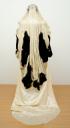
Below the draped cow hide is a muslin skirt and cream silk satin bridal train. The muslin is gathered and attached with rusting nails to the top part of the sub-frame and falls to 200mm above floor level where it ends in a stitched hem. There are numerous rust stains in the muslin, probably caused by contact with the wet hide and iron sub-frame when the piece was made. From her grandmother's eighty-year old wedding dress the artist cut and stitched a detachable round ended train that drapes on the floor behind the figure. When attached to the two large buttons stitched to the underside of the cow hide, the train hangs over the muslin skirt.
Prior to acquisition some of the holes and tears sustained during the flaying and curing process of the hide have been stitched with string and there is evidence of hair loss in places. The artist has said the teats in the cow hide were oiled several times with various oils including baby oil and vegetable oil, to prevent blanching and drying of the skin. The hide is now stiff, dry and stable but prior to acquisition when preservative salts crystallised on the surface, they were brushed off by the artist.
The artist accepts the work will slowly change with time (correspondance with artist 1995). The existing holes in the satin train are acceptable to the artist, but in future if the fabric deteriorates, she would like them mended (satin material from the same source as the original has been supplied by the artist). The satin can be dry-cleaned when necessary. Early signs of moth infestation were noticed on the cowhide while on display at The Tate Gallery, Liverpool in l997, and subsequently treated by prolonged deep freezing.
Sandra Deighton
June 1997