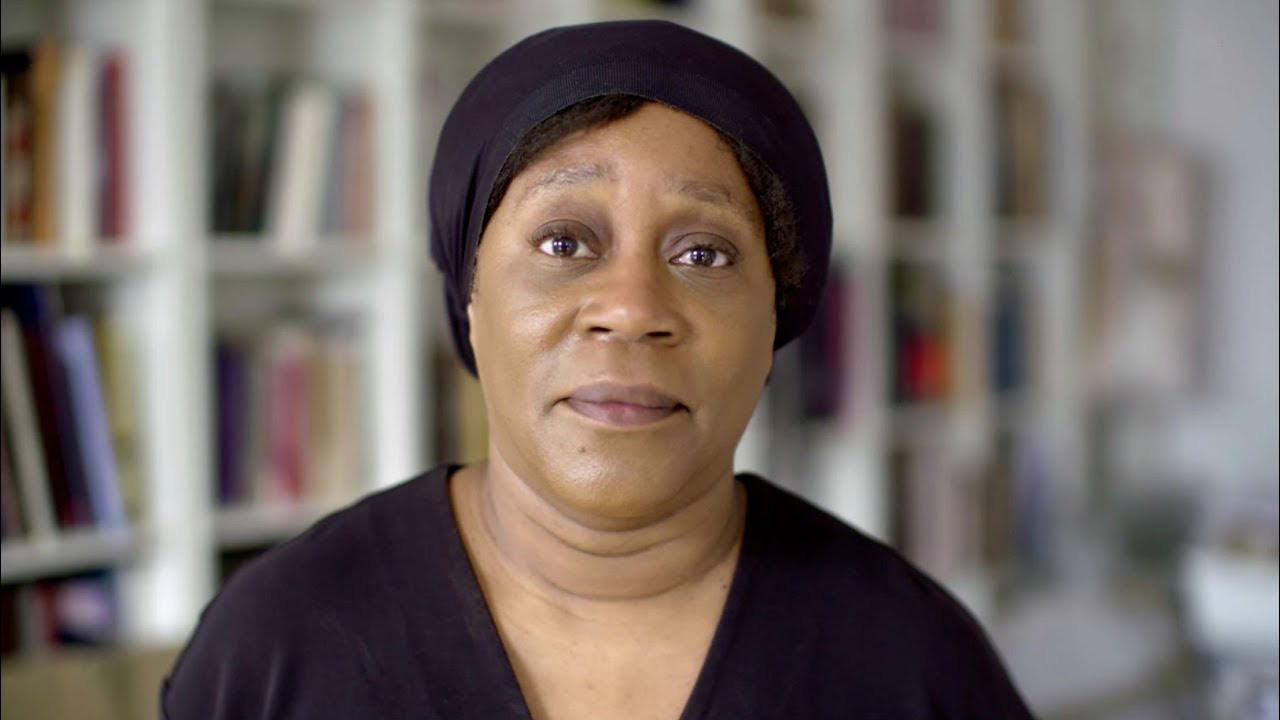
Still from Hurvin Anderson 'It's questioning my history, my place', TateShots, Photo © Tate
Who is he?
Hurvin Anderson is an artist who makes colourful paintings that tell stories about the history and memories of the people and places around him.
Anderson was born in Birmingham, England, in 1965. His parents and older brothers and sisters had travelled to England from Jamaica four years earlier as part of The Windrush Generation. This was the name given to the thousands of people, just like them, who came from the West Indies to help rebuild Britain after the Second World War. They settled into new lives all over the UK.
This means that Anderson’s family are part of the Jamaican diaspora. Have you heard this word before? It describes a group of people who have moved from one place to another and brought their food, music, fashions, language and so much more with them. So he grew up surrounded by both British and Jamaican culture. How cool is that!?
When Anderson went to school, he loved to draw and he took his sketchbook everywhere. He drew pictures of Black superheroes and the objects he found at home. His parents put his drawings up around the house and encouraged his love of art. Does that sound familiar? Do you and your friends like to draw too? Are your pictures on your wall at home?
Is his background important to his art?
It’s very important! One day, Anderson’s older brother took him to see an art exhibition by local Black artists. This was a really special moment because it made him realise that he could be an artist too. That must have been such an inspiring day for him! He went to college to study art and learnt new ways to put his ideas into pictures.
Anderson is really interested in the importance of who we are and where we come from. His work explores how it feels to belong to England and Jamaica at the same time. One time, his father took him to a barbershop in his friend’s attic in Birmingham. But this wasn’t just somewhere to get a haircut! For Jamaican and other Black Caribbean communities barbershops and hair salons are important centres for people to hang out with their friends. For many members of the Windrush Generation who arrived in Britain in the 1960s, they were a little piece of home.

Hurvin Anderson Jersey 2008 Tate Purchased using funds provided by the 2008 Outset Frieze Art Fair Fund to benefit the Tate Collection 2009 © Hurvin Anderson
He has painted lots of different barbershops from both England and Jamaica. These paintings show us new ways of looking at the same things. In his picture Jersey 2008, he painted the inside of a Jamaican barbershop. Look at how still the picture is! Even though there are no people in the picture, can you see how Anderson has created a scene which is really busy and full of life? There are hair clippings all over the floor, bottles spilling on the counter and chairs spun around by the people who were sitting in them. Do you think the picture gives any other clues about the people who may have been there? Doesn’t it feel like they could come back at any moment?
So, how does he make his paintings?
Anderson paints landscapes (outdoor places) and interiors (indoor places). He starts by taking lots of photographs of the places he wants to paint. Then he looks closely at the different people and things in his photos. He chooses which parts he finds most interesting and uses them to build collages. He also experiments with other materials that give texture and colours to his pictures. Then, when he has built his image, he paints his creation onto big canvases with oil and acrylic paints.

Hurvin Anderson, Hawksbill Bay, 2020. Tate: Lent by Tate Americas Foundation, courtesy of Mala Gaonkar 2023. © Hurvin Anderson. Courtesy the artist, Thomas Dane Gallery and VeneKlasen
Hawksbill Bay 2020 was created from some photos he took on a visit to Jamaica with his wife and children. While they were helping to guide some newly hatched turtles across the beach towards the sea (which is a pretty cool thing to do at the beach!), Anderson noticed some grey and empty hotel buildings in the distance. He photographed what he saw and made a painting which shows brightly coloured trees and plants in front of the angular grey buildings. It’s a little strange to see blue leaves, isn’t it? But the blue of the sea is such an important part of the Jamaican landscape.
Anderson said that he wanted to show how people and tourism have changed the Jamaican landscape and made it feel ‘inhospitable’. How does the picture make you feel? Do you feel like it welcomes you into the landscape? Or are there parts that you would not like to visit?
Hurvin Anderson’s work shows that any place can be full of memories and history that are important to the people who were once there. He also shows that we can bring new stories into places and make them our own. Take a look at the place where you are now. What can you see? Are there any clues about the people who were here before? You could be just like Anderson and take some pictures of a place you know and use them to create a collage. Which parts of the pictures will you choose to use? And what story will you tell?