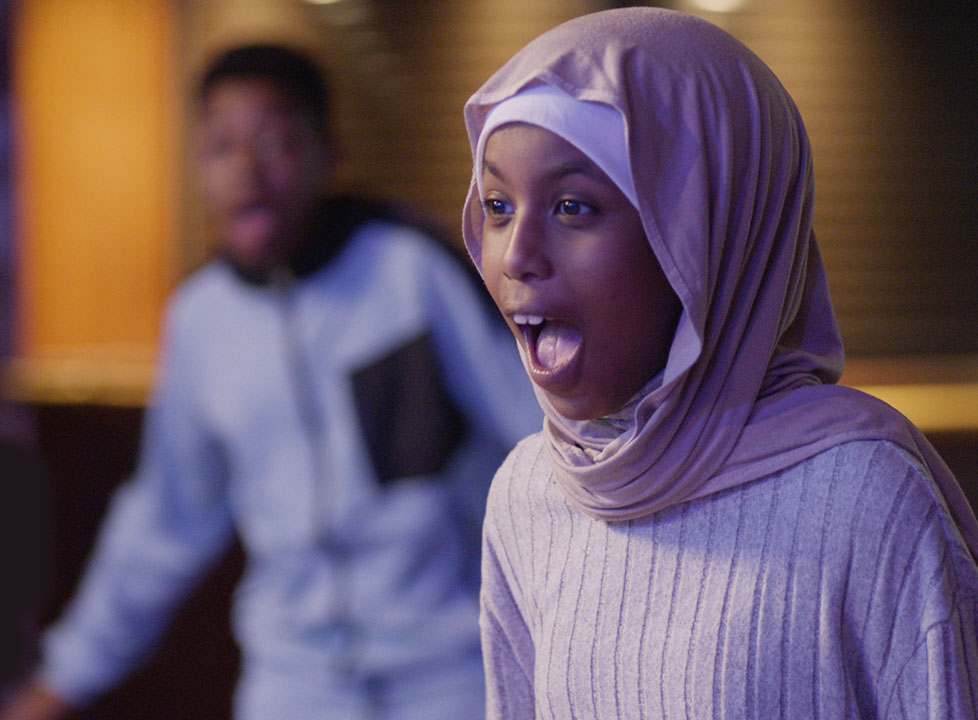
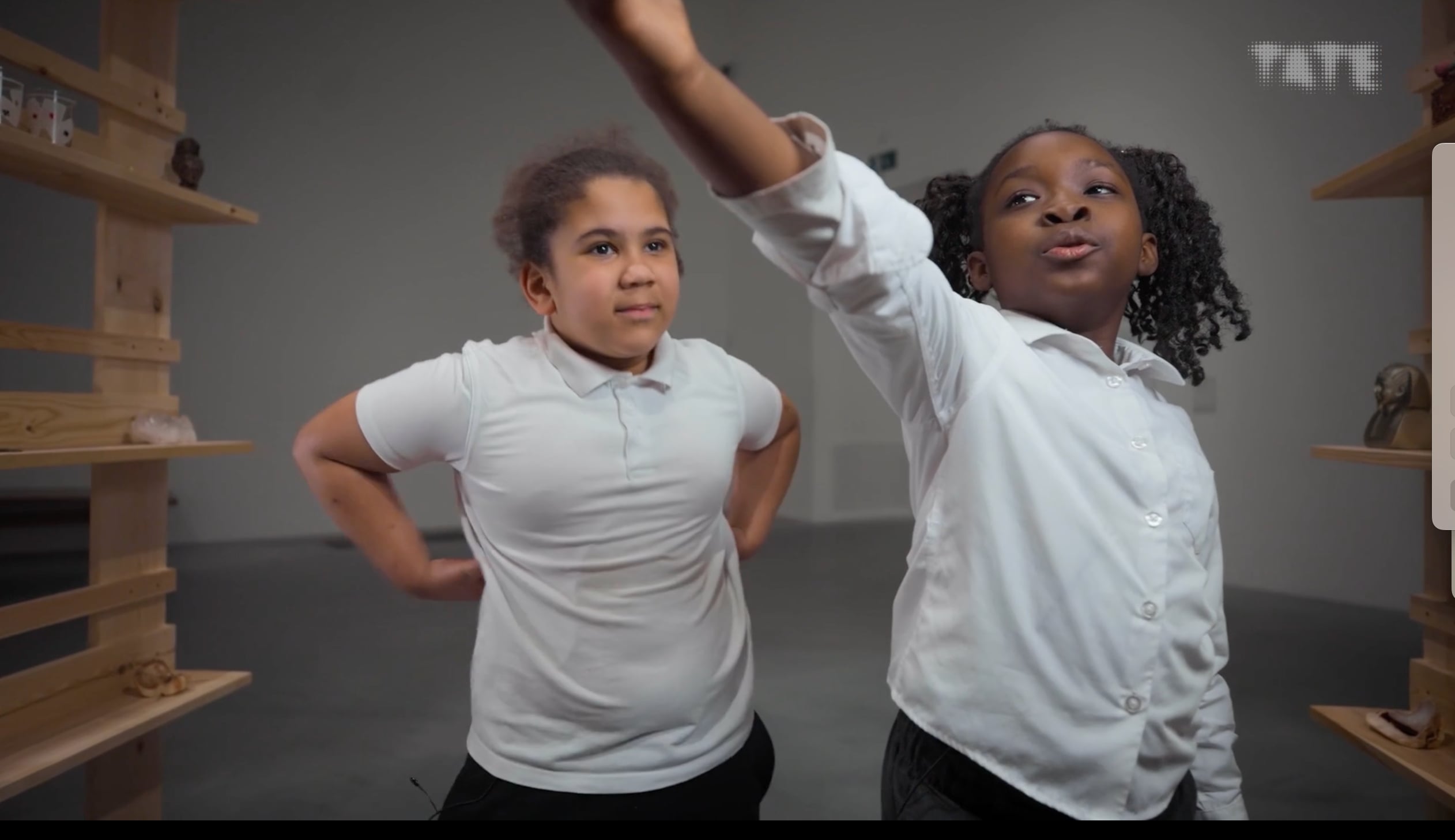
Zineb Sedira poses with her artwork during a preview for When Words Fall Silent, Cinema Speaks commissioned for the Duveen Galleries in Tate Britain, London. Lucy North / Alamy Stock Photo
Who is she?
Zineb Sedira is an artist who uses video and photography to tell stories about memories and migration from one place to another.
Sedira was born in Paris, France, in 1963. As a little girl she loved going to art classes every Saturday morning. She adored being creative and once she grew up, she said these lessons were one of her happiest childhood memories. She also enjoyed going to the cinema and her father took her to see films that came from all over the world.
Although she grew up in France, Sedira’s parents came from Algeria in North Africa. Their country had won a war to win its independence from France, and some French people were not always very nice to people from Algeria. When she was a teenager she spent time with other young artists who made films about the real-life problems that affected them. This included racism and the way that people from different backgrounds are sometimes treated by others.
Eventually, she left France and moved to London where she studied art. It was here that film and photography became a very important part of the art she wanted to create.
Can a video really be art?
Absolutely! Artists can use videos and sounds to express their ideas, ask questions, and tell all types of stories! Sedira makes films about real experiences and she is often inspired by her own family’s life. Her art is full of the history, culture and traditions which her parents shared with her.

Zineb Sedira
Mother Tongue
(2002)
Tate
Some of her videos record conversations between her family as they talk about their lives. Her film Mother Tongue 2002 is about her connections to France, Algeria and England. It shows Sedira talking to her mother and her daughter about their childhoods. They all grew up in different countries and speak different languages; the video shows them talking in French, Arabic and English. However, Sedira has to translate for her mother and daughter so that they can understand each other. This film shows how the three women are closely connected but that they have all had very different experiences and that language can make it difficult to communicate with people, even if you are very close to them. Do you sometimes find different ways to communicate with the people around you? How do you make yourself heard?
Is Sedira only inspired by her family?
Zineb Sedira’s art explores lots of big ideas that impact individuals and large groups of people. Many others, like her parents, travelled across the sea to build their lives in new countries. This can be a very exciting and scary thing to do. Can you imagine making your home in a new place? Perhaps you already know somebody who has. Sedira is inspired to make videos and pictures that ask us to think about these journeys and their impacts on the people who make them.

Zineb Sedira Dreams Have No Titles 2022 Film still © Zineb Sedira, DACS, London
Dreams Have No Titles 2022 combines footage from old films and archives with videos of Sedira in different places and scenes. She appears in her home in London, and dancing across different sets where actors and film equipment move around her. The film is inspired by the movies she watched as a child and recreates or reuses scenes from Algerian films which were made after the country became independent. Dreams Have No Titles was made when Sedira was the first artist of Algerian heritage to represent France at a very important international art event called the Venice Biennale in 2022. This was an amazing achievement!
Does she only make videos?
Videos are a very important way for Sedira to create her art, but she uses lots of other methods too. When Dreams Have No Titles was first shown in Venice, it was part of a much larger artwork that people could actually step into. The audience walked through different rooms before sitting down in a small cinema just like the one she visited as a child. How do you think it would feel if you could walk inside a piece of art?
Zineb Sedira uses art to share identities, tell stories and remember history. Then she shares it with audiences all over the world. If you could make a film that told a story, what would it be about?