Skip navigation

Main menu

  • What's On
  • Visit
  • Art
    • Discover Art
    • Artists
    • Artworks
    • Stories
    Stories
    Stories

    Watch, listen and read

  • Learn
    • Schools
    • Tate Kids
    • Research
    • Activities and workshops
    Tate Kids
    Tate Kids

    Games, quizzes and films for kids

  • Shop
Become a Member
  • View All
  • Tate Modern
  • Tate Britain
  • Tate St Ives
  • Tate Liverpool
  • Exhibitions And Displays
  • On Today
  • Events
  • Tate Britain
    Tate Britain Free admission
  • Tate Modern
    Tate Modern Free admission
  • Tate Liverpool + RIBA North
    Tate Liverpool + RIBA North Free admission
  • Tate St Ives
    Tate St Ives Ticket or membership card required
  • Families
  • Accessibility
  • Schools
  • Private tours
  • Discover Art
  • Artists
  • Artworks
  • Stories
  • Schools
  • Tate Kids
  • Research
  • Activities and workshops
Tate Logo

Try searching for...

  • J.M.W. Turner
  • Ophelia
  • Tracey Emin

DON'T MISS

Exhibition

Turner & Constable: Rivals & Originals

Tate Britain
Until 12 Apr 2026
Exhibition

Theatre Picasso

Tate Modern
Until 12 Apr 2026
Become a Member

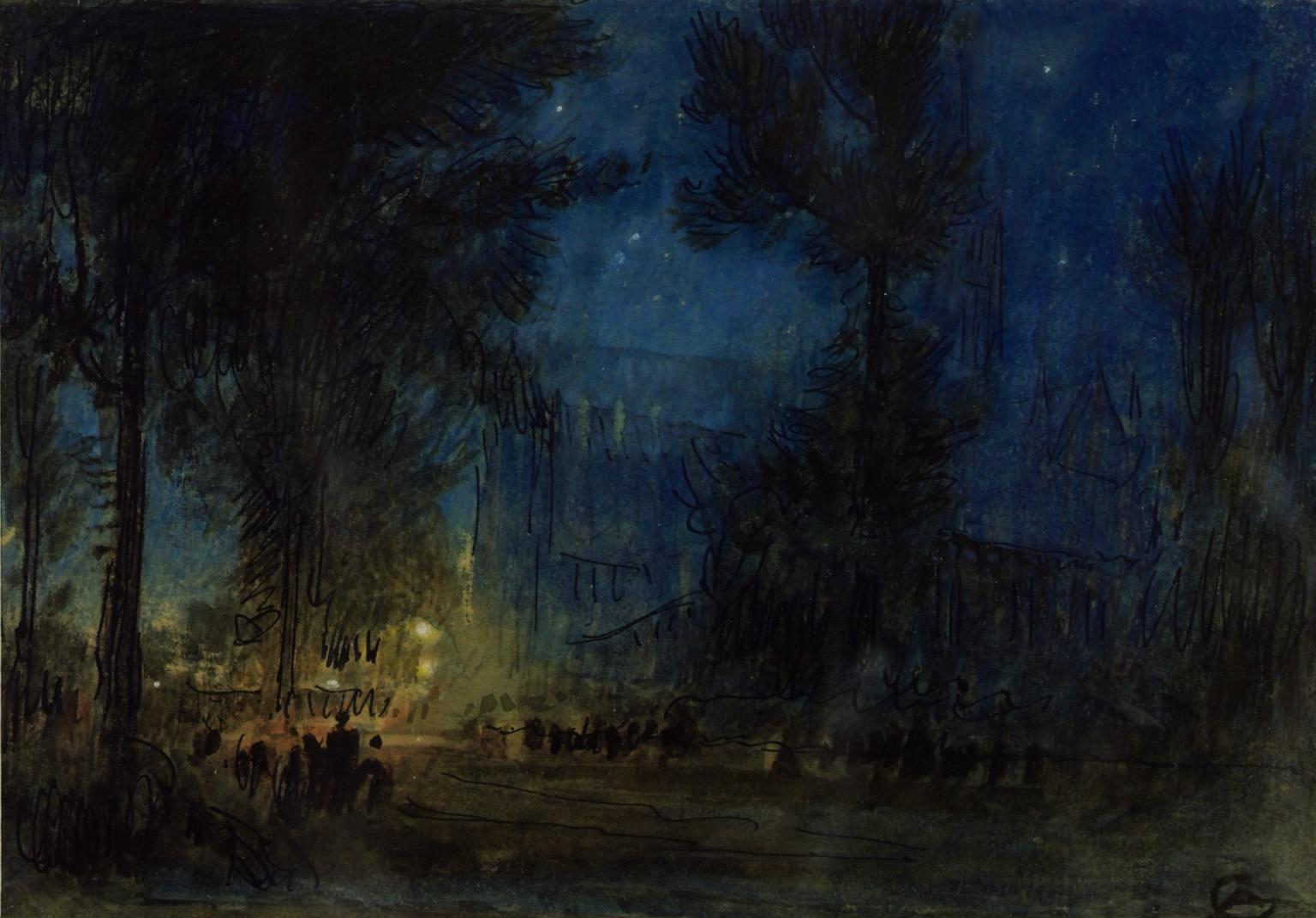
Albert Goodwin

1845–1932

Salisbury
License this image

Biography

Albert Goodwin (1845–1932) was an English landscapist specialising in watercolours. His work shows the influences of Turner and the Pre-Raphaelite Brotherhood.

Goodwin was born in Maidstone in Kent, the son of a builder and one of 9 children. After leaving school he became an apprentice draper. His exceptional artistic ability was recognised at an early age and he went on to study with the Pre-Raphaelite artists Arthur Hughes and Ford Madox Brown - the latter predicting that he would become "one of the greatest landscape painters of the age".

At the age of 15 his first painting was exhibited at the Royal Academy. He became an associate member of the Royal Watercolour Society (RWS) in 1876. He was championed by famed art critic John Ruskin who took him on a tour of Europe, where he made many sketches from nature which were later turned into watercolours. During his lifetime he traveled extensively throughout Britain and Europe, and visited many other countries including a trip to Canada in 1890 accompanied by his nephew and fellow artist Sidney Goodwin.

Goodwin was a prolific artist, producing over 800 works and continuing to paint well into his eighties. His wide variety of landscape subjects reflected his love of travel and show the influence of Turner, with whom he felt a strong affinity. In later works he developed experimental techniques such as using ink over water color to achieve atmospheric lighting effects. His works are also an important record of social history.

This biography is from Wikipedia under an Attribution-ShareAlike Creative Commons License. Spotted a problem? Let us know.

Read full Wikipedia entry
Artworks

Left Right

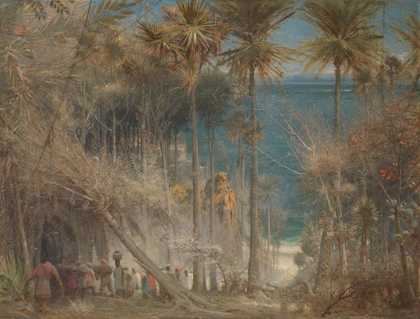
Shipwreck: Sinbad the Sailor Storing his Raft

Albert Goodwin
1887

Ali Baba and the Forty Thieves

Albert Goodwin
1901

The Gate of the Pass, Maloja

Albert Goodwin
date not known

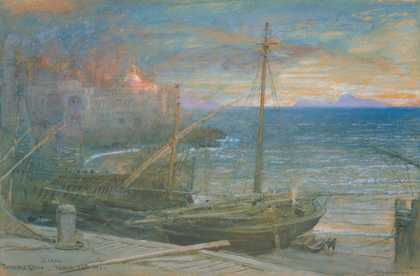
Torre del Greco and Capri

Albert Goodwin
1900 and 1904

Folkestone Harbour

Albert Goodwin
1907

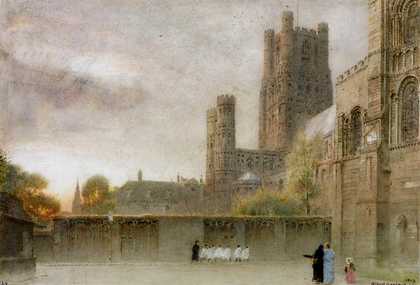
Ely Cathedral

Albert Goodwin
1908

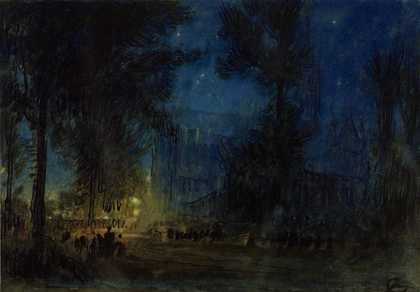
Salisbury

Albert Goodwin
date not known

In the shop

Browse the shop
Artwork
Close

Join in

  • Twitter
  • Facebook
  • YouTube
  • Instagram
  • Pinterest
Sign up to emails

Sign up to emails

This site is protected by reCAPTCHA and the Google Privacy Policy and Terms of Service apply.

Tate’s privacy policy

About

  • About us
  • Our collection
  • Terms and copyright
  • Governance
  • Picture library
  • ARTIST ROOMS
  • Tate Kids

Support

  • Tate Collective
  • Members
  • Patrons
  • Donate
  • Corporate
  • My account
  • Press
  • Jobs
  • Accessibility
  • Privacy
  • Cookies
  • Contact
© The Board of Trustees of the Tate Gallery, 2026
All rights reserved