Biography
Black and white negative, Paul Nash holding Pooh, in the backgarden of New House, Rye [c.1931–3]
© reserved
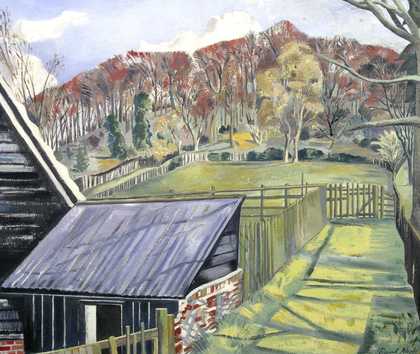
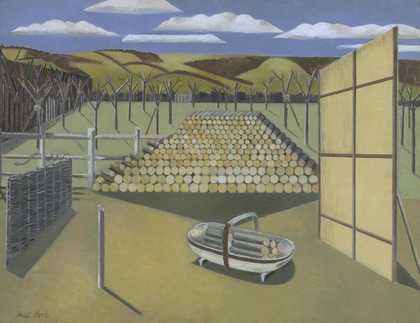
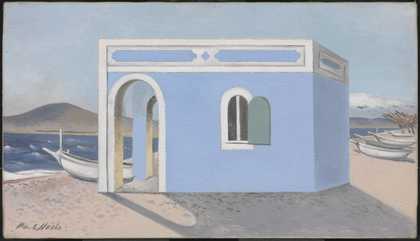
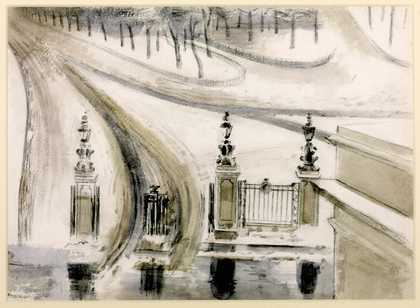
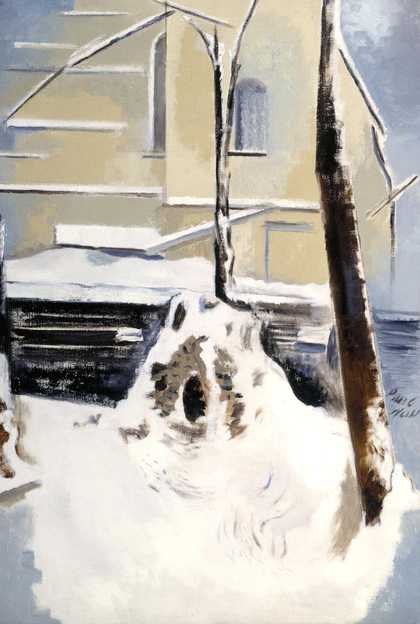
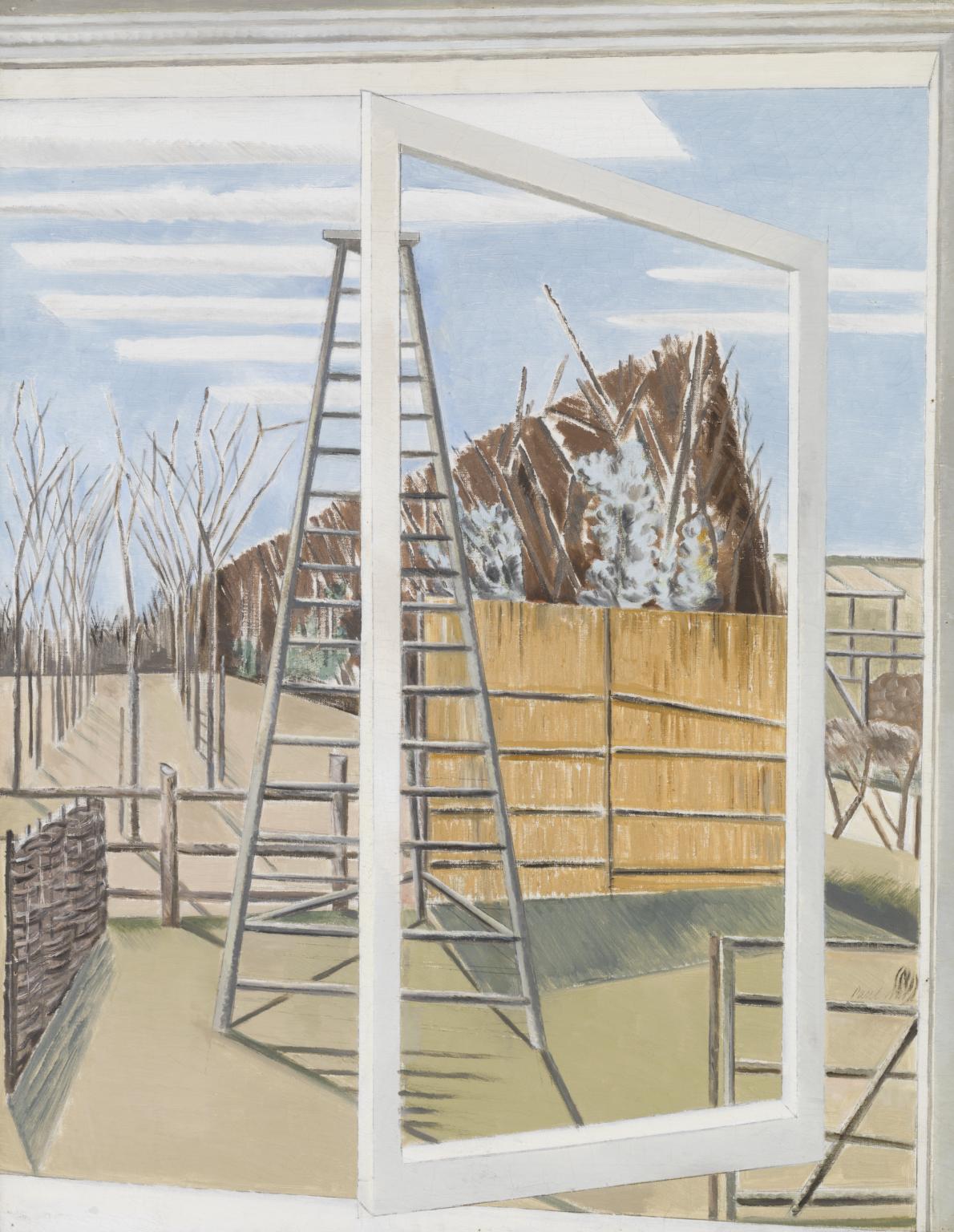
Paul Nash (11 May 1889 – 11 July 1946) was a British surrealist painter and war artist, as well as a photographer, writer and designer of applied art. Nash was among the most important landscape artists of the first half of the twentieth century. He played a key role in the development of Modernism in English art.
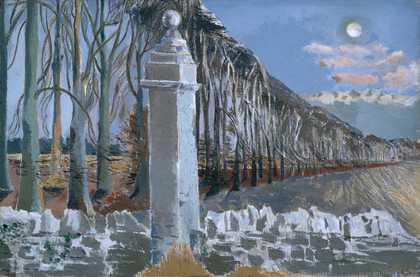
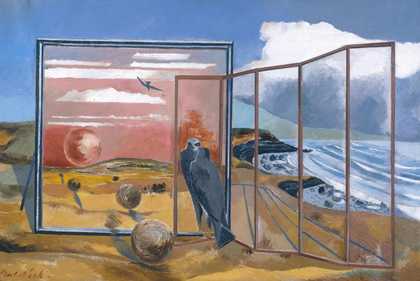
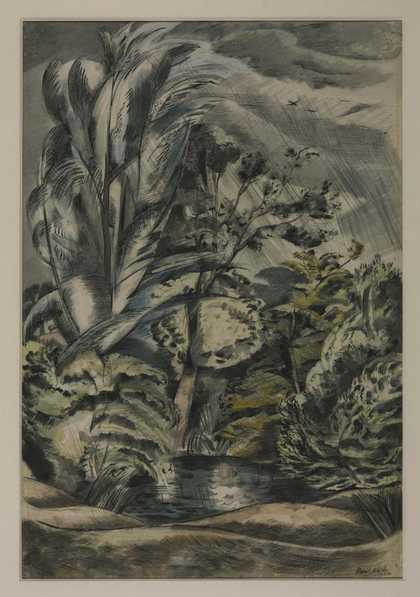
Born in London, Nash grew up in Buckinghamshire where he developed a love of the landscape. He entered the Slade School of Art but was poor at figure drawing and concentrated on landscape painting. Nash found much inspiration in landscapes with elements of ancient history, such as burial mounds, Iron Age hill forts such as Wittenham Clumps and the standing stones at Avebury in Wiltshire. The artworks he produced during World War I are among the most iconic images of the conflict. After the war Nash continued to focus on landscape painting, originally in a formalized, decorative style but, throughout the 1930s, in an increasingly abstract and surreal manner. In his paintings he often placed everyday objects into a landscape to give them a new identity and symbolism.
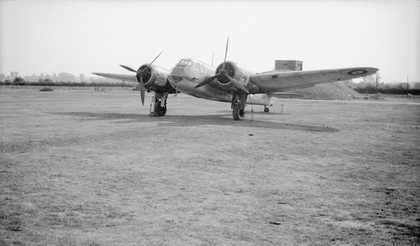
During World War II, although sick with the asthmatic condition that would kill him, he produced two series of anthropomorphic depictions of aircraft, before producing a number of landscapes rich in symbolism with an intense mystical quality. These have perhaps become among the best known works from the period. Nash was also a fine book illustrator, and also designed stage scenery, fabrics and posters.
He was the older brother of the artist John Nash.
This biography is from Wikipedia under an Attribution-ShareAlike Creative Commons License. Spotted a problem? Let us know.
Read full Wikipedia entryArtworks
Artist as subject
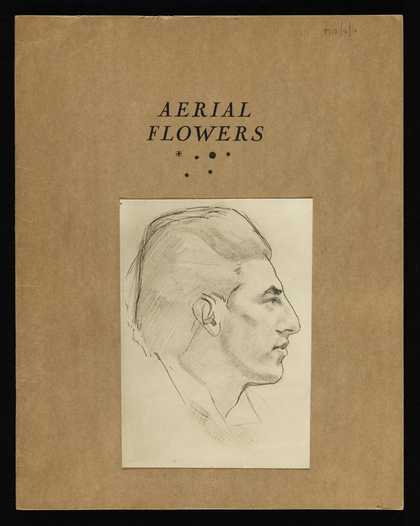
J. Leger & Son (London, UK) J. Leger & Son exhibition catalogue titled ‘Paintings, Water-colours & Sculptures by Contemporary Artists’
Film and audio
Dave McKean on Paul Nash – 'The trenches completely changed him' | TateShots
Illustrator, filmmaker and comic book artist Dave McKean tells us about the influence of Paul Nash on his own work
The Dark Monarch
Welcome to the world of The Dark Monarch, at Tate St Ives until 10 January 2010. Bracewell looks at eerie ...
Further reading
Who is Paul Nash?
Paul Nash is one of the most important British artists of the early 20th century. Let’s meet him!
War artists
War artists are artists who are commissioned through an official scheme to record the events of war
Unit One
British group formed by Paul Nash in 1933 to promote modern art, architecture and design
Otto Dix and Paul Nash: Views from the First World War
From the Surreal to the Decorative
Archives & Access project: Artists in wartime
As part of her work on Tate’s Archives & Access project Liane MacIver, Archive Data Inputter, looks at Paul Nash ...
The detritus of the future and pleasure of the past
The exhibition Ruin Lust at Tate Britain explores artists’ and subsequently photographers’ fascination with the ruin, via works from JMW ...
Paul Nash's Equivalents for the Megaliths 1935
Tate Etc. invited a selection of contemporary artists featured in the new rehang of British art at Tate Britain to ...
‘New Ways of Modern Bohemia’: Edward Burra in London, Paris, Marseilles and Harlem
Paying close attention to Edward Burra’s letters, scrapbooks and other archival material, Andrew Stephenson reveals the impact that the ...
A landscape of mortality
Paul Nash was preoccupied with his own mortality from childhood. But being posted as official artist to both world wars ...