Artist biography
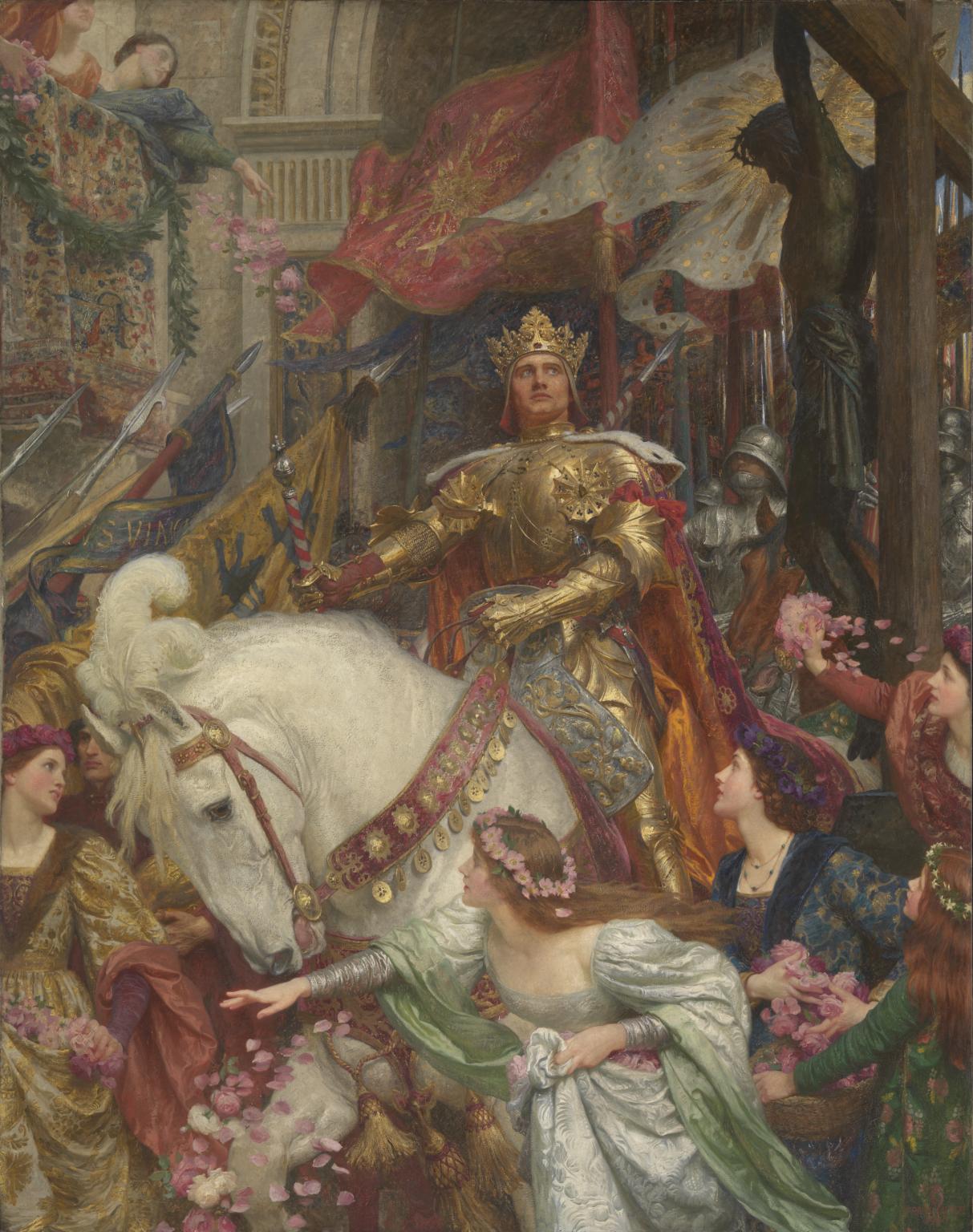
Dicksee's paintings are executed with textural fluidity and rich orchestrations of colour. They reveal a curious blend of influences, in particular the classicism of Frederic Leighton and the abstracted idealism of G. F. Watts. His predilection for the decorative aspects of painting grew out of his studies with Henry Holiday, a designer of stained glass. He passionately championed the Victorian ideals of High Art and publicly condemned the artistic trends that emerged towards the end of his life. His work covers a wide range of subject-matter and genres, including biblical and allegorical paintings. He also painted society portraits and social dramas, such as The Confession (1896; priv. col., see Great Victorian Pictures, exh. cat. by R. Treble, ACGB, 1978, p. 30).
Dicksee was elected ARA in 1881, RA in 1891 and PRA in 1924. He was knighted in 1925 and made KCVO in 1927. His sister Margaret Isabel (1858–1903) and brother Herbert Thomas (1862–1942) were also painters, as was his uncle John Robert Dicksee (1817–1905).
Bibliography
S. Hodges: ‘Mr. Frank Dicksee', Mag. A., x (1887), pp. 217–22
E. R. Dibdin: ‘The Art of Frank Dicksee', A. Annu. (1905), pp. 1–32 [Christmas issue]
A. Kavanagh: ‘Sir Frank Dicksee', Country Life, clxxvii (31 Jan 1985), pp. 240–42
AMANDA KAVANAGH
Article provided by Grove Art Online www.groveart.com
Copyright material reproduced courtesy of Oxford University Press, New York