Tate Online home Tate Britain Tate Modern Tate Liverpool Tate St Ives
HomeSupportersFeedbackTicketsShop Online
Technology from BT Tate Online together with BT
    #getArtistA2ZLink(uk.org.tate.application.collections.CGroupHierarchy@2a6cc873 uk.org.tate.application.collections.URLMaker@4bdc0bc7 -1 true)#getArtistListLink(uk.org.tate.application.collections.CGroupHierarchy@2a6cc873 uk.org.tate.application.collections.URLMaker@4bdc0bc7 -1 D true)#getArtistWorksLink(uk.org.tate.application.collections.CGroupHierarchy@2a6cc873 uk.org.tate.application.collections.URLMaker@4bdc0bc7 Degas -1 988 true)Work

View Work InformationFind out where this work is on displayView other images for this workCross refer by subjectView texts associated with this workView other media or information about this work  
Edgar Degas  1834-1917

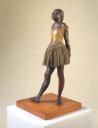
Edgar Degas Little Dancer Aged Fourteen 1880-1, cast circa 1922
Little Dancer Aged Fourteen  1880-1, cast circa 1922
Petite danseuse de quatorze ans

Painted bronze with muslin and silk
object: 984 x 419 x 365 mm, 31 kg (integral base included)
sculpture

Purchased with assistance from The Art Fund 1952

N06076
The model for this sculpture was a ballet student at the Paris Opéra, where Degas often drew and painted. Degas first made a reddish-brown wax sculpture of her in the nude. Then, aiming for a naturalistic effect, he dressed a three-quarter life-size wax sculpture of her in clothing made of real fabrics - cream-coloured silk for the bodice, tulle and gauze for the tutu, and fabric slippers. He also gave it real hair tied with a ribbon. When the wax sculpture was first exhibited, contemporaries were shocked by the unprecedented realism of the piece. But they were also moved by the work's representation of the pain and stress of ballet training endured by a barely adolescent girl. After Degas' death, his heirs decided in the early 1920s to make bronze casts - nearly thirty of them - of the wax original. In these versions, all is bronze except for the dancer's gauze tutu and silk ribbon. Recent investigation into the casting of this piece has shown how the founders attempted to match the colours and aged appearance of the original wax sculpture, which, by this point, had spent forty years in the artist's studio. Pigmented waxes, ranging in colour from pale orange through pink and brown, were rubbed into the flesh areas. The bodice was painted a cream colour, but a pigmented wax was applied to darken the lower part. The skirt was dipped in a mixture of animal glue and pigment in order to created an aged effect.
 (From the display caption August 2004)