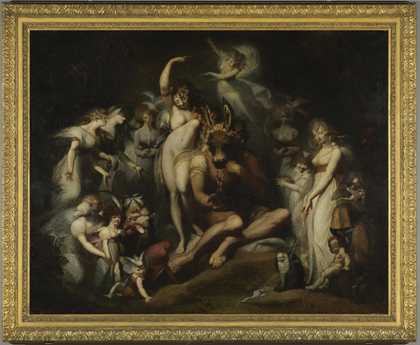
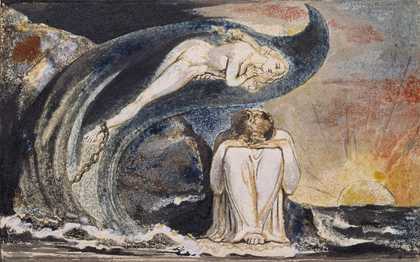
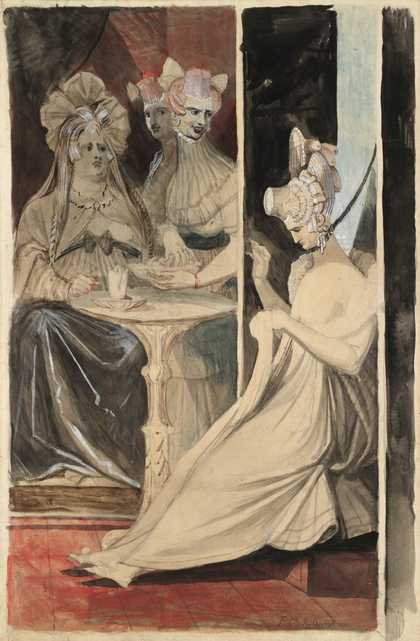
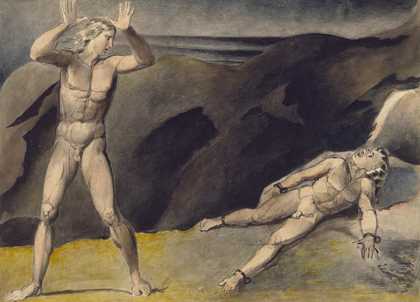
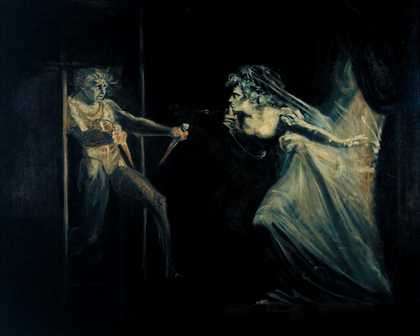
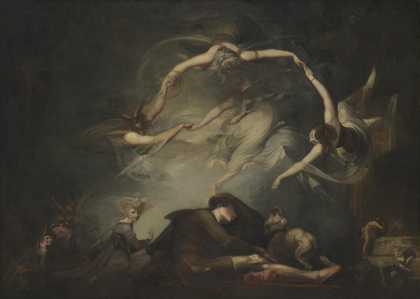
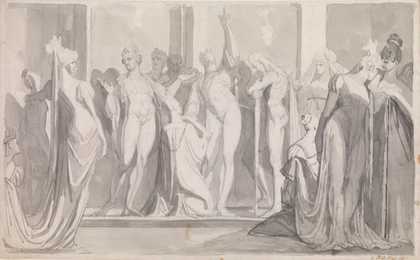
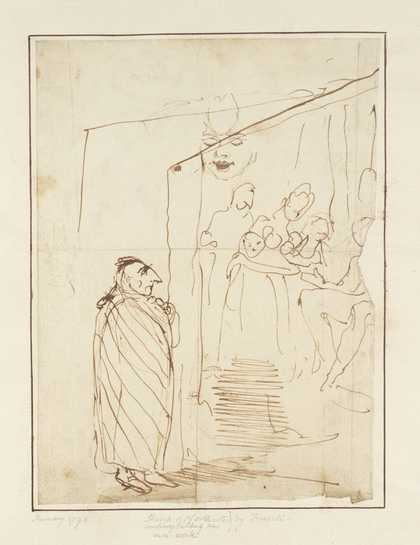
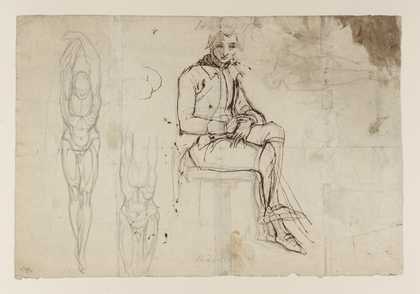
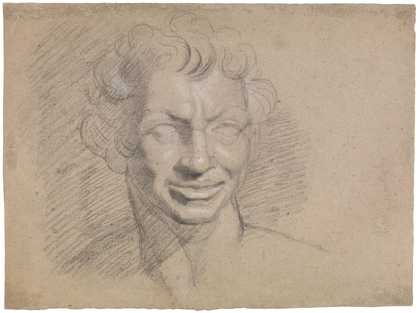
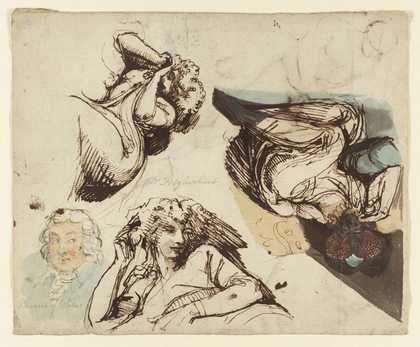
You might like Left Right Titania and Bottom Henry Fuseli c.1790 Plate 4 of ‘Visions of the Daughters of Albion’ William Blake c.1795 The Debutante Henry Fuseli 1807 Los and Orc William Blake c.1792–3 Lady Macbeth Seizing the Daggers Henry Fuseli ?exhibited 1812 The Shepherd’s Dream, from ‘Paradise Lost’ Henry Fuseli 1793 Siegfried about to Deny on Oath that Brunhild Had Been his Paramour. Verso: The Figures Traced Through Henry Fuseli 1805 2. Caricature of Northcote Henry Fuseli date not known Self-Portrait and Anatomical Studies. Verso: Two Male Anatomical Studies Henry Fuseli 1783 Self-Portrait as a Faun. Verso: Head of a Woman Three-Quarters to Left Henry Fuseli date not known A Sheet of Studies: Three Figures of Recumbent Women. A Head of a Man. Verso: Half Length Figure of a Woman in Profile, and a Study of a Head and Arm; a Nude Male Figure Henry Fuseli date not known Charis Phykomené. Verso: Head of a Woman, Unfinished Henry Fuseli 1791