
Turner Bequest CCXXXII 1–76a
Sketchbook bound in boards covered in green oil paper, with unlined flap extending 26 mm from fore-edge of front cover and pocket lined with oil paper inside front and back covers
76 leaves and paste-downs of white wove writing paper, approximate page size 157 x 98 mm
Stamped in black on front cover ‘CCXXXII’ top right
Numbered 174 as part of the Turner Schedule in 1854 and endorsed by the Executors of the Turner Bequest inside back cover (D41044)
76 leaves and paste-downs of white wove writing paper, approximate page size 157 x 98 mm
Stamped in black on front cover ‘CCXXXII’ top right
Numbered 174 as part of the Turner Schedule in 1854 and endorsed by the Executors of the Turner Bequest inside back cover (D41044)
Accepted by the nation as part of the Turner Bequest 1856
References
This sketchbook records a specific portion of Turner’s 1838 tour of south-eastern France and the Mediterranean coast, a journey that took the artist from Paris to Genoa over the course of several weeks. Having traditionally been associated with the artist’s travels through this region in 1828,1 it is now considered to be the second book in a sequence of four that correspond to the newly identified 1838 tour (see the overall tour Introduction for an overview of this thesis). As its title suggests, the first of these, the Orleans to Marseilles sketchbook (Tate; Turner Bequest CCXXIX) documents the journey as far as Marseille. The first location represented in the present sketchbook is Toulon, a city on the south-east coast of France, located approximately forty miles east of Marseille (there is no known record of Turner’s passage from Marseille to Toulon).
The sketchbook’s title was assigned by A.J. Finberg in his 1909 Inventory of the Turner Bequest, adopted directly from John Ruskin’s customary brief endorsement on a wrapper (since lost): ‘174. Coast of Genoa. Some fine things, but mostly careless.’2 In its entirety, the book records the artist’s travels from Toulon to Genoa, the capital of Italy’s Liguria region and the ultimate destination of the 1838 tour. The two cities are separated by a two-hundred-mile expanse of coastline, which encompasses several important coastal resorts, including Cannes, Nice, San Remo and Imperia. Broadly speaking, Turner appears to have followed the course of this coastline, travelling in a north-easterly direction from France’s Mediterranean shores (through the region now commonly referred to as the French Riviera), to the coastal towns of Liguria (sometimes collectively known as the Ligurian Riviera).3 The exact date of the journey is not known, but, as Ian Warrell has concluded, Turner probably arrived in Genoa in the August or September of 1838.4
Following Ruskin’s dismissive comments about the sketchbook, as noted above, it has been largely ignored by Turner scholars. With the exception of Finberg, whose 1909 Inventory provides the customary page-by-page account, offering a brief description of each drawing (‘mountains’; ‘town’; ‘view on coast’ feature repeatedly, for example), the first published art-historical response to the work appeared in 1981 as an entry in the seminal Turner en France catalogue by the curator Maurice Guillaud.5 Naturally, Guillaud was exclusively focused on the French subjects and approached the book as an evidential tool in terms of establishing Turner’s journey from Toulon to Nice. Although Guillaud, writing several decades before the evolution of the 1838 discourse, assumed the 1828 dating to be correct, his assessment of Turner’s journey through this region nonetheless remains applicable and generally accurate in terms of the subjects and locations represented.
Guillaud’s enthusiastic appraisal of the quality and merits of the designs, principally of those showing views of Nice, is compelling, and the curator was clearly captivated by Turner’s sketches. In fact, he inadvertently endorsed the notion of the later dating by casually highlighting key stylistic and technical distinctions between the present book and the Marseilles to Genoa sketchbook (Tate; Turner Bequest CCXXXI), two books which were, until the relatively recent assemblage of the 1838 thesis, believed to have been used concurrently by Turner on his 1828 journey to Genoa. Guillaud observed that ‘the pencil used [in the Marseilles to Genoa book] was of a different type, thick and grey, whereas here the tip is well sharpened and, more important, Turner’s state of mind and manner of observing are completely different’.6 As outlined in the section Introduction, the discrepant pairing of these sketchbooks was a significant factor in the reconstruction of the 1838 tour; the Marseilles to Genoa book has retained its 1828 dating.
The only other significant response to the sketchbook is by Roland Courtot, a geographer with a particular interest in Turner’s explorations in the South of France. Courtot has published several articles on the subject of Turner in France, although it is his online blog series, Carnets de Voyage de Turner, from which the most in-depth analysis of the present sketchbook, published in 2018, originates.7 In terms of identifying the subjects and locations depicted by Turner, this particular essay, aided by its author’s extensive local knowledge, has been the principal source of information for the individual page entries in this catalogue, although it should be noted that Courtot, like Guillaud before him, holds an inherent predisposition for the French subjects: as such, the many views of Genoa are not mentioned in his blog post. In addition to this article, which includes a description of each drawing, organised in a list that follows the pagination sequence of the book (what the geographer terms a ‘documentary annex’),8 the sketchbook is also discussed by Courtot in several additional posts in the Carnets blog series, in which he sometimes questions its association with the 1838 tour, owing to its disorderly and confusing arrangement.9
Courtot’s principal concern is that the organisation of the drawings (meaning the order in which the designs appear in the pagination sequence, as first presented and subsequently numbered accordingly in Finberg’s catalogue), does not correspond to the itinerary proposed by Ian Warrell for the 1838 tour.10 This is because the images of Genoa, the final destination of the journey represented according to Warrell, are contained towards the centre of the book, with the preceding pages broadly describing the expected route from Toulon to Genoa. The second half of the book, however, appears to record a similar journey in reverse, back to Toulon. As Courtot is eager to point out, this is at odds with supposed 1838 itinerary since, according to the subjects and locations documented in the Genoa to Grenoble sketchbook (Tate; Turner Bequest CCXCV), the third book in the tour’s sequence, Turner did not completely retrace his steps on departing Genoa as he made his way towards Grenoble, instead heading inland when he reached Fréjus (as outlined in the Introduction to that sketchbook).11
This anomaly can be explained one of two ways. Firstly, the reappraisal of the present sketchbook as a product of the 1838 tour could be incorrect. However, as Courtot himself realises in a later blog post, the contents of the book are incompatible with the current understanding of the 1828 tour through this region of south-east France.12 The second explanation would be that the sketches conceived in the second half of the book were not executed after Turner had visited Genoa, despite their position in the foliation sequence. Courtot is reluctant to accept this reasoning, but it is the most logical and probable scenario.
There are, in fact, several indications within the book itself to suggest that Turner inserted his designs at random intervals. For example, there is a view of Noli, a small town on Italy’s Ligurian coast, on folio 61 verso (D21381), that does not geographically correspond with the subjects depicted on neighbouring pages, which typically record views around Cannes or Antibes, nearly one hundred miles away. It should also be noted that there are long sequences of blank pages within the book, which arguably demonstrates a casual and spontaneous approach to sketching. As is equally evident in the Orleans to Marseilles book, Turner was not always concerned with documenting the chronology of his journey in a page-by-page sequence. The arrangement of the drawings implies that he used the present book simultaneously in both directions (from the first page, but also from the last; presumably held upside down, so as to mimic the conventional orientation and format) to document his approach to Genoa, which explains the position of the Genoa subjects, executed on a sequence of pages towards the middle of the book.
It is clear, therefore, that the designs were not necessarily produced in the order in which they appear, as later catalogued by Finberg, meaning the geographical or chronological order of the drawings is unrelated to their layout. The overall impression is that Turner carried, held and therefore used his sketchbook in various orientations, and drawings were therefore inserted hastily and spontaneously, wherever the next blank space presented itself upon its opening. This casual approach to sketching is perhaps related to the relative speed with which the artist appears to have travelled, but it is arguably equally indicative of his general character, his intrepid attitude to travel and a personal approach to sketching.
The absence of any known archival records associated with the journey means that the sketchbook itself remains the only original source of information pertaining to the route taken by the artist. As outlined above, the seemingly laidback, unconventional organisation of the designs means that a precise itinerary is difficult to interpret. Nonetheless, whilst the finer details of Turner’s schedule and route through this region may never be revealed, the general thesis for the 1838 tour proposed by Ian Warrell is convincing and, for the purposes of this catalogue, the understanding of this sketchbook as a record of the second part of the artist’s outward journey to Genoa in 1838 is accepted as correct.
The locations represented by the drawings in this sketchbook are almost exclusively coastal towns, resorts and cities and it would appear, as previously indicated, that Turner broadly followed the course of the coastline from Toulon to Genoa, adhering to the roads that trace the outline of the shore as much as possible. Only on occasion did the artist venture inland: for example, to explore La Turbie, a small village situated in mountainous territory to the north-west of Menton, close to the present-day French-Italian border, known for its large Roman monument, the Trophy of Augustus, which features prominently in several of the sketches (see folios 48 recto, 51 verso and 52 recto; D21354, D21361, D21362). He also appears to have taken an inland route to Fréjus after leaving Toulon, and several pages in the sketchbook record views of small towns situated between these locations, some twenty miles from the coast (see folios 74 verso–75 verso; D21407–D21409). Similarly, there is evidence to suggest that the artist travelled further inland after departing Fréjus, as he made his way to Cannes (see folios 66 verso, 67 recto, 68 verso and 69 recto; D21391, D21392, D21395, D21396).
The research undertaken for this cataloguing project, in which the subject and site of each drawing has been considered, and in most cases identified, means that a near-complete list of all the towns and cities Turner travelled by or through can be assembled. Presented from east to west, in the broad order in which Turner encountered them, the list of locations represented includes: Toulon, Gonfaron, Les Arcs, Frejus, Saint Raphael, Cannes, Antibes, Nice, La Turbie, Menton, Mortola, Ventimiglia, Bordighera, San Remo, Arma di Taggia, Porto Maurizio (now part of Imperia), Oneglia (now part of Imperia), Albenga, Ceriale, Loano, Pietra Ligure, Finale Ligure, Noli, Spotorno, Celle Ligure, Arenzano and, finally, Genoa. The artistic attention given to these subjects varies enormously, and, in some cases, Turner may only have viewed a town from the distance (see, for example, folio 6 verso; D21282).
In the absence of archival records, it is unclear where the longer stays or overnight stops took place, although logical deductions can be made owing to the volume of drawings dedicated to specific places. According to this criterion, the most significant locations would appear to be Fréjus (see, for example, folios 70 recto–74 recto; D21398–D21406); Nice (see, for example, folios 54 verso–59 verso; D21367–D21377); Finale Ligure (see, for example, folios 39 verso–42 verso; D21337–D21343); Noli (see, for example, folios 33 verso–35 recto; D21325–D21328); and, of course, Genoa (see folios 23 verso–33 recto; D21305–D21324). The most detailed study in the book records a view of Genoa (folio 33 recto; D21324), although it is the views of Nice for which Guillaud reserved special praise.13
Details within the drawings would suggest that Turner primarily travelled by land, with roads and pathways visible in several compositions (see folios 34 recto, 35 recto, 35 verso and 66 recto; D21326, D21328, D21329, D21380, for example), including the historic routes of the Grand Corniche road, near Nice (see folios 54 verso and 55 recto; D21367, D21368) and the Via Aurelia (see folios 39 verso, 41 recto and 66 verso; D21337, D21340, D21391). There is also evidence of boat trips, including an excursion around the Var estuary, between Nice and Antibes (see folio 66 recto; D21390) and a possible outing to an offshore island near Cannes (see folio 64 recto; D21386).
In addition to the present author’s research and considered application of Courtot’s identifications and ideas, the individual entries presented here represent updated or edited versions of draft texts composed by Nicola Moorby in 2017 and 2018. Moorby’s research was largely informed by a series of email exchanges with Roland Courtot, in which unpublished research notes were shared outlining proposed identifications and theories. Much of the research from these notes has since been issued in Courtot’s publications and blogposts, which has effectively eradicated any references to these notes (which the present author has consulted) in the catalogue entries presented here. The author is nonetheless heavily indebted to the extensive and meticulous work and research conducted by Nicola Moorby, a former contributor to the Turner Bequest cataloguing project.
Turner would have crossed the French-Italian border (today positioned between Menton and Ventimiglia, two locations represented in Turner’s sketches) between Nice and Cannes, close to the Var Estuary. Nice was part of the Kingdom of Piedmont-Sardinia in 1838, which it remained until being annexed by France in 1860.
Roland Courtot, ‘Carnet de voyage de Turner: 9. Notebook CCXXXII “Côte de Génès” (1838?)’, Hypotheses, 24 August 2018, accessed 2 June 2025, https://carnetswt.hypotheses.org/949 .
See, for example, Roland Courtot, ‘Carnet de voyage de Turner: 5. Dates et itinéraires des carnets de Turner à travers le sud-est de la France’, Hypotheses, 28 July 2018, accessed 12 June 2025, https://carnetswt.hypotheses.org/423 . Also see Courtot 2016.
Technical notes
-
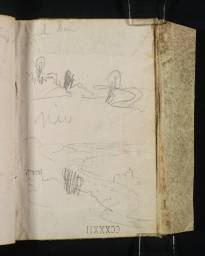 Joseph Mallord William TurnerCoast of Genoa SketchbookD41043
 -
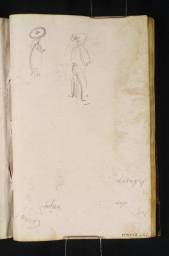 Joseph Mallord William TurnerCoast of Genoa SketchbookD21271
 -
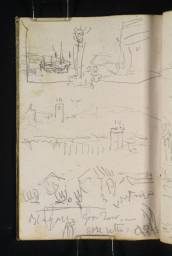
-
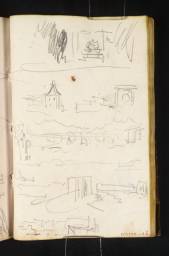 Joseph Mallord William TurnerCoast of Genoa SketchbookD21273
 -
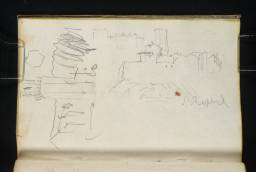 Joseph Mallord William TurnerCoast of Genoa SketchbookD21274
 -
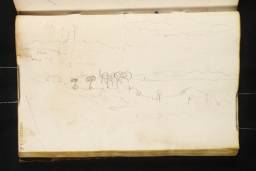 Joseph Mallord William TurnerCoast of Genoa SketchbookD21275
 -
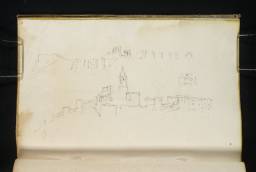 Joseph Mallord William TurnerCoast of Genoa SketchbookD21276
 -
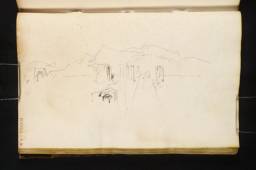
-
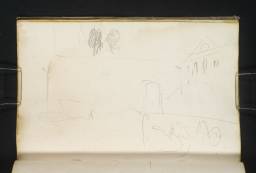 Joseph Mallord William TurnerCoast of Genoa SketchbookD21278
 -
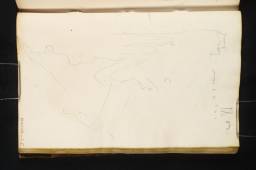 Joseph Mallord William TurnerCoast of Genoa SketchbookD21279
 -
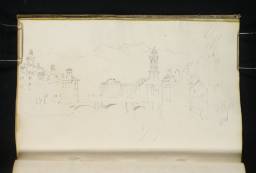 Joseph Mallord William TurnerCoast of Genoa SketchbookD21280
 -
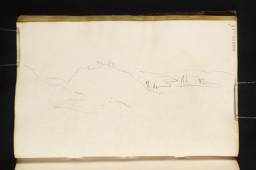 Joseph Mallord William TurnerCoast of Genoa SketchbookD21281
 -
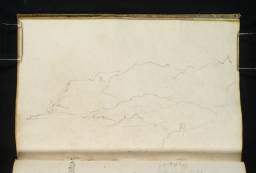 Joseph Mallord William TurnerCoast of Genoa SketchbookD21282
 -
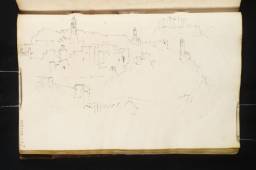 Joseph Mallord William TurnerCoast of Genoa SketchbookD21283
 -
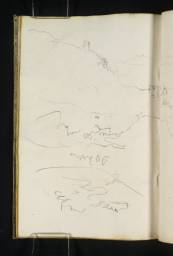 Joseph Mallord William TurnerCoast of Genoa SketchbookD21284
 -
 Joseph Mallord William TurnerCoast of Genoa SketchbookD21285
 -
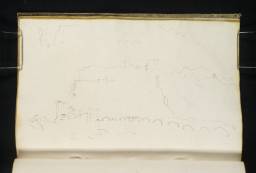
-
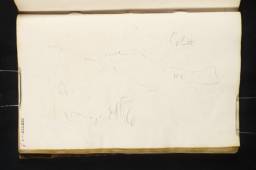 Joseph Mallord William TurnerCoast of Genoa SketchbookD21287
 -
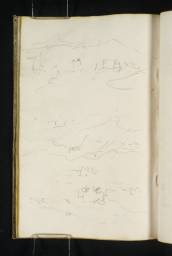 Joseph Mallord William TurnerCoast of Genoa SketchbookD21288
 -
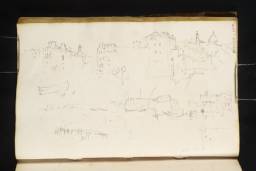
-
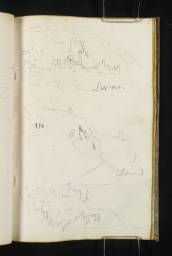 Joseph Mallord William TurnerCoast of Genoa SketchbookD21290
 -
 Joseph Mallord William TurnerCoast of Genoa SketchbookD21291
 -

-
-
-
-
-
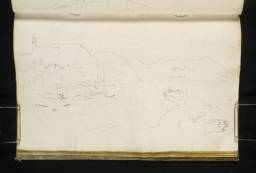 Joseph Mallord William TurnerCoast of Genoa SketchbookD21297
 -
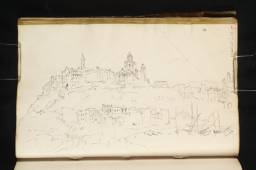
-
How to cite
Hayley Flynn, ‘Coast of Genoa Sketchbook 1838’, sketchbook, June 2025, in David Blayney Brown (ed.), J.M.W. Turner: Sketchbooks, Drawings and Watercolours, Tate Research Publication, July 2026, https://www