I prefer the men
That’s hysterical
Paris
Men are more useful because you get the entire contour of the body
if I cut here
I'm assuming I'm going to cut them up
Maybe I shouldn't make that assumption
I'm still at that point where I'm just enjoying them
It's a strange and paradoxical thing to have a book that you really enjoy looking at and then destroying it
But sacrifice is necessary
I think it's to do with the sacrificial
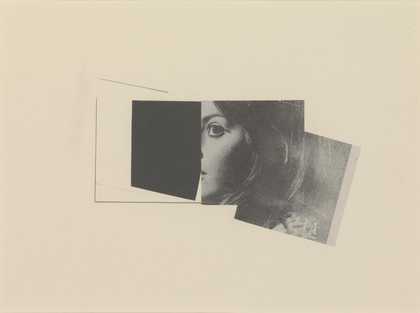
It's to do with violence that somehow if you violate an image, you cut it in some way and then you bring it into connection with another
You seem to be healing it, bringing it back into a recognisable image
But because of the discontinuities it doesn't heal and that seam, it's so central, the violence of that seam that we as the spectators have to overlook that and create our own connection between the two sides
But if you're not allowed to make that connection because it's already too well made then you're not participating in the creation of the image and the image becomes mine rather than yours
The moment you create that image you heal that wound
I often used to describe my images as kind of like orphans overlooked and ignored in life but taken care of by myself but only for destruction purposes
Like children's homes
I have a box of just fights
Fights are really good because obviously they're not really fighting, a punch is never thrown
So it's more a mime, a static mime
If I were to cut this, I would probably keep that hand in and the remainder would be a silhouette
And then I decide about this hand
I sometimes like having just hands
Yeah, there's a nice one
You see there is a category somewhere here of sleeping people
Clearly they're not asleep
They're posing with their eyes closed
No one looks quite that elegant when they're asleep
Or, maybe they do
I don't know
I want to show you where it all began
My very first film still which I didn't find, actually, it was found by my ex-wife
At that time, my girlfriend Rosetta Brooks and she gave it to me this way up, the wrong way up
Something in me decided that I shouldn't turn it the right way around
That moment of misrecognition
I wanted to somehow preserve where an image is somehow caught between two worlds, the world of the reflection and the world of the reality and that... I think everything I've done goes back to that single first image and the power that it exerted on me at the time
I believed that somehow the image for all its debasement within contemporary culture could also be a guide
In a strange way I thought the stereotypical, the stereotype image could in some ways reveal something archetypal or that it could be actually a spiritual guide of some sort to try and understand the world in a different perspective than one that simply tried to use it
But that, to me seemed to be the project and I invested wholeheartedly in that
It's just these tiny little elements, the relationship of a millimetre or two of the pupil and the extinction of the eye there and that tiny highlight on the top of the lips which suggests the overlap of the lipstick and there's something about those two things that really worked with this particular image
With the Blinds I felt as though I was closing down a world
It was an act of destruction
Whereas with the Loves I felt there was a form of redemption going on
And I'm always looking for redemption in the end
I think all my work is about trying to redeem images
I mean these images are the kind of stereotypical litter, the aftermath of communication and I'm trying to reinvest them with life
Certainly lockdown was very much connected with absence
I suppose that period was also the period in which I was beginning to reread fairy tales and I became very interested in particularly The Extraordinary Tale of Peter Schlemihl
In the story a grey man proposes to the impoverished Peter if he could have his shadow he would give him worldly wealth and so he gets worldly wealth and loses his shadow
But in a strange way this disembodiment becomes something he can't take it's as though he becomes almost transparent, unseen
So then he goes in pursuit of the man to try and recover his shadow
Incidentally I kind of identified not with Peter in the story
I identified with the grey man because I think I'm a collector of shadows in many ways, seeking embodiment
But anyway, Peter does regain his shadow but somehow in the process (I can't actually remember the narrative details) he gains two shadows and that's where I got the idea of calling this Double Shadows series
Yes, this is a room I don't go into too often
We call it the the cabinet of horrors
It’s a collection of objects which have a slightly more obvious relationship with the uncanny
Around here where the studio is located in St Leonard's is an absolute treasure trove of such objects
And one of the ones I found was a death mask and barely ever do
I come in here and barely ever do I see this dear lady here or the absence of this dear lady
But it is such a compelling thing
It seems as though all the first images of the human face were essentially facial reconstructions incorporating the skull and that somehow the dawn of the age of the image coincided with burial rituals
Hans Belting sees this as the origins of portraiture
The origins of the representation of the face which has led all the way through to the mass media world in which we look at faces every day on our iPad, on TV etc
And I find it in ancient objects
I go to ethnological museums and I can see it
I can see the strangeness of early images and it's their presence
It's like a ghost inhabiting the culture that we live in
There is an ultimate mystery that we are no longer aware of, the image we've taken for granted so much of the presence in our life that we no longer see it?
I want to make that visible in some way
And when I say make this
I want to make that strangeness visible to break through the seal of indifference that comes with familiarity, you might say
Yeah I spent so much of my life secluding images like this from the temporality of cinema from their disappearance in succession to make them somehow appear and be for conscious vision
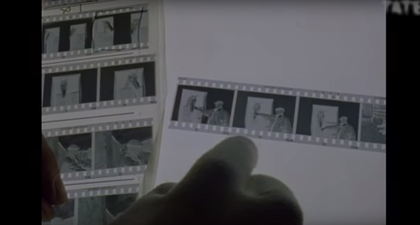
And, I decided that it would be really interesting to take a multiplicity of images and see what happens if I cinematise them
In other words project them at 24 frames a second
I came across this book
It’s The Stallion annual for 1990 and immediately I did that I saw the possibility of making a film
This was number one, Horse
A sort of homage to [Eadweard] Muybridge in some way
And of course there is a central still object so then it occurred to me what would happen if I took a multiplicity of just random film stills my collection just take a stack off the shelf, and and just put those into 24 frames a second and that was Blind
My second film which is in a way the real breakthrough film for me
It's kind of like a cinematic Rorschach
The disorder here is it's just incredible
I digress almost as quickly as as I pursue the search
I do like women holding guns
It's an interesting phallic symbol
Obviously That's probably one of the most extreme dislocations of scale between the eyes and the face
But I think it's magical, the eyes of sacred figures are not there to be seen by the worshipper but they're there to be present in order for the worshipper to be seen by them and that for some reason, seemed to me very important
And once again I try to find a point of alignment between the eyes of the viewer, the comedian in this case and in this case, the eyes of the Virgin Mary
What interests me about the comic series and the successive portrait series is this intermingling of the sacred gaze with the profane
I felt as though I was focusing more and more on this tiny two millimetre aperture of looking out, looking in and that dialogue
We're desperate to be able to see another world and it's only by understanding our separateness of the other that we can find a more profound form of union in my belief
It sort of ticks all the boxes, really
I like piano players for some reason
I like... I have a collection of people who are blind or blindfolded but this is I think, the first in which there's just a single eye patch like that
But it's strange the way this white centre or this grey centre which merges with, almost disappears surrounded by seeming frenzied violin playing, a weird sense of stillness and movement simultaneously which makes the image really ambiguous
I see my work as a sort of liberation of the image as image from communications essentially from language
The image is always chained to a narrative to meaning to language
And it's never free to be itself
So we're always looking, we use the image as a sort of transparent conduit which we believe is allowing us to see the reality of the world
But it's not
It's a world of shadows, of illusions of phantoms
And I'm trying to restore these supposed realities to their genuine status as these mysteries
All my work is about trying to redeem images... to break through the seal of indifference that comes with familiarity. I am making that strangeness visible.
From his studio on the south coast of England, artist John Stezaker sets out to transform how we see the image. By cutting and combining stills of Hollywood pin-ups, scenic postcards and other photographs drawn from his extensive archive, he destroys images to set them free.