
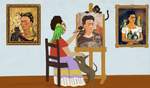

Frida Kahlo
Meet the artist who explored identity, culture and personal experiences through colourful and imaginative paintings
Frida Kahlo was born in 1907, in a blue house in Mexico City, the capital of Mexico.
Her dad was a German photographer who loved to paint. He taught Frida how to use a camera, develop photos and colour them. They would also go to the park together, where her dad painted while Frida collected plants, bugs and stones.
Frida’s mum was of native Mexican heritage. She taught Frida and her sisters about their culture and traditions through sewing, cooking and going to church.
When Frida was six years old, she became sick with a virus called polio. She spent nine months in bed recovering. Although she got better, her right leg became shorter and thinner than her left one. Her classmates at school teased her about it. She tried to hide her legs by wearing long skirts, but she still felt different and alone.
To cope, she dreamed up an imaginary friend, a little girl her age, who she could tell all her secrets and feelings to.
Frida’s dad encouraged her to play sports to make her right leg stronger. She rode her bike climbed trees and even tried boxing and wrestling!
It was rare for girls in those days to be so sporty, but Frida continued to do things that most girls at the time didn’t do.
When she was a teenager, she got into one of the best schools in Mexico. She was one of only thirty-five girls among two thousand boys!
She found a group of best friends and she dreamed of becoming a doctor. The future looked bright.
Then suddenly – something terrible happened.
Eighteen-year-old Frida was sitting on a bus after school. It was going very fast. There was a streetcar. And a huge crash.
Her spine was fractured in three places. Her collarbone, leg, foot, pelvis and two ribs were all broken.
The doctors didn’t know if she’d survive, but she did. She lay in bed with a plaster cast to keep her still.
Frida’s mum attached a special easel to her bed so she could make pictures with her dad’s paintbox.
In one of her first paintings, she showed herself in a beautiful velvet dress, looking healthy and healed from her accident.
It was the first of many paintings she drew of herself. She would later say she painted so many self-portraits “because I am so often alone, because I am the person I know best”.
Frida would be in pain for the rest of her life because of the crash. She had over 30 operations and was often shut away from the world to recover. But painting was her one constant friend through thick and thin. “I am not sick, I am broken,” she said of her injuries. “But I am happy to be alive as long as I can paint.”
And she went on to live life to the fullest. Instead of becoming a doctor, she became an artist. Ever proud of being Mexican, she loved to wear traditional dresses and bold jewellery, with colourful flowers and ribbons in her hair. She travelled to lots of places around Mexico, the United States and even Europe.
She fell in love many times and had her heart broken many times too.
Whether she was happy or hurting, Frida captured it all in her art. She painted herself with her beloved pets, which included monkeys, dogs and parrots. She also painted herself pierced by thorns around her neck, but standing strong and undefeated.
When she felt like there were different sides to her personality fighting each other, she painted them as two Fridas holding hands to make peace.
When she couldn’t stop thinking about someone, she painted them on her head!
Anyone looking at her paintings could see her hopes, fears and dreams. And they were very moved by what they saw.
Today, Frida still inspires people, including other artists, with the way she dressed and how she painted. The blue house where she was born is now a museum. Visitors come from all over the world, fascinated by her art, her story and her spirit.
“In spite of my illness, I feel immense joy in living,” Frida wrote in her diary when she was very sick. Right to the end, she channelled her feelings into her art. Her last painting is called “Long Live Life”.
If you drew a picture of yourself, like Frida did, what would you like to show the world about you?
about the video
Encourage your students to respond to the film in their own ways – perhaps by making notes, doodles or drawings, or through gestures and sounds.
Find out about Frida Kahlo and how she used art to tell stories about her life, feelings and identity through this colourful animation.
"I paint myself because I am the person I know best."
Frida Kahlo
Frida Kahlo was born in Coyoacán, Mexico, in 1907. As a child, she loved learning, sport and exploring the world around her. After a serious accident when she was eighteen, she began painting while recovering at home. Painting became a constant friend throughout her life.
Kahlo is best known for her self-portraits, which explore her identity, experiences, hopes and fears. She was proud of her Mexican culture and celebrated it through her art and the traditional clothes she wore. Whether she was feeling joyful or hurting, Frida captured it all in her paintings, inspiring people around the world to express themselves and celebrate what makes them unique.
Discuss
Your students' ideas and experiences are the best starting point for any discussion. Using the prompts below, support meaningful and creative discussions in the classroom about the video’s key themes. Discover how Frida Kahlo’s practice can inspire your students to learn with art.
Identity and Self-Portraits
Frida Kahlo painted many self-portraits. She said, ‘I paint myself because I am the person I know best.’ Through her paintings, Frida explored different sides of her personality, along with her hopes, fears and dreams. Her self-portraits tell stories about who she was and how she felt.
Prompts
- Why might an artist want to show different sides of their personality?
- In the film, Frida painted herself with monkeys, dogs and parrots. How do colours, objects or animals help tell a story about someone?
- If you drew a picture of yourself like Frida did, what would you like to show the world about you? What would you include alongside you?
Turning Feelings and Experiences into art
After a serious accident, painting became a constant friend throughout Frida's life and a way for her to examine her feelings. She used art to share moments of happiness, pain, hope and joy. Frida did not hide her feelings. Instead, she transformed them into powerful paintings. She once said, ‘I am not sick. I am broken. But I am happy to be alive as long as I can paint.’
Frida's paintings show how art can help us express feelings and tell stories that are difficult to put into words.
Prompts
- How can making art help people express their feelings?
- Have you ever used drawing, writing or music to process, communicate, or share how you feel?
- Why do you think Frida chose to paint both happy and difficult experiences?
- Can challenges sometimes inspire creativity?
Celebrating culture and belonging
Frida was proud of being Mexican and celebrated her culture through her paintings and the clothes she wore. Her art combined personal stories with ideas about culture, history and belonging. Through her work, Frida showed that our family backgrounds, traditions and experiences help shape who we are. Today, Frida continues to inspire people around the world to celebrate what makes them unique.
- How can clothing, colours and objects express identity? For example, do you have a specific outfit that makes you feel like 'you'?
- What people, places or traditions are important to you?
- How can art help people learn about different cultures?
- What makes you feel a sense of belonging?
- Why do you think Frida's life and artwork continue to inspire people today?
How to Use Artist Stories
Introduce art and artists into your classroom with Artist Stories resources. The resources combine engaging videos and thoughtful discussion points to encourage confidence, self-expression and critical thinking. Art is a powerful tool for discussing the big ideas that impact young people's lives today.
- Explore the video:
- Read About the video to introduce the artist to your students.
- Project the video or watch it in smaller groups.
- Each video is between 3–10 minutes.
- Transcripts are included where available
2. Discuss the video:
- Select discussion prompts from the lists to frame your conversation.
- Use a mix of individual reflection, pair work and group discussion.
- Use one set of prompts to explore a theme in depth or shape your discussion across different themes.
- Discussion prompts can also be used in a Q&A format.


