

Paul Pfeiffer, Morning After the Deluge 2003. Tate. © Paul Pfeiffer.
Two artists, born nearly two centuries apart, question our view of the natural world in a time of technological change
This display unites Paul Pfeiffer’s video installation Morning After the Deluge with the painting by JMW Turner that inspired it. This is the first time the artworks have been presented together. The painting, Light and Colour (Goethe’s Theory) - the Morning after the Deluge hangs outside this room alongside its partner work, Shade and Darkness - The Evening of the Deluge.
Pfeiffer first encountered the painting by Turner when reading Jonathan Crary’s 1992 book Techniques of the Observer: On Vision and Modernity in the Nineteenth Century. Crary describes the painting as an ‘impossible image’ because Turner presents a view of the sun that cannot be seen by the naked eye without being blinded by its brightness. Instead, a device called a camera obscura enabled 18th-century scientists and artists to make observations of the sun without having to look directly at it.
Pfeiffer’s installation appears, at first, to be footage of a sunset in real-time. However, the artist has used digital technology to challenge our human-centred view of the sun moving through the sky towards a stable horizon. To make the video, Pfeiffer combined two video clips he shot in Cape Cod, Massachusetts – one a sunset over the Atlantic Ocean and the other a sunrise on Cape Cod Bay. He then created a split-screen image of the sun simultaneously rising and setting on a double-sided horizon. As the sun slowly disappears into the ocean on one side, it rises out of the water on the other. In this new arrangement, the usual figure-ground relationship is upended: the sun becomes a fixed point at the centre of the image while the horizon line becomes unfixed, slowly wandering across the frame from top to bottom.
Pfeiffer says of his artwork, ‘It has a very dramatic composition, but it pulls the ground out from under the viewer, creating an optical space for him or her to stand in.’Turner and Pfeiffer both question the position of the viewer, literally and metaphorically. Both artists find different ways to evoke the romantic concept of the ‘sublime’. This concept became popular in 18th-century Europe to describe a complex mix of fear and exhilaration at anything that reminded humankind of its own fragility. It has been applied to the power of nature – to vast mountain ranges and storms – but also to new technology, and the power of man-made machines.
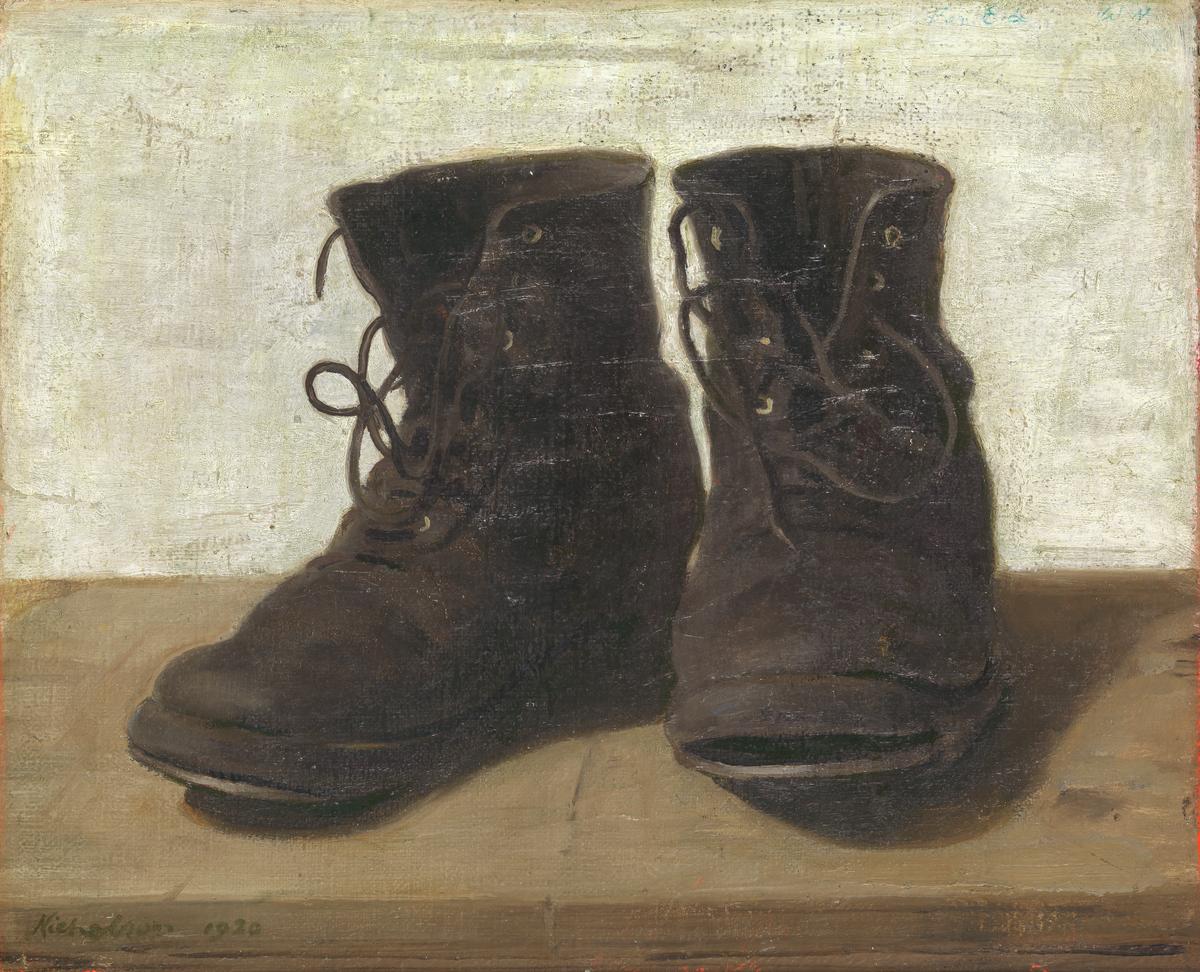
Sir William Nicholson, Miss Jekyll’s Gardening Boots 1920
Gertrude Jekyll was a well known garden designer, who often worked in collaboration with the architect Edwin Lutyens. In 1920 she was seventy-six, and quite difficult. It is said that Nicholson painted this picture of her boots while he was waiting the opportunity of a sitting, as she would only allow this in the late afternoon. However, Nicholson enjoyed finding the revelation of character in clothing. He had painted other pictures of shoes, and of a hat.
The painting is dedicated 'For E.L.', and was a gift to Lutyens. Nicholson's portrait of Miss Jekyll is at the National Portrait Gallery.
Gallery label, September 2004
1/18
artworks in Morning after the Deluge
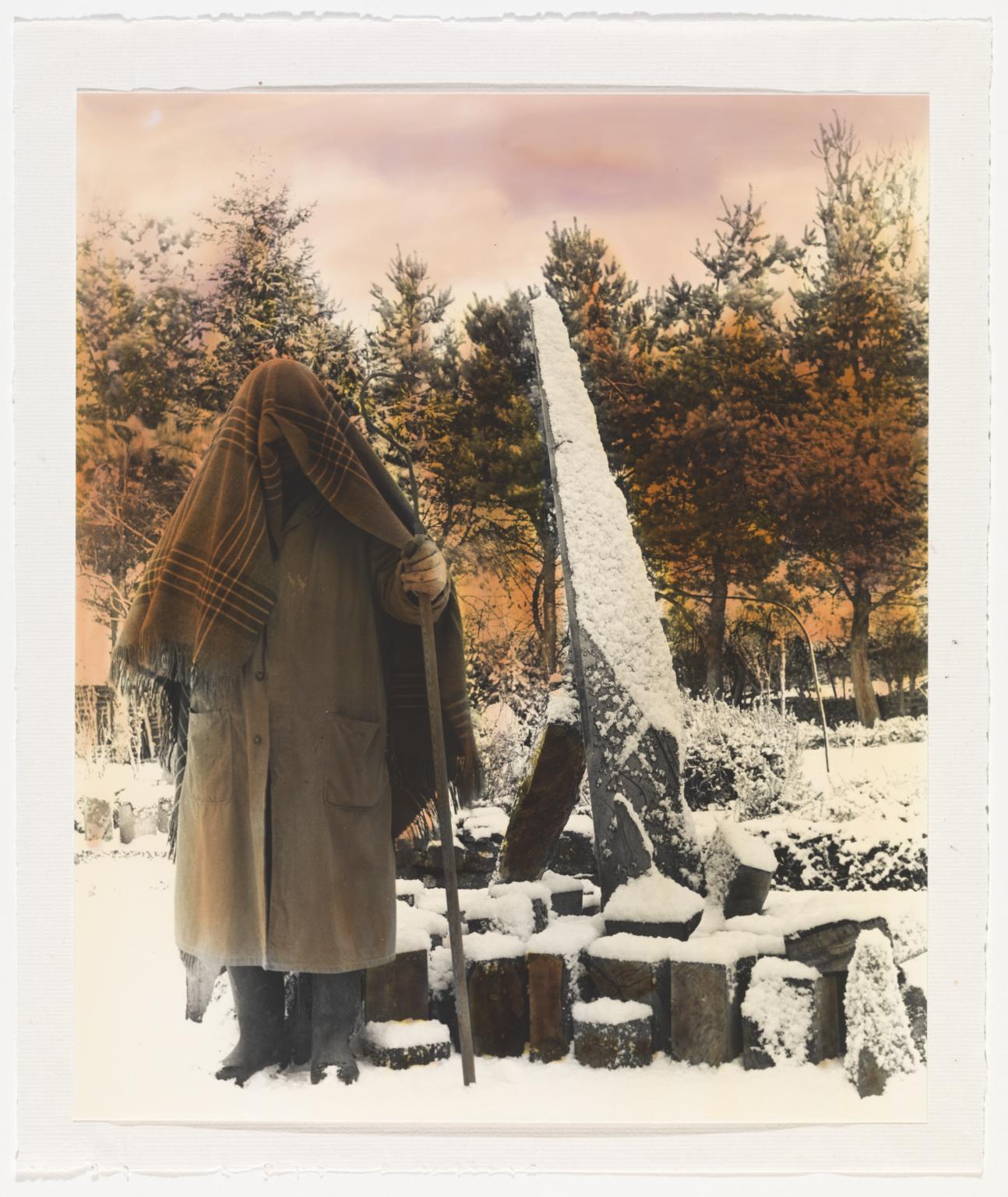
Li Yuan-chia, [no title] 1993
2/18
artworks in Morning after the Deluge
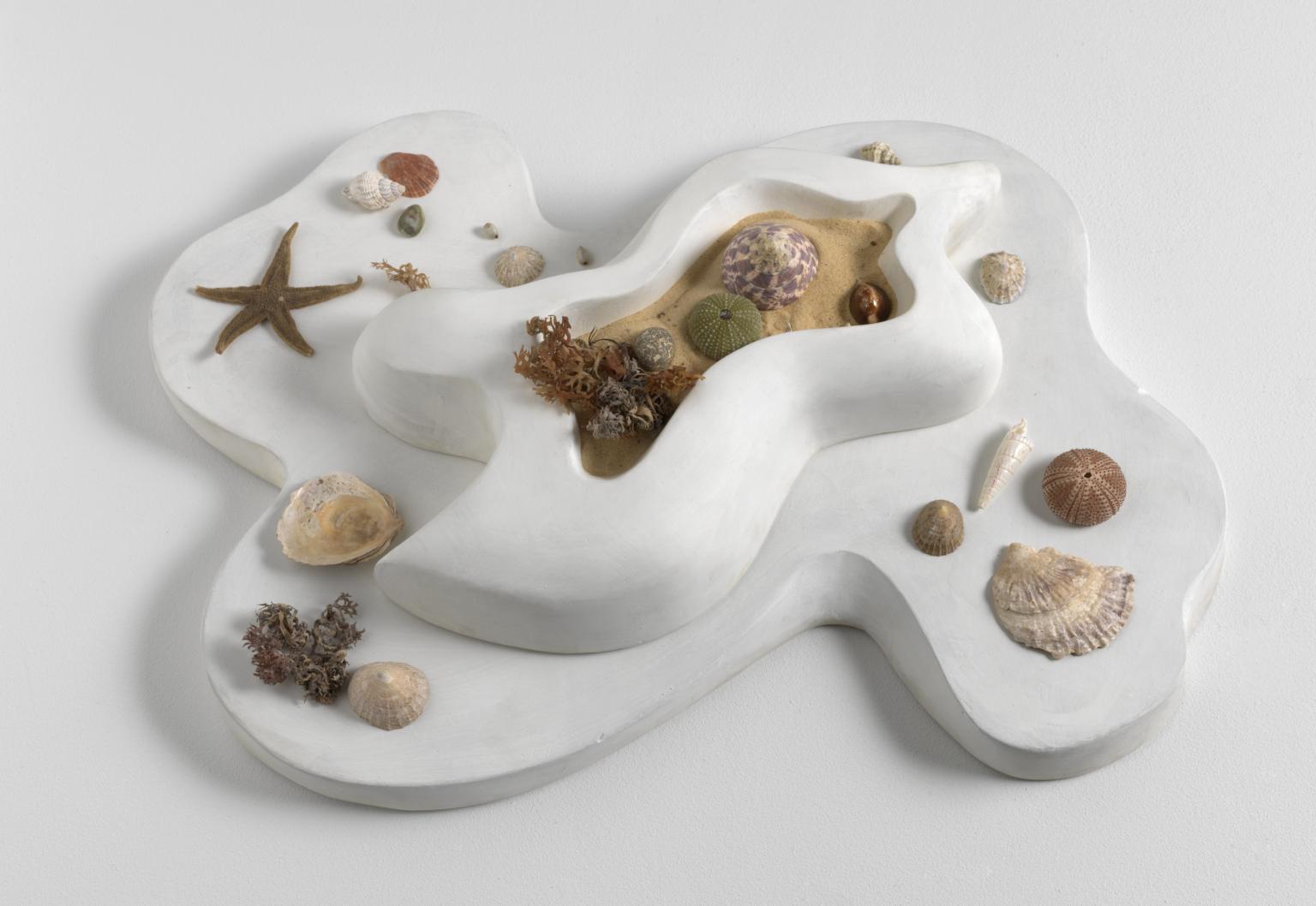
Paule Vézelay, Garden 1935
Garden 1935 is one of a small group of sculptures in plaster that Vézelay made in 1935 using simple organic forms and incorporating natural objects. The forms of these sculptures were similar to those that she had used in her paintings of the 1930s such as White Shapes in Movement 1930 (Tate L03890), extending these investigations of the relationship of form to space into three dimensions. Garden is constructed from two white biomorphic plaster shapes placed on top of each other, the lower shape closely recalling the central white form in White Shapes in Movement. The upper form in Garden is hollowed out and is shown in contemporary photographs installed in different ways, the central hollow containing sand, plants or seashells, and the lower form either bare or with shells, starfish and pebbles arranged on top of it. This flexibility in the natural objects that might be incorporated into the installation of the sculpture is reflected in the title Jardinière under which it was first exhibited at Galerie Jeanne Bucher in Paris in 1937, a ‘jardinière’ being an ornamental container in which to display plants. In a list of works compiled by Vézelay, the artist also described it as Table ‘garden’ with sand suggesting its informality in the context of a domestic environment.
3/18
artworks in Morning after the Deluge
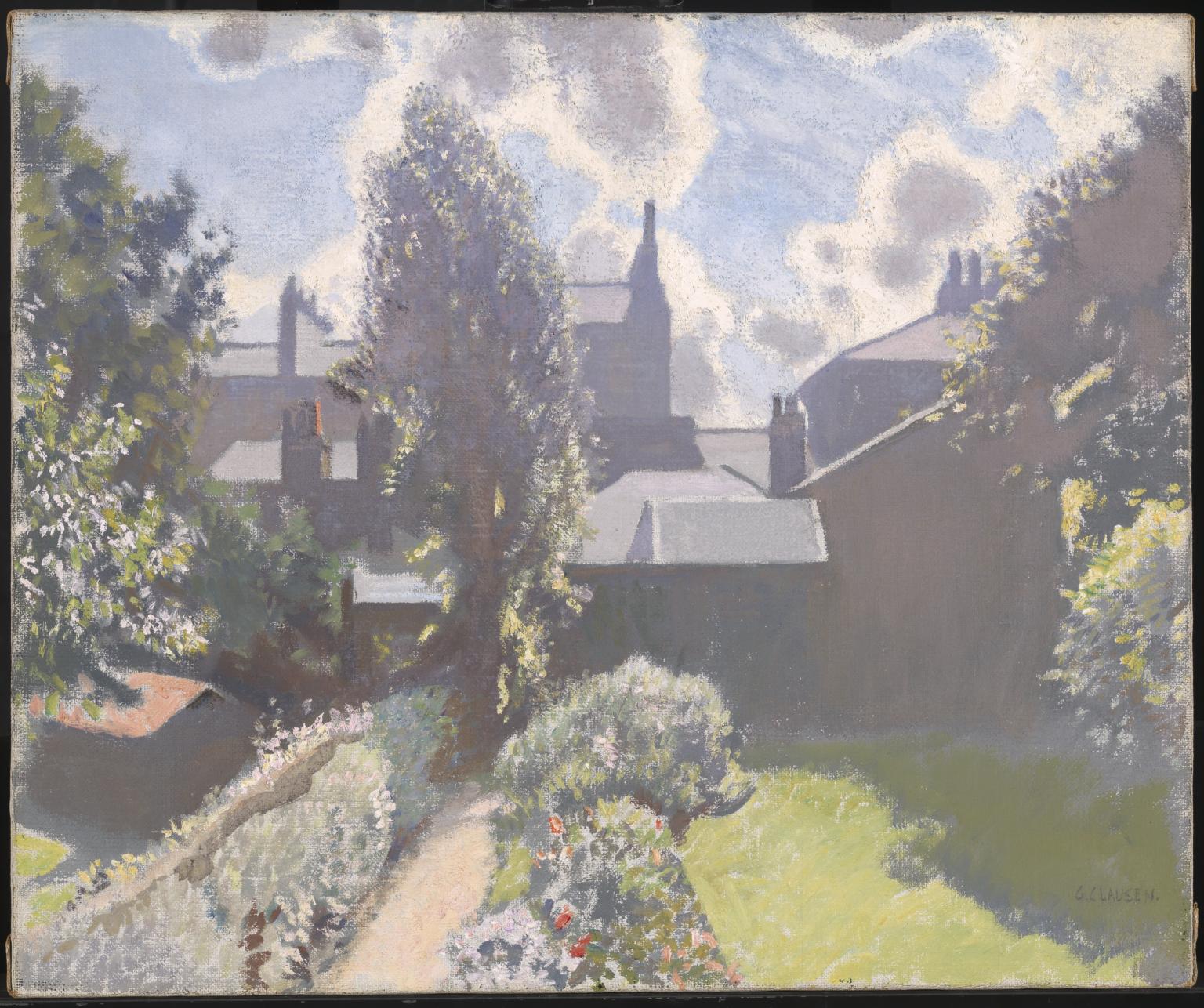
Sir George Clausen, My Back Garden exhibited 1940
4/18
artworks in Morning after the Deluge
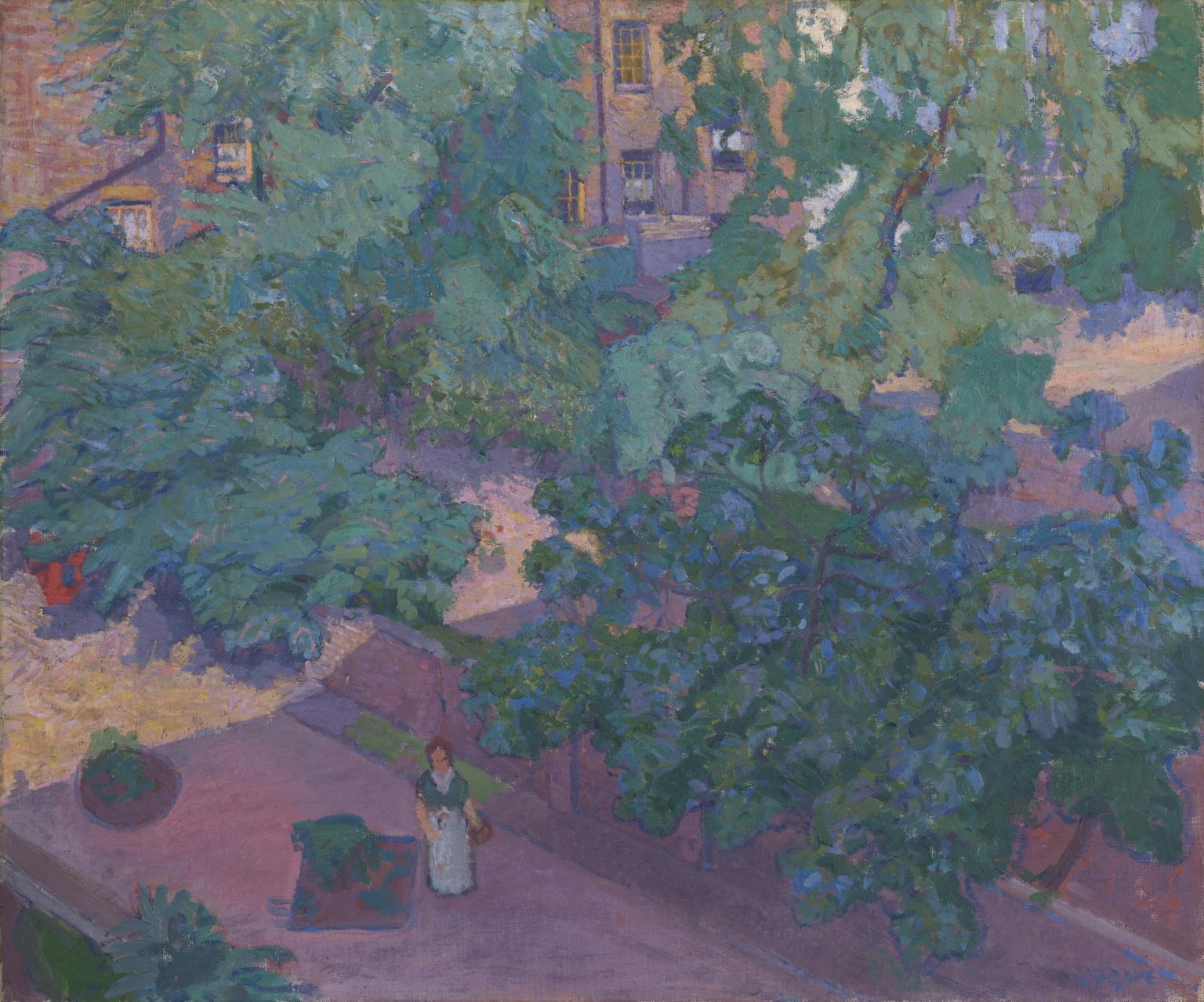
Spencer Gore, The Fig Tree c.1912
Spencer Gore was drawn to scenes of everyday life in London. Here he shows the fig tree which grew in the garden next to his upstairs flat at Houghton Place, just off Mornington Crescent.
Gore often painted the view through the windows of houses where he lived. He produced a sequence of views of this tree in different seasons, perhaps inspired by Claude Monet’s series of paintings of haystacks, or Rouen Cathedral, under different lighting conditions.
Gallery label, September 2004
5/18
artworks in Morning after the Deluge
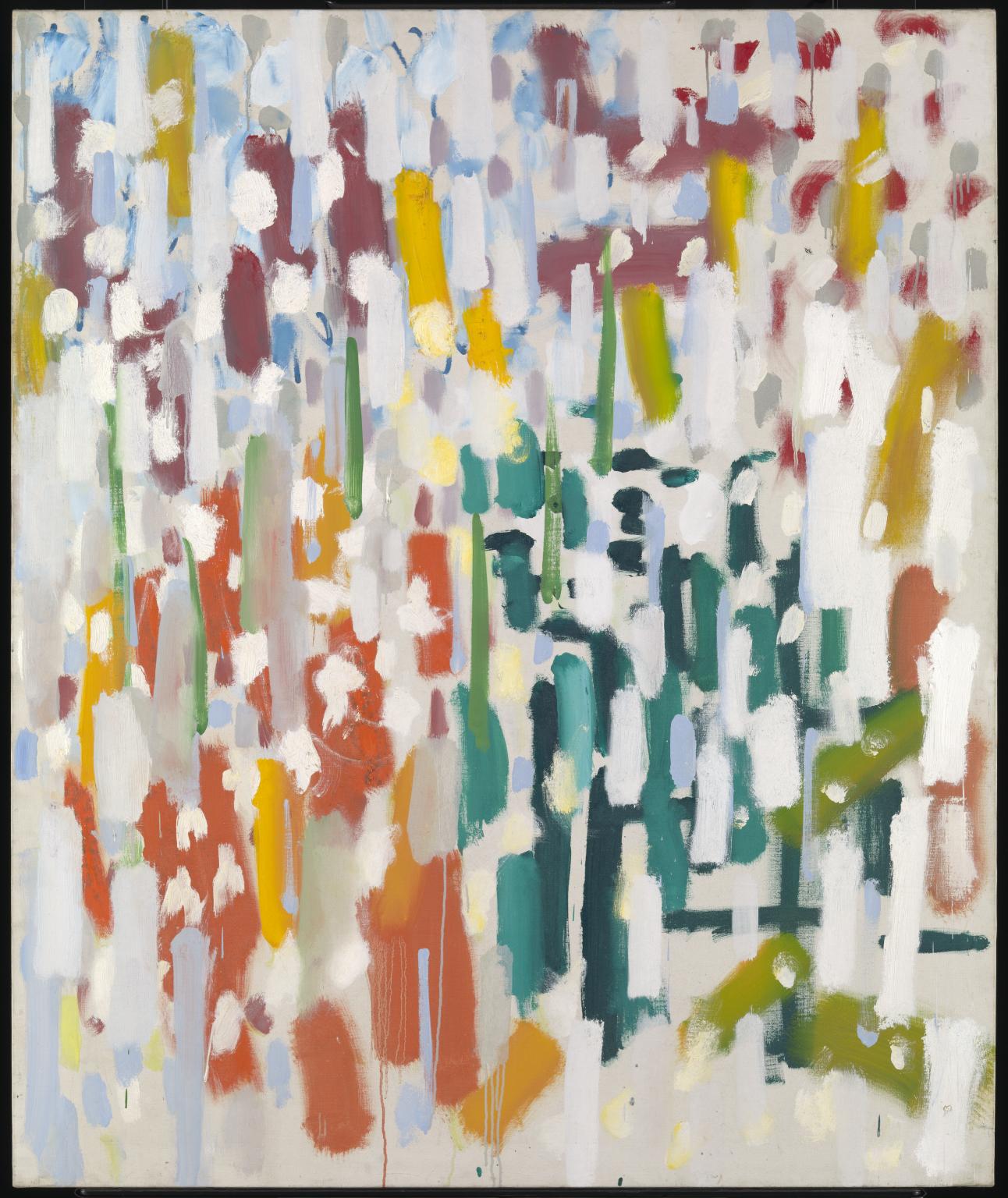
Patrick Heron, Azalea Garden : May 1956 1956
Heron first made his name as a critic but by 1956 was well established as a painter. Inspired by his Cornish garden, Heron painted this picture during a period when he saw himself moving from representational art to abstraction. He recalled: ‘I referred to the series as garden paintings, since they certainly related in my mind to the extraordinary effervescence of flowering azaleas and camellias which was erupting all over the garden’. Though he regarded the formal qualities of a painting as paramount, he also believed in the importance of subject matter.
Gallery label, September 2016
6/18
artworks in Morning after the Deluge
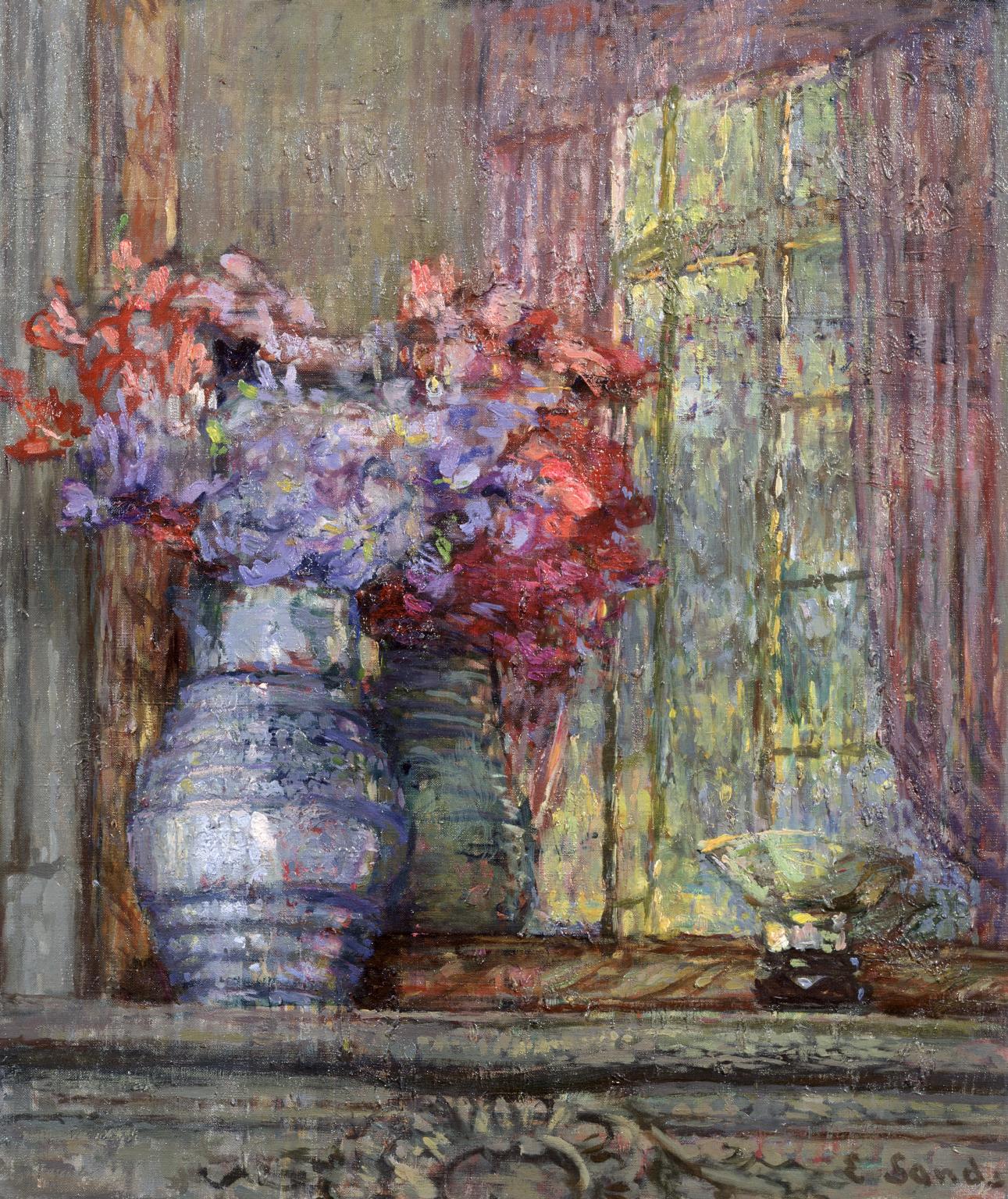
Ethel Sands, Flowers in a Jug ?1920s
Ethel Sands was born in America, but grew up in Britain. She was wealthy, and owned houses in Chelsea, at Newington near Oxford and at Auppegard in Normandy, where Flowers in a Jug was probably painted. She was encouraged by the painter Walter Sickert (1860-1942), whom she had met first in 1906 when he expressed admiration for a picture she had sent to the Salon d'Automne in Paris and who had pursued her acquaintance. The following year Sickert invited her to join his newly-created Fitzroy Street Group which sought to promote a form of Impressionist naturalism in Britain. In the years 1906 to 1914 Sands was an important literary and artistic patron, and her house was one of the social centres of modern art in London. Sands's own painting was of a mild Anglo-French type comparable with that of her friend Jacques-Emile Blanche (1861-1942), although the late Impressionist control of colour Flowers in a Jug is comparable too with the pictures of Edouard Vuillard (1868-1940). The mantelpiece still life arrangement, and the visual conceit of the reflected image within the painting, are reminiscent of a small number of pictures by Sickert and some members of the Camden Town Group, such as Spencer Gore (1878-1914) with which Sands is likely to have been familiar. Further reading:Wendy Baron, Miss Ethel Sands and her Circle, London, 1977 Robert UpstoneFebruary 2002
7/18
artworks in Morning after the Deluge
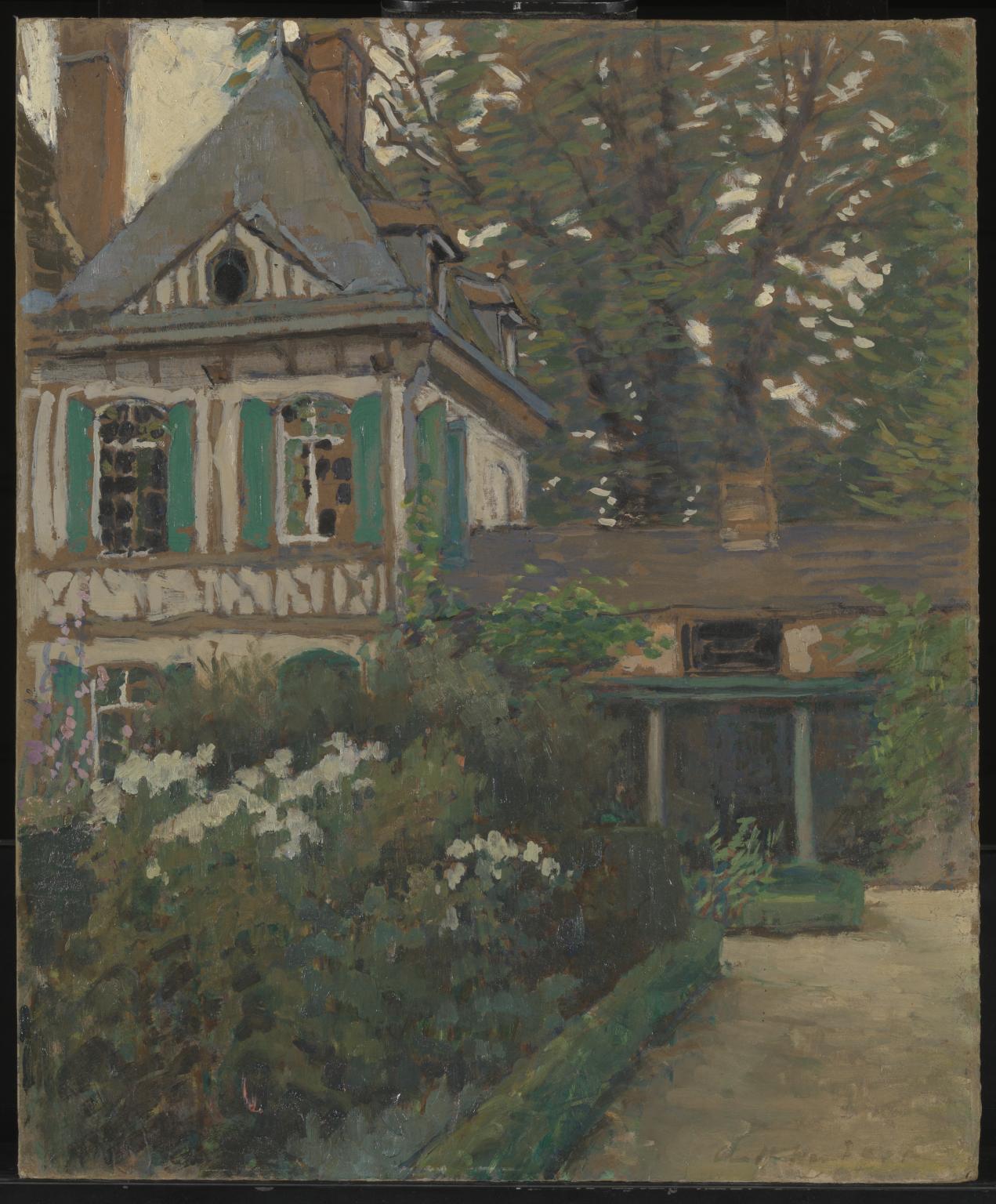
Anna Hope Hudson, Chateau d’Auppegard After 1927
8/18
artworks in Morning after the Deluge
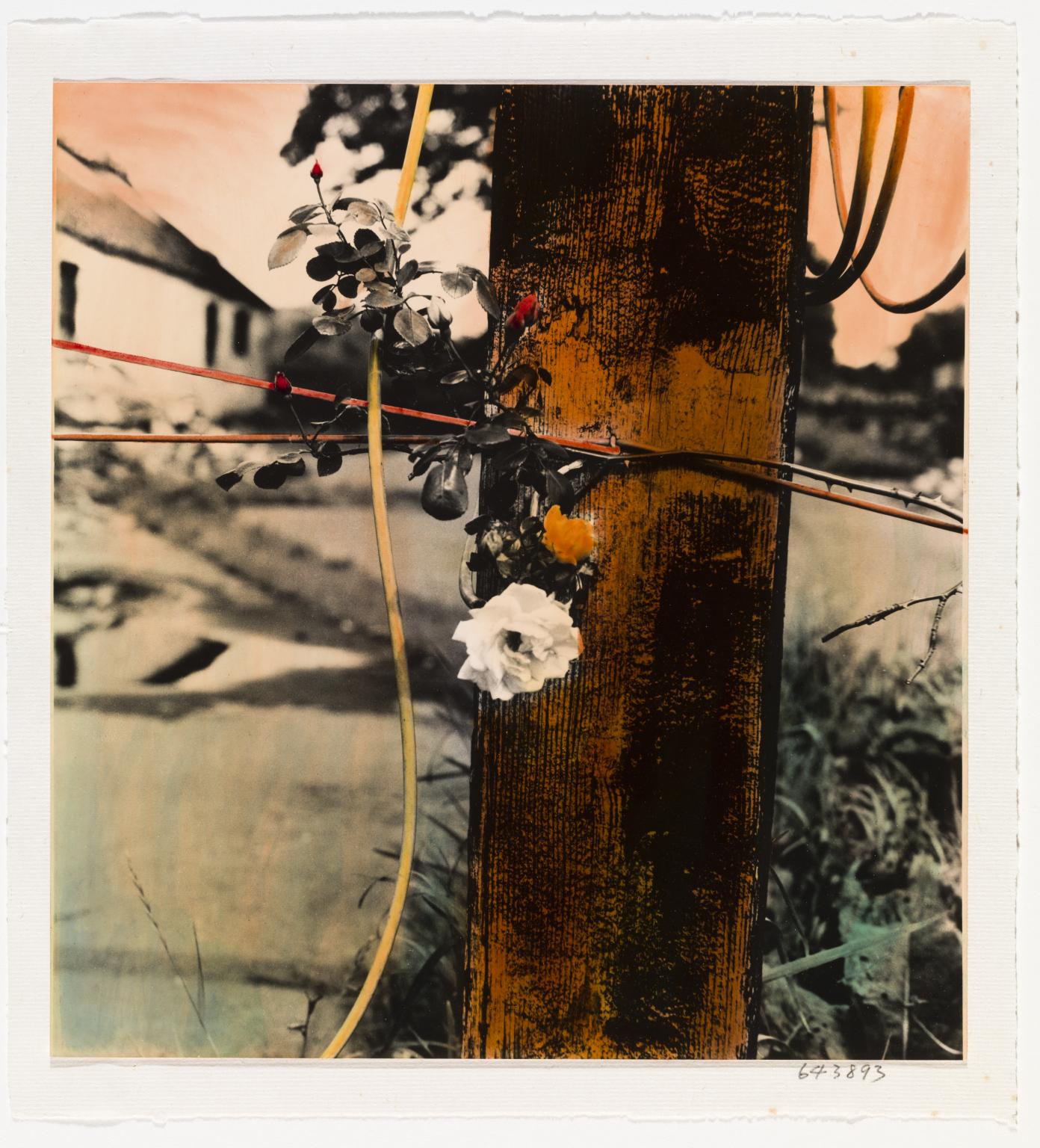
Li Yuan-chia, Untitled 1993
9/18
artworks in Morning after the Deluge
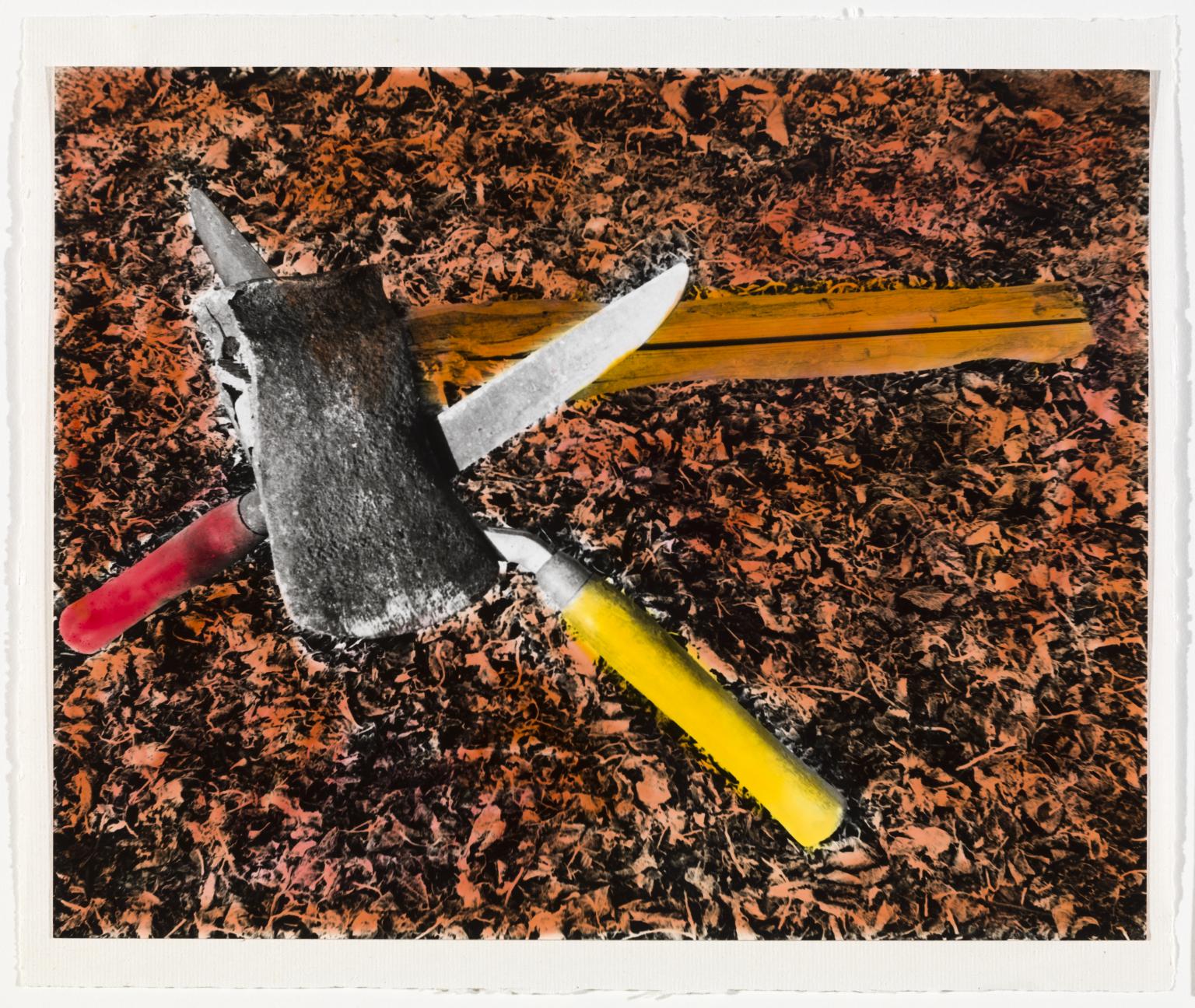
Li Yuan-chia, Untitled 1993
10/18
artworks in Morning after the Deluge
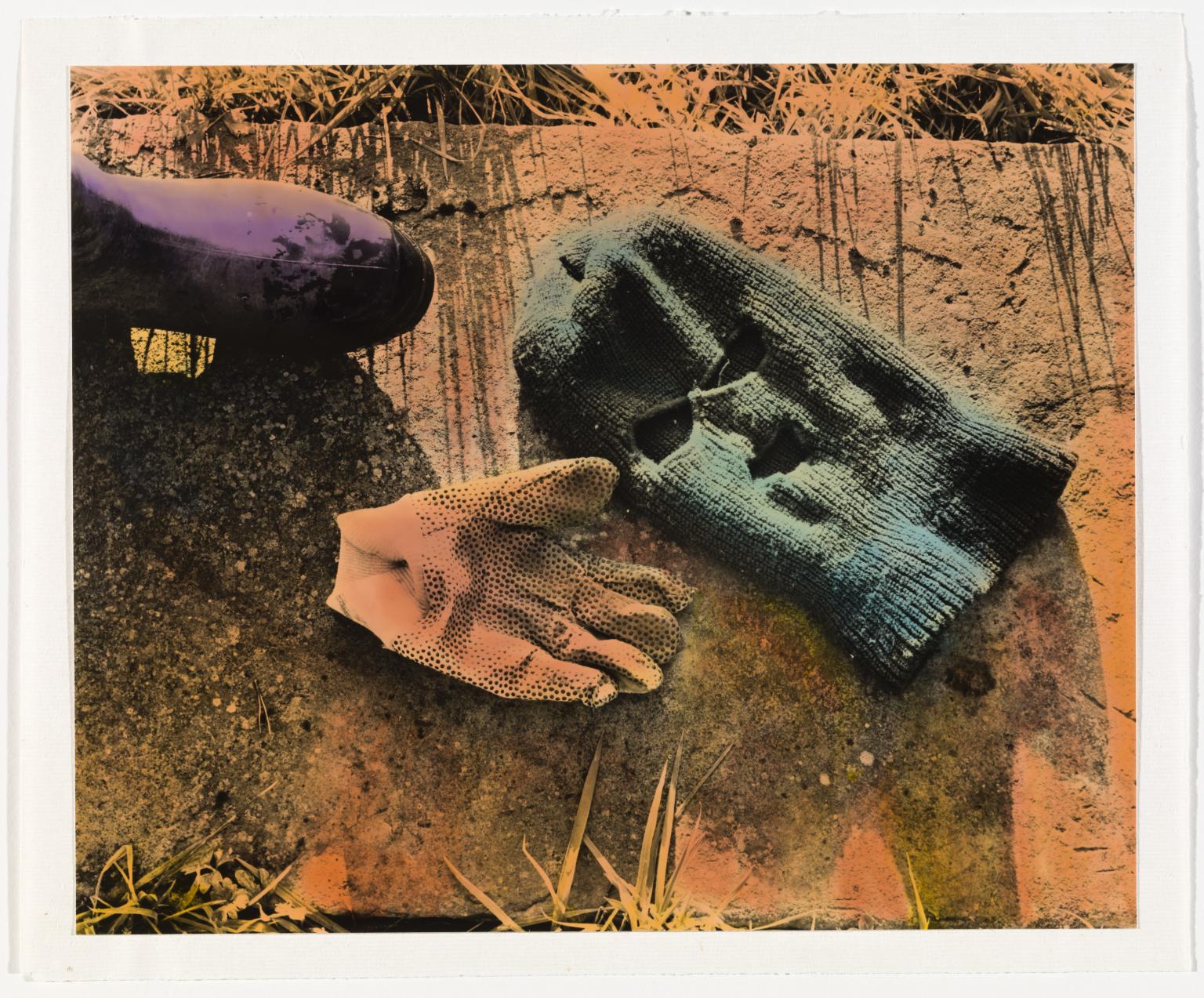
Li Yuan-chia, No Title 1993
11/18
artworks in Morning after the Deluge
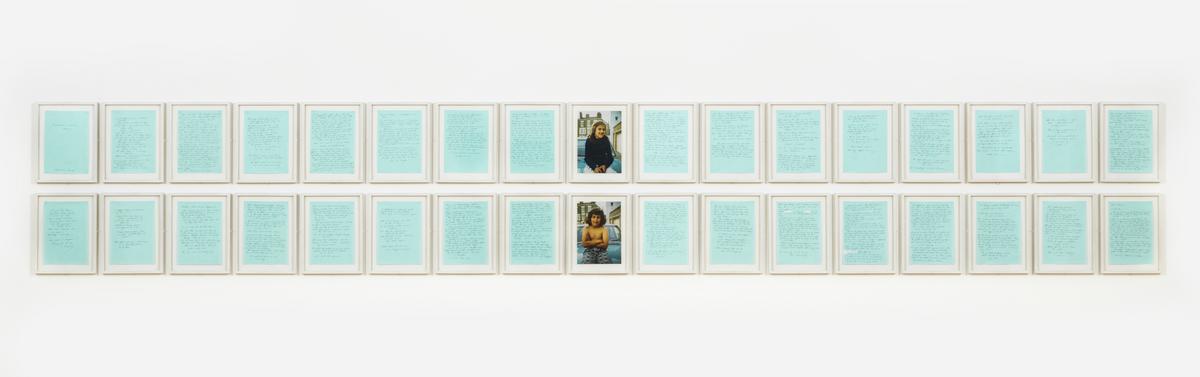
Tracey Emin, Exploration of the Soul 1994
This work comprises framed sheets of blue A4 notepaper on which Emin has written a poetic text recounting significant moments in her life up until the age of thirteen. It begins with a celebration of the endless cycle of life represented by nature (the sea, the stars, the sun, the earth’s rotation) and human love-making, as an introduction to the passionate encounter in which the artist imagines her and her twin brother Paul’s conception. The following page describes birth, laying the ground for future depression: ‘The moment of my birth into/ this world I somehow felt a mistake/ had been made – I couldn’t scream or/ cry or even argue my case – I/ just lay there motionless just wishing/ I could just go back – Back to where/ I had came [sic]’. The tension arising from the coupling of beauty and pleasure with pain continues throughout the text as Emin describes the twins’ uncanny closeness and their frustration at being too special and too spoilt. She recounts their adventures growing up at the ‘giant’ Hotel International, where they had moved at the age of six as a result of her parents’ unorthodox relationship: a love affair between an English woman and a Turkish Cypriot property-developer, both married to other people. The pregnancy resulting in Emin and her brother was an accident and was nearly aborted. In Emin’s text, the end of the Hotel International idyll and her parents’ relationship leads to sexual experimentation between the children and disturbing attentions from her mother’s new lover, heralding the beginnings of anxiety and despair. As they grow up, the twins gradually grow apart, the separation an inevitable source of pain. Ridicule and rejection from other children, sexual exploitation by a ‘big brown hairy man’ and the loss of her front teeth after being head butted by Paul precede the traumatic culminating event of the text. The artist’s rape at the age of thirteen had a devastating emotional effect: ‘for me my childhood was over – I had/ become conscious of my own physicality – Aware/ of my single presence – I had become open/ to the ugly truths of this world –/ And at the age of thirteen I realized there was a/ danger in beauty and innocents [sic] – I could not/ have both –/ This would be something I would/ battle with for the rest of/ my life.’
12/18
artworks in Morning after the Deluge
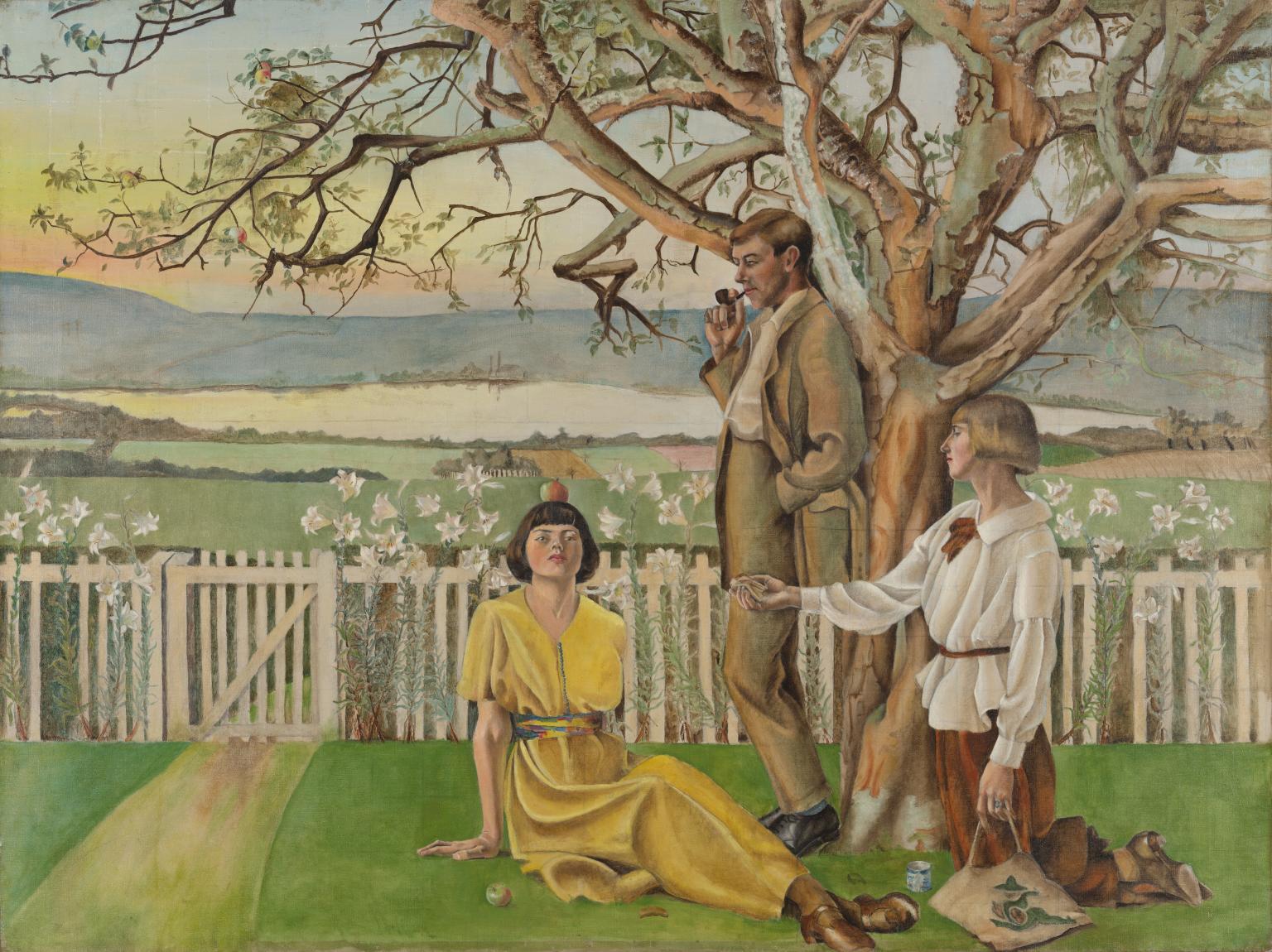
Christine Kühlenthal, The Picnic 1913
13/18
artworks in Morning after the Deluge
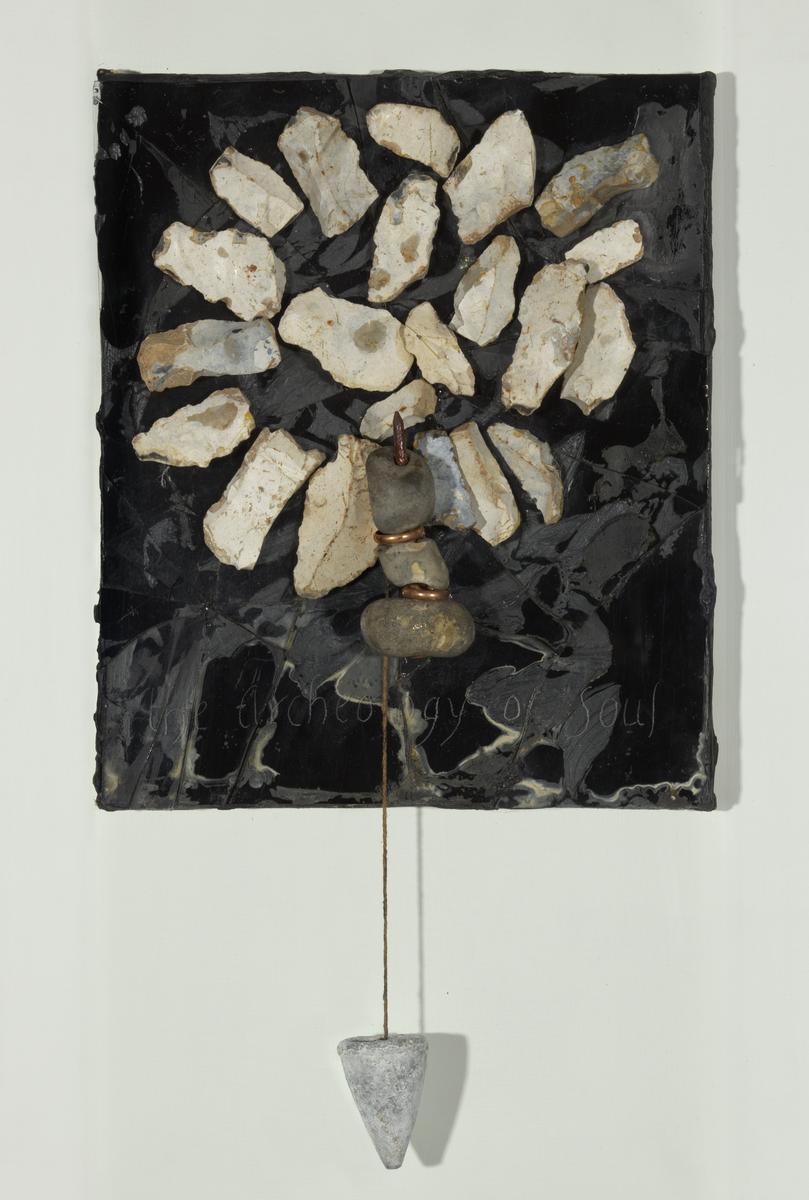
Derek Jarman, Prospect - Archaeology of Soul 1987
14/18
artworks in Morning after the Deluge
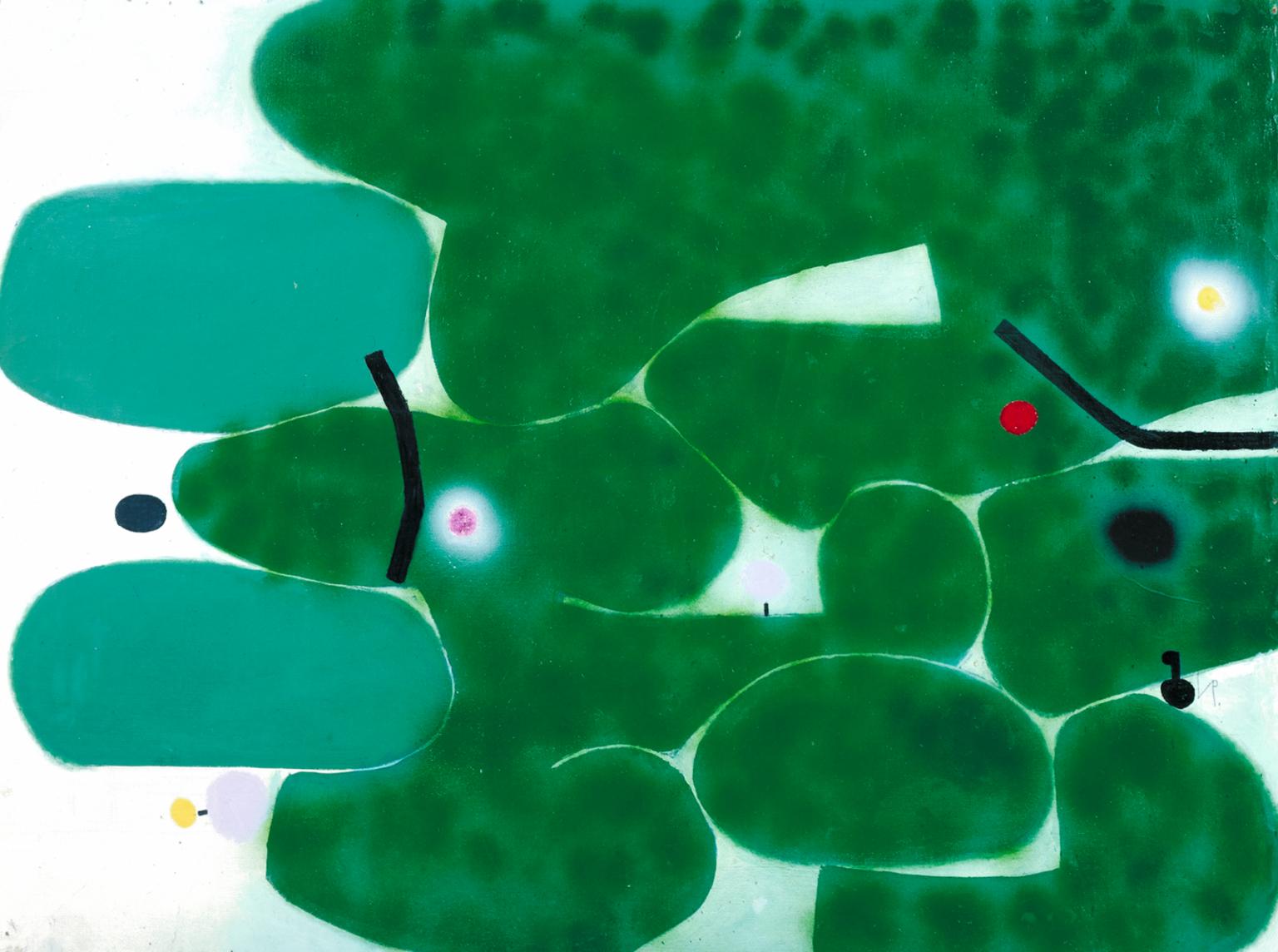
Victor Pasmore, The Green Earth 1979–80
According to Pasmore 'This picture is a completely independent abstract painting and not a landscape abstraction. The title was given after it was painted, to form a poetic metaphor.' It develops a theme explored in a series of paintings made between 1968 and 1976, following Pasmore's move to Malta. He turned from relief construction to a more symbolic content, expressed in colour, shape and line. In the earlier of these works, as here, rounded, organic looking abstract motifs appeared to be held in space by dark rod-like forms. Pasmore also links 'The Green Earth' to very early abstracts, like 'Square Motif, Blue and Gold: The Eclipse', also in this gallery: 'it was one of the first to return to my interest in colour.'
Gallery label, September 2004
15/18
artworks in Morning after the Deluge
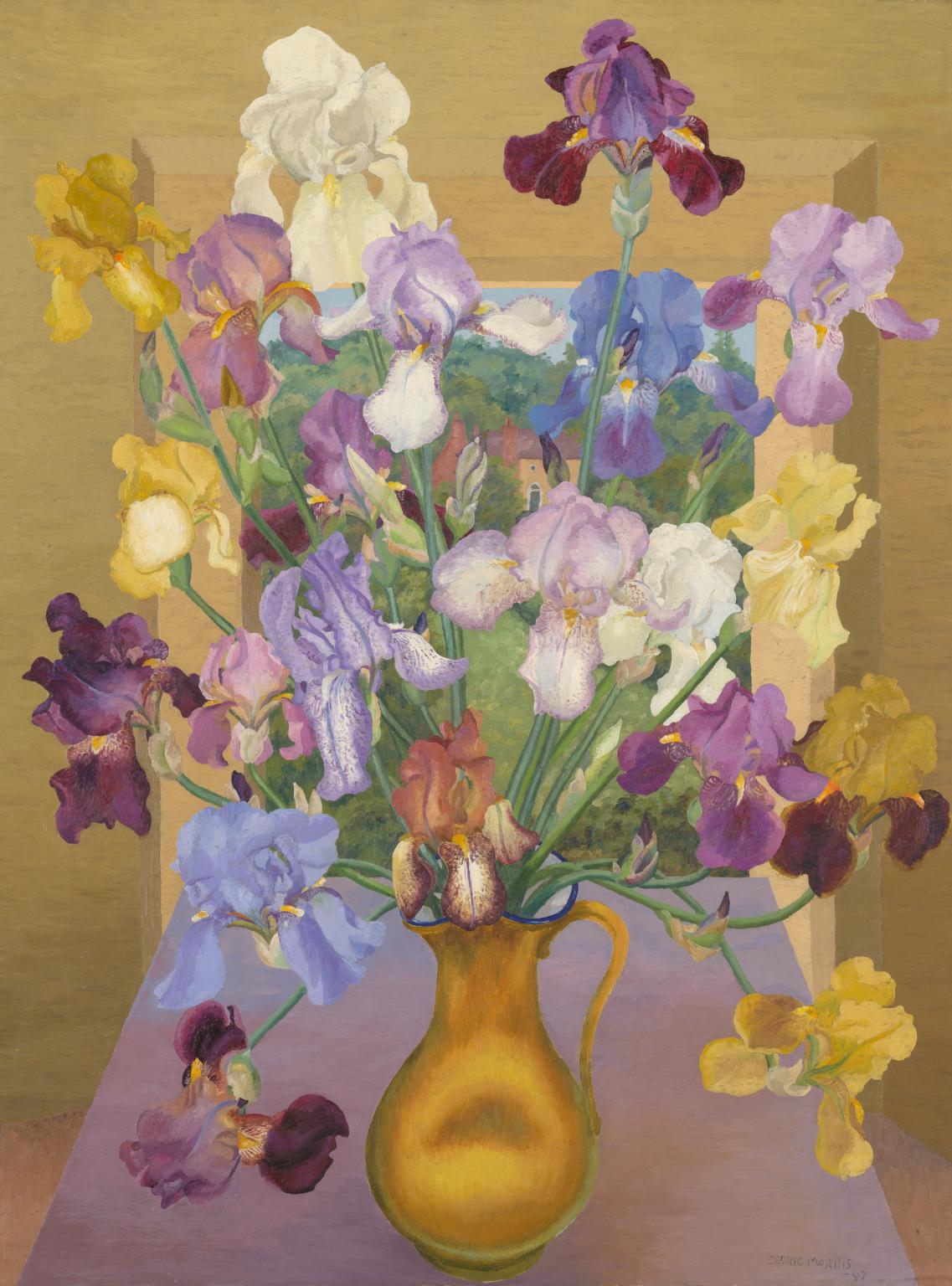
Sir Cedric Morris, Bt, Iris Seedlings 1943
Before the Second World War, Morris was a well-known painter and breeder of irises, which he admired for their 'elegance, pride and delicacy'. In 1940 he moved to Benton End in Suffolk, where he cultivated a garden inspired by Claude Monet's at Giverny. He grew about 1,000 new iris seedlings every year.
1943, the year this work was painted, yielded a particularly beautiful crop. The flowers were placed in a Chinese jug and painted quickly so that the picture could be completed before they died. Morris admired Chinese flower painters because they conveyed something of the deeper meaning of plants.
Gallery label, February 2004
16/18
artworks in Morning after the Deluge
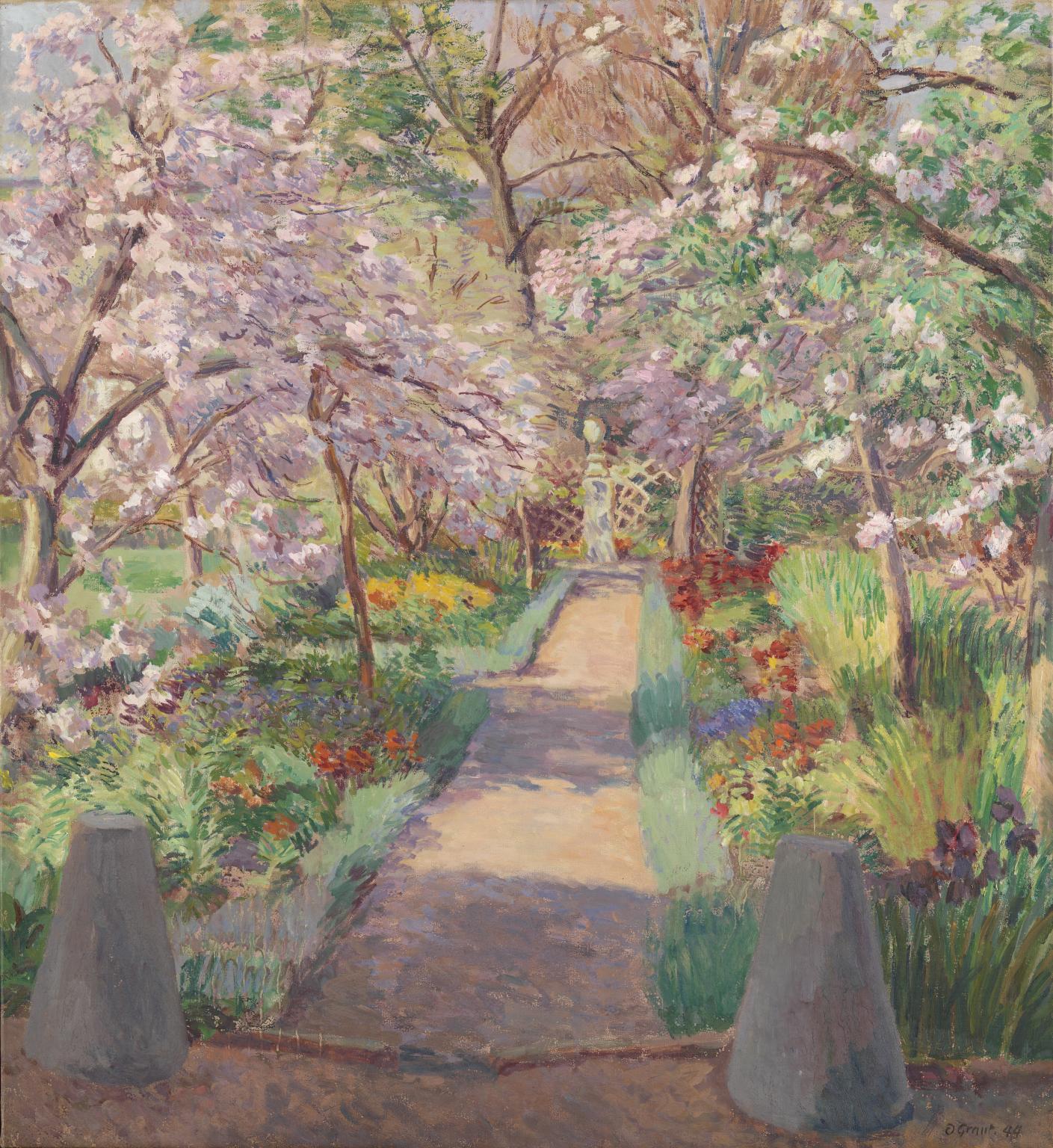
Duncan Grant, Garden Path in Spring 1944
Flowers were a major subject in Grant's later work. The garden represented is that at Charleston farmhouse, near Firle in Sussex, which he shared with the painter Vanessa Bell and where he lived and worked from 1916 until his death. Charleston, its interior decorated by Grant and Bell and its garden developed and frequently recorded by them in their paintings, became a meeting place for artists and writers in the Bloomsbury circle. The house and garden have recently been restored and opened to the public.
Gallery label, August 2004
17/18
artworks in Morning after the Deluge
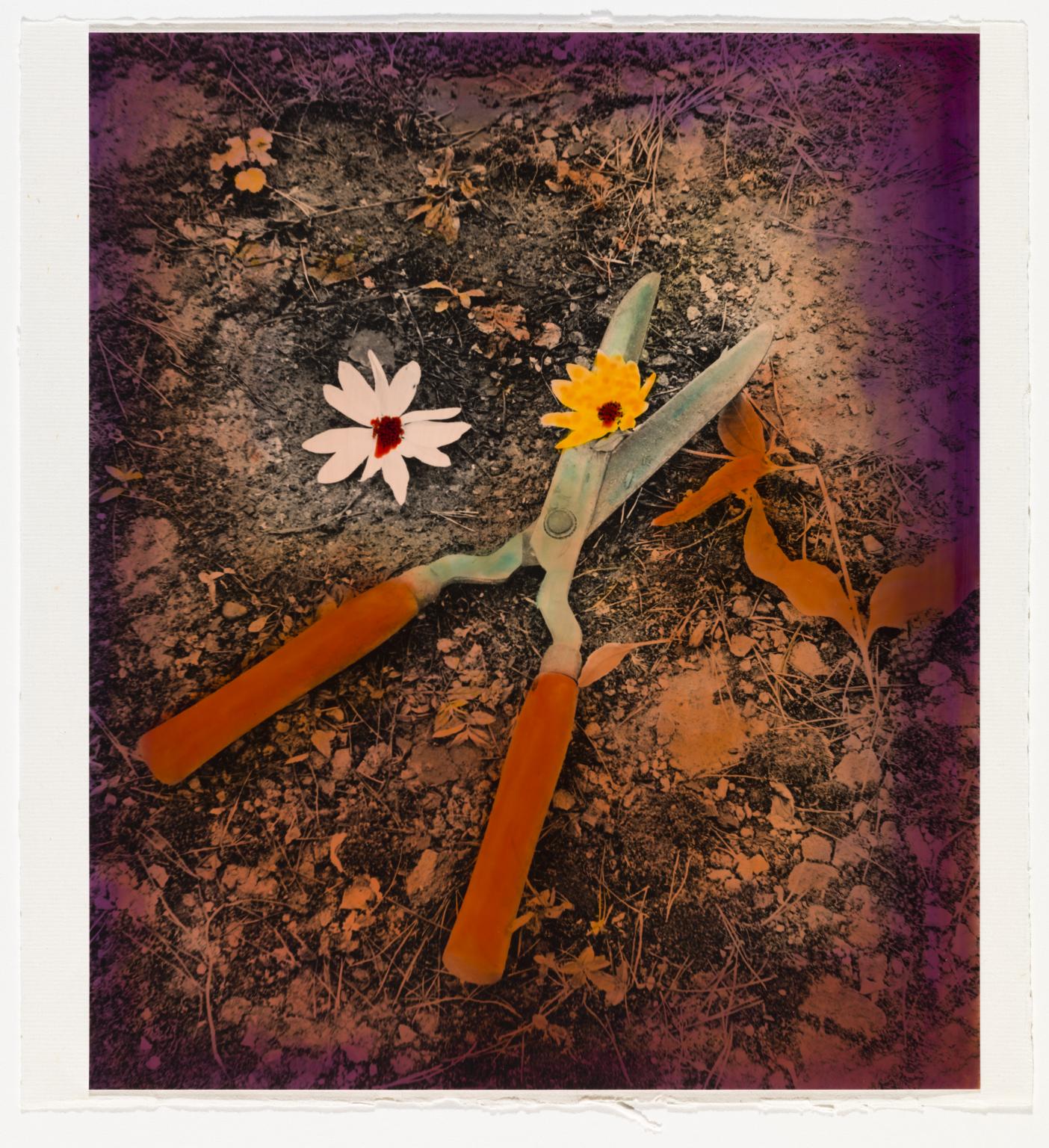
Li Yuan-chia, [no title] 1993
18/18
artworks in Morning after the Deluge
Art in this room
Sir William Nicholson
Miss Jekyll’s Gardening Boots
1920
Li Yuan-chia
[no title]
1993
Paule Vézelay
Garden
1935
Sir George Clausen
My Back Garden
exhibited 1940
Spencer Gore
The Fig Tree
c.1912
Patrick Heron
Azalea Garden : May 1956
1956
You've viewed 6/18 artworks
You've viewed 18/18 artworks