

Deana Lawson, Nation 2018. Tate. © Deana Lawson.
Deana Lawson’s photographs invite questions about truth, manipulation and the role of photography in constructing reality
The domestic settings of Lawson’s photographs in this display may suggest they are images of people in their homes. Some are, but many of her portraits are more complex.
Lawson finds her subjects through chance encounters or friends, gravitating towards those who resemble people she grew up around. She then works closely with her models to decide on details of the composition, such as the environment and their pose. The artist carefully stages each scene, sometimes inserting props or rearranging furniture. The distinction between invented and authentic aspects is deliberately blurred.
Lawson uses medium and large format film cameras for many of her pictures. These capture rich textures, colours and shadows. By merging lived experiences and imagined narratives, Lawson depicts her subjects as nuanced and multi-faceted individuals, creating a mirror of everyday lives.
Tate Modern
Natalie Bell Building Level 2 West
Room 4
13 November 2023 – 16 November 2025
Free
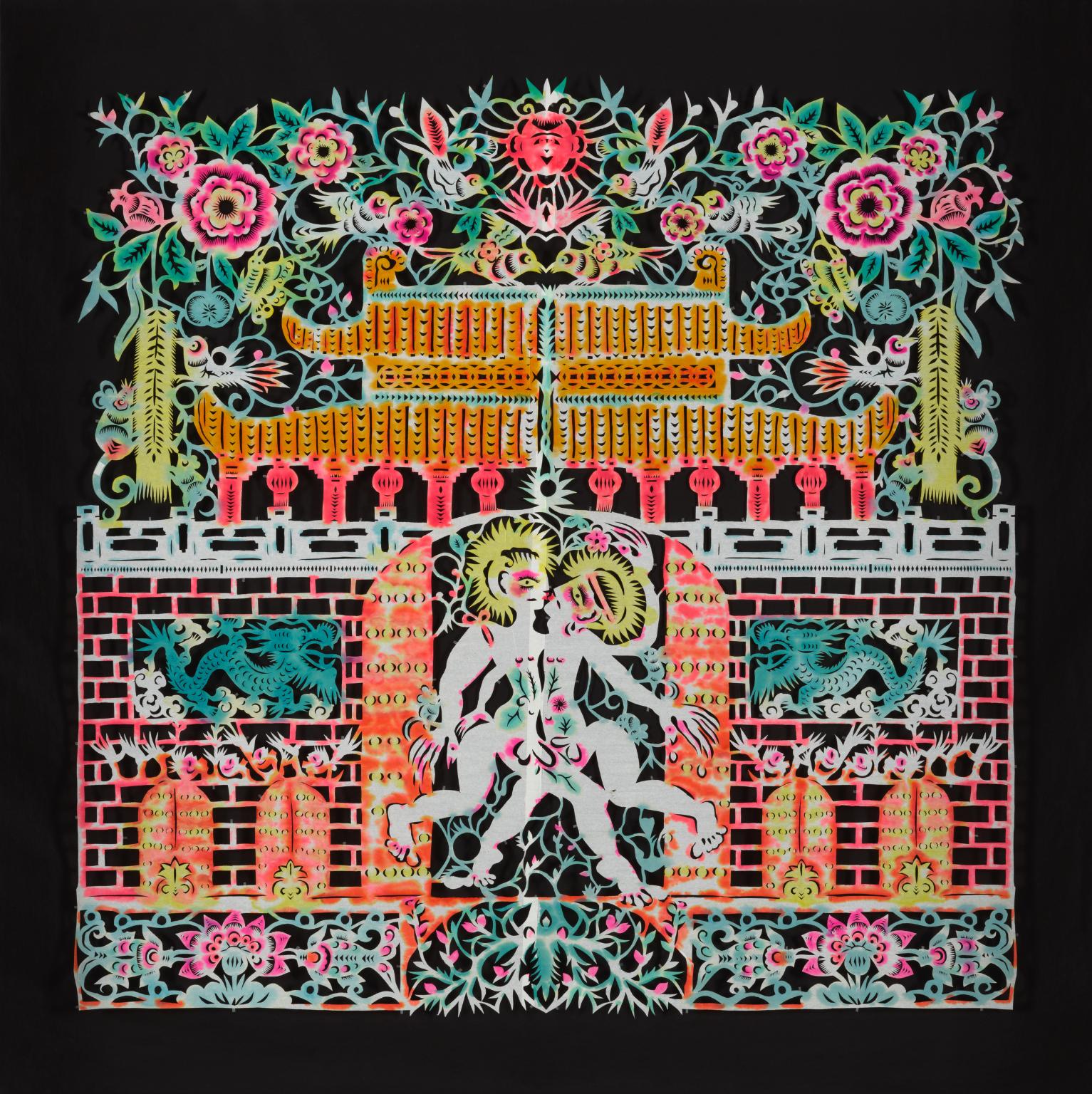
Xiyadie, Gate (Tiananmen) 2020
This one of a group of paper works in Tate’s collection by the Chinese artist Xiyadie. The works come from two separate series of works which subvert in different ways the traditional and intricate art of papercutting, recognised in China as an ancient folk art that can be traced back to the Eastern Han Dynasty (25–220 CE). Three works from 2020 (Gate (Tiananmen), Fish on a Chopping Board and Train, Tate T15927–T15929) are large-scale papercuts from white ‘xuanzhi’ (宣纸), a type of paper which is also used for traditional Chinese calligraphy and ink-wash painting due to its resilient yet absorbent qualities. Once cut, each of these works is hand-painted with food colouring more commonly used for identifying the fillings of steamed ‘bao’ buns, a humble snack often sold at street food stalls throughout China. Though each of these works represents figurative subjects, they are highly stylised according to the parameters of cutting folded paper: an intricate skill which has generically been described as a ‘matriarchs’ art’ due to the way in which it has traditionally been passed down through generations of women within the domestic sphere.
1/8
artworks in Deana Lawson
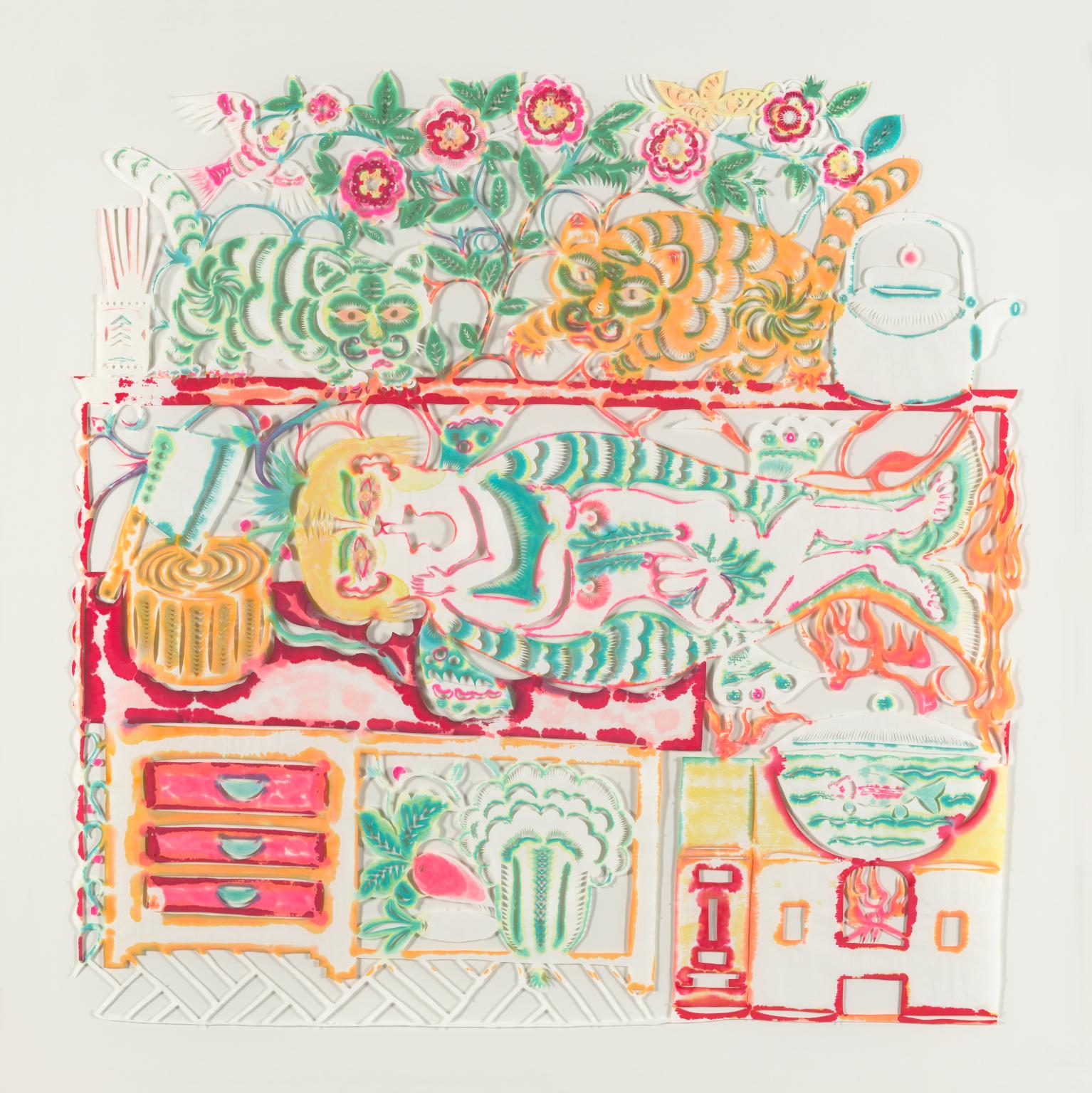
Xiyadie, Fish on a Chopping Board c.2001
This one of a group of paper works in Tate’s collection by the Chinese artist Xiyadie. The works come from two separate series of works which subvert in different ways the traditional and intricate art of papercutting, recognised in China as an ancient folk art that can be traced back to the Eastern Han Dynasty (25–220 CE). Three works from 2020 (Gate (Tiananmen), Fish on a Chopping Board and Train, Tate T15927–T15929) are large-scale papercuts from white ‘xuanzhi’ (宣纸), a type of paper which is also used for traditional Chinese calligraphy and ink-wash painting due to its resilient yet absorbent qualities. Once cut, each of these works is hand-painted with food colouring more commonly used for identifying the fillings of steamed ‘bao’ buns, a humble snack often sold at street food stalls throughout China. Though each of these works represents figurative subjects, they are highly stylised according to the parameters of cutting folded paper: an intricate skill which has generically been described as a ‘matriarchs’ art’ due to the way in which it has traditionally been passed down through generations of women within the domestic sphere.
2/8
artworks in Deana Lawson
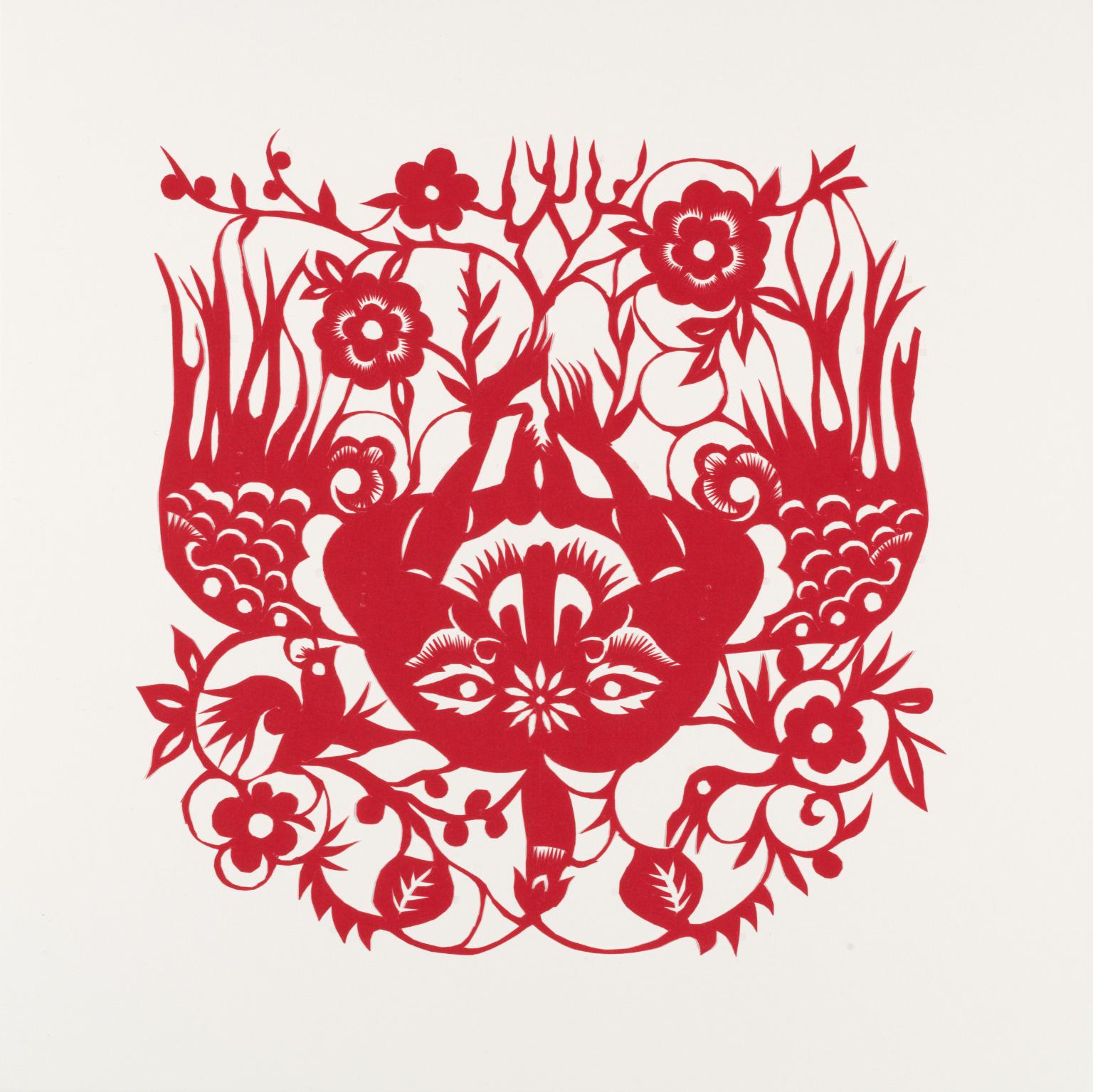
Xiyadie, Fun 2017
This one of a group of paper works in Tate’s collection by the Chinese artist Xiyadie. The works come from two separate series of works which subvert in different ways the traditional and intricate art of papercutting, recognised in China as an ancient folk art that can be traced back to the Eastern Han Dynasty (25–220 CE). Three works from 2020 (Gate (Tiananmen), Fish on a Chopping Board and Train, Tate T15927–T15929) are large-scale papercuts from white ‘xuanzhi’ (宣纸), a type of paper which is also used for traditional Chinese calligraphy and ink-wash painting due to its resilient yet absorbent qualities. Once cut, each of these works is hand-painted with food colouring more commonly used for identifying the fillings of steamed ‘bao’ buns, a humble snack often sold at street food stalls throughout China. Though each of these works represents figurative subjects, they are highly stylised according to the parameters of cutting folded paper: an intricate skill which has generically been described as a ‘matriarchs’ art’ due to the way in which it has traditionally been passed down through generations of women within the domestic sphere.
3/8
artworks in Deana Lawson
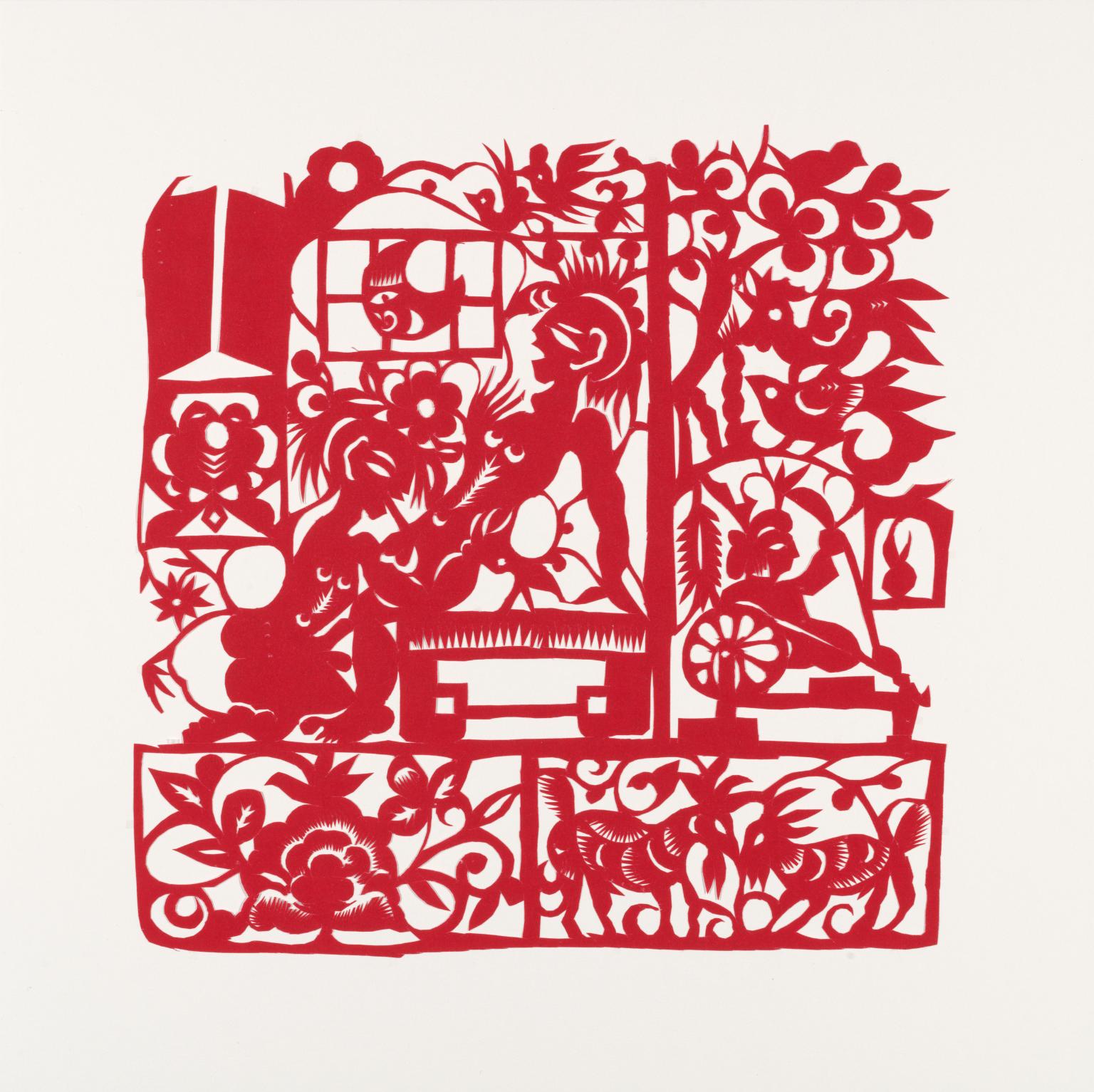
Xiyadie, ‘No Worries, My Mother Is Next Door’ 2017
This one of a group of paper works in Tate’s collection by the Chinese artist Xiyadie. The works come from two separate series of works which subvert in different ways the traditional and intricate art of papercutting, recognised in China as an ancient folk art that can be traced back to the Eastern Han Dynasty (25–220 CE). Three works from 2020 (Gate (Tiananmen), Fish on a Chopping Board and Train, Tate T15927–T15929) are large-scale papercuts from white ‘xuanzhi’ (宣纸), a type of paper which is also used for traditional Chinese calligraphy and ink-wash painting due to its resilient yet absorbent qualities. Once cut, each of these works is hand-painted with food colouring more commonly used for identifying the fillings of steamed ‘bao’ buns, a humble snack often sold at street food stalls throughout China. Though each of these works represents figurative subjects, they are highly stylised according to the parameters of cutting folded paper: an intricate skill which has generically been described as a ‘matriarchs’ art’ due to the way in which it has traditionally been passed down through generations of women within the domestic sphere.
4/8
artworks in Deana Lawson
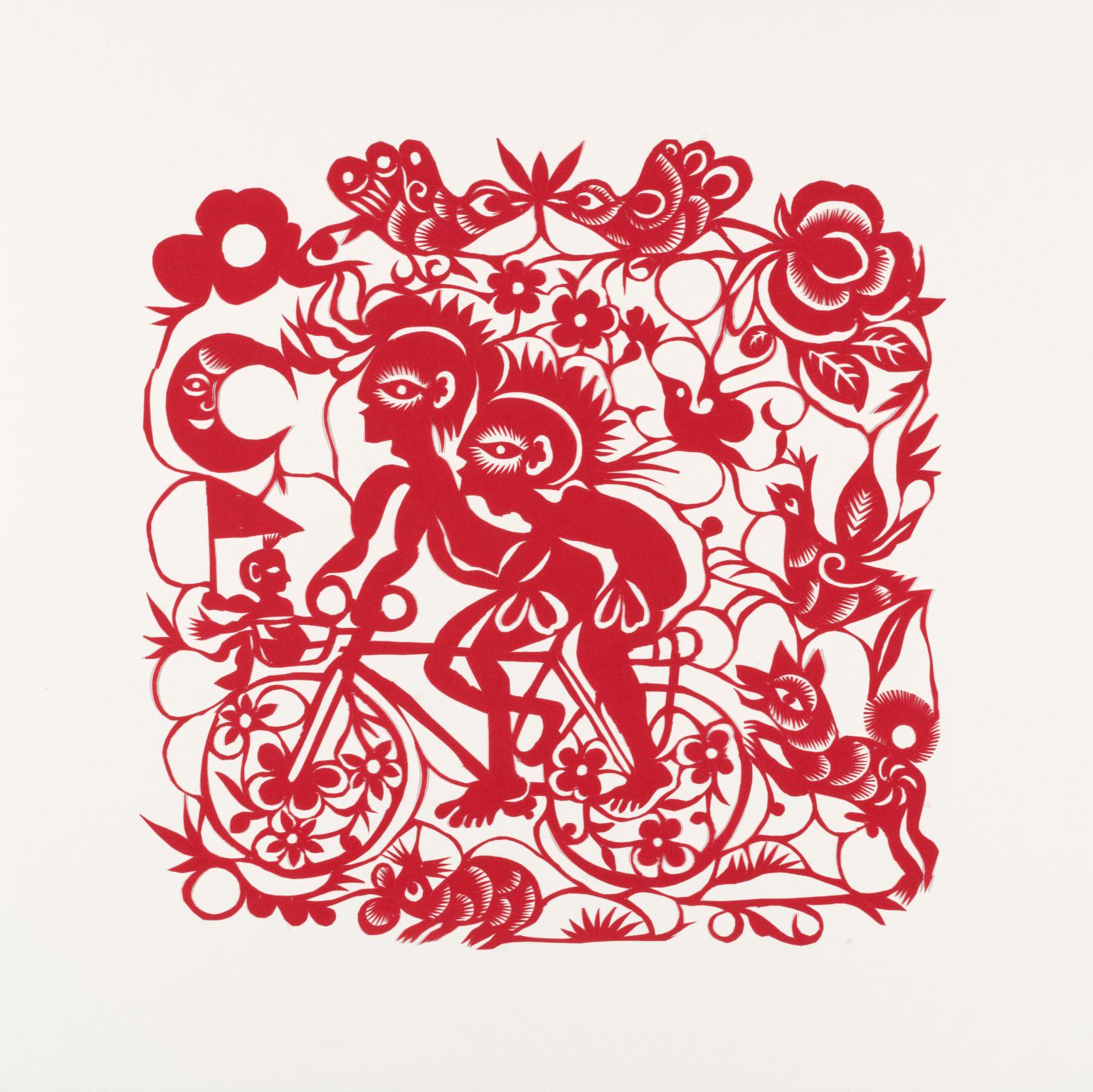
Xiyadie, Fun 2001
This one of a group of paper works in Tate’s collection by the Chinese artist Xiyadie. The works come from two separate series of works which subvert in different ways the traditional and intricate art of papercutting, recognised in China as an ancient folk art that can be traced back to the Eastern Han Dynasty (25–220 CE). Three works from 2020 (Gate (Tiananmen), Fish on a Chopping Board and Train, Tate T15927–T15929) are large-scale papercuts from white ‘xuanzhi’ (宣纸), a type of paper which is also used for traditional Chinese calligraphy and ink-wash painting due to its resilient yet absorbent qualities. Once cut, each of these works is hand-painted with food colouring more commonly used for identifying the fillings of steamed ‘bao’ buns, a humble snack often sold at street food stalls throughout China. Though each of these works represents figurative subjects, they are highly stylised according to the parameters of cutting folded paper: an intricate skill which has generically been described as a ‘matriarchs’ art’ due to the way in which it has traditionally been passed down through generations of women within the domestic sphere.
5/8
artworks in Deana Lawson
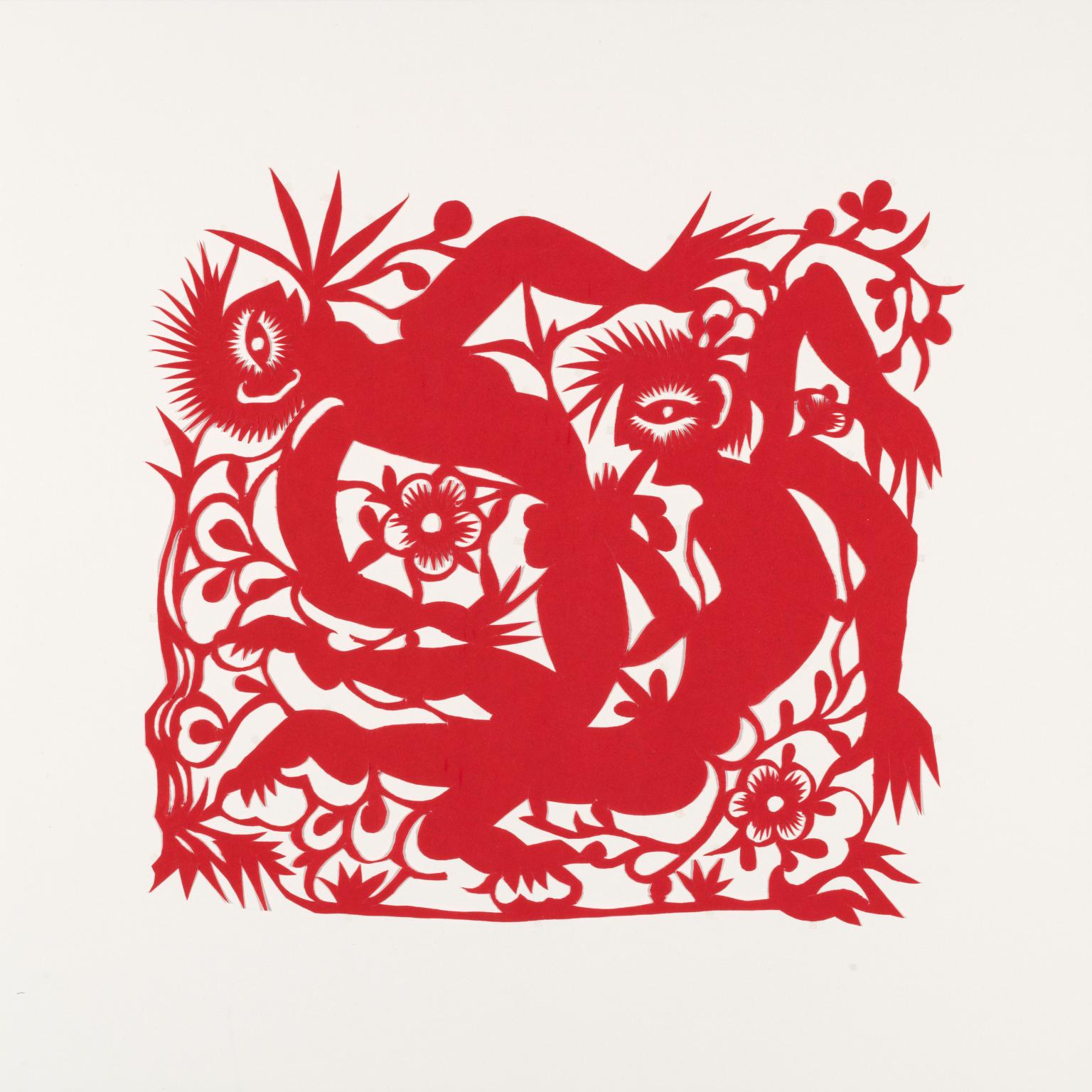
Xiyadie, Fun 2001
This one of a group of paper works in Tate’s collection by the Chinese artist Xiyadie. The works come from two separate series of works which subvert in different ways the traditional and intricate art of papercutting, recognised in China as an ancient folk art that can be traced back to the Eastern Han Dynasty (25–220 CE). Three works from 2020 (Gate (Tiananmen), Fish on a Chopping Board and Train, Tate T15927–T15929) are large-scale papercuts from white ‘xuanzhi’ (宣纸), a type of paper which is also used for traditional Chinese calligraphy and ink-wash painting due to its resilient yet absorbent qualities. Once cut, each of these works is hand-painted with food colouring more commonly used for identifying the fillings of steamed ‘bao’ buns, a humble snack often sold at street food stalls throughout China. Though each of these works represents figurative subjects, they are highly stylised according to the parameters of cutting folded paper: an intricate skill which has generically been described as a ‘matriarchs’ art’ due to the way in which it has traditionally been passed down through generations of women within the domestic sphere.
6/8
artworks in Deana Lawson
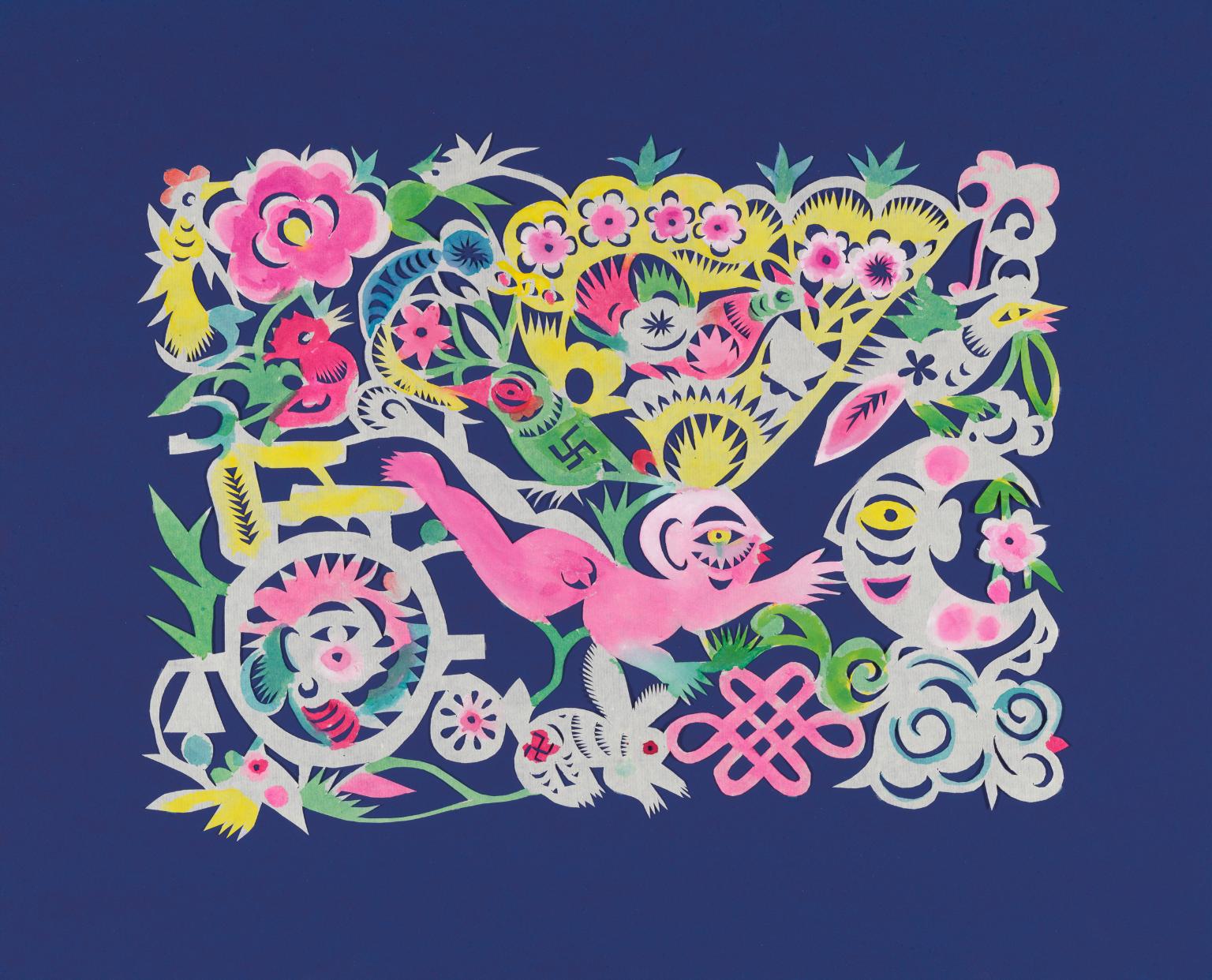
Xiyadie, Flying 2000
This one of a group of paper works in Tate’s collection by the Chinese artist Xiyadie. The works come from two separate series of works which subvert in different ways the traditional and intricate art of papercutting, recognised in China as an ancient folk art that can be traced back to the Eastern Han Dynasty (25–220 CE). Three works from 2020 (Gate (Tiananmen), Fish on a Chopping Board and Train, Tate T15927–T15929) are large-scale papercuts from white ‘xuanzhi’ (宣纸), a type of paper which is also used for traditional Chinese calligraphy and ink-wash painting due to its resilient yet absorbent qualities. Once cut, each of these works is hand-painted with food colouring more commonly used for identifying the fillings of steamed ‘bao’ buns, a humble snack often sold at street food stalls throughout China. Though each of these works represents figurative subjects, they are highly stylised according to the parameters of cutting folded paper: an intricate skill which has generically been described as a ‘matriarchs’ art’ due to the way in which it has traditionally been passed down through generations of women within the domestic sphere.
7/8
artworks in Deana Lawson
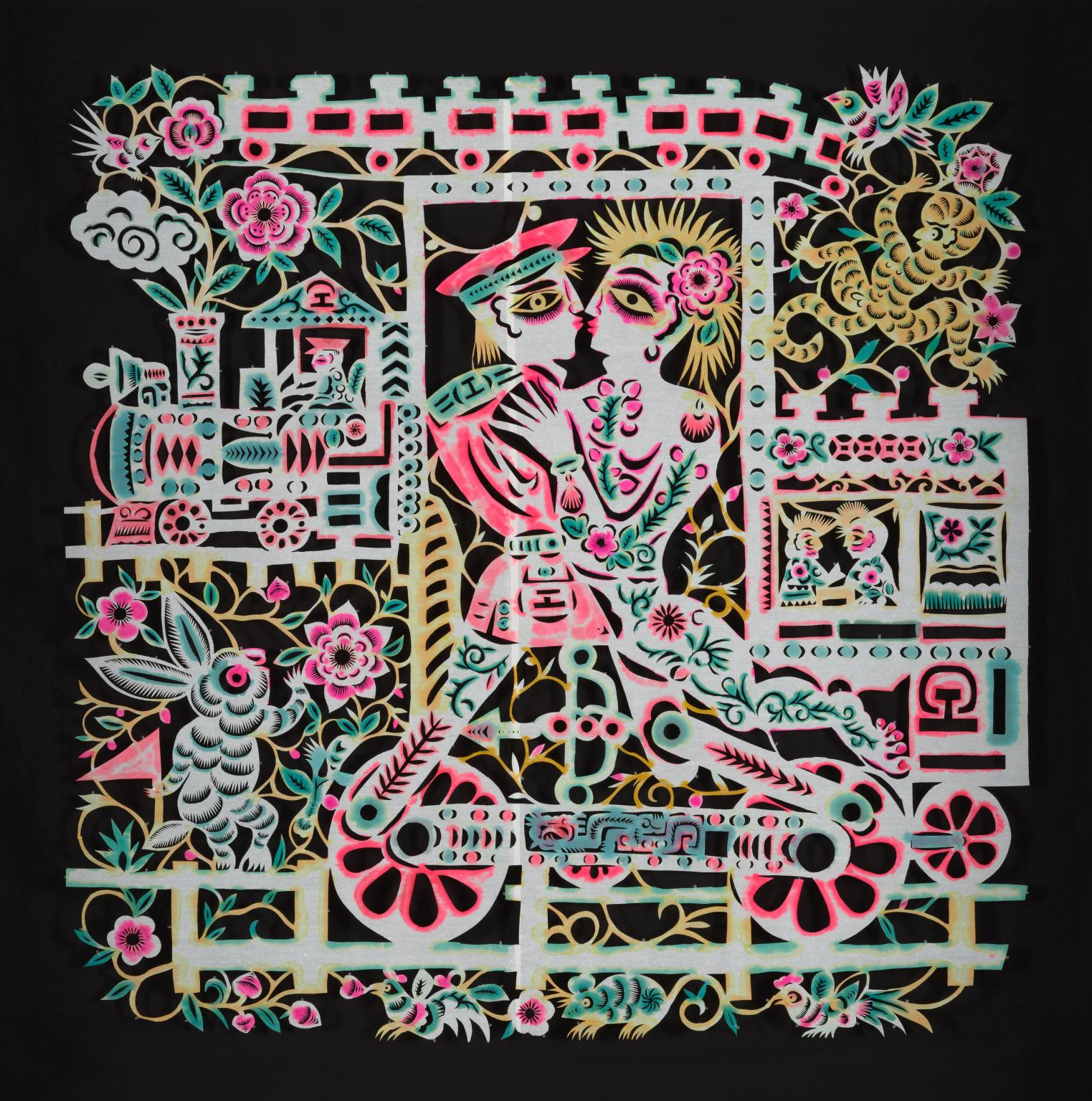
Xiyadie, Train 1985–6
This one of a group of paper works in Tate’s collection by the Chinese artist Xiyadie. The works come from two separate series of works which subvert in different ways the traditional and intricate art of papercutting, recognised in China as an ancient folk art that can be traced back to the Eastern Han Dynasty (25–220 CE). Three works from 2020 (Gate (Tiananmen), Fish on a Chopping Board and Train, Tate T15927–T15929) are large-scale papercuts from white ‘xuanzhi’ (宣纸), a type of paper which is also used for traditional Chinese calligraphy and ink-wash painting due to its resilient yet absorbent qualities. Once cut, each of these works is hand-painted with food colouring more commonly used for identifying the fillings of steamed ‘bao’ buns, a humble snack often sold at street food stalls throughout China. Though each of these works represents figurative subjects, they are highly stylised according to the parameters of cutting folded paper: an intricate skill which has generically been described as a ‘matriarchs’ art’ due to the way in which it has traditionally been passed down through generations of women within the domestic sphere.
8/8
artworks in Deana Lawson
Art in this room
Xiyadie
Gate (Tiananmen)
2020
Xiyadie
Fish on a Chopping Board
c.2001
Xiyadie
Fun
2017
Xiyadie
‘No Worries, My Mother Is Next Door’
2017
Xiyadie
Fun
2001
Xiyadie
Fun
2001
Xiyadie
Flying
2000
Xiyadie
Train
1985–6