

Photo © Tate (Joe Humphrys)
Arahmaiani’s paintings and healing performances lament violence against women in Indonesia.
Burning Country refers to traumatic events witnessed by Arahmaiani in her home country of Indonesia in May 1998. During a period of economic crises, food shortages and unemployment, students began demonstrating against the authoritarian regime of President Suharto.
The killing of four students at a protest triggered three days of arson attacks and acts of racially motivated violence, mostly directed against the Chinese Indonesian population. Around 1,500 people were raped or murdered.
For Arahmaiani, this work is a memorial ‘for the souls of the women who were violated and killed’ during the riots. Arahmaiani made black-and-white paintings to mourn the women whom this horror was inflicted upon. She painted them in the gallery in the weeks leading up to the display opening to the public.
Arahmaiani rose to prominence in the 1980s and 1990s at the forefront of activist and performance art in Southeast Asia. She opened this installation with a mournful performance of protest poetry, drumming and song. By blending artistic disciplines – such as performance, painting, music, poetry and dance – with direct action, she hopes to encourage transcultural and interreligious conversation.
For the artist, her community-based work and performance offer a form of reparation and healing. They are a way to address historical violence by coming to terms with the past.
Tate Modern
Natalie Bell Building Level 2 West
Room 10
25 November 2024 – 13 April 2026
Free
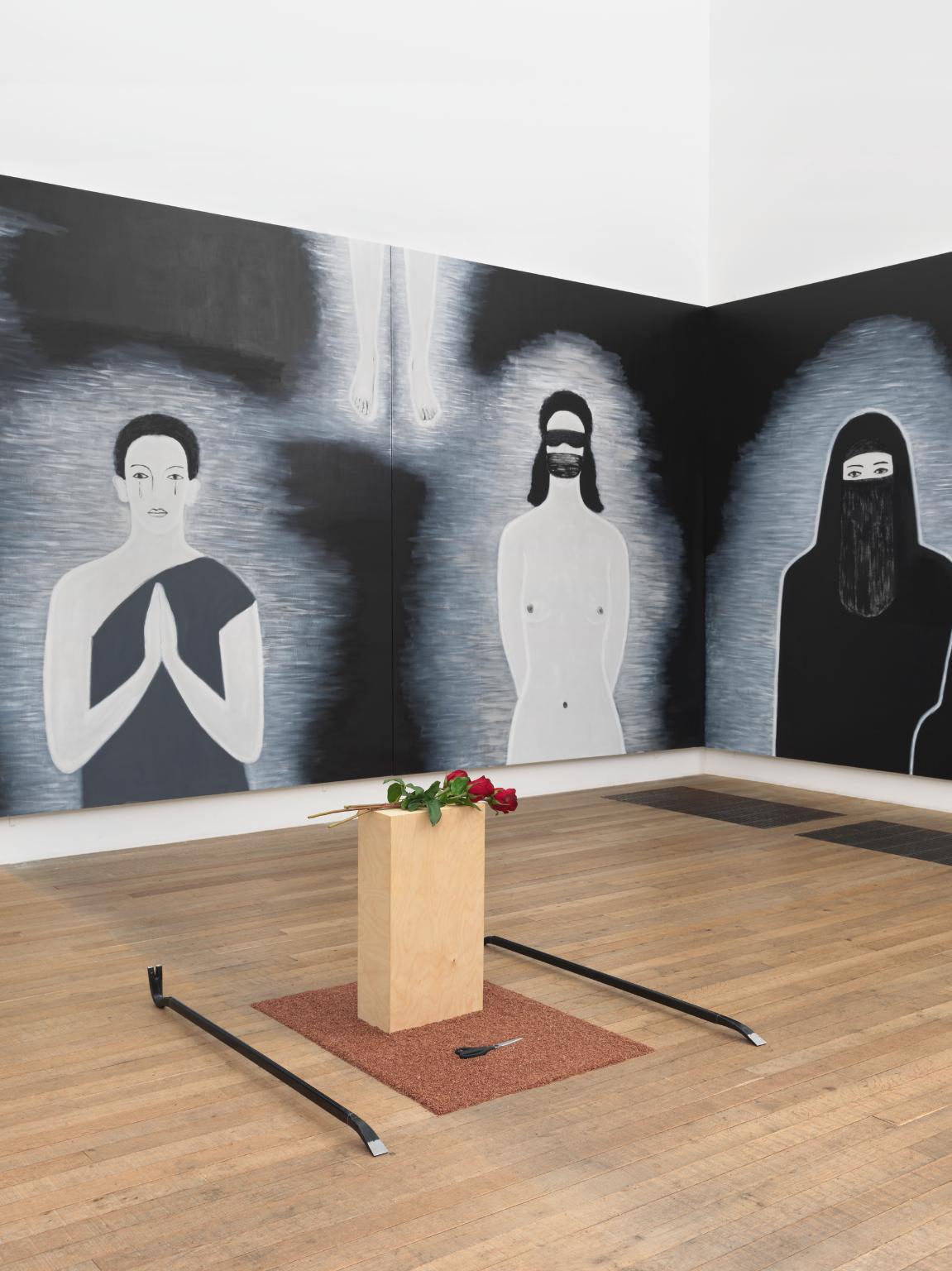
Arahmaiani, Burning Country 1998–2020
Arahmaiani sees her performances as healing rituals that nurture connectivity between individuals, communities and nature. In this video, we see the artist performing protest poems in Indonesian. She wrote them in response to the violence against women she witnessed in Indonesia in 1998. This is a video of Arahmaiani’s performance that took place in the Tate Modern gallery on 21 November 2024. The performance was organised by Hyundai Tate Research Centre: Transnational in partnership with Hyundai Motor.
A commitment to environmental issues runs throughout Arahmaiani’s work. The artist identifies as an ‘ecofeminist’ and often draws links between the plundering of nature for capitalist gains and the exploitation of women’s bodies. The connection between the extraction of the land and violence against bodies is visible in this sculpture, which refers to the islands of Indonesia. The archipelago has been made from matchsticks and above the sculpture hangs a dress, emptied out of a body.
Gallery label, March 2025
1/2
artworks in Witnesses
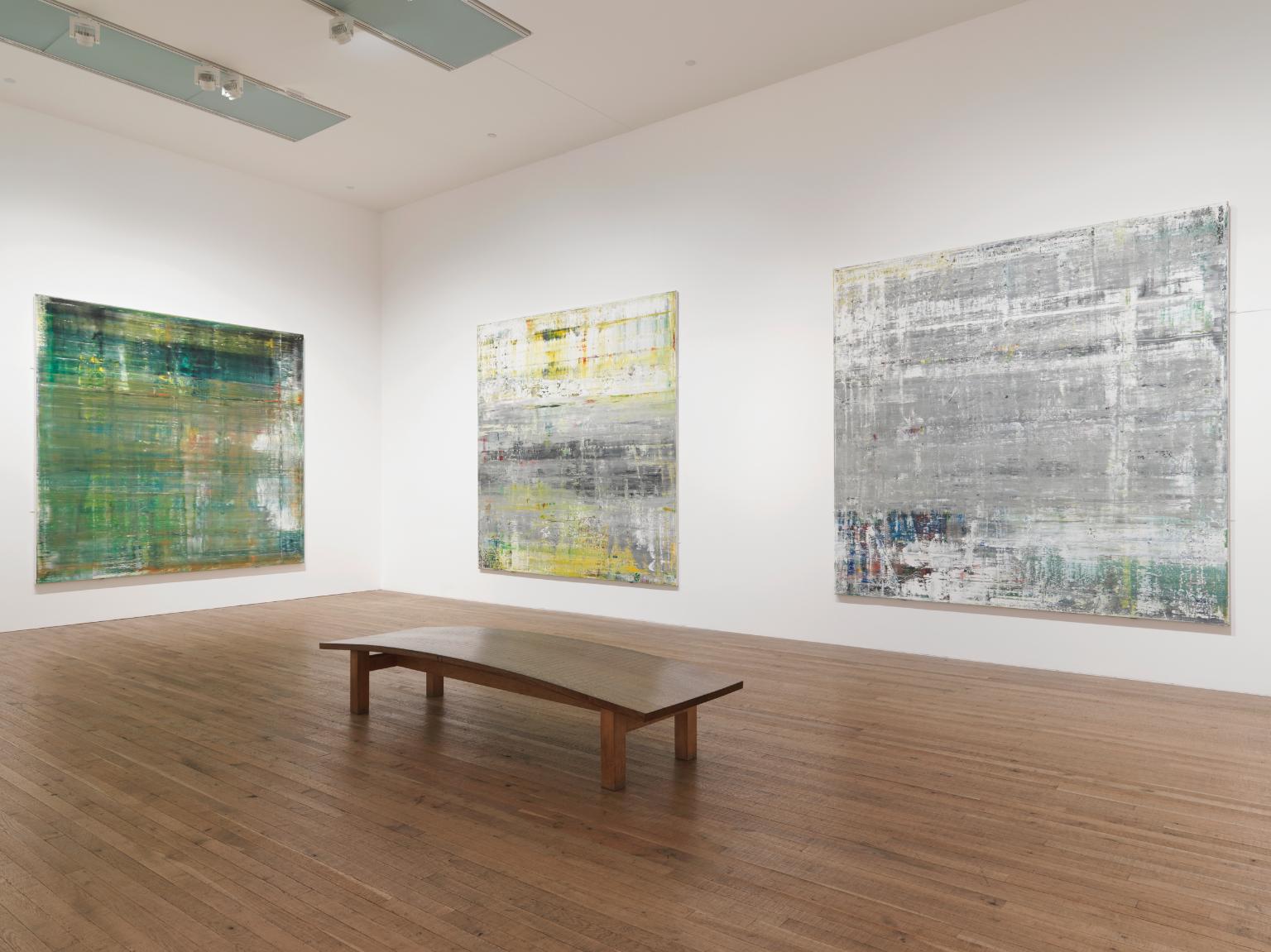
Gerhard Richter, Cage (1) - (6) 2006
Cage (1) – (6) 2006 is a group of six large, square abstract paintings by the German artist Gerhard Richter. Three of the canvases measure 2900 x 2900 mm, while the other three are slightly larger, at 3000 x 3000 mm each. The paintings all have a similar thickly painted surface that is rough and textured in appearance. They are composed of a progression of horizontal and vertical bands and a series of multi-directional scratches and indentations that are scraped into the painted surface. In specific areas of the paintings, the upper layers of paint have been removed and several sublayers of colour exposed. In each painting, the layers of colours and the composition of the bands and marks are different. Cage (1) is predominantly lime green in hue with a wide bottle green bar running horizontally across the upper quarter of the composition, and at the far right of the work is a wide vertical band composed mostly of white, but also containing yellow and green. Cage (2) is largely pale grey, white and lime green, with small exposed areas of bright red and charcoal grey. Cage (3) is composed of multiple scratch marks and indentations and is mostly light grey and white, with small patches of lime green, bottle green, dark grey, blue and red. Cage (4) has multiple sublayers of paint exposed, while Cage (5) is predominantly grey with white, red, pale yellow and a small amount of black. Cage (6) is the most varied in its range of exposed underlying colours, but it overall composition is mainly green, white, yellow, black and blue. The paintings are designed to be hung together in one large gallery space.
2/2
artworks in Witnesses
Art in this room
Arahmaiani
Burning Country
1998–2020
Gerhard Richter
Cage (1) - (6)
2006