
Step into the darkroom with Sustainable Darkroom and explore photography as a material, creative, and experimental art form. Presented as part of Light and Magic: The Birth of Art Photography, this programme of hands-on courses celebrates image-making through process-led practice and an arts-for-art’s-sake approach to photography. It offers a rare opportunity to develop new skills and produce unique, personalised prints.
Each course focuses on a different photographic process, from cyanotypes and botanical toning to natural chemistry chemigrams and phytograms. Working with low-toxicity and plant-based chemistries, you’ll gain insight into how photographs are formed, transformed, and experienced as physical objects.
The prints you create can be kept as finished artworks or developed further into personalised works through digitisation and reworking into other formats such as cards, textiles, and printed objects.
Drawing on the history of global pictorialism and alternative photographic practices, these courses invite experimentation, play, and technical discovery in the darkroom, in direct dialogue with the exhibition.
Explore the courses below to discover each process and secure your place during the Members’ priority booking period. Members receive an exclusive discount on both these sessions and the wider public programme. For longer-form processes and more in-depth study, see the main course schedule, which includes dry plate photography, gum printing, silver gelatin printing, and more.
Phytograms
10.15–12.15
Get a taster for low-toxicity photographic print making in this workshop! You will learn how to make phytograms on bromide papers. This is a cameraless photography process that uses household chemistries.
Phytograms is a process of capturing the internal chemistry of plants on photographic film or paper. In this workshop, we will be working on bromide papers, recreating some of the colours and textures found on the bromide prints in the exhibition. You will learn how to transform leaves and petals into an auto-degrading chemistry that can activate the silver bromide paper, causing it to darken. This allows us to capture the delicate details of leaf veins and flower petals as the plants come into contact with the light sensitive emulsion, recording it as a permanent photographic image directly on the paper.
Teacher: Hannah Fletcher
Natural Chemistry Chemigrams
13.00–15.00
Bridging the gap between painting and photography, this workshop introduces chemigrams, a cameraless photographic process using historic and expired papers that are similar to the ones that photographers in the exhibition were working with.
This workshop covers making home-made photographic developers using food waste collected from the Tate modern cafe, along with other local waste materials. Using these home-made chemistries, we will then consider the possibilities of the photographic surface and its materiality. Alongside our photographic developers, we will work with a variety of resists to produce a range of camera-less shapes, textures and images, on the surface of silver gelatine paper.
Teacher: Hannah Fletcher
Cyanotypes and Botanical Toning
15.30–17.30
Join Sustainable Darkroom and immerse yourself in historic and low-toxic methods of pigment extraction and image making using iron based chemistries.
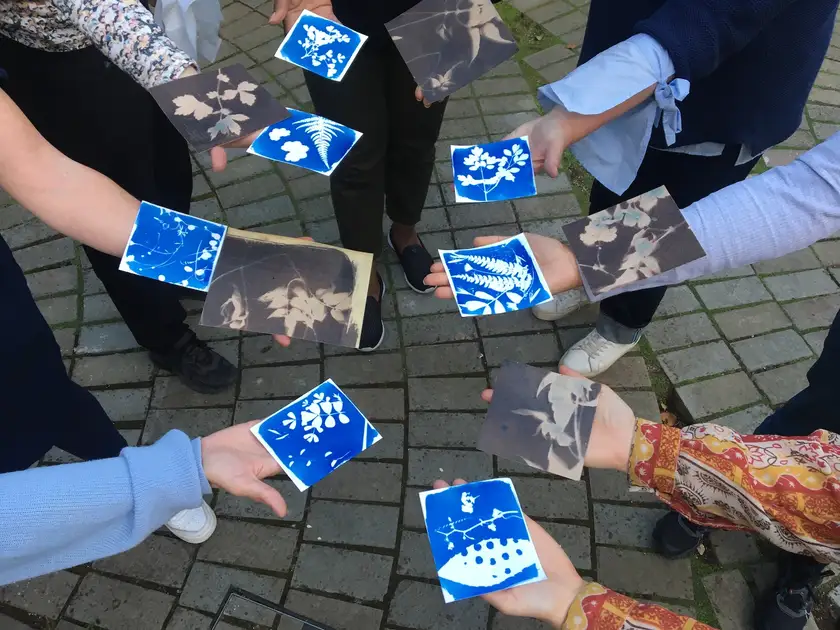
This workshop builds upon the traditional cyanotype, a historic iron based photographic process that uses sunlight to fix the low-toxicity chemistry to the paper, resulting in a vibrant Prussian blue and white print. We will make contact prints using pressed botanicals and collaged paper stencils and negatives. From this, you will learn the chemical relationships between iron chemistries and plant tannins, as we will then explore the possibilities of toning our blue prints using botanicals and food waste from the cafe at Tate modern to give us a range of colours.
Teacher: Hannah Fletcher
Space inside the darkroom is limited and the table we will be working from is at a high level. Please contact us if you are a wheelchair user and would like to discuss adjustments that can be made.
Folding stools will be available.
All Tate Modern entrances are step-free. You can enter via the Turbine Hall and into the Natalie Bell Building on Holland Street, or into the Blavatnik Building on Sumner street. There are lifts to every floor of the Blavatnik and Natalie Bell buildings. Alternatively you can take the stairs.
- Fully accessible toilets are located on every floor on the concourses
- A quiet room is available to use in the Natalie Bell Building on Level 4
- Ear defenders can be borrowed from the Ticket desks
To help plan your visit to Tate Modern, have a look at our visual story. It includes photographs and information about what you can expect from a visit to the gallery.
For more information before your visit:
- Email hello@tate.org.uk
- Call +44 (0)20 7887 8888 (daily 10.00–17.00)


