
This resource was written by Damali Ibreck. Damali is a researcher exploring connections between family learning and arts administration. Working in partnership with communities, schools, artists and organisations Damali creates ambitious projects that work towards embedding change across contemporary visual art and art education.

William Dobson
Be inspired by William Dobson and create self-portraits exploring identity, pose and expression to reveal or question your ideas of the ‘true self’
You will need:
- Pens
- Paper and card (A4 plain white or black paper alongside a range of colourful paper (any size), old magazines, wrapping paper, newspaper)
- Scissors
- Tape
- Glue
- Fabrics that can be draped
- Cameras (digital, tablet, polaroid)
- If appropriate, and in advance of the lesson, invite your students to bring in some materials from home – clothing, hats, costumes, that they feel represent themselves
- For the 'Make a Collage Self-Portrait' element of this resource you may want to consider creating your own collage in advance to reassure students that it is not about making a perfect or even a recognisable image, but playing with colour and shapes whilst thinking about the true self
Explore the artwork

Artwork
Self-Portrait
William Dobson
c.1639

Your students don’t need to know anything about an artwork or artist to start exploring it.
Use these quick group activities to build their confidence and curiosity in sharing their first responses to the artwork. Some artworks they might like straight away, some they might not.
Discovering art can be new, exciting and sometimes confusing. There are no right or wrong ways to respond!
In pairs or as a group, take it in turns to imagine the artwork answering these questions and telling their story.
- What are you made from?
- When were you made?
- What has happened here?
- Do you want me to feel sad or joyful, or something else?
- What else would you like to say?
In pairs or as a group, use your body to respond to the artwork.
- Mirror movements or shapes in the artwork
- Imagine sounds the artwork might make
- Trace the artwork in the air with your hands
- Move like the artwork
- What else could you do?
About the artwork
"I’m interested in the way Dobson tried to show something truthful in those he painted – without flattery or filter."
Damali Ibreck
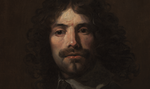
This youthful self-portrait was probably painted in the late 1630s. Unlike other self-portraits made in Britain at the time, it rejects a carefully elegant pose. Dobson’s unruly hair and intense gaze are matched by quick handling, thick strokes of paint and rapid transitions from light to dark, called chiaroscuro. His approach reflects the influence of Dutch artists such as Rembrandt. Dobson’s powerful self-image, full of personality, was made at a moment when art in Britain, and how artists viewed themselves, was changing.
This painting is one of approximately 60 completed artworks by artist William Dobson (1611-1646). Dobson was appointed as King Charles I’s Principal Painter during a violent period in British history: the English Civil War, when England, Ireland and Scotland were at war with each other. Dobson’s job was to document the officers and army commanders who fought on behalf of the King.
Despite more recently being declared ‘the first British-born genius’ and clearly being an important person during his lifetime, very little is known about Dobson. He left no letters or diaries behind so people have had to work hard to put together his story – figuring out how he ended up dying in poverty aged just 35 years old.
Make
This painting by William Dobson prompts us to think about whether a self-portrait can show one's ‘true self.' Is Dobson showing us who he really is, or how he wants to be seen? In this activity, you’ll explore your own ideas around your ‘true self’ by creating self-portraits using collage and photography.
Discuss
5 MIN
Work in small groups.
- When and where are you able to show your true self and who to?
- If you painted that ‘true self’ - your personality, your feelings, your interests - what would that look like? What colours, shapes, textures would you use?
- Dobson's portrait was painted just before the Civil War began. He chose to dress in armour-like clothing. What would you wear in your portrait? How would it reflect the time we are in?
Make a Collage self-portrait
10 min
Take a piece of plain paper and using collage materials, create a quick and rough self-portrait. You could decide to create a completely abstract self-portrait, just focusing on colours, shapes and textures or you could create a simple figure. The goal is to help you start to think creatively about expressing the true you, not to create a masterpiece.
Make a photographic self-portrait
20 min
Work in pairs
- Take a few minutes to look at the materials and props available. You could take inspiration from your collage or go a completely different way. Really think again about your ‘true self’: do you want to show this, or to hide it? Select items to help you create your self-portrait – drape materials around or over you, try on a hat, or make other props.
- Now think about your position and your expression. Dobson faces us with his body just slightly turned, he is not smiling – he is not performing. Try holding an expression that feels honest rather than posed. This is harder than it sounds!
- Work together to set up your shots carefully. What is in the background? What light are you in? Are you close to the camera or far away? Each of these is a decision to be considered - just as Dobson considered every element of his portraits. Every decision you make now will impact how your self-portrait is viewed in the future! If working on a digital camera you can take more than one shot, but you have to select and keep only one!
- Alternatively, instead of taking an actual photograph, you might want to follow steps 1-3 and then write a description of your self-portrait - an exhibition label for the work to be shown 400 years from now.
Compare
5 min
Compare your photographic portrait with your collage portrait. How do they connect? Was one easier to create than the other, and if so, why?
Share
10 min
Choose one of your portraits that you feel most strongly about to share with your class or in a group – or bring all the class portraits together. Talk through your decision-making processes. Can you find true elements in your friends’ self-portraits? Can they see the ‘true’ you? Celebrate the artworks that you have made together!
Adapt
Choose one thing about yourself — a favourite colour, shape or even a movement and use the collage materials to explore that one thing:
- Find pieces of paper or fabric that are your favourite colour and play with them to create patterns and textures. Rip, scrunch, fold, drape and place or stick the pieces down onto a larger sheet.
- Draw or make versions of your favourite shape in different sizes and colours. Once you have a few versions, think about how you want to arrange them and take a photo.
Create an object portrait:
- Gather a selection of different things from your bag and the classroom or space around you (e.g. books, lunch, water bottle, paper, pens, paper clips, rubbers)
- Arrange them on a table in different ways until you find an arrangement that you like
- Photograph these using a camera
- Think about why you chose each object – what does this portrait say about you?
“Other than his paintings, William Dobson was largely forgotten. Is remembering the artist as important as the artwork?”
Damali Ibreck
Extend
A useful way to understand Dobson's portrait is by comparing it to both his other works, and to contemporary portrait artists.
Compare Dobson's self-portrait with his commissioned works
Explore Dobson’s portraits of army commanders in Tate’s collection and consider what was happening at the time politically and globally. In the 17th century, the only way to be remembered visually was by having your portrait painted. What do the objects, people and symbols included in the paintings tell you about how each of the commanders wanted to be remembered? Think about whose portraits weren’t captured at the time and why this might be - who has been forgotten from history?

Artwork
Portrait of an Officer
William Dobson
c.1645

Artwork
Endymion Porter
William Dobson
c.1642–5
Compare with Claudette Johnson
Look at Claudette Johnson's self-portrait drawing. Johnson, like Dobson, works directly onto the canvas / surface without sketching or drawing in pencil first (a technique known as ‘alla prima’). Johnson always begins a portrait with the forehead and cheek and has described her self-portraits as trying to project authentic presence rather than flattery.
- Compare Johnson’s approach to Dobson's. What is similar? What is different?
- If Johnson and Dobson could meet, what do you think they might talk about?

Artwork
Standing Figure with African Masks
Claudette Johnson MBE
2018
Compare with Cindy Sherman
Cindy Sherman has created thousands of photographic self-portraits with a difference. In each image she turns herself into a different person or character (male, female and androgynous). She has said that when she looks back at her photos, she doesn’t see herself - she feels anonymous.
- What influence might gender have had on the way each artist worked?
- How do you think Sherman’s work connects to how we present ourselves on social media?

Artwork
Untitled B
Cindy Sherman
1975

Compare with Lynette Yiadom-Boakye
Lynette Yiadom-Boakye is an artist who also works with portraiture but pieces together the people she paints from different sources - photographs, magazines and drawings - creating fictitious characters and scenes.
- Think about the artist’s role as creating a reflection or document of a particular place and time in history – what do you think Yiadom-Boakye and Dobson’s paintings say about the times in which they are working?
- Explore the painting style of Dobson and Yiadom-Boakye. Both artists use strong contrasts between shadow and light (chiaroscuro). Try creating your own photograph or painting using this technique, emphasising the darker and lighter areas to create drama and focus points.

Artwork
Razorbill
Lynette Yiadom-Boakye
2020

Artwork
10pm Saturday
Lynette Yiadom-Boakye
2012
How to Use Art Makes
Making art is a powerful way to learn new skills, explore ideas and express ourselves creatively. Encourage your students to discover new materials, techniques and methods inspired by great artists at Tate.
Art Makes can be completed in one lesson, or stretched over two or more. An indication of the time required for each element of the resource is provided to support your planning, and a rough guide is provided below:
- Prepare
- Project the artwork in your classroom and/or print off copies for your students to have in front of them.
2. Explore (10 minutes)
- Invite your students to respond to the artwork through the group activity
- Read the background information on the artwork and the artist
3. Make (30 minutes)
- Follow the step-by-step instructions
- Use the Adapt section for accessible alternatives to this activity
- Use the Extend activity within the same lesson or in a future session
4. Share (10 minutes)
- Invite students to share, discuss and celebrate their artworks with each other

The William Dobson Self-Portrait tour and supporting programme has been made possible through the support of The National Lottery Heritage Fund, alongside generous support from Bjorn Saven CBE, David and Emma Verey Charitable Trust and Tavolozza Foundation.


