

© Rikard Österlund
Gain insight into the process behind Henry Moore’s large public commissions
The second room of the display looks at a selection of Henry Moore’s large public commissions, offering a fascinating insight into the process he used to make them.
In the 1950s and 1960s, Moore worked almost exclusively in plaster to be cast in bronze and around themes of the body, landscape and nature. He became known for his large-scale works that were made for locations as diverse as new housing estates in London, the UNESCO headquarters in Paris, and Dallas City Hall.
The major works in this new display, including Reclining Figure 1951, and Draped Seated Woman 1957–8, are exhibited alongside drawings and maquettes, as well as film and photographs of the artist at work in his studio.
Tate Britain
Main Floor
Free
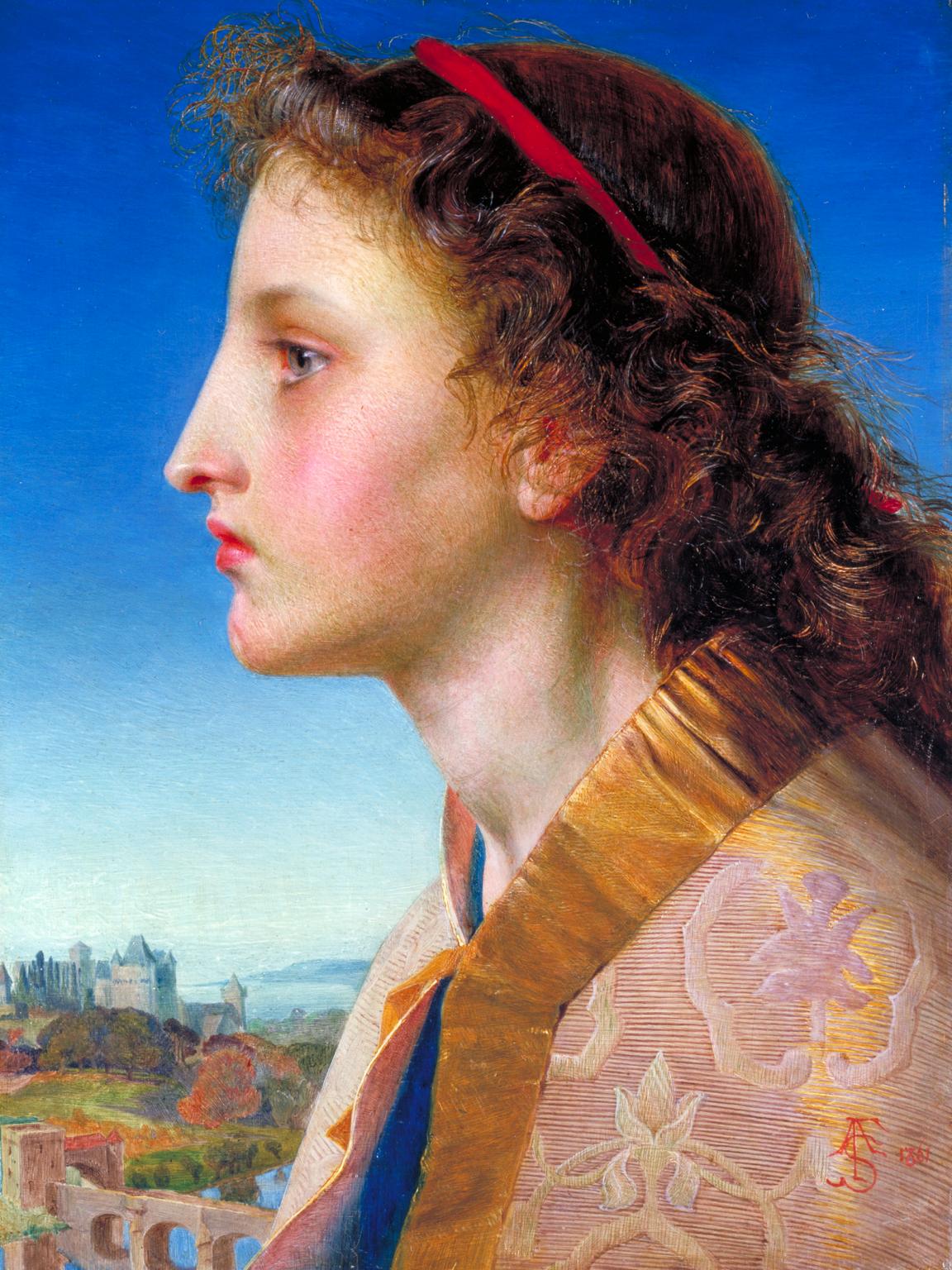
Frederick Sandys, Oriana 1861
This subject is taken from a poem The Ballad of Oriana by Alfred Tennyson. Oriana stands on the wall of a castle, watching her betrothed in battle below. An arrow aimed at him goes astray and she is killed instead.Frederick Sandys was influenced by the Pre-Raphaelites and the meticulous technique of this work shows that he shared their interest in fifteenth-century Flemish painting, in particular the work of Rogier van der Weyden and Jan van Eyck. The bridge in this picture which suggests a European setting was actually based on the Bishop’s bridge in Norwich, Norfolk.
Gallery label, July 2007
1/18
artworks in Henry Moore’s Public Commissions
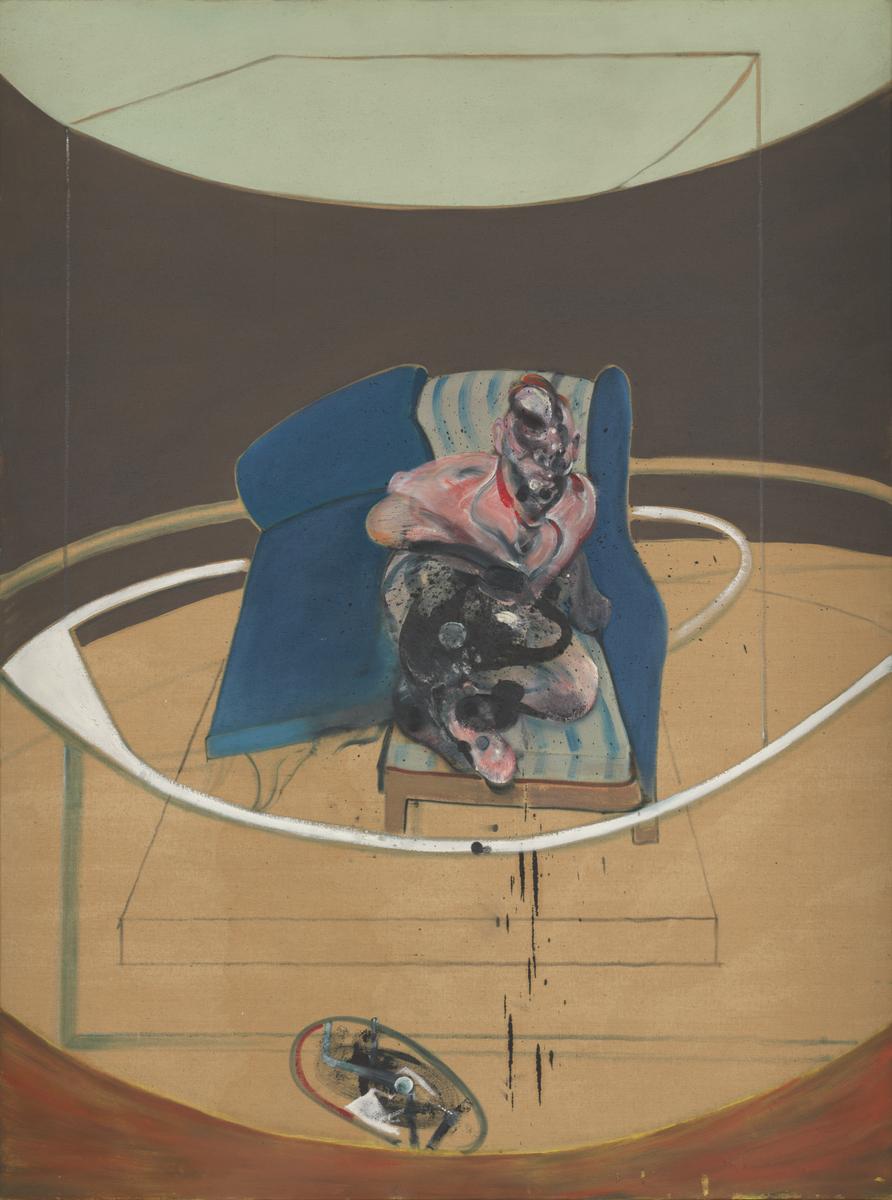
Francis Bacon, Study for Portrait on Folding Bed 1963
A partially clothed male figure, wearing a rolled sleeved shirt, lies on an unmade folding bed. The head and lower body are rendered with distortion and ambiguity, with the texture and visceral colours evoking the flesh, bone and blood. The dribbles and splatters of paint give the appearance of leaking bodily fluids. Francis Bacon found the image disappointing, regretting the oval at the bottom and the absence of the carpet, remarking ‘I wish they (Tate) would burn it.’
Gallery label, October 2025
2/18
artworks in Henry Moore’s Public Commissions
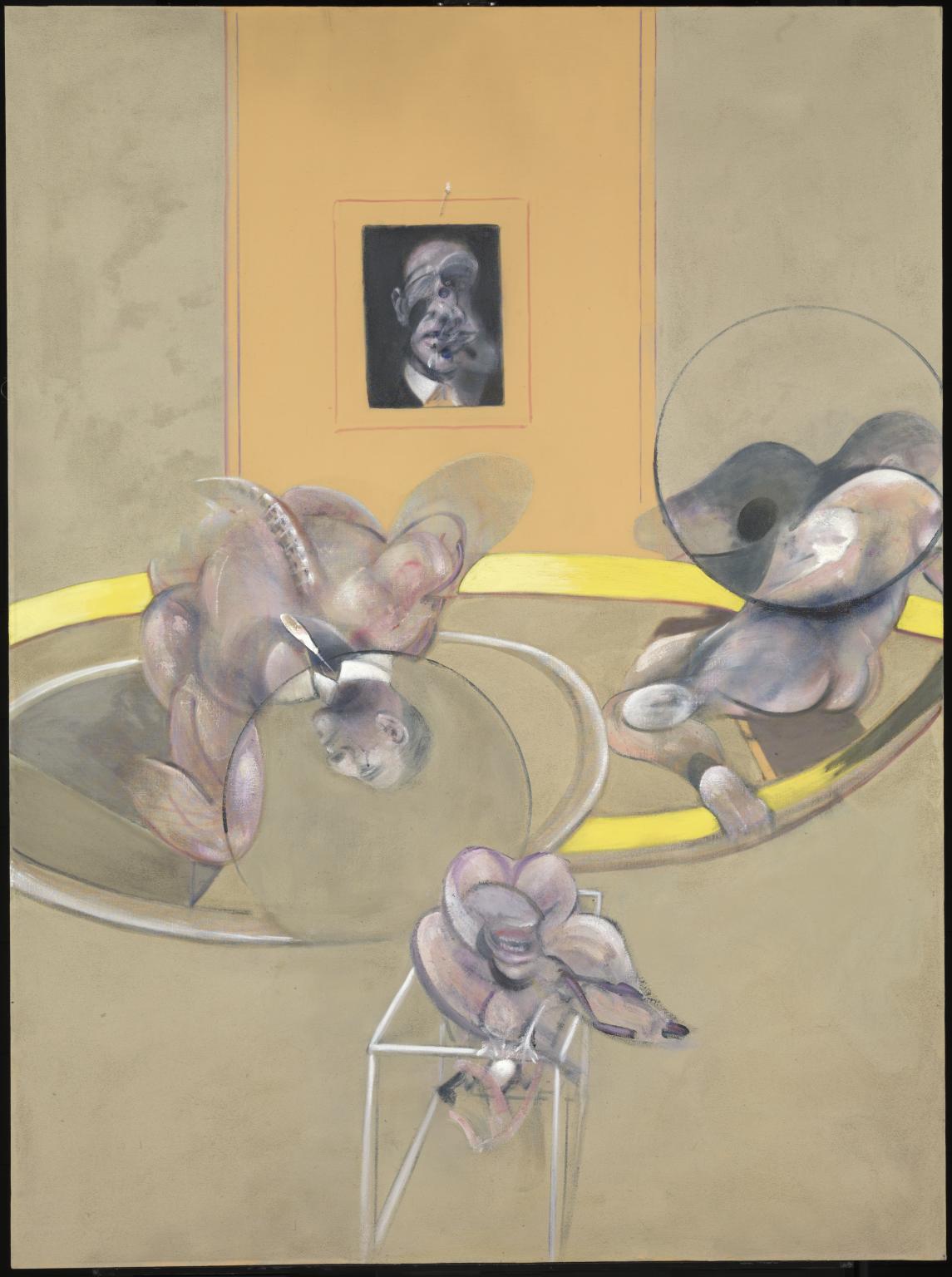
Francis Bacon, Three Figures and Portrait 1975
Two dynamic figures and bird-like creature are placed within a claustrophobic setting. The three figures are watched over by a portrait. This work is usually seen as an image of suffering. One - and possibly both - of the twisting human figures have been identified as George Dyer, Bacon’s companion, lover and muse. Dyer killed himself in 1971, but Bacon continued to portray him after his death. The bird-like form in the foreground, with its snarling human mouth, has been linked to the Furies, goddesses of vengeance in Greek mythology.
Gallery label, June 2021
3/18
artworks in Henry Moore’s Public Commissions
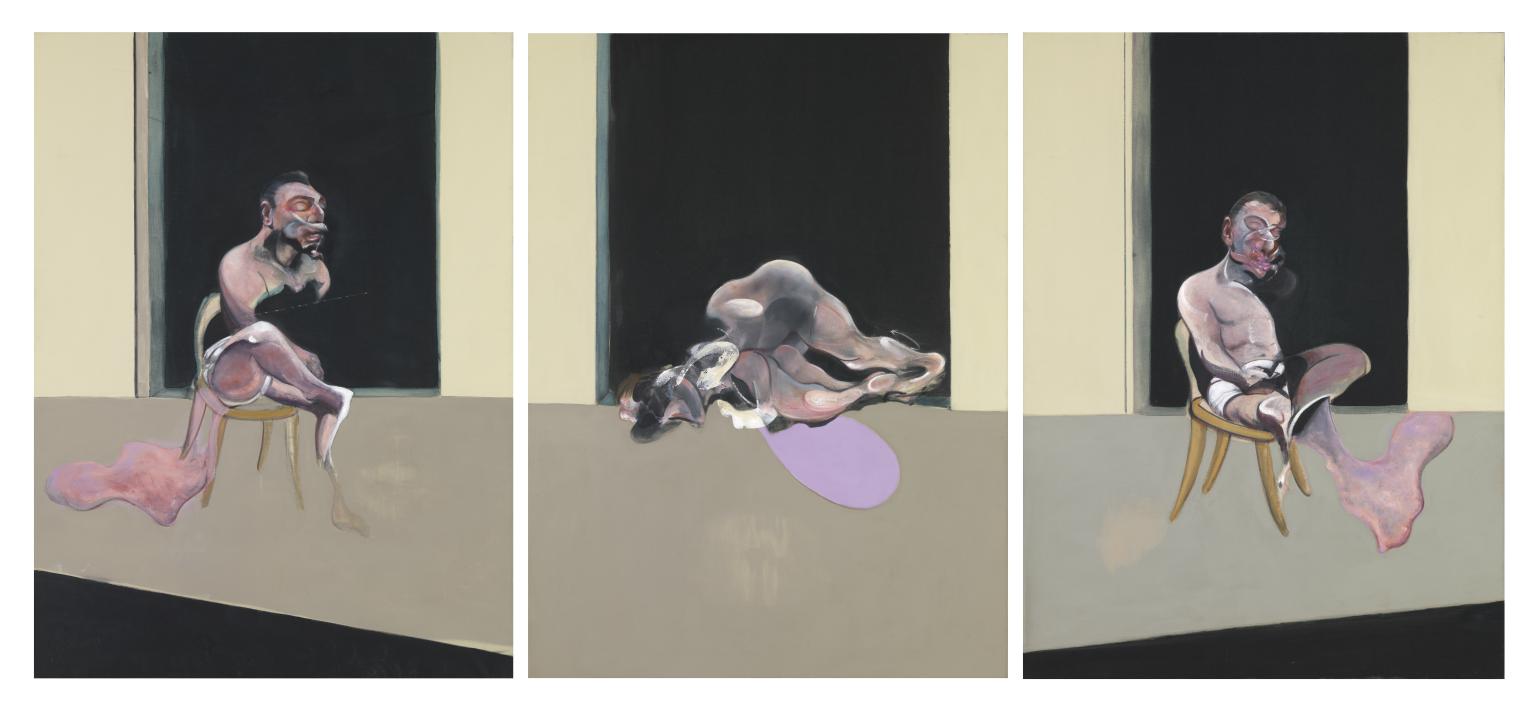
Francis Bacon, Triptych August 1972 1972
This work is generally considered one in a series of Black Triptychs which followed the suicide of Bacon’s lover, George Dyer. Dyer appears on the left and Bacon is on the right. The central group is derived from a photograph of wrestlers by Edward Muybridge, but also suggests a more sexual encounter. The seated figures and their coupling are set against black voids and the central flurry has been seen as ‘a life-and death struggle’. The artist’s biographer wrote: ‘What death has not already consumed seeps incontinently out of the figures as their shadows.’
Gallery label, September 2016
4/18
artworks in Henry Moore’s Public Commissions
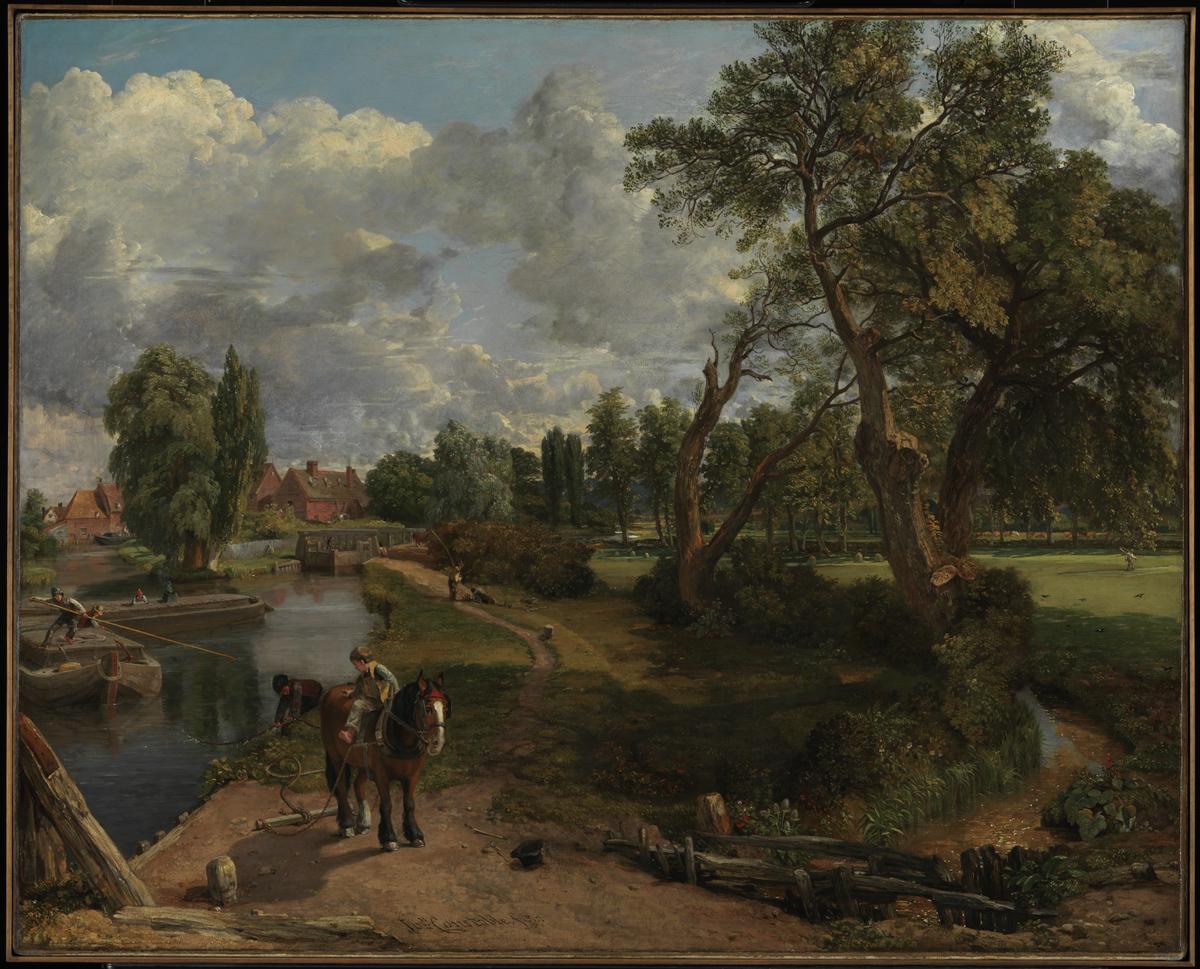
John Constable, Flatford Mill (‘Scene on a Navigable River’) 1816–7
Typical of the kind of painting for which Constable became famous, this is a snapshot of working life at his father’s business premises on the River Stour. It shows a barge being disconnected from a tow horse, ready to be ‘poled’ under Flatford bridge, in the lower left-hand corner. It is the largest painting Constable worked on outdoors. X-rays show us that he changed it significantly in the studio, painting out a horse on the towpath and replacing it with the two boys in the distance. Can you see where Constable has signed his name as if it has been written in the dirt track?
Gallery label, October 2023
5/18
artworks in Henry Moore’s Public Commissions
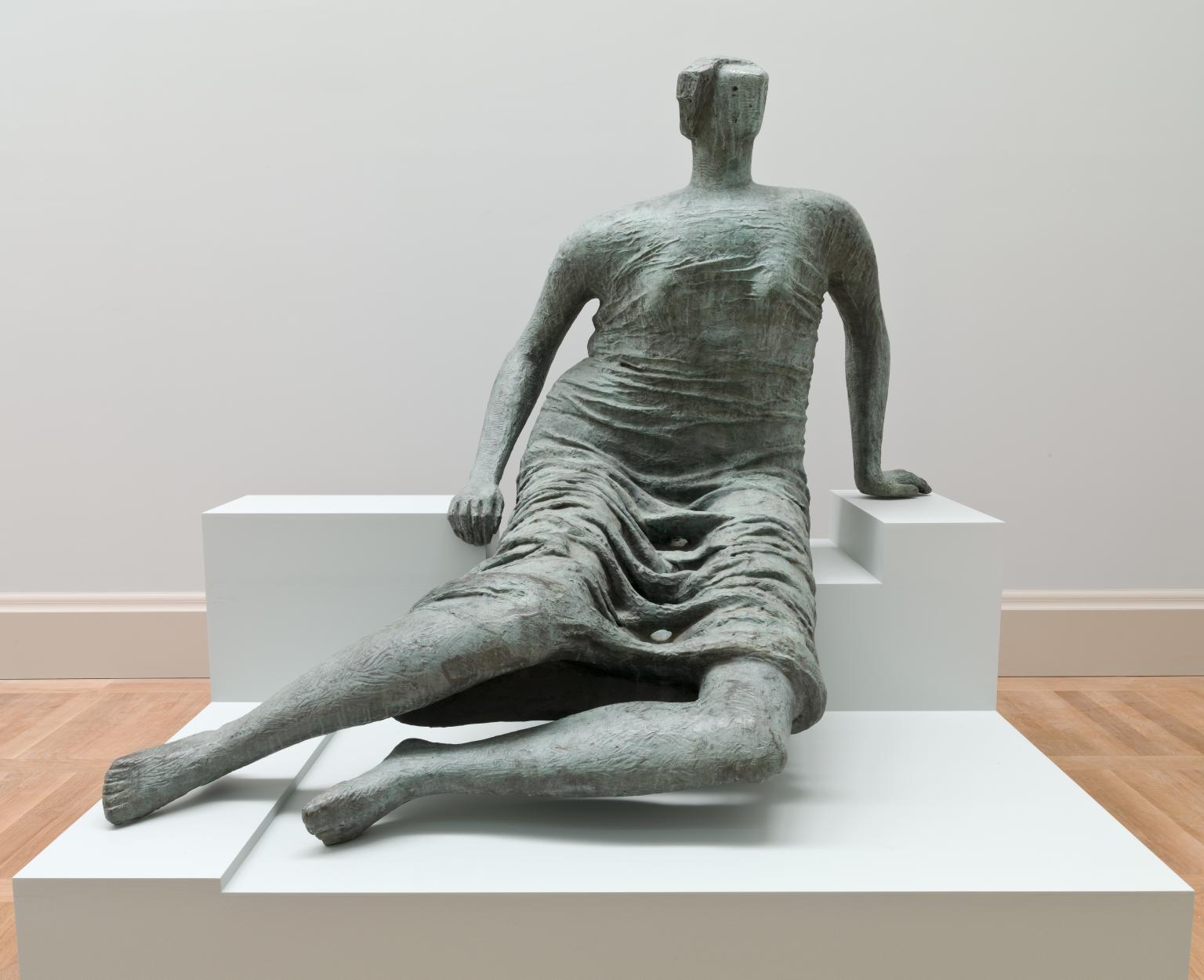
Henry Moore OM, CH, Draped Seated Woman 1957–8, cast c.1958–63
Two casts of this monumental female figure have been sited in public urban spaces: one in Wuppertal in Germany, another in the East End of London. London County Council’s policy of placing such work in deprived areas was part of a post-war revival of civil aspirations and social reform.
Gallery label, June 2003
6/18
artworks in Henry Moore’s Public Commissions
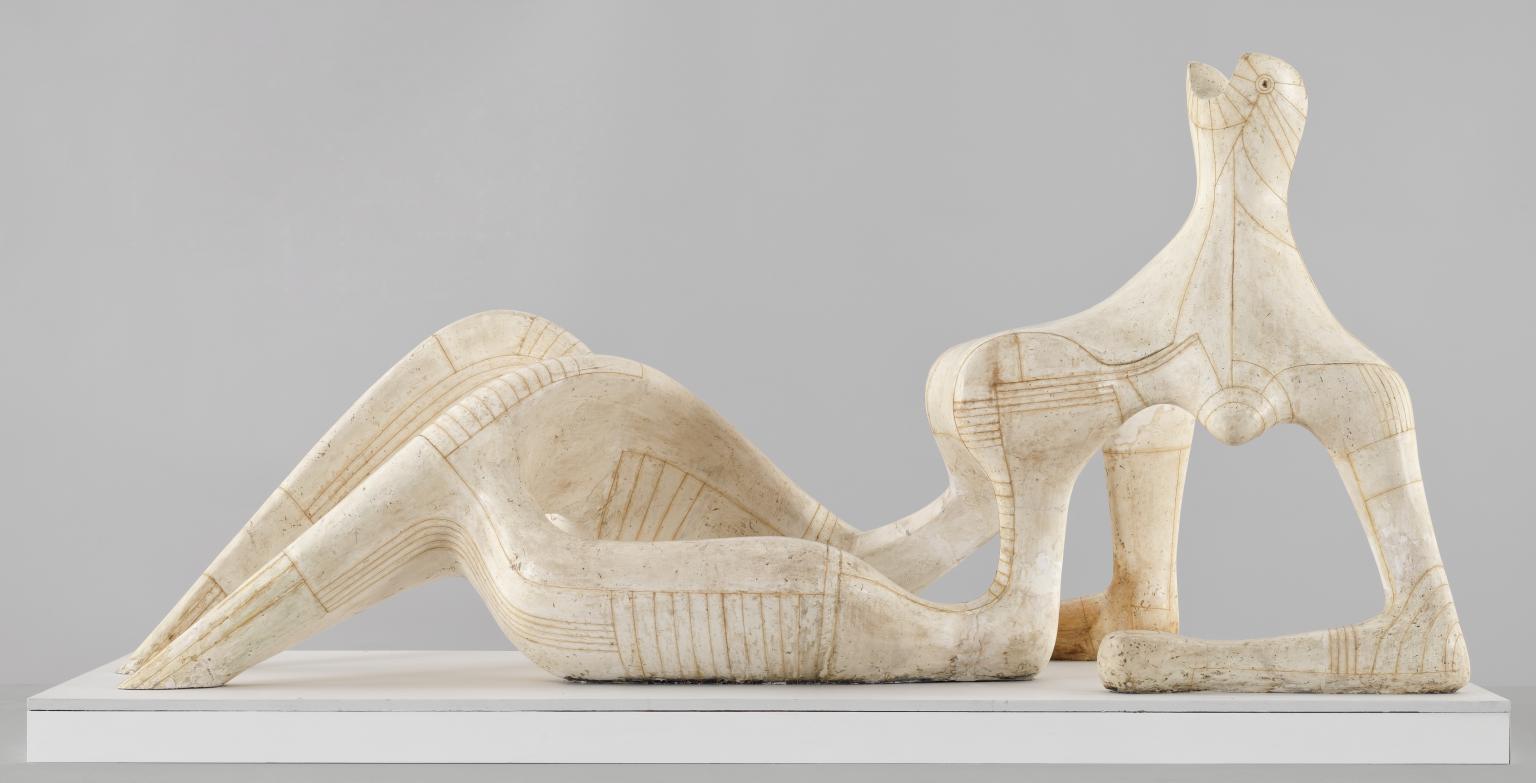
Henry Moore OM, CH, Reclining Figure 1951
In the late 1940s, the Arts Council invited Moore to submit ideas for a sculpture to be sited at the South Bank site of the Festival of Britain. Although the organising committee suggested a family theme, Moore chose to make this tense, skeletal reclining form. The work on display is the plaster model for the bronze, which was cast in an edition of five.
Gallery label, September 2004
7/18
artworks in Henry Moore’s Public Commissions
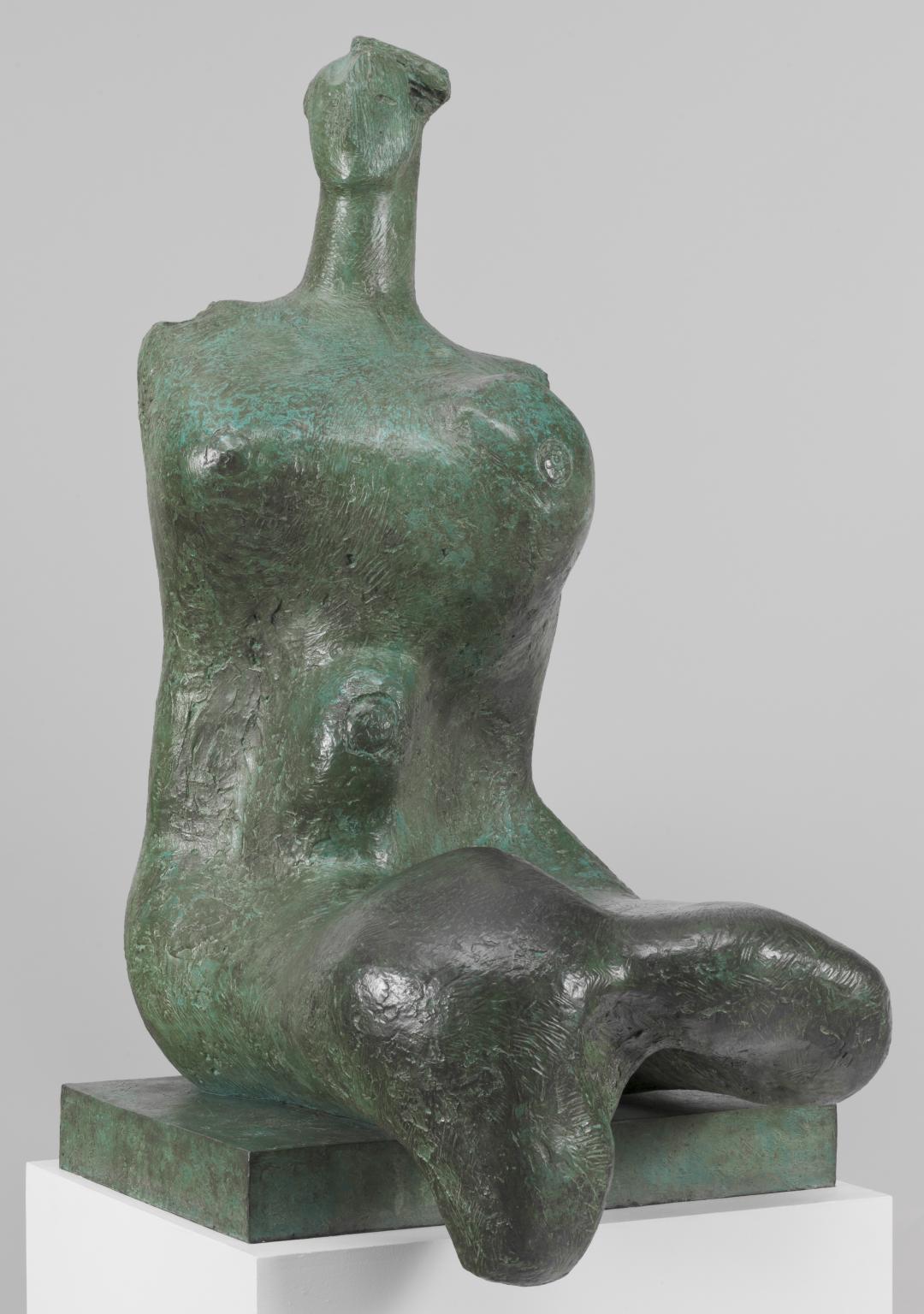
Henry Moore OM, CH, Woman 1957–8, cast date unknown
This is one of the largest of Moore's sculptures of a seated female nude, and it was cast in an edition of nine. The original plaster is in the Art Gallery of Ontario, Toronto, and the curator there, Alan Wilkinson, has described this sculpture as 'one of the most potent images of fertility produced in the 20th century'. He also related it to Moore's early interest in Palaeolithic sculpture, an influence the artist readily acknowledged. Moore wrote of the work: ''Woman' has that startling fullness of the stomach and breasts. The smallness of the head is necessary to emphasize the massiveness of the body - if the head had been any larger it would have ruined the whole idea of the sculpture.'
Gallery label, September 2004
8/18
artworks in Henry Moore’s Public Commissions
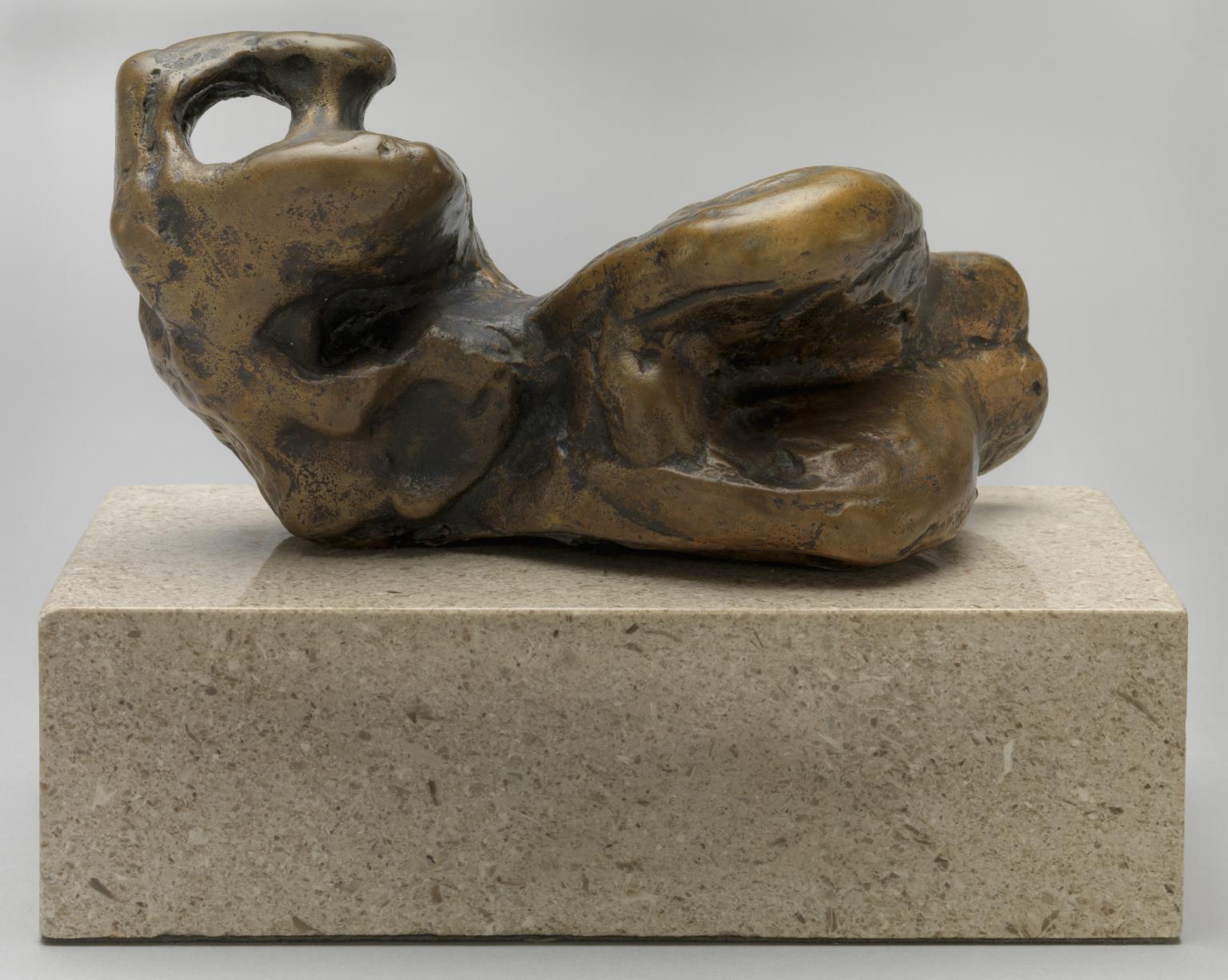
Henry Moore OM, CH, Reclining Figure: Bunched 1961, cast 1961–2
By the mid-1950s Moore had almost entirely eliminated drawing from his creative process and explored his ideas through small maquettes. These had an intrinsic quality of immediacy or spontaneity and allowed him to imagine the finished product in the round. In order to translate the scale of the work more effectively, he often made larger working models as an intermediate stage between the maquette and the finished sculpture. Moore’s maquettes were typically cast in bronze in editions of up to ten. The sculptor strove for monumentality in his work and tried to imbue the same quality in the small maquettes. He also took a great deal of care with their finish. Some were more polished than others, some darker, some greener. Moore did all the patination himself, treating the bronze with different acids to achieve different effects then working on it by hand, rubbing and wearing it down.
Gallery label, September 2004
9/18
artworks in Henry Moore’s Public Commissions
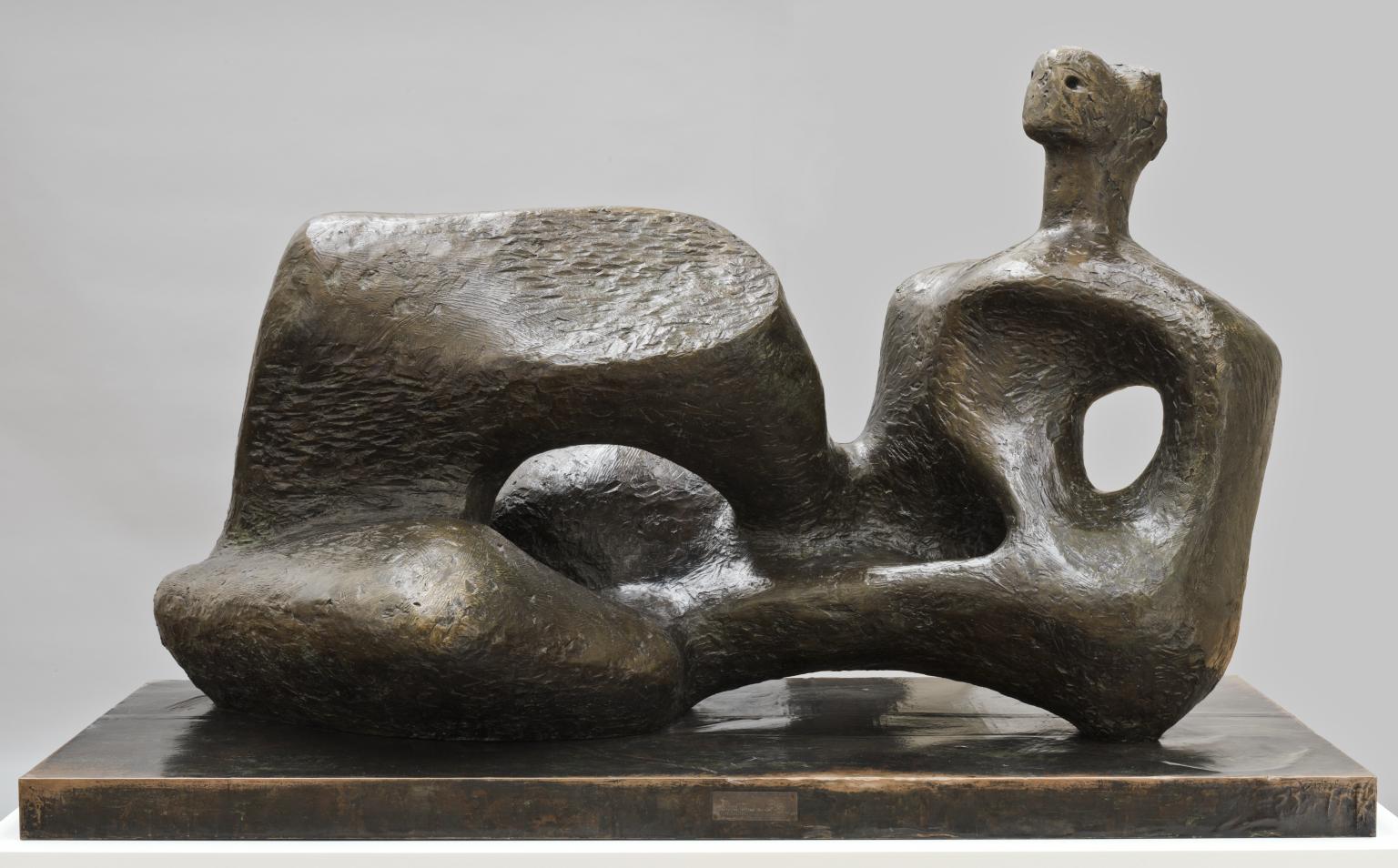
Henry Moore OM, CH, Working Model for Unesco Reclining Figure 1957, cast c.1959–61
This sculpture is related to the UNESCO Reclining Figure at UNESCO’s Paris headquarters shown in the photograph above. That work is carved from travertine marble and is unique. This smaller bronze sculpture is in an edition of six. As with his other public sculptures Moore sought to avoid narrative or overt rhetoric. The universal significance attributed to Moore’s sculpture made it particularly appropriate for a global organisation such as UNESCO.
Gallery label, September 2004
10/18
artworks in Henry Moore’s Public Commissions
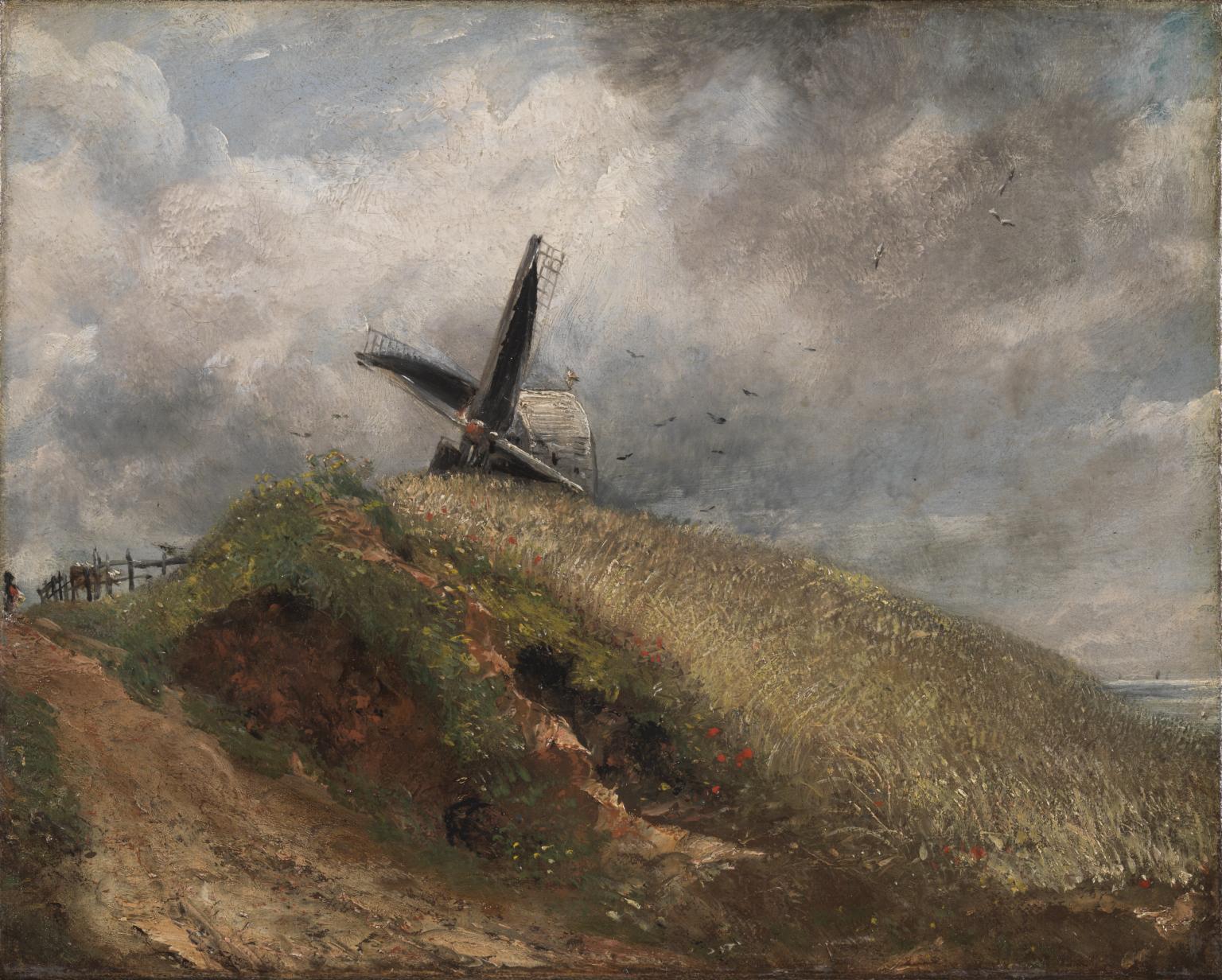
John Constable, A Windmill near Brighton 1824
Though he didn’t like the crowds that flocked to Brighton, Constable found its setting inspiring. Exploring the quiet of the downs behind the town, he discovered a working landscape of windmills, crops and grazing animals. Constable’s composition, with the windmill partially obscured by a mound, gives a good sense of this undulating landscape. It falls away on the right to offer a glimpse of the sea. This sketch was painted on 27 July 1824. He wrote a note about weather conditions on the back: ‘very fine morning after rain’.
Gallery label, October 2023
11/18
artworks in Henry Moore’s Public Commissions
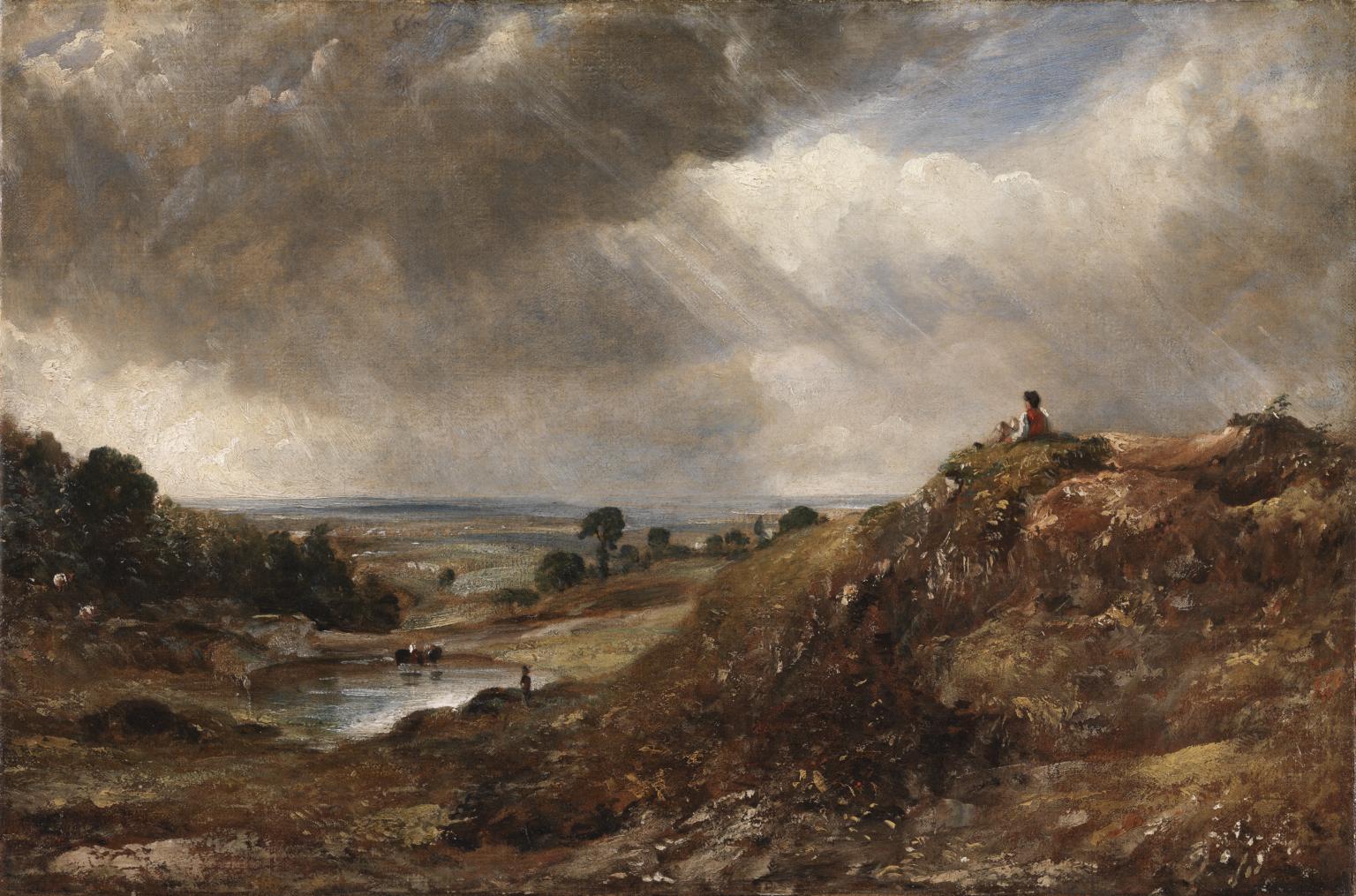
John Constable, Branch Hill Pond, Hampstead Heath, with a Boy Sitting on a Bank c.1825
By the early nineteenth century the open landscape of Hampstead Heath, north of London, was increasingly appreciated as a refuge from the ever more crowded and polluted city. This is one of many views of the Heath that Constable painted. His picture revels in the wildness of the landscape, both in the choice of scene and in the freedom of his painting style. It was created for his friend, the actor Jack Bannister, who, the artist reported, wanted a landscape in which he could 'feel the wind blowing on his face'.
Gallery label, September 2004
12/18
artworks in Henry Moore’s Public Commissions
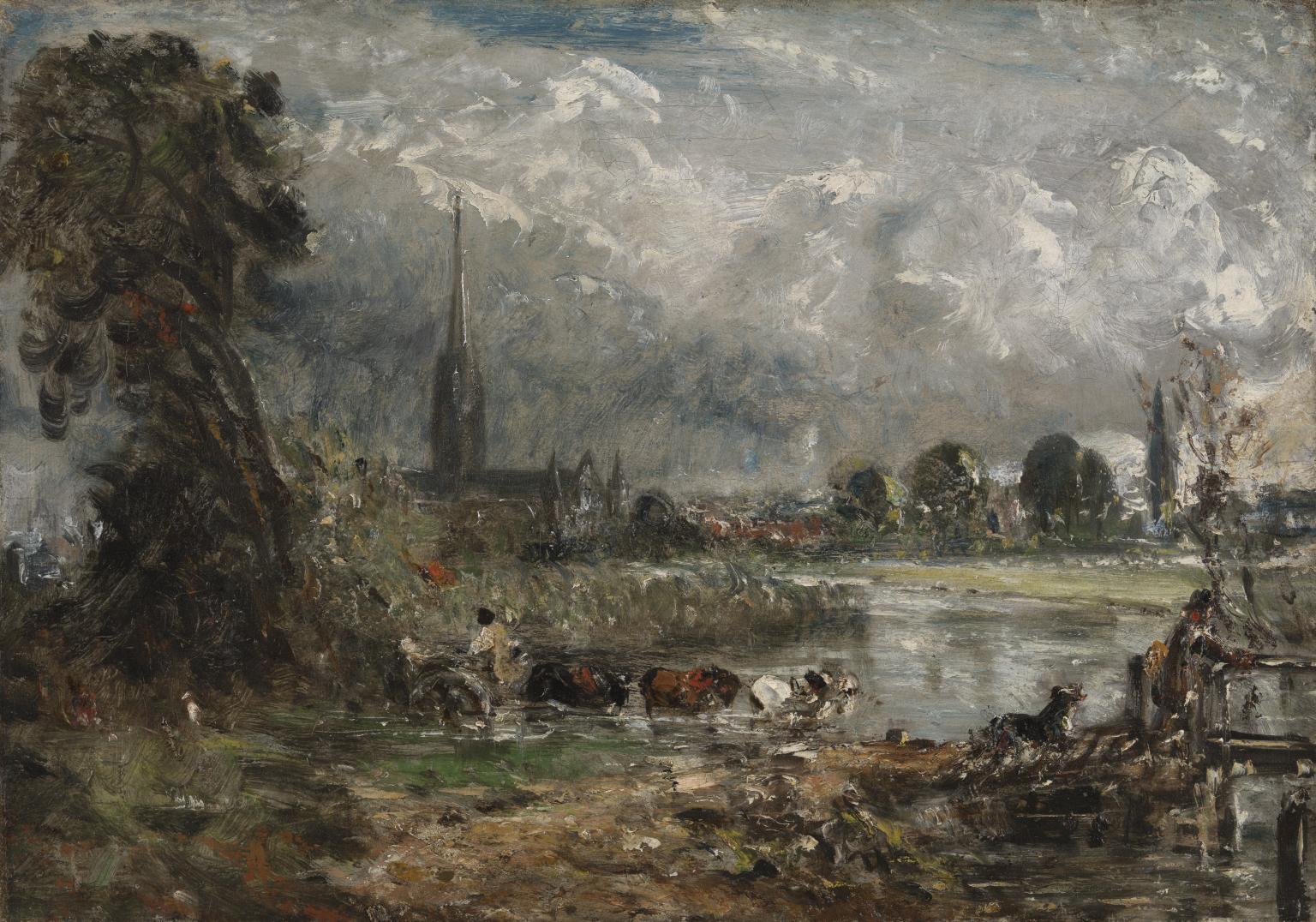
John Constable, Salisbury Cathedral from the Meadows ?1829
On his final two visits to Salisbury in 1829, Constable planned his last and most impressive image of the place, Salisbury Cathedral from the Meadows, exhibited in 1831. The finished painting is in a private collection but is currently on loan to the National Gallery.
This is a studio sketch, about a quarter of the size of the final picture. It was preceded by smaller oil sketches and drawings, and followed by a full-size oil sketch. It represents a crucial stage in the development of the work, with the horse-drawn waggon now moved to the centre of the composition.
Gallery label, September 2004
13/18
artworks in Henry Moore’s Public Commissions
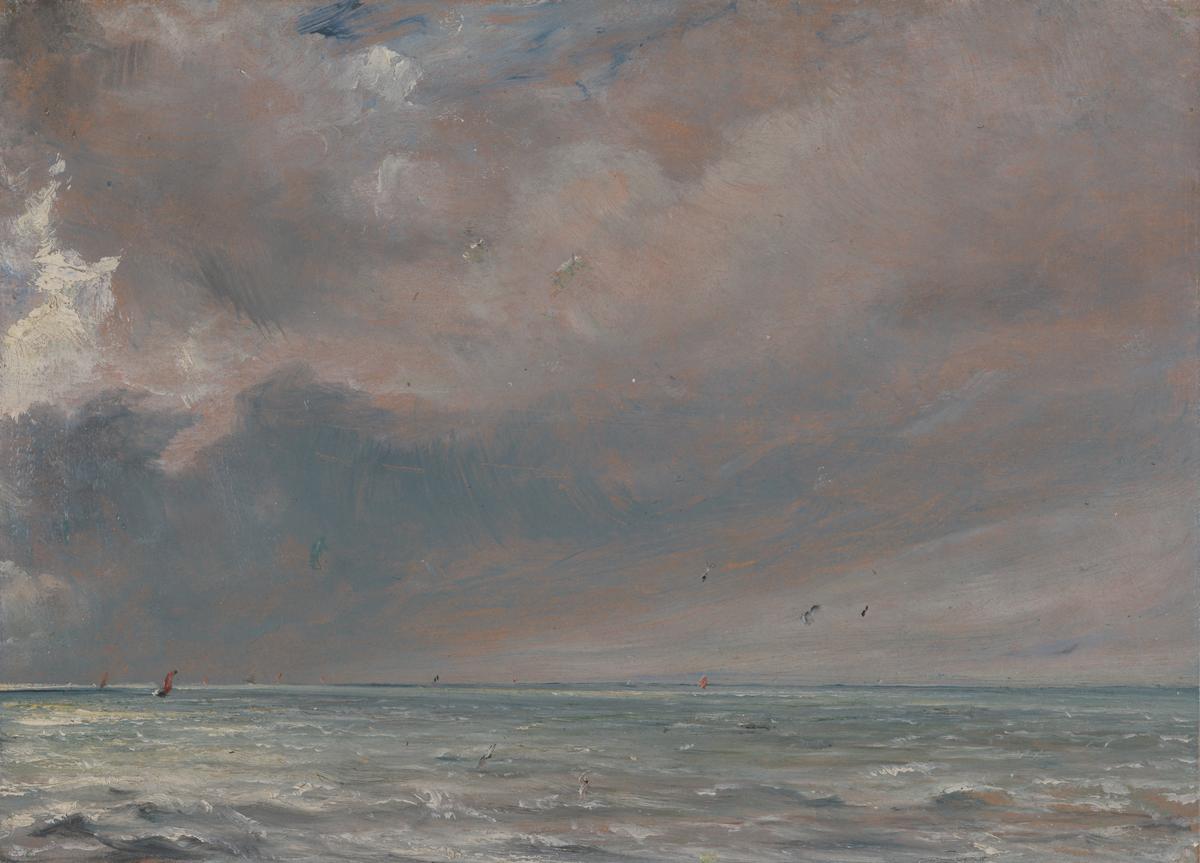
John Constable, The Sea near Brighton 1826
Brighton, on the south coast of England, was a place many Londoners escaped to. Some went there for fun, others for rest. Constable rented a house for his family there in the hope that the fresh sea air and change of scene would restore the health of his wife, Maria. This painting is one of only a handful of oil sketches Constable made outdoors in winter. He had written on being impressed by ‘the magnificence of the sea’ and of how seabirds, like those seen here, ‘add to the wildness and to the sentiment of melancholy’ at the shore.
Gallery label, October 2023
14/18
artworks in Henry Moore’s Public Commissions
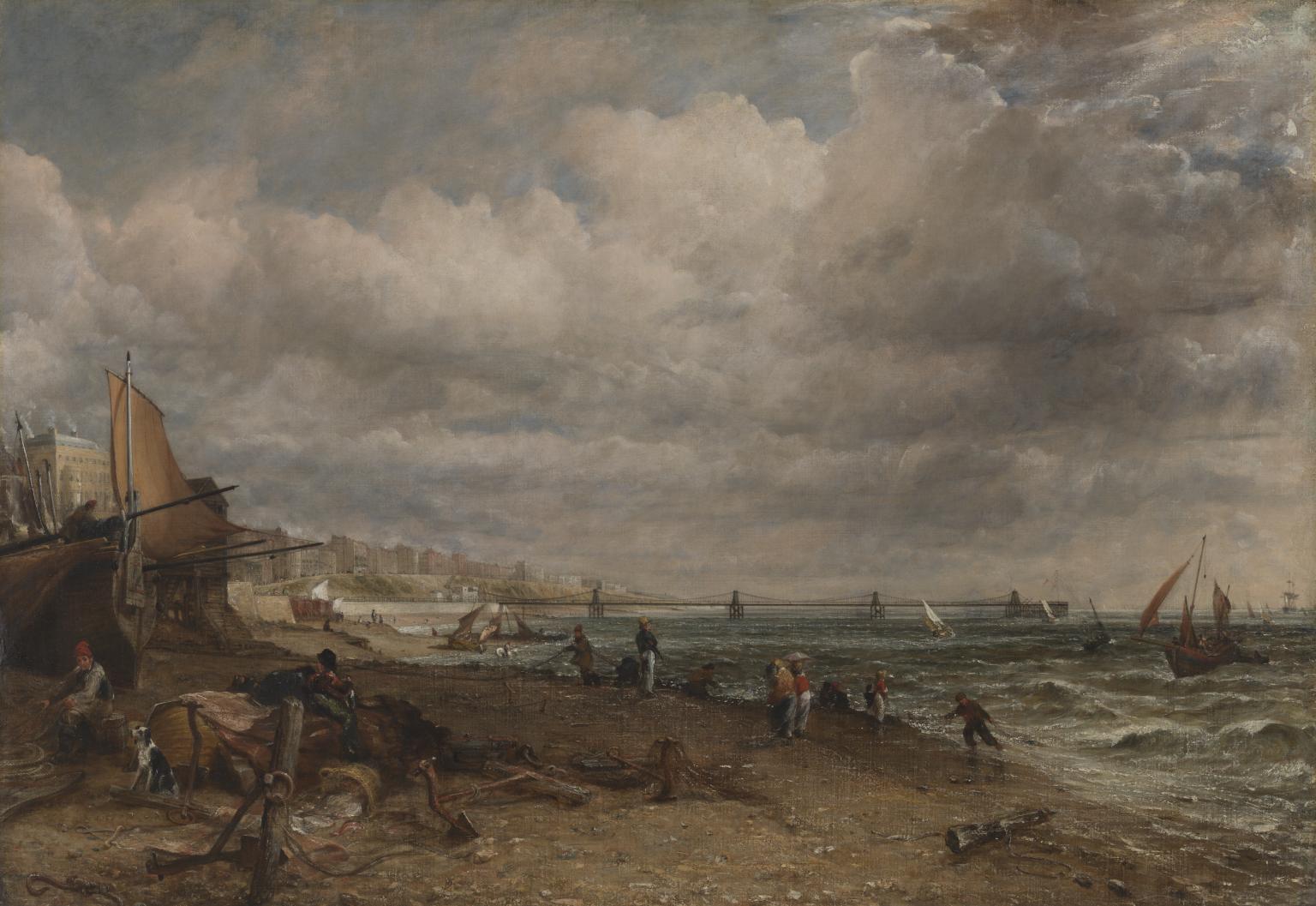
John Constable, Chain Pier, Brighton 1826–7
This blustery coastal scene was part of Constable’s attempt to prove that he could paint different kinds of subjects on a large scale. From 1824, Constable regularly spent summers in Brighton in the hope that the sea air would restore the health of his wife, Maria. Brighton was then the fastest growing and most fashionable town in Britain. Tourists flocked to attractions like the Chain Pier, which opened in 1823 to receive steamboats from France. Constable has silhouetted the pier on the horizon here. Around it we see fishermen and ladies huddled under their parasols as well as rows of newly built terraces lining the seafront.
Gallery label, January 2025
15/18
artworks in Henry Moore’s Public Commissions
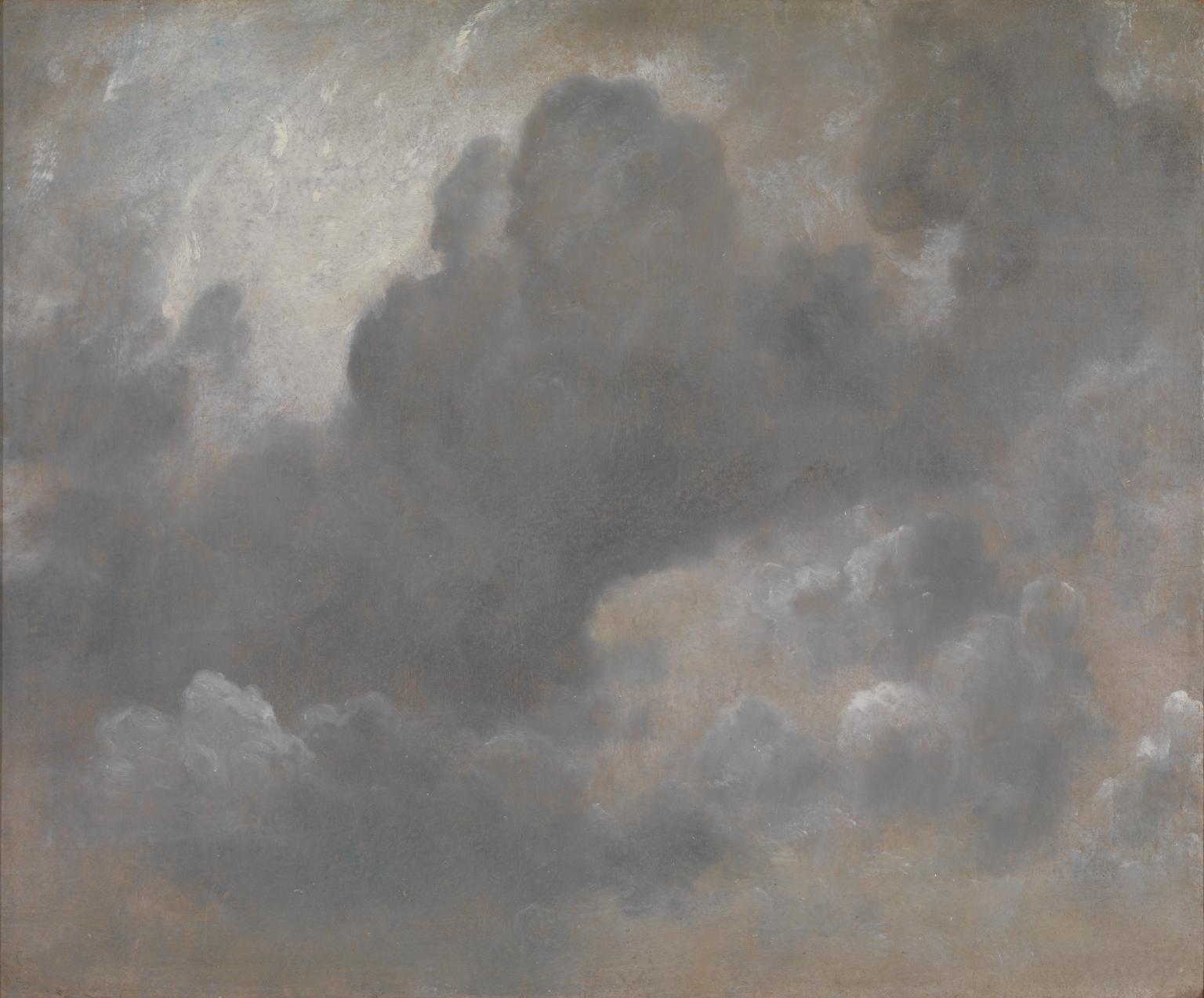
John Constable, Cloud Study 1822
In 1821 and 1822, Constable studied clouds and the sky intensively, mainly over Hampstead Heath, north of London. He often inscribed the date, time of day, wind direction and general weather conditions on the back of the painting, indicating an interest in meteorology. In this instance, the inscription on the back includes the time of day ’11 o’clock’ and ‘noon,’ suggesting Constable painted this in an hour. Capturing the changeability of clouds as they drifted above him was a challenging exercise. Constable’s lively brushwork, colour tones and understanding of the structure and movement of clouds made him adept at expressing mood in landscape painting.
Gallery label, October 2023
16/18
artworks in Henry Moore’s Public Commissions
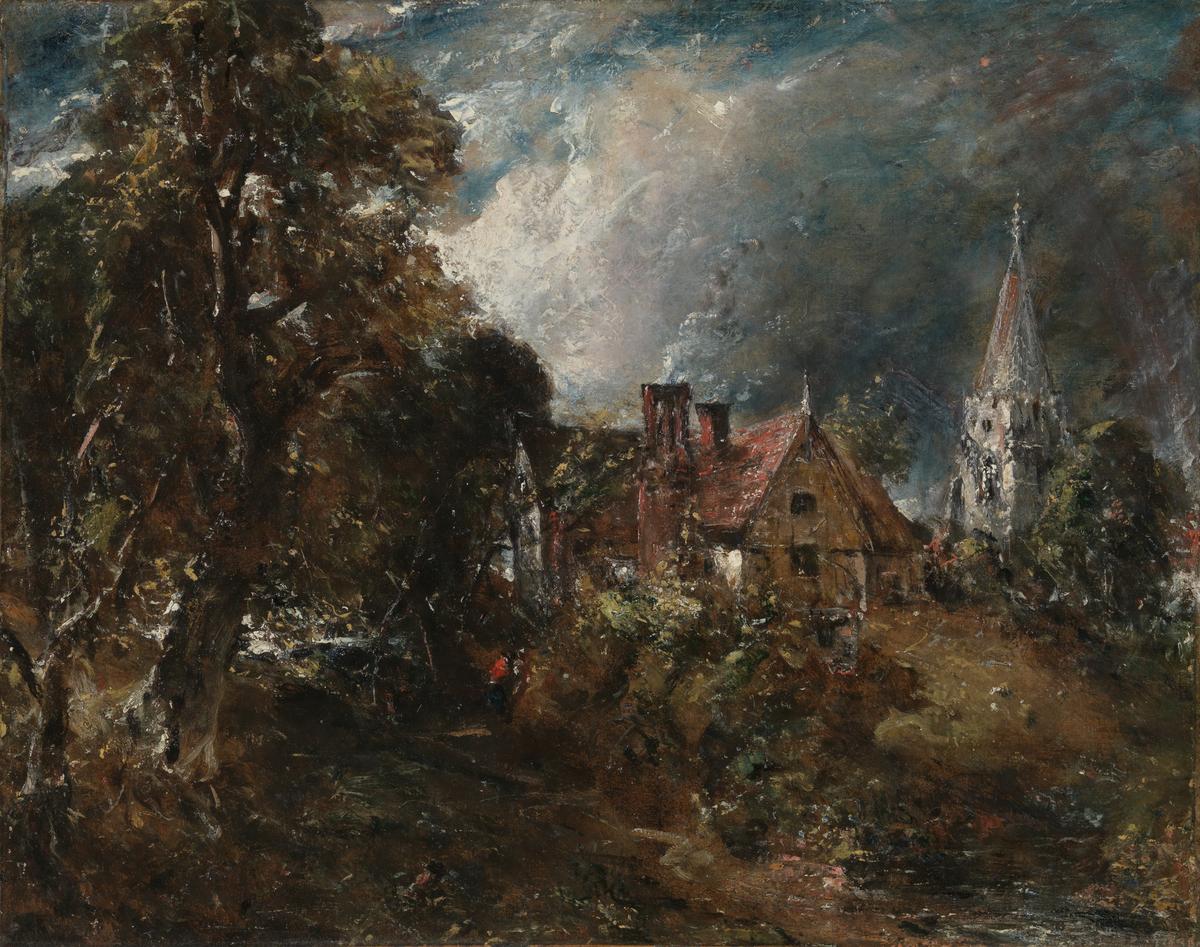
John Constable, The Glebe Farm c.1830
From around 1828, Constable’s paintings became darker. He conjured turbulent skies and applied paint using dabs and dashes. He grew obsessive about white highlights, believing they created ‘freshness’. The critics, however, called this effect ‘Constable’s ‘snow’. ‘Glebe’ means church-owned land. Constable’s supporter, the Bishop of Salisbury, had lived in this house during his time in Suffolk. Constable painted at least four other versions of this view after the Bishop’s death in 1825. He experimented on this one, adding a spire to the church and a rainbow on the right. He also tried changing the church into a windmill.
Gallery label, October 2023
17/18
artworks in Henry Moore’s Public Commissions
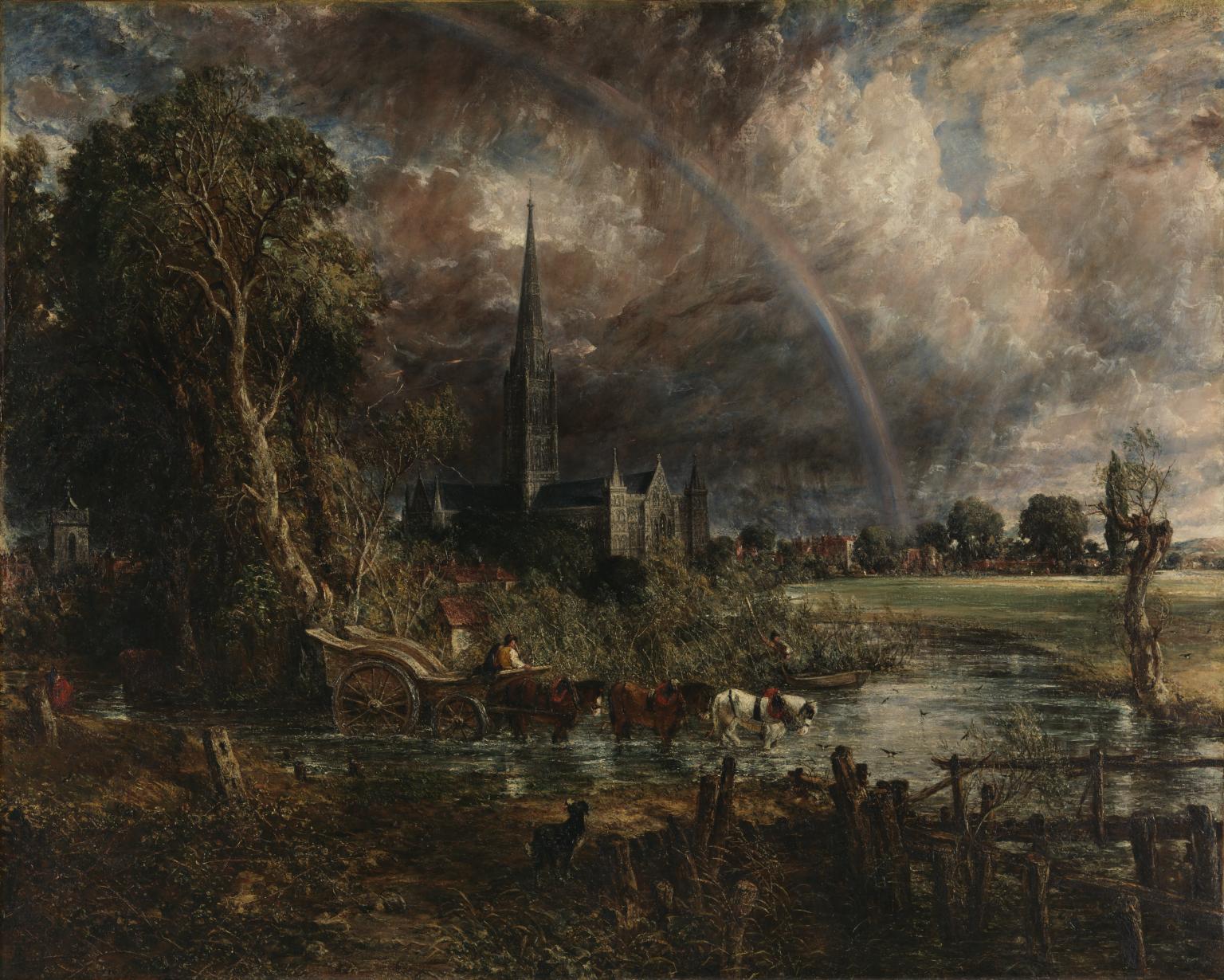
John Constable, Salisbury Cathedral from the Meadows exhibited 1831
This stormy painting is thought to reflect John Constable’s worries about the effect of political reform on the Anglican Church. The subject was suggested by his close friend John Fisher, an Archdeacon who lived in Salisbury. The storm may also represent Constable’s grief following the death of his wife, Maria. When he first exhibited this painting in 1831, debates about political reform were intensifying. The rainbow may have been added later, however, suggesting the storm is passing.
Gallery label, August 2024
18/18
artworks in Henry Moore’s Public Commissions
Art in this room
Frederick Sandys
Oriana
1861
Francis Bacon
Study for Portrait on Folding Bed
1963
Francis Bacon
Three Figures and Portrait
1975
Francis Bacon
Triptych August 1972
1972
John Constable
Flatford Mill (‘Scene on a Navigable River’)
1816–7
Henry Moore OM, CH
Draped Seated Woman
1957–8, cast c.1958–63
You've viewed 6/18 artworks
You've viewed 18/18 artworks