

Liz Johnson Artur, Time Don’t Run Here 2020. Tate. © reserved.
‘I use time but in a different way, I create my own way to deal with time.’ A display of photographs by Liz Johnson Artur
After joining the Black Lives Matter protests in London in Spring 2020, photographer Liz Johnson Artur was motivated to show solidarity with and photograph protestors in Vauxhall, Westminster and Trafalgar Square. Artur decided to print the work on pages from braille editions of two novels she collected: Iris Murdoch’s The Red and The Green (1965) and John Harris’s Ride out the Storm: A Novel of Dunkirk (1975), both of which contain references to difference, conflict and resistance.
‘It was crucial for me to give those people their reference in time in a physical way, this is why I printed the photographs. I hope they can see themselves as part of this important moment in British history.’
Time don’t run here forms part of what Artur calls her Black Balloon Archive. She has been making this vast ongoing body of work since the 1990s, depicting people in Africa, and of the African and Caribbean diasporas. Examples from the Archive are displayed around this room.
‘In my work, I like to talk to people, not about them. When people look at my work, they are actually looking at my audience. It’s them I would like to reach, but everyone else is invited too.’
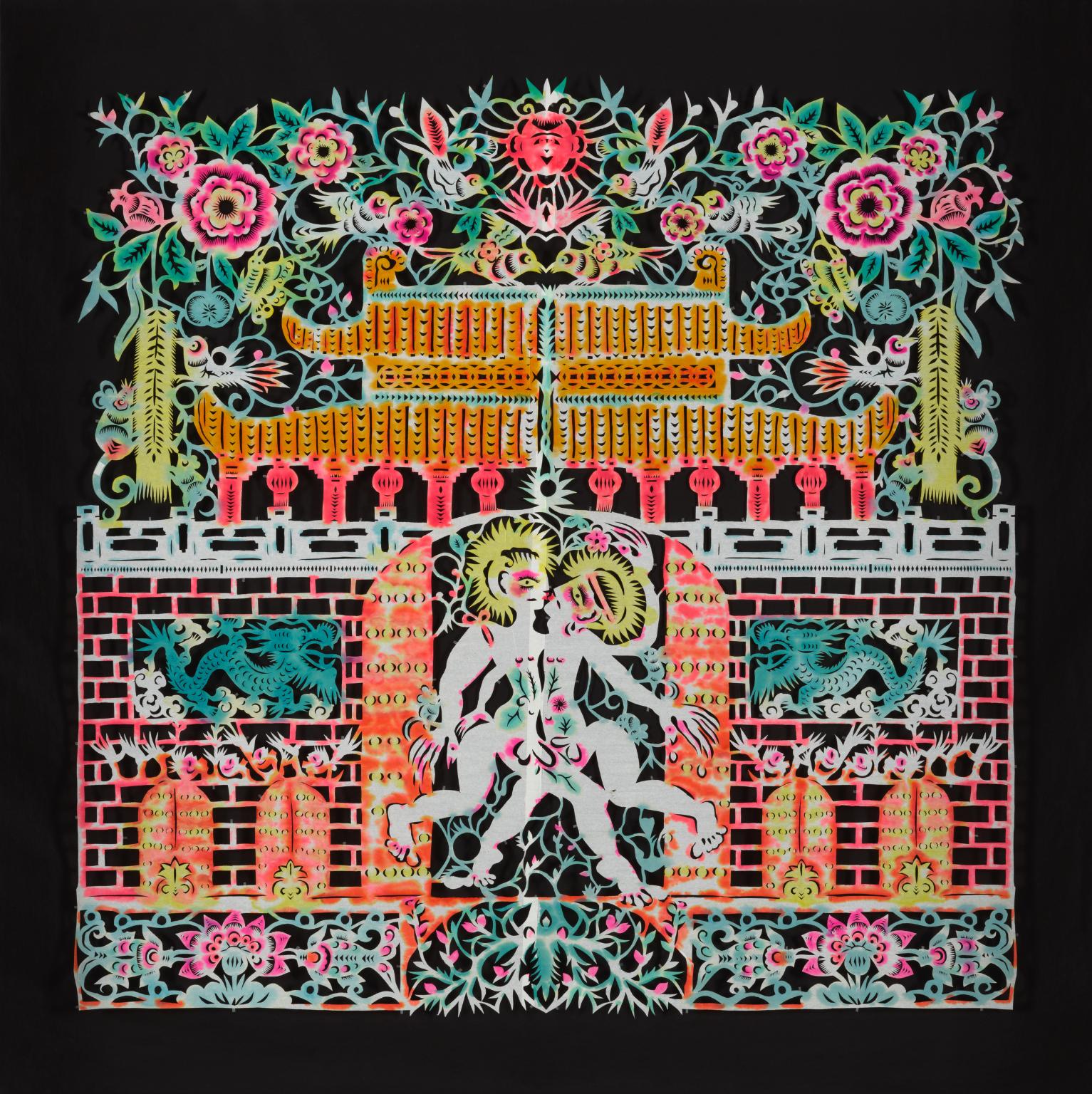
Xiyadie, Gate (Tiananmen) 2020
This one of a group of paper works in Tate’s collection by the Chinese artist Xiyadie. The works come from two separate series of works which subvert in different ways the traditional and intricate art of papercutting, recognised in China as an ancient folk art that can be traced back to the Eastern Han Dynasty (25–220 CE). Three works from 2020 (Gate (Tiananmen), Fish on a Chopping Board and Train, Tate T15927–T15929) are large-scale papercuts from white ‘xuanzhi’ (宣纸), a type of paper which is also used for traditional Chinese calligraphy and ink-wash painting due to its resilient yet absorbent qualities. Once cut, each of these works is hand-painted with food colouring more commonly used for identifying the fillings of steamed ‘bao’ buns, a humble snack often sold at street food stalls throughout China. Though each of these works represents figurative subjects, they are highly stylised according to the parameters of cutting folded paper: an intricate skill which has generically been described as a ‘matriarchs’ art’ due to the way in which it has traditionally been passed down through generations of women within the domestic sphere.
1/8
artworks in Liz Johnson Artur
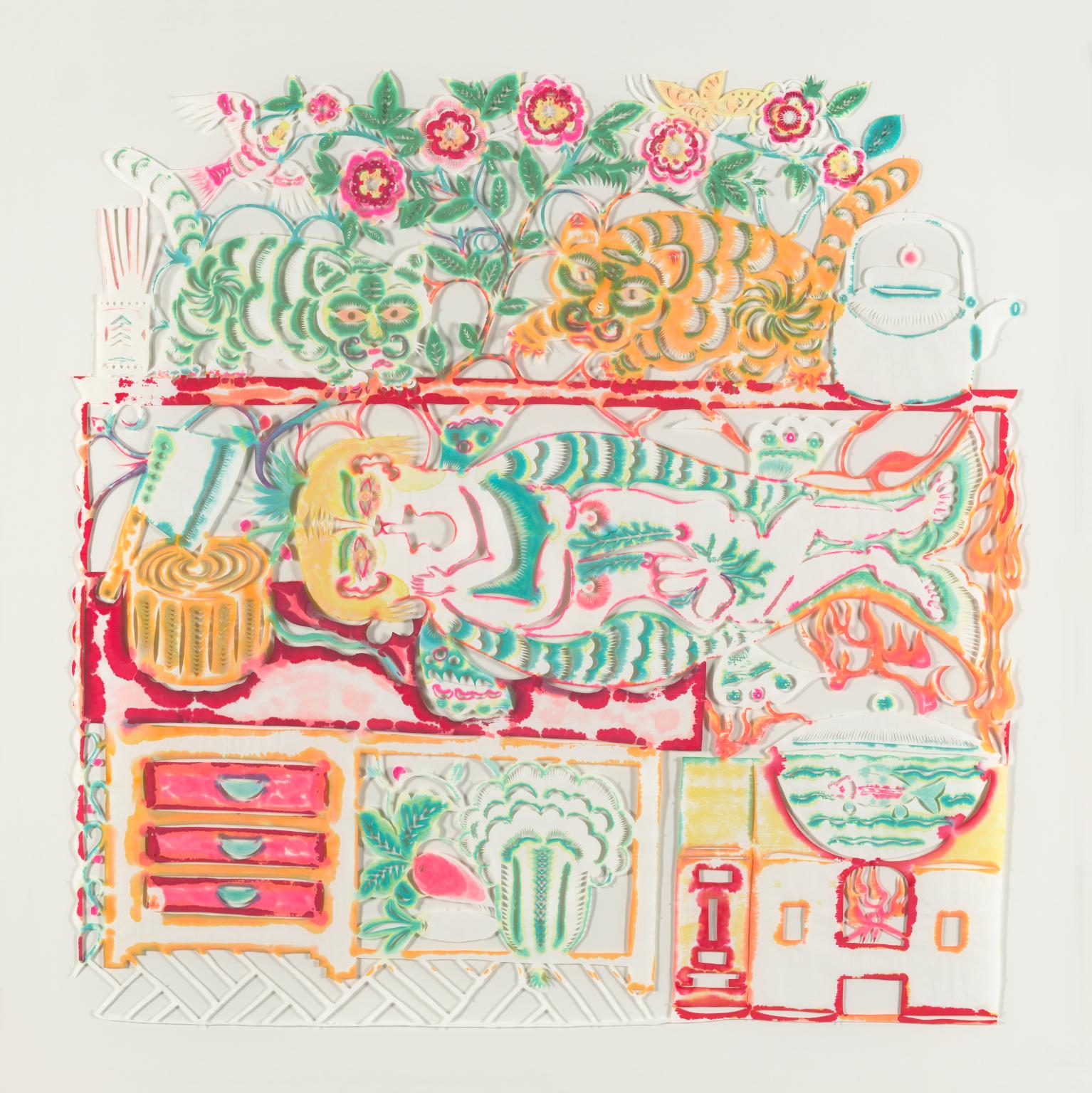
Xiyadie, Fish on a Chopping Board c.2001
This one of a group of paper works in Tate’s collection by the Chinese artist Xiyadie. The works come from two separate series of works which subvert in different ways the traditional and intricate art of papercutting, recognised in China as an ancient folk art that can be traced back to the Eastern Han Dynasty (25–220 CE). Three works from 2020 (Gate (Tiananmen), Fish on a Chopping Board and Train, Tate T15927–T15929) are large-scale papercuts from white ‘xuanzhi’ (宣纸), a type of paper which is also used for traditional Chinese calligraphy and ink-wash painting due to its resilient yet absorbent qualities. Once cut, each of these works is hand-painted with food colouring more commonly used for identifying the fillings of steamed ‘bao’ buns, a humble snack often sold at street food stalls throughout China. Though each of these works represents figurative subjects, they are highly stylised according to the parameters of cutting folded paper: an intricate skill which has generically been described as a ‘matriarchs’ art’ due to the way in which it has traditionally been passed down through generations of women within the domestic sphere.
2/8
artworks in Liz Johnson Artur
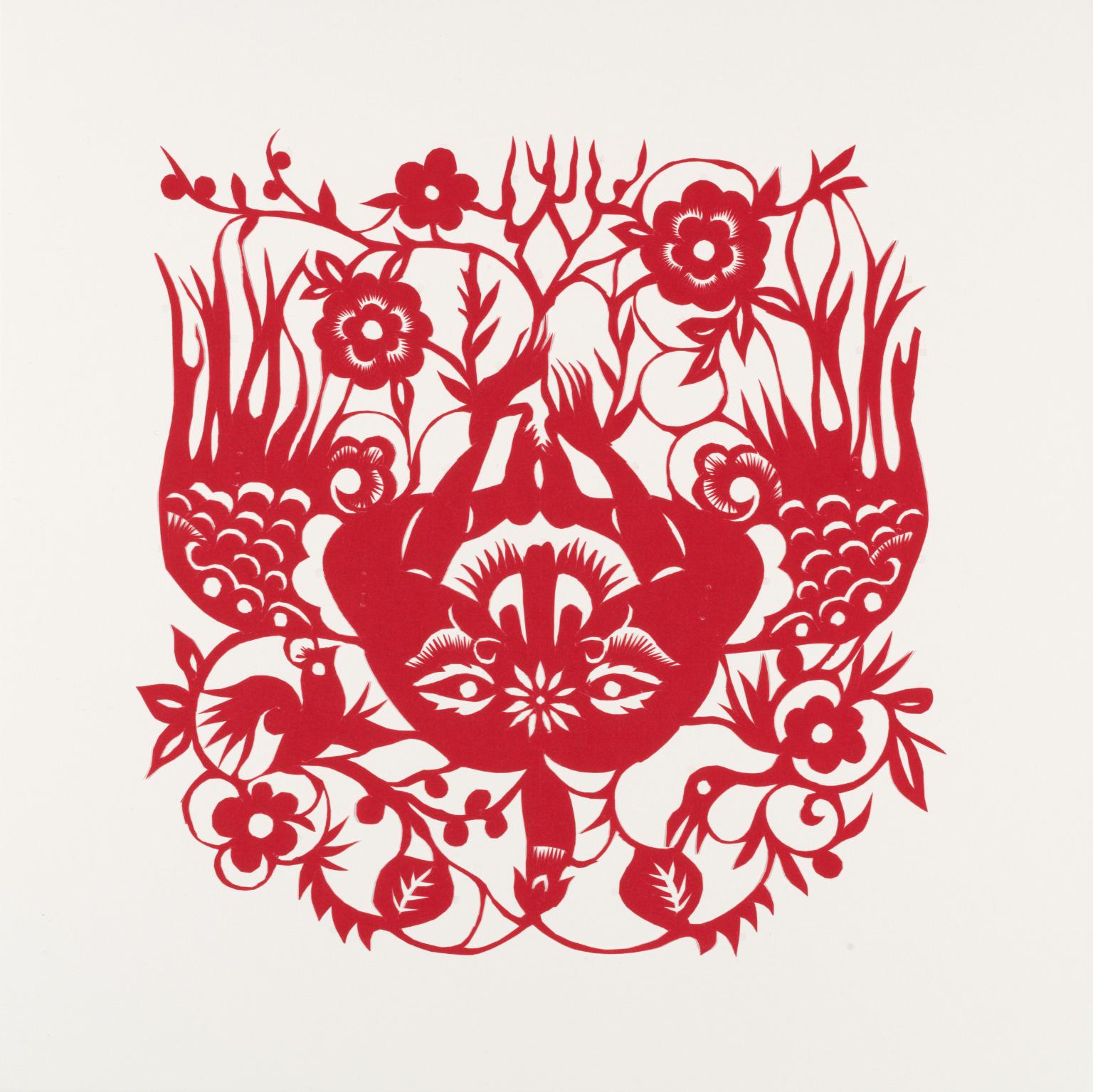
Xiyadie, Fun 2017
This one of a group of paper works in Tate’s collection by the Chinese artist Xiyadie. The works come from two separate series of works which subvert in different ways the traditional and intricate art of papercutting, recognised in China as an ancient folk art that can be traced back to the Eastern Han Dynasty (25–220 CE). Three works from 2020 (Gate (Tiananmen), Fish on a Chopping Board and Train, Tate T15927–T15929) are large-scale papercuts from white ‘xuanzhi’ (宣纸), a type of paper which is also used for traditional Chinese calligraphy and ink-wash painting due to its resilient yet absorbent qualities. Once cut, each of these works is hand-painted with food colouring more commonly used for identifying the fillings of steamed ‘bao’ buns, a humble snack often sold at street food stalls throughout China. Though each of these works represents figurative subjects, they are highly stylised according to the parameters of cutting folded paper: an intricate skill which has generically been described as a ‘matriarchs’ art’ due to the way in which it has traditionally been passed down through generations of women within the domestic sphere.
3/8
artworks in Liz Johnson Artur
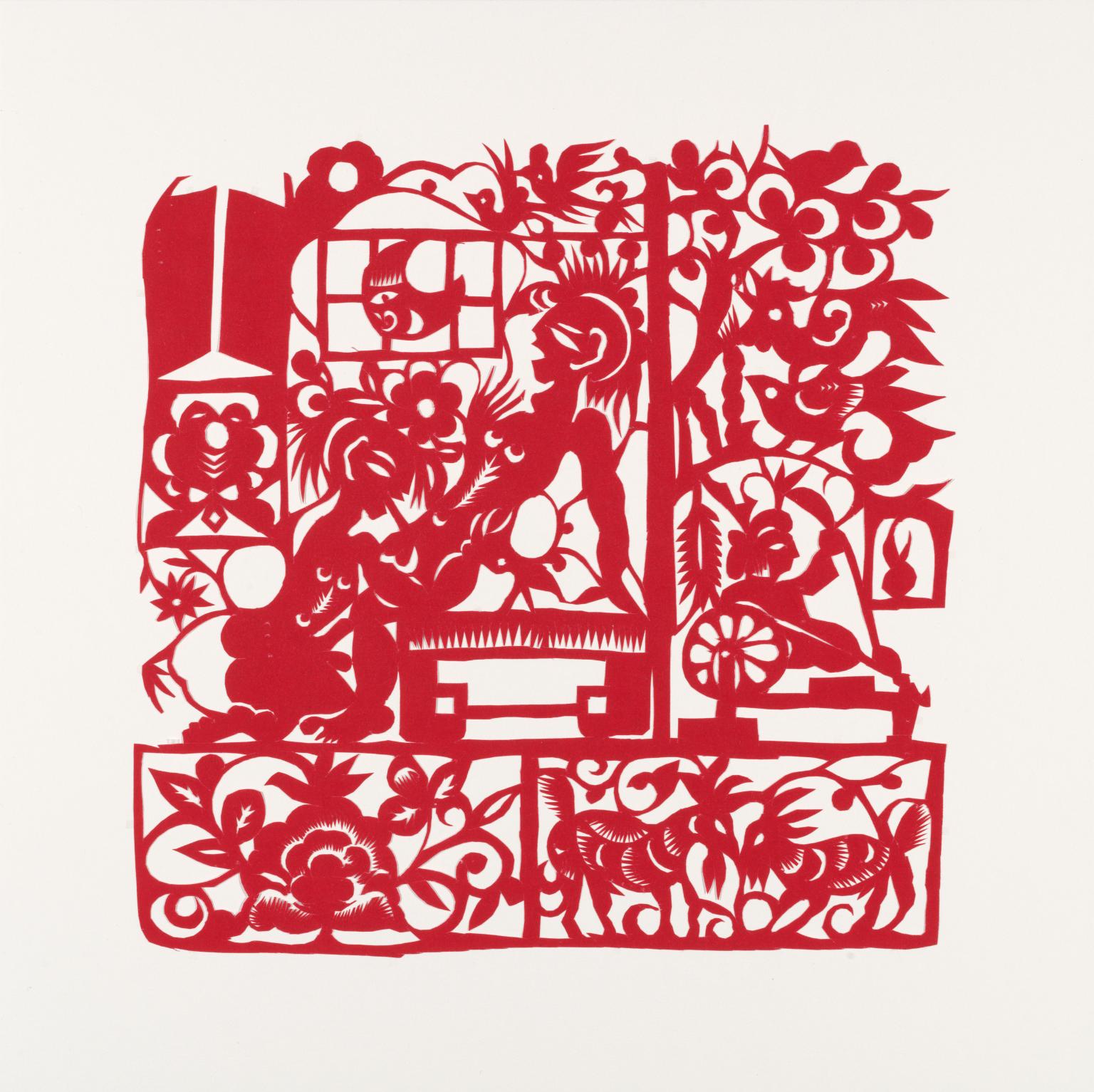
Xiyadie, ‘No Worries, My Mother Is Next Door’ 2017
This one of a group of paper works in Tate’s collection by the Chinese artist Xiyadie. The works come from two separate series of works which subvert in different ways the traditional and intricate art of papercutting, recognised in China as an ancient folk art that can be traced back to the Eastern Han Dynasty (25–220 CE). Three works from 2020 (Gate (Tiananmen), Fish on a Chopping Board and Train, Tate T15927–T15929) are large-scale papercuts from white ‘xuanzhi’ (宣纸), a type of paper which is also used for traditional Chinese calligraphy and ink-wash painting due to its resilient yet absorbent qualities. Once cut, each of these works is hand-painted with food colouring more commonly used for identifying the fillings of steamed ‘bao’ buns, a humble snack often sold at street food stalls throughout China. Though each of these works represents figurative subjects, they are highly stylised according to the parameters of cutting folded paper: an intricate skill which has generically been described as a ‘matriarchs’ art’ due to the way in which it has traditionally been passed down through generations of women within the domestic sphere.
4/8
artworks in Liz Johnson Artur
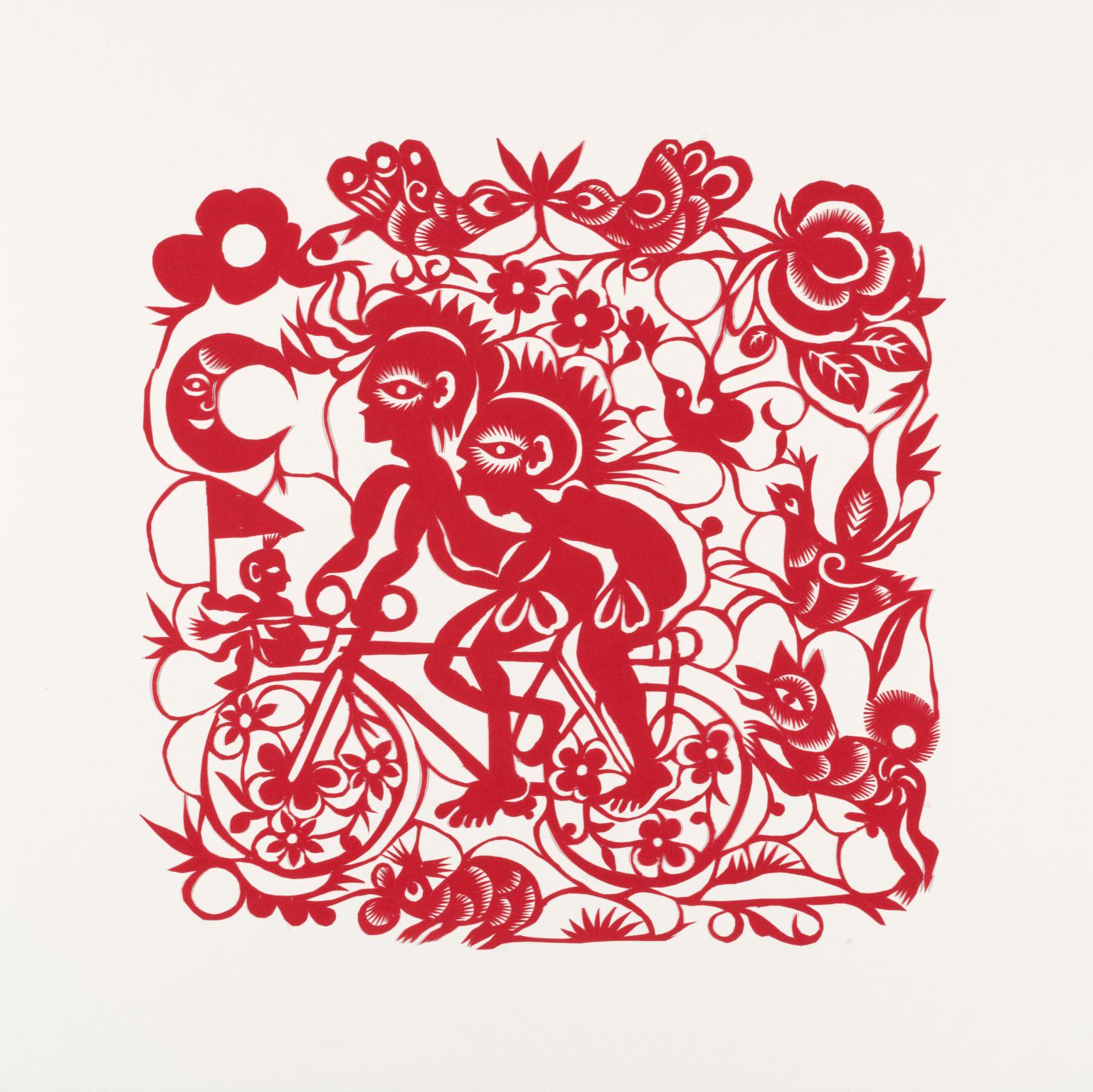
Xiyadie, Fun 2001
This one of a group of paper works in Tate’s collection by the Chinese artist Xiyadie. The works come from two separate series of works which subvert in different ways the traditional and intricate art of papercutting, recognised in China as an ancient folk art that can be traced back to the Eastern Han Dynasty (25–220 CE). Three works from 2020 (Gate (Tiananmen), Fish on a Chopping Board and Train, Tate T15927–T15929) are large-scale papercuts from white ‘xuanzhi’ (宣纸), a type of paper which is also used for traditional Chinese calligraphy and ink-wash painting due to its resilient yet absorbent qualities. Once cut, each of these works is hand-painted with food colouring more commonly used for identifying the fillings of steamed ‘bao’ buns, a humble snack often sold at street food stalls throughout China. Though each of these works represents figurative subjects, they are highly stylised according to the parameters of cutting folded paper: an intricate skill which has generically been described as a ‘matriarchs’ art’ due to the way in which it has traditionally been passed down through generations of women within the domestic sphere.
5/8
artworks in Liz Johnson Artur
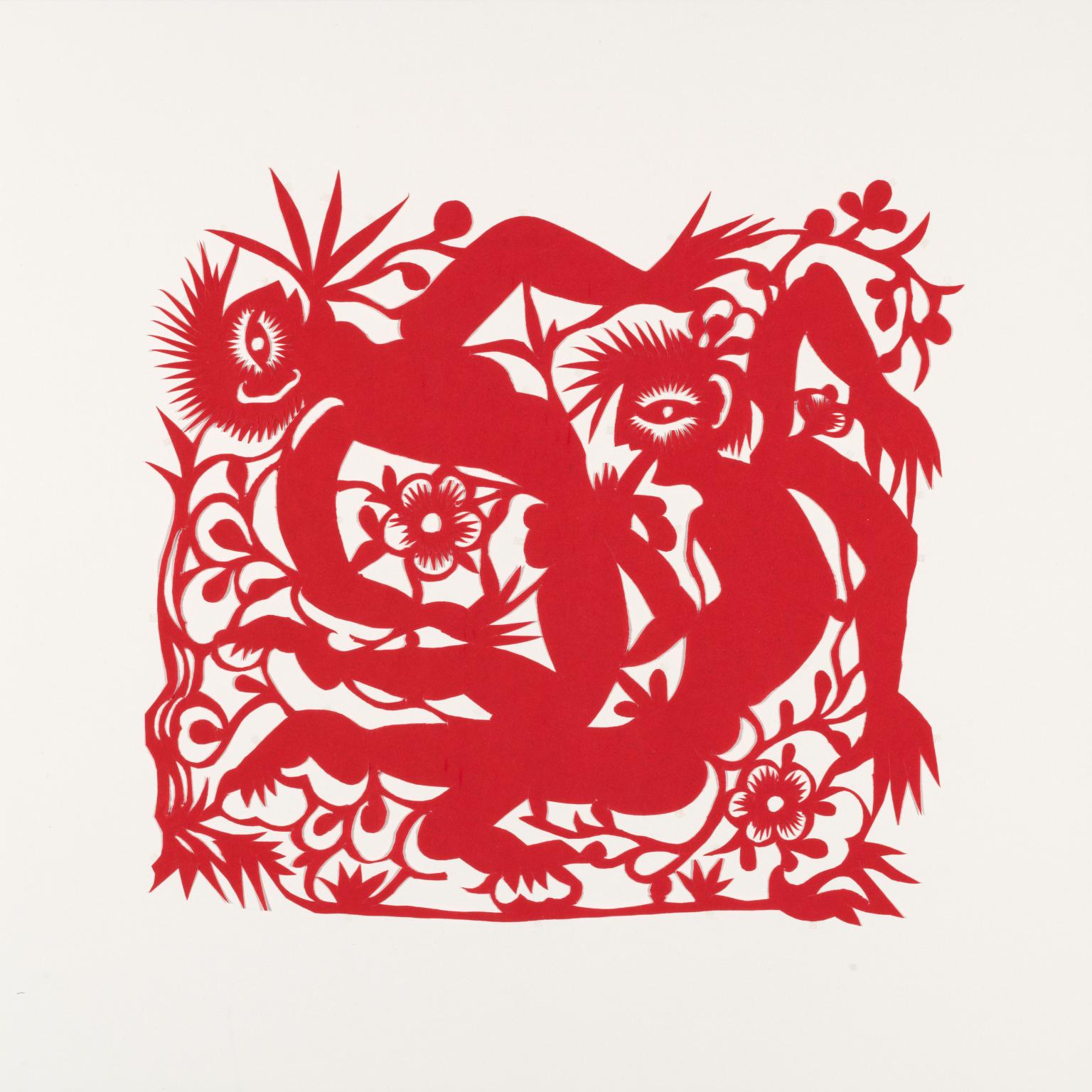
Xiyadie, Fun 2001
This one of a group of paper works in Tate’s collection by the Chinese artist Xiyadie. The works come from two separate series of works which subvert in different ways the traditional and intricate art of papercutting, recognised in China as an ancient folk art that can be traced back to the Eastern Han Dynasty (25–220 CE). Three works from 2020 (Gate (Tiananmen), Fish on a Chopping Board and Train, Tate T15927–T15929) are large-scale papercuts from white ‘xuanzhi’ (宣纸), a type of paper which is also used for traditional Chinese calligraphy and ink-wash painting due to its resilient yet absorbent qualities. Once cut, each of these works is hand-painted with food colouring more commonly used for identifying the fillings of steamed ‘bao’ buns, a humble snack often sold at street food stalls throughout China. Though each of these works represents figurative subjects, they are highly stylised according to the parameters of cutting folded paper: an intricate skill which has generically been described as a ‘matriarchs’ art’ due to the way in which it has traditionally been passed down through generations of women within the domestic sphere.
6/8
artworks in Liz Johnson Artur
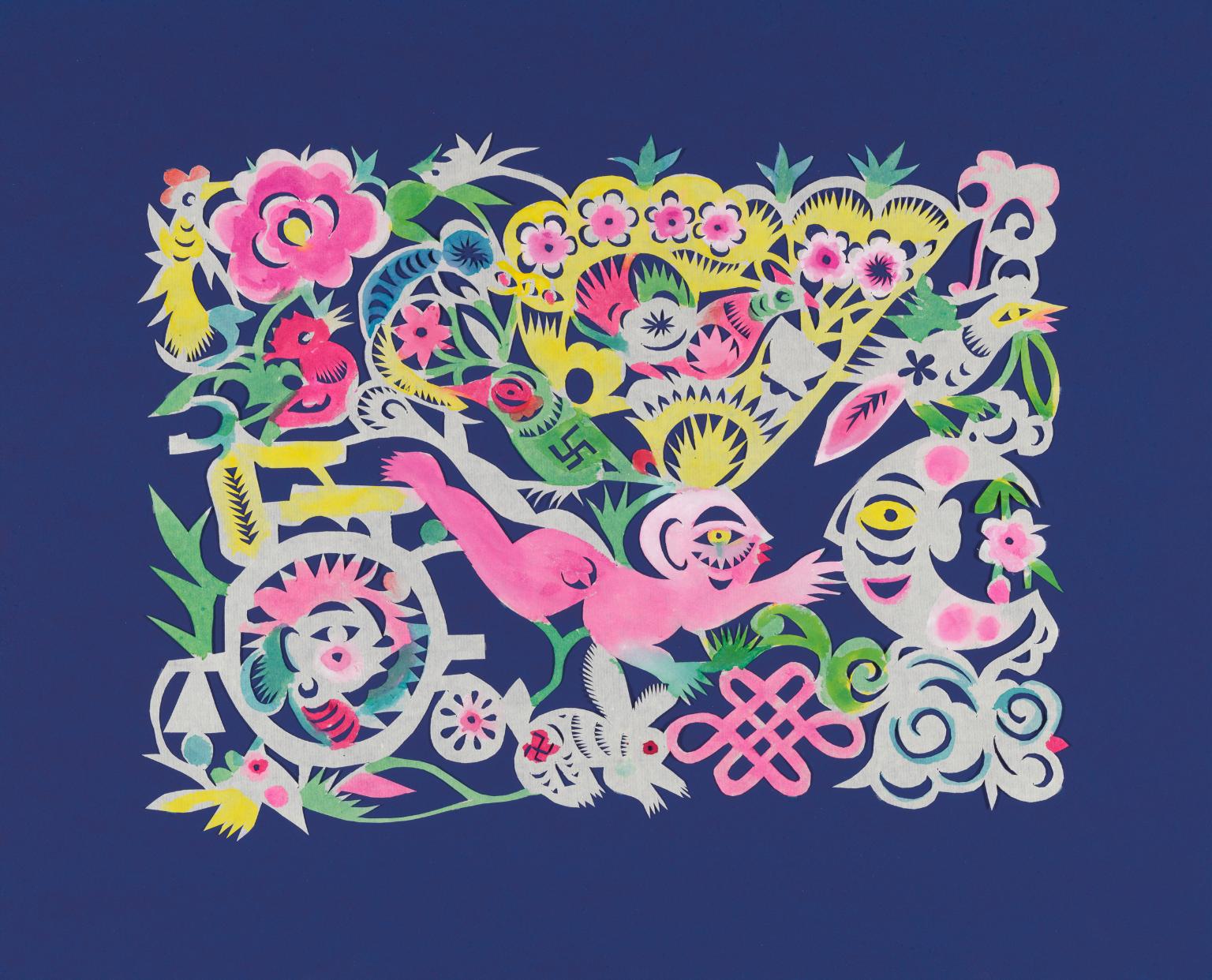
Xiyadie, Flying 2000
This one of a group of paper works in Tate’s collection by the Chinese artist Xiyadie. The works come from two separate series of works which subvert in different ways the traditional and intricate art of papercutting, recognised in China as an ancient folk art that can be traced back to the Eastern Han Dynasty (25–220 CE). Three works from 2020 (Gate (Tiananmen), Fish on a Chopping Board and Train, Tate T15927–T15929) are large-scale papercuts from white ‘xuanzhi’ (宣纸), a type of paper which is also used for traditional Chinese calligraphy and ink-wash painting due to its resilient yet absorbent qualities. Once cut, each of these works is hand-painted with food colouring more commonly used for identifying the fillings of steamed ‘bao’ buns, a humble snack often sold at street food stalls throughout China. Though each of these works represents figurative subjects, they are highly stylised according to the parameters of cutting folded paper: an intricate skill which has generically been described as a ‘matriarchs’ art’ due to the way in which it has traditionally been passed down through generations of women within the domestic sphere.
7/8
artworks in Liz Johnson Artur
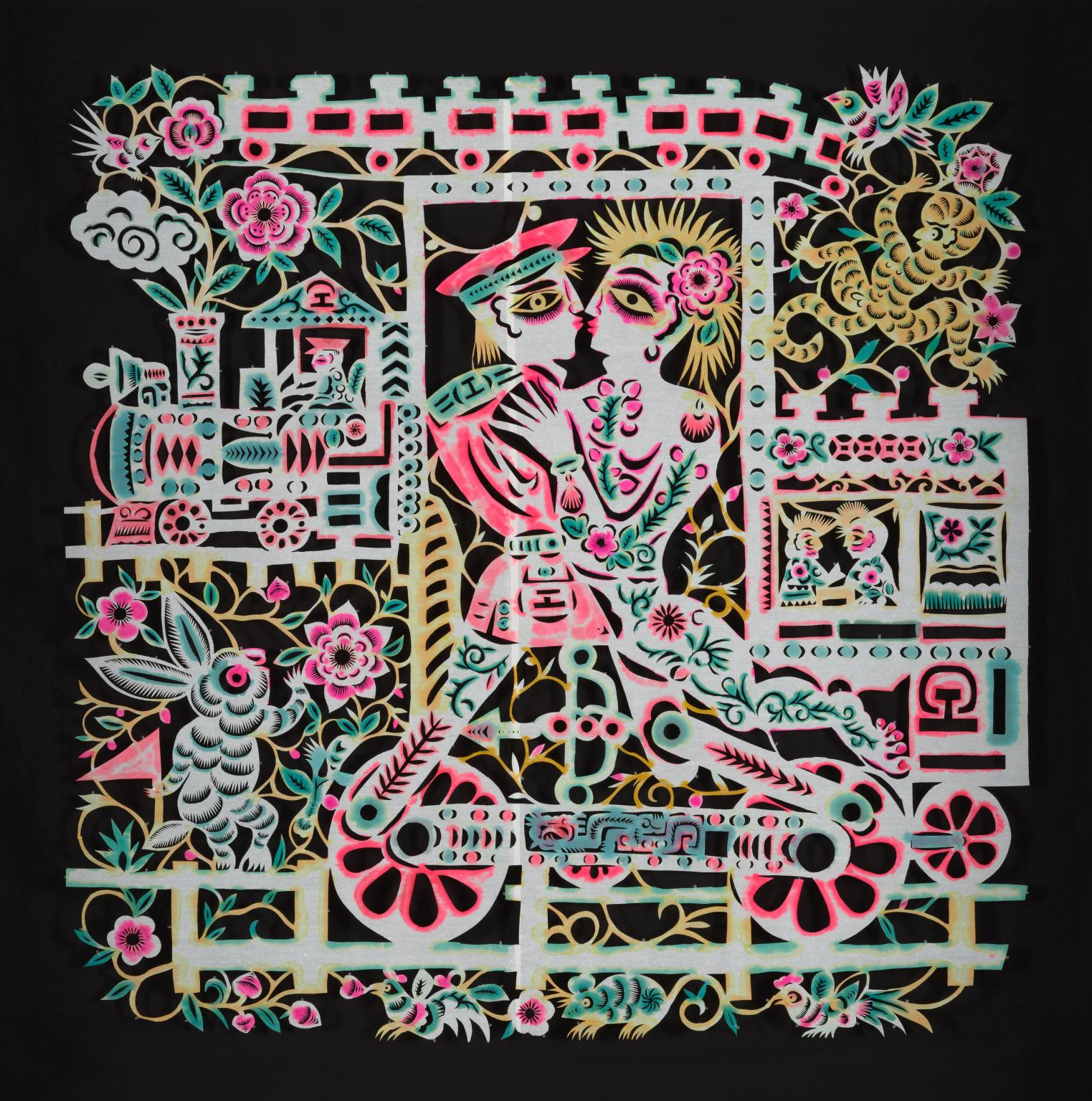
Xiyadie, Train 1985–6
This one of a group of paper works in Tate’s collection by the Chinese artist Xiyadie. The works come from two separate series of works which subvert in different ways the traditional and intricate art of papercutting, recognised in China as an ancient folk art that can be traced back to the Eastern Han Dynasty (25–220 CE). Three works from 2020 (Gate (Tiananmen), Fish on a Chopping Board and Train, Tate T15927–T15929) are large-scale papercuts from white ‘xuanzhi’ (宣纸), a type of paper which is also used for traditional Chinese calligraphy and ink-wash painting due to its resilient yet absorbent qualities. Once cut, each of these works is hand-painted with food colouring more commonly used for identifying the fillings of steamed ‘bao’ buns, a humble snack often sold at street food stalls throughout China. Though each of these works represents figurative subjects, they are highly stylised according to the parameters of cutting folded paper: an intricate skill which has generically been described as a ‘matriarchs’ art’ due to the way in which it has traditionally been passed down through generations of women within the domestic sphere.
8/8
artworks in Liz Johnson Artur
Art in this room
Xiyadie
Gate (Tiananmen)
2020
Xiyadie
Fish on a Chopping Board
c.2001
Xiyadie
Fun
2017
Xiyadie
‘No Worries, My Mother Is Next Door’
2017
Xiyadie
Fun
2001
Xiyadie
Fun
2001
Xiyadie
Flying
2000
Xiyadie
Train
1985–6