Skip navigation

Main menu

  • What's On
  • Visit
  • Art
    • Discover Art
    • Artists
    • Artworks
    • Stories
    Stories
    Stories

    Watch, listen and read

  • Learn
    • Schools
    • Tate Kids
    • Research
    • Activities and workshops
    Tate Kids
    Tate Kids

    Games, quizzes and films for kids

  • Shop
Become a Member
  • Tate Britain
    Tate Britain Free admission
  • Tate Modern
    Tate Modern Free admission
  • Tate Liverpool + RIBA North
    Tate Liverpool + RIBA North Free admission
  • Tate St Ives
    Tate St Ives Ticket or membership card required
  • Families
  • Accessibility
  • Schools
  • Private tours
  • Discover Art
  • Artists
  • Artworks
  • Stories
  • Schools
  • Tate Kids
  • Research
  • Activities and workshops
Tate Logo

Try searching for...

  • J.M.W. Turner
  • Ophelia
  • Tracey Emin

DON'T MISS

Exhibition

Lee Miller

Tate Britain
Until 15 Feb 2026
Exhibition

Theatre Picasso

Tate Modern
Until 12 Apr 2026
Become a Member
This is a past display. Go to current displays

Spread from 'Commemorative album of the 26th World Table Tennis Championships' (1961)

Nation Building Between Heaven And Earth

Explore photobooks published by the Chinese government from the 1950s to the 1980s that aimed to build international diplomacy

Years of devastating armed conflicts between the Chinese Communist Party and the government of the Republic of China ended in 1949 with Communist control of Mainland China. Mao Zedong, the Communist Party leader, declared the founding of the People’s Republic of China.

In the following decades, China sought to strengthen international relations with other countries. Mao and his government wanted to construct a new national identity and global image for China. Mao called this New China.

The Chinese Communist Party replaced private publishing houses with government-sanctioned bookmaking. These official publishers made books with images documenting religious expeditions and large-scale sports competitions. The photographers’ names and identities were not recorded, as these publications were intended to be the voice of the new nation, not any individual. The photobooks were distributed nationally and internationally, with captions translated into Arabic, English, Indonesian and Russian.

Mao’s portrait was on the first page of all official publications. Staged images of workers became extremely common. State publishers issued publications showing landscapes of large-scale infrastructure projects such as roads and waterworks, as well as the extraction of natural resources. Civil aviation books were published to study the movement of clouds, seeking to control the skies.

The name of this display is taken from the ancient Chinese concept of equal human unity with Heaven and Earth. This notion was adjusted in the era of New China to mean human governance over Heaven and Earth.

These books are drawn from the Martin Parr collection at Tate which comprises over 12,000 photobooks from around the world.

Read more

Tate Modern
Natalie Bell Building Level 2 West
Room 6

Getting Here

9 October 2023 – 23 November 2025

Free
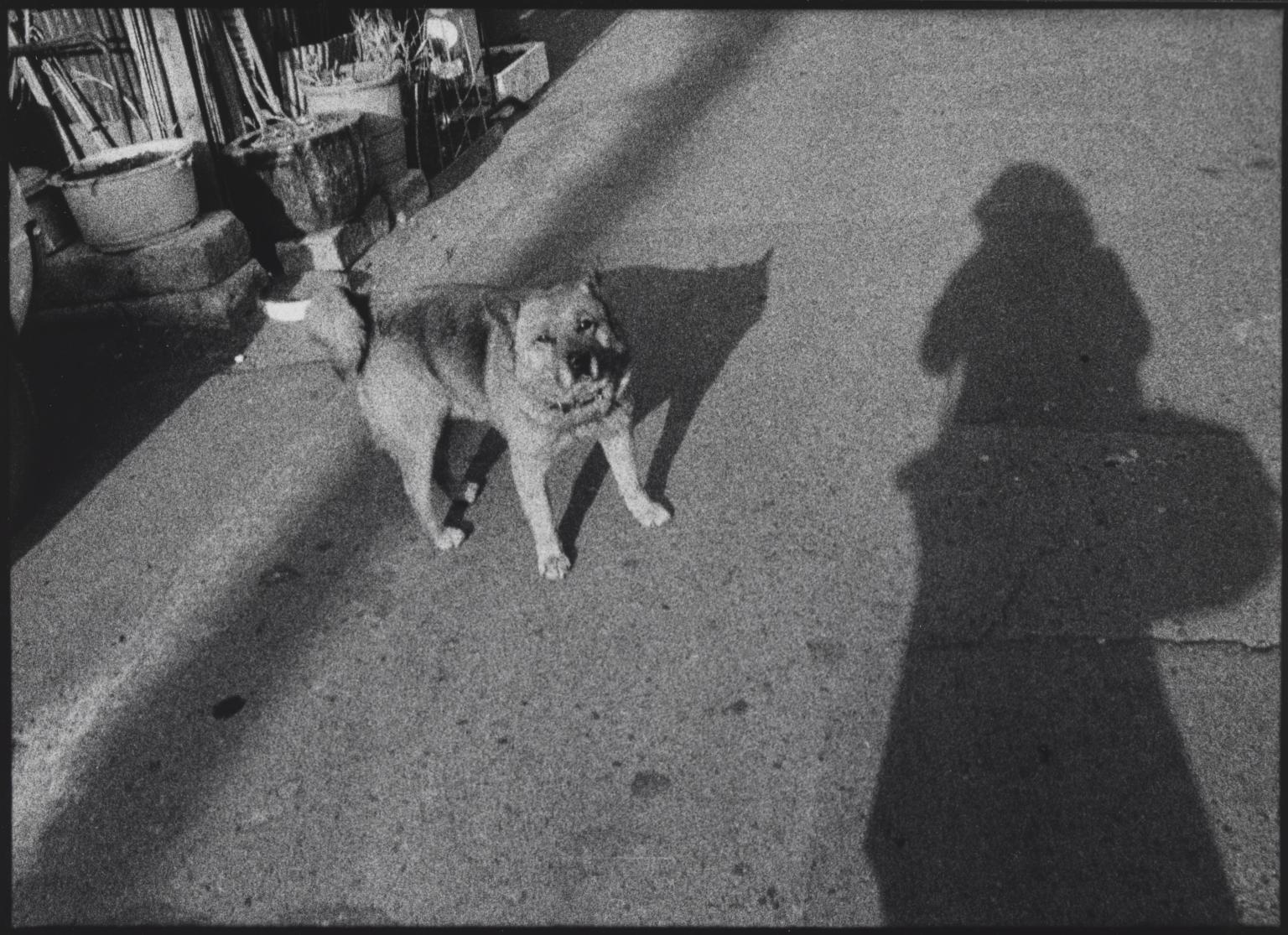
Miyako Ishiuchi, Yokosuka Story  1977

Yokosuka Story 1977, by the Japanese photographer Miyako Ishiuchi, comprises forty vintage black and white prints which are typically displayed in a large grid. As the title suggests, the work depicts the town of Yokosuka, a small port in Japan where Ishiuchi grew up during the 1950s and 1960s, when the town was the site of a large American naval base. In these years of military occupation the town was infiltrated by American culture and in turn the visual landscape reflected this struggle between local and foreign, past and present and the uncertainty of Japan’s future identity. Like other slightly older Japanese photographers associated with the ‘Provoke’ movement, such as Shomei Tomatsu and Daido Moriyama, with whom she worked, Ishiuchi was part of the post-war generation who used their cameras to record and explore what it meant to be Japanese at this pivotal moment in history. The Provoke movement experimented with photographic techniques in order to offer a more subjective and radical vision of society in Japan post-Hiroshima, focusing on the alienation and disaffection characterising urban life.

1/10
artworks in Nation Building Between Heaven And Earth

More on this artwork

Miyako Ishiuchi, Yokosuka Story  1977

Yokosuka Story 1977, by the Japanese photographer Miyako Ishiuchi, comprises forty vintage black and white prints which are typically displayed in a large grid. As the title suggests, the work depicts the town of Yokosuka, a small port in Japan where Ishiuchi grew up during the 1950s and 1960s, when the town was the site of a large American naval base. In these years of military occupation the town was infiltrated by American culture and in turn the visual landscape reflected this struggle between local and foreign, past and present and the uncertainty of Japan’s future identity. Like other slightly older Japanese photographers associated with the ‘Provoke’ movement, such as Shomei Tomatsu and Daido Moriyama, with whom she worked, Ishiuchi was part of the post-war generation who used their cameras to record and explore what it meant to be Japanese at this pivotal moment in history. The Provoke movement experimented with photographic techniques in order to offer a more subjective and radical vision of society in Japan post-Hiroshima, focusing on the alienation and disaffection characterising urban life.

2/10
artworks in Nation Building Between Heaven And Earth

More on this artwork

Miyako Ishiuchi, Yokosuka Story  1977

Yokosuka Story 1977, by the Japanese photographer Miyako Ishiuchi, comprises forty vintage black and white prints which are typically displayed in a large grid. As the title suggests, the work depicts the town of Yokosuka, a small port in Japan where Ishiuchi grew up during the 1950s and 1960s, when the town was the site of a large American naval base. In these years of military occupation the town was infiltrated by American culture and in turn the visual landscape reflected this struggle between local and foreign, past and present and the uncertainty of Japan’s future identity. Like other slightly older Japanese photographers associated with the ‘Provoke’ movement, such as Shomei Tomatsu and Daido Moriyama, with whom she worked, Ishiuchi was part of the post-war generation who used their cameras to record and explore what it meant to be Japanese at this pivotal moment in history. The Provoke movement experimented with photographic techniques in order to offer a more subjective and radical vision of society in Japan post-Hiroshima, focusing on the alienation and disaffection characterising urban life.

3/10
artworks in Nation Building Between Heaven And Earth

More on this artwork

Miyako Ishiuchi, Yokosuka Story  1977

Yokosuka Story 1977, by the Japanese photographer Miyako Ishiuchi, comprises forty vintage black and white prints which are typically displayed in a large grid. As the title suggests, the work depicts the town of Yokosuka, a small port in Japan where Ishiuchi grew up during the 1950s and 1960s, when the town was the site of a large American naval base. In these years of military occupation the town was infiltrated by American culture and in turn the visual landscape reflected this struggle between local and foreign, past and present and the uncertainty of Japan’s future identity. Like other slightly older Japanese photographers associated with the ‘Provoke’ movement, such as Shomei Tomatsu and Daido Moriyama, with whom she worked, Ishiuchi was part of the post-war generation who used their cameras to record and explore what it meant to be Japanese at this pivotal moment in history. The Provoke movement experimented with photographic techniques in order to offer a more subjective and radical vision of society in Japan post-Hiroshima, focusing on the alienation and disaffection characterising urban life.

4/10
artworks in Nation Building Between Heaven And Earth

More on this artwork

Miyako Ishiuchi, Yokosuka Story  1977

Yokosuka Story 1977, by the Japanese photographer Miyako Ishiuchi, comprises forty vintage black and white prints which are typically displayed in a large grid. As the title suggests, the work depicts the town of Yokosuka, a small port in Japan where Ishiuchi grew up during the 1950s and 1960s, when the town was the site of a large American naval base. In these years of military occupation the town was infiltrated by American culture and in turn the visual landscape reflected this struggle between local and foreign, past and present and the uncertainty of Japan’s future identity. Like other slightly older Japanese photographers associated with the ‘Provoke’ movement, such as Shomei Tomatsu and Daido Moriyama, with whom she worked, Ishiuchi was part of the post-war generation who used their cameras to record and explore what it meant to be Japanese at this pivotal moment in history. The Provoke movement experimented with photographic techniques in order to offer a more subjective and radical vision of society in Japan post-Hiroshima, focusing on the alienation and disaffection characterising urban life.

5/10
artworks in Nation Building Between Heaven And Earth

More on this artwork

Miyako Ishiuchi, Yokosuka Story  1977

Yokosuka Story 1977, by the Japanese photographer Miyako Ishiuchi, comprises forty vintage black and white prints which are typically displayed in a large grid. As the title suggests, the work depicts the town of Yokosuka, a small port in Japan where Ishiuchi grew up during the 1950s and 1960s, when the town was the site of a large American naval base. In these years of military occupation the town was infiltrated by American culture and in turn the visual landscape reflected this struggle between local and foreign, past and present and the uncertainty of Japan’s future identity. Like other slightly older Japanese photographers associated with the ‘Provoke’ movement, such as Shomei Tomatsu and Daido Moriyama, with whom she worked, Ishiuchi was part of the post-war generation who used their cameras to record and explore what it meant to be Japanese at this pivotal moment in history. The Provoke movement experimented with photographic techniques in order to offer a more subjective and radical vision of society in Japan post-Hiroshima, focusing on the alienation and disaffection characterising urban life.

6/10
artworks in Nation Building Between Heaven And Earth

More on this artwork

Miyako Ishiuchi, Yokosuka Story  1977

Yokosuka Story 1977, by the Japanese photographer Miyako Ishiuchi, comprises forty vintage black and white prints which are typically displayed in a large grid. As the title suggests, the work depicts the town of Yokosuka, a small port in Japan where Ishiuchi grew up during the 1950s and 1960s, when the town was the site of a large American naval base. In these years of military occupation the town was infiltrated by American culture and in turn the visual landscape reflected this struggle between local and foreign, past and present and the uncertainty of Japan’s future identity. Like other slightly older Japanese photographers associated with the ‘Provoke’ movement, such as Shomei Tomatsu and Daido Moriyama, with whom she worked, Ishiuchi was part of the post-war generation who used their cameras to record and explore what it meant to be Japanese at this pivotal moment in history. The Provoke movement experimented with photographic techniques in order to offer a more subjective and radical vision of society in Japan post-Hiroshima, focusing on the alienation and disaffection characterising urban life.

7/10
artworks in Nation Building Between Heaven And Earth

More on this artwork

Miyako Ishiuchi, Yokosuka Story  1977

Yokosuka Story 1977, by the Japanese photographer Miyako Ishiuchi, comprises forty vintage black and white prints which are typically displayed in a large grid. As the title suggests, the work depicts the town of Yokosuka, a small port in Japan where Ishiuchi grew up during the 1950s and 1960s, when the town was the site of a large American naval base. In these years of military occupation the town was infiltrated by American culture and in turn the visual landscape reflected this struggle between local and foreign, past and present and the uncertainty of Japan’s future identity. Like other slightly older Japanese photographers associated with the ‘Provoke’ movement, such as Shomei Tomatsu and Daido Moriyama, with whom she worked, Ishiuchi was part of the post-war generation who used their cameras to record and explore what it meant to be Japanese at this pivotal moment in history. The Provoke movement experimented with photographic techniques in order to offer a more subjective and radical vision of society in Japan post-Hiroshima, focusing on the alienation and disaffection characterising urban life.

8/10
artworks in Nation Building Between Heaven And Earth

More on this artwork

Miyako Ishiuchi, Yokosuka Story  1977

Yokosuka Story 1977, by the Japanese photographer Miyako Ishiuchi, comprises forty vintage black and white prints which are typically displayed in a large grid. As the title suggests, the work depicts the town of Yokosuka, a small port in Japan where Ishiuchi grew up during the 1950s and 1960s, when the town was the site of a large American naval base. In these years of military occupation the town was infiltrated by American culture and in turn the visual landscape reflected this struggle between local and foreign, past and present and the uncertainty of Japan’s future identity. Like other slightly older Japanese photographers associated with the ‘Provoke’ movement, such as Shomei Tomatsu and Daido Moriyama, with whom she worked, Ishiuchi was part of the post-war generation who used their cameras to record and explore what it meant to be Japanese at this pivotal moment in history. The Provoke movement experimented with photographic techniques in order to offer a more subjective and radical vision of society in Japan post-Hiroshima, focusing on the alienation and disaffection characterising urban life.

9/10
artworks in Nation Building Between Heaven And Earth

More on this artwork

Miyako Ishiuchi, Yokosuka Story  1977

Yokosuka Story 1977, by the Japanese photographer Miyako Ishiuchi, comprises forty vintage black and white prints which are typically displayed in a large grid. As the title suggests, the work depicts the town of Yokosuka, a small port in Japan where Ishiuchi grew up during the 1950s and 1960s, when the town was the site of a large American naval base. In these years of military occupation the town was infiltrated by American culture and in turn the visual landscape reflected this struggle between local and foreign, past and present and the uncertainty of Japan’s future identity. Like other slightly older Japanese photographers associated with the ‘Provoke’ movement, such as Shomei Tomatsu and Daido Moriyama, with whom she worked, Ishiuchi was part of the post-war generation who used their cameras to record and explore what it meant to be Japanese at this pivotal moment in history. The Provoke movement experimented with photographic techniques in order to offer a more subjective and radical vision of society in Japan post-Hiroshima, focusing on the alienation and disaffection characterising urban life.

10/10
artworks in Nation Building Between Heaven And Earth

More on this artwork

Art in this room

Sorry, no image available

Miyako Ishiuchi Yokosuka Story 1977
P80610: Yokosuka Story
Miyako Ishiuchi Yokosuka Story 1977

Sorry, no image available

Miyako Ishiuchi Yokosuka Story 1977

Sorry, no image available

Miyako Ishiuchi Yokosuka Story 1977

Sorry, no image available

Miyako Ishiuchi Yokosuka Story 1977

Sorry, no image available

Miyako Ishiuchi Yokosuka Story 1977

Sorry, no image available

Miyako Ishiuchi Yokosuka Story 1977

Sorry, no image available

Miyako Ishiuchi Yokosuka Story 1977

Sorry, no image available

Miyako Ishiuchi Yokosuka Story 1977

Sorry, no image available

Miyako Ishiuchi Yokosuka Story 1977

You've viewed 6/10 artworks

You've viewed 10/10 artworks

Artwork
Close

Join in

  • Twitter
  • Facebook
  • YouTube
  • Instagram
  • Pinterest
Sign up to emails

Sign up to emails

This site is protected by reCAPTCHA and the Google Privacy Policy and Terms of Service apply.

Tate’s privacy policy

About

  • About us
  • Our collection
  • Terms and copyright
  • Governance
  • Picture library
  • ARTIST ROOMS
  • Tate Kids

Support

  • Tate Collective
  • Members
  • Patrons
  • Donate
  • Corporate
  • My account
  • Press
  • Jobs
  • Accessibility
  • Privacy
  • Cookies
  • Contact
© The Board of Trustees of the Tate Gallery, 2025
All rights reserved