

Helen Chadwick, with Mark Pilkington, The Labours VI 1983–4. Tate. © Estate of Helen Chadwick.
Helen Chadwick combines powerful imagery and visceral materials, creating pieces that are both sensuous and unsettling
Helen Chadwick (1953–1996) was born in Croydon and spent most of her career working from her home and studio in Hackney, London. Her work experiments with light, sculpture, photography and installation. It explores ideas of the self, gender, eroticism and consciousness which Chadwick drew from philosophy, science and art history.
The relationship between viewer, subject and artist is never straightforward for Chadwick. In the early to mid 1980s the artist’s own naked body featured frequently in her work. These pieces express her memory or desires as bodily sensations rather than abstract thoughts. However, the artist’s face is hidden or averted, anonymising her body. The viewer is invited to imagine themselves as the subject, rather than to be an external voyeur.
Towards the end of the 1980s Chadwick moved away from overtly using her body in her work. She began experimenting with visceral materials such as cells, animal and human flesh and bodily fluids. Works from this period dissolve the separation between genders, self and other, while also locating human consciousness firmly within the flesh and substance of the body. Chadwick explains, ‘I didn’t know how I could depict my body without being female. It was at this point that I thought if I use the cells of my body, my interior self, then this would be read as “human”.’
In 1987, Chadwick became one of the first women artists to be nominated for the Turner Prize. Throughout the 1980s and 90s she taught at various art schools across London. Despite her sudden death at only 42, Chadwick’s prolific body of work and her dedication to her practice and teaching made her a vital influence on the next generation of British artists and beyond.
Tate Modern
Blavatnik Building Level 4
30 September 2024 – 8 June 2025
Free
Content guidance: Artworks in this display reference fertility treatment.
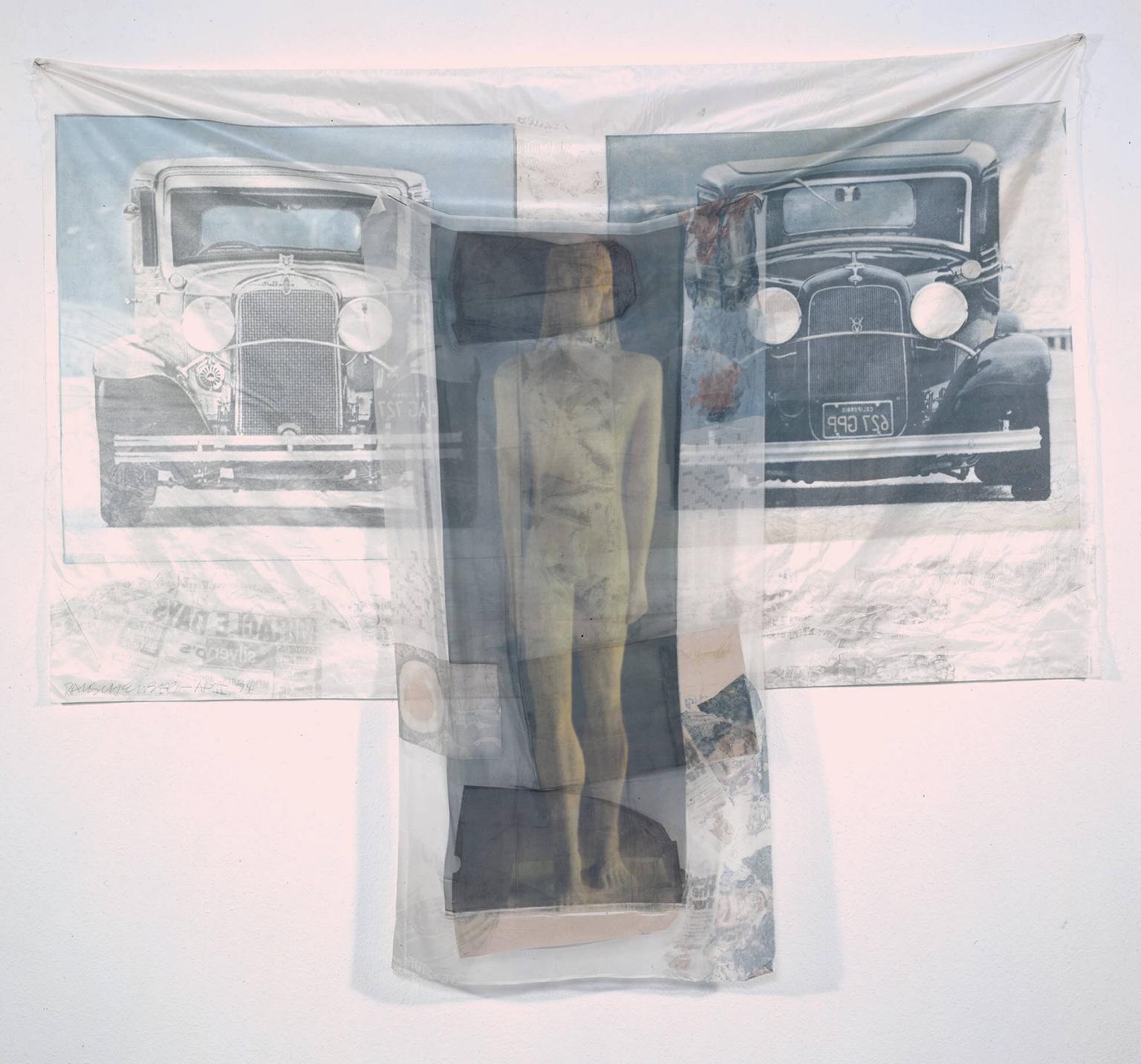
Robert Rauschenberg, Preview 1974
1/4
artworks in ARTIST ROOMS: Helen Chadwick
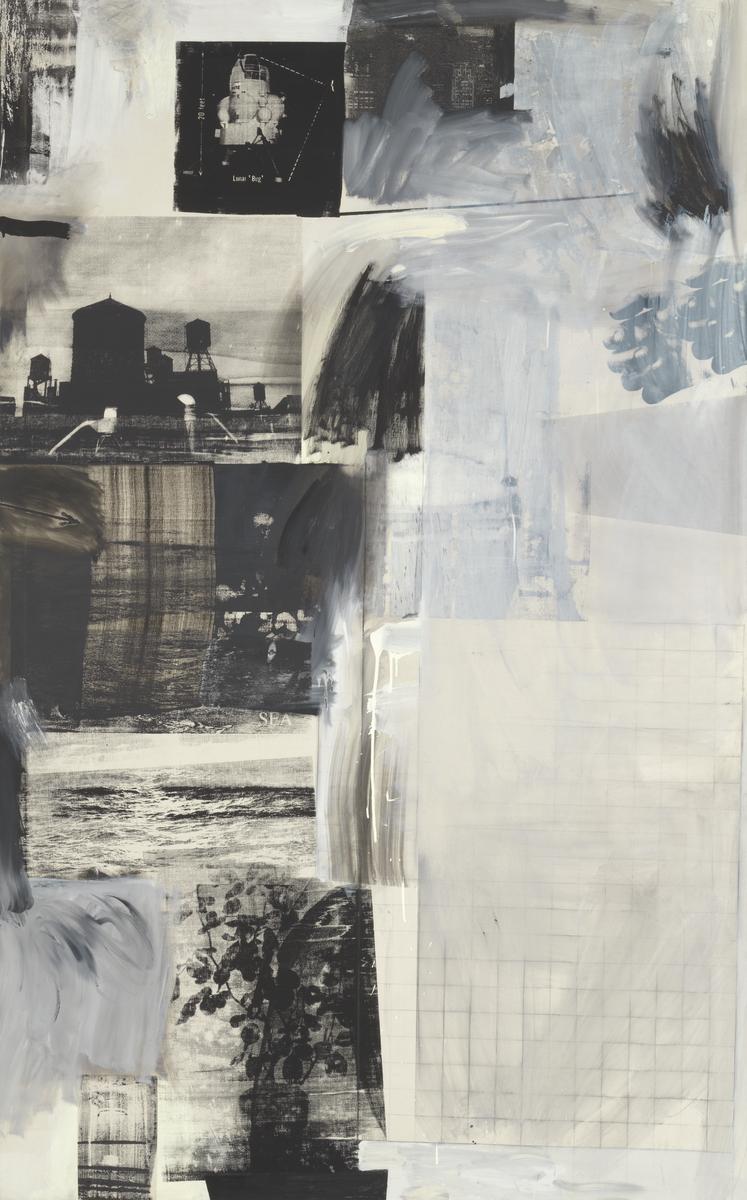
Robert Rauschenberg, Almanac 1962
Rauschenberg began making silkscreen paintings in 1962. He would screen-print images from books and magazines, along with his own photographs, onto the canvas, then apply painterly brushstrokes reminiscent of Abstract Expressionism. His intention was 'to escape the familiarity of objects and collage'. Like all these works, Almanac has no specific meaning or narrative. The images are organised in a loose, poetic manner, creating an impression of visual flux that allows the viewer to free-associate .
Gallery label, August 2004
2/4
artworks in ARTIST ROOMS: Helen Chadwick
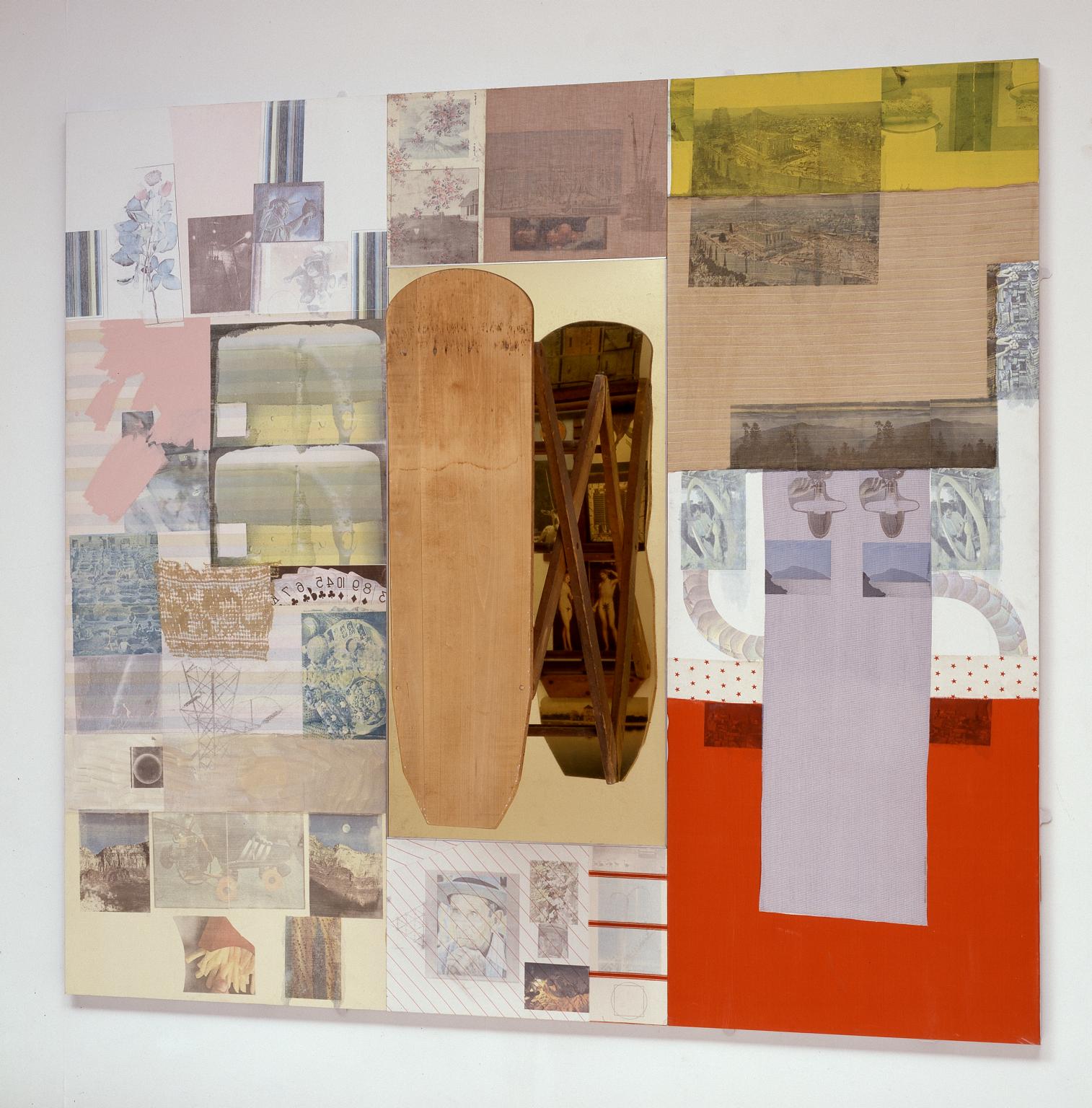
Robert Rauschenberg, Revenue (Spread) 1980
3/4
artworks in ARTIST ROOMS: Helen Chadwick
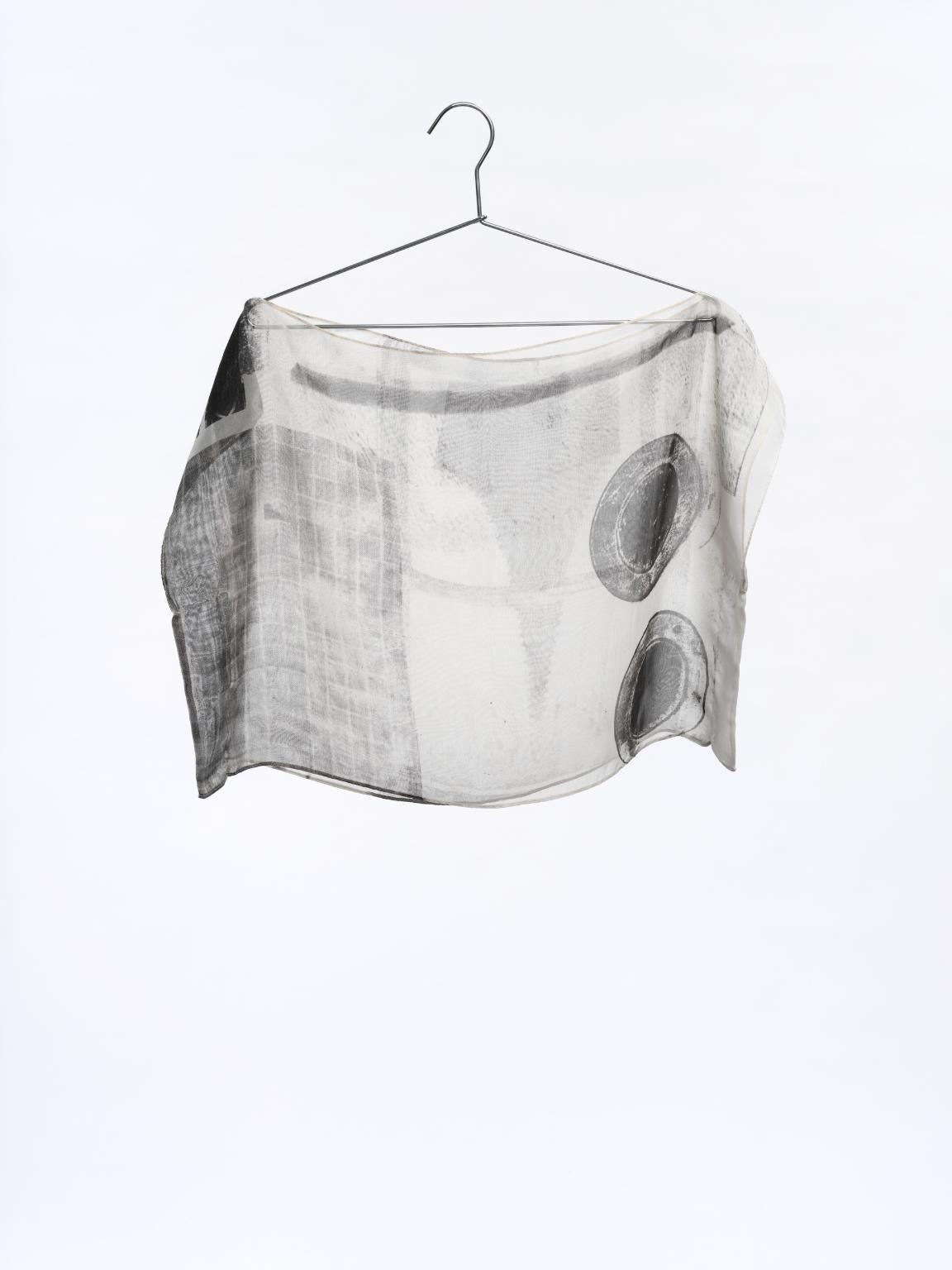
Robert Rauschenberg, Costumes for Trisha Brown’s ‘Set and Reset’ 1983
Set and Reset 1983 is an installation of Trisha Brown’s dance production of the same name that includes Robert Rauschenberg’s (1925–2008) original costumes and sculpture created for the stage-set, lighting by Beverly Emmons (born 1943) with Rauschenberg, and music by Laurie Anderson (born 1947), with optional archival documentation of Brown’s choreography being performed. Set and Reset is considered one of the most important works in Brown’s career and in the history of postmodern dance. Brown is best known as a founding member of the Judson Dance Theater in New York and as a choreographer of postmodern dance, with productions that have been staged in a range of venues internationally.
4/4
artworks in ARTIST ROOMS: Helen Chadwick
Art in this room
Robert Rauschenberg
Preview
1974
Robert Rauschenberg
Almanac
1962
Robert Rauschenberg
Revenue (Spread)
1980
Robert Rauschenberg
Costumes for Trisha Brown’s ‘Set and Reset’
1983

