

G-I Glut 1986. Metal. ARTIST ROOMS Tate and National Galleries of Scotland. Presented by the Robert Rauschenberg Foundation (Tate Americas Foundation) 2026. On long term loan. AL00401. Photo: Ron Amstutz
Through his inventive use of everyday objects and materials, Robert Rauschenberg expanded the possibilities of art and transformed how we see the world around us
'Art has everything to do with life, but nothing to do with art.'
– Robert Rauschenberg
Widely considered one of the most influential US artists of the 20th century, Robert Rauschenberg refused to accept traditional conventions in both his life and his art. Spanning six decades, his expansive practice moved freely across painting, sculpture, photography, performance, printmaking and electronic art.
Rauschenberg always pushed the boundaries of what art could be during a time of social and technological change following the Second World War. Fuelled by a relentless curiosity about how he could work with the materials around him, he invented new methods of art making that changed the course of art history.
His early art practice in the 1950s challenged the dominance of North American Abstract Expressionism – paintings that are often characterised by gestural brushstrokes or spontaneous mark making. Instead, he brought everyday objects such as Coca-Cola bottles, ironing boards and newspapers, as well as images, both appropriated and his own photographs, into his painted canvases.
Growing up in Port Arthur, Texas, Rauschenberg designed theatre sets in high school. It was only after being drafted into the US Navy that he visited his first art museum and was inspired to become an artist. He was a passionate adventurer and prioritised bringing the real world into his artworks, often with objects and materials he found during his travels.
Each room in this display focuses on a different material Rauschenberg used, revealing how his way of working changed over time. Throughout his career, Rauschenberg held a profound enthusiasm for collaboration and experimentation, continually extending the limits of artistic practice.
This display coincides with the centenary celebrations of Robert Rauschenberg's birth and features a group of works generously presented by the Rauschenberg Foundation to ARTIST ROOMS, Tate and National Galleries of Scotland's touring collection.
This ARTIST ROOMS display was organised in collaboration with the Robert Rauschenberg Foundation.
Tate Modern
Blavatnik Building Level 4
Ongoing
Free
This display is part of ARTIST ROOMS, a collection of modern and contemporary art.
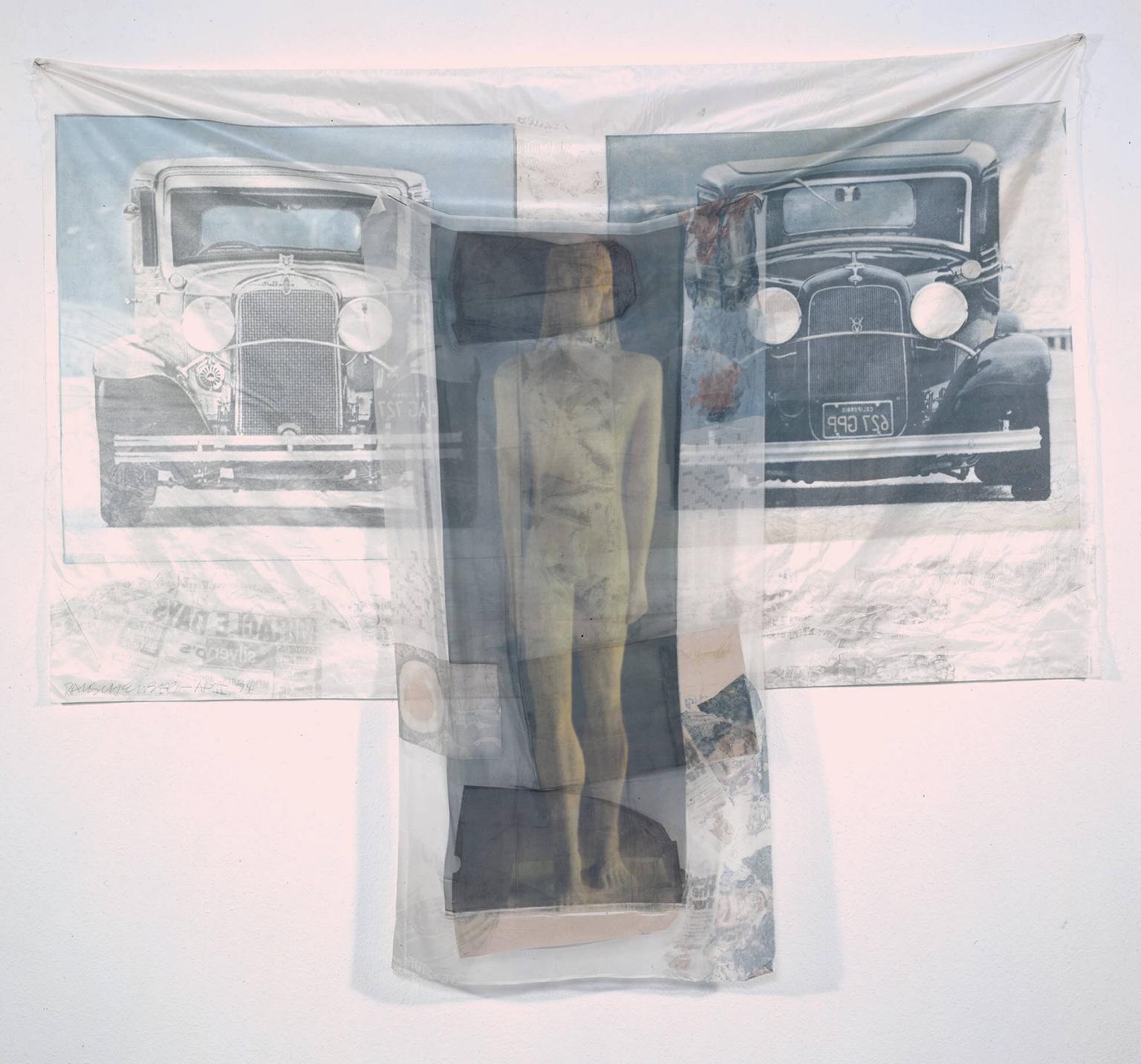
Robert Rauschenberg, Preview 1974
1/4
artworks in Artist Rooms: Robert Rauschenberg
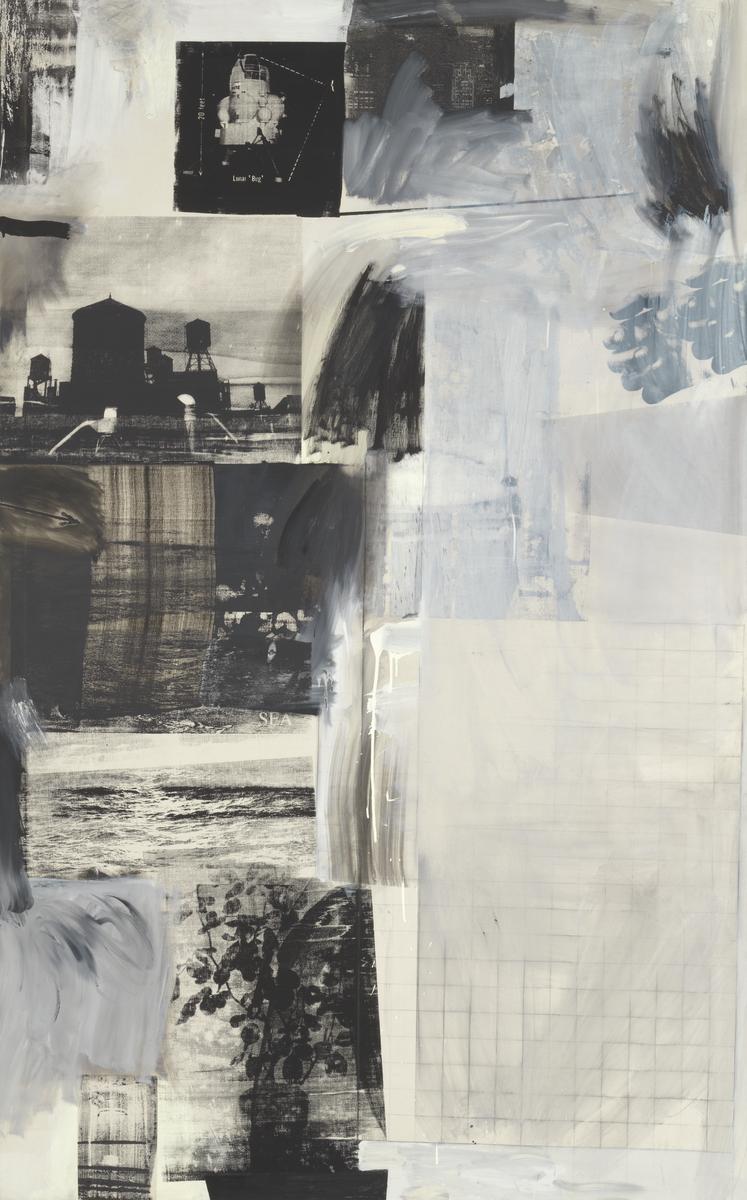
Robert Rauschenberg, Almanac 1962
Rauschenberg began making silkscreen paintings in 1962. He would screen-print images from books and magazines, along with his own photographs, onto the canvas, then apply painterly brushstrokes reminiscent of Abstract Expressionism. His intention was 'to escape the familiarity of objects and collage'. Like all these works, Almanac has no specific meaning or narrative. The images are organised in a loose, poetic manner, creating an impression of visual flux that allows the viewer to free-associate .
Gallery label, August 2004
2/4
artworks in Artist Rooms: Robert Rauschenberg
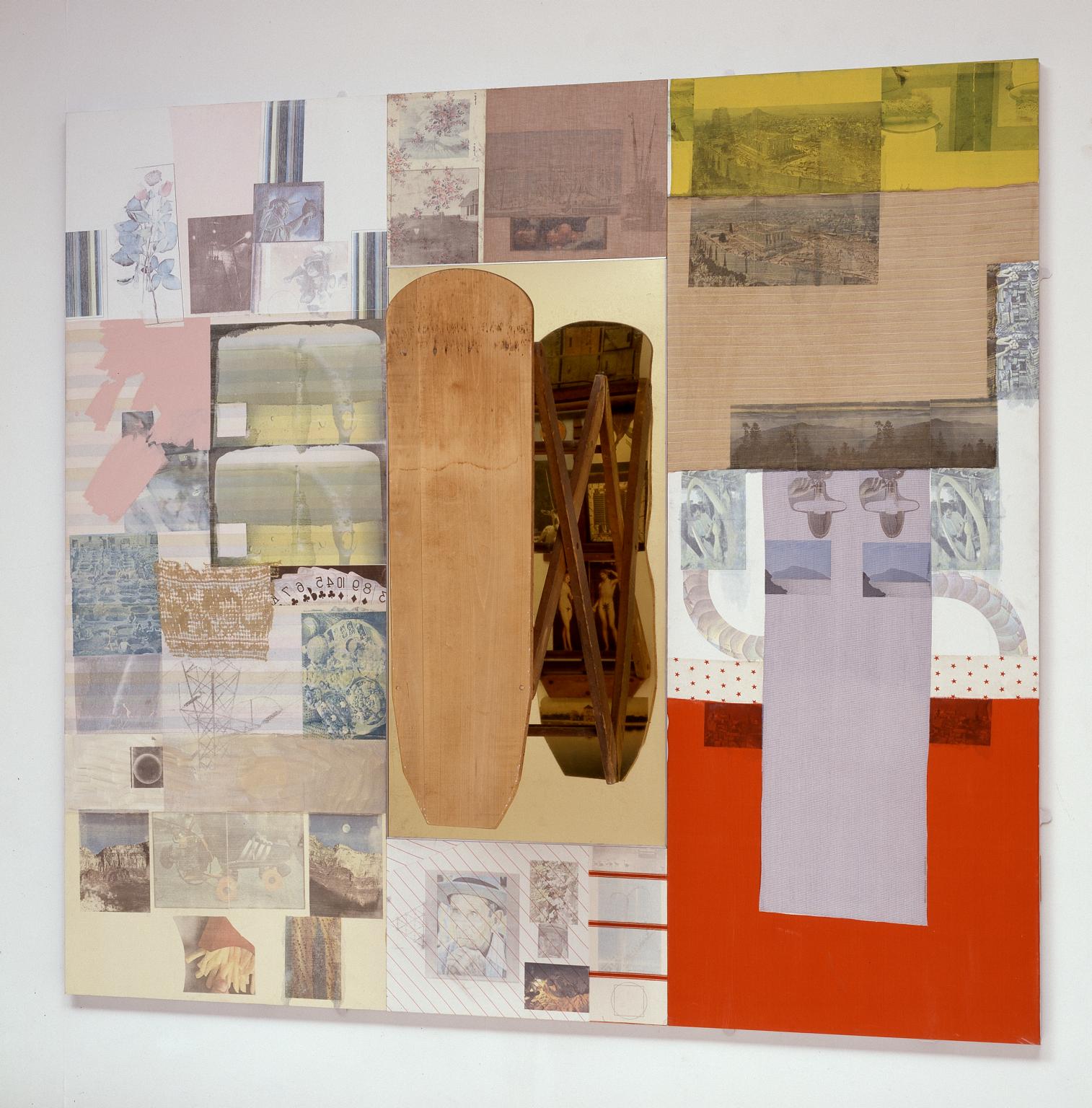
Robert Rauschenberg, Revenue (Spread) 1980
3/4
artworks in Artist Rooms: Robert Rauschenberg
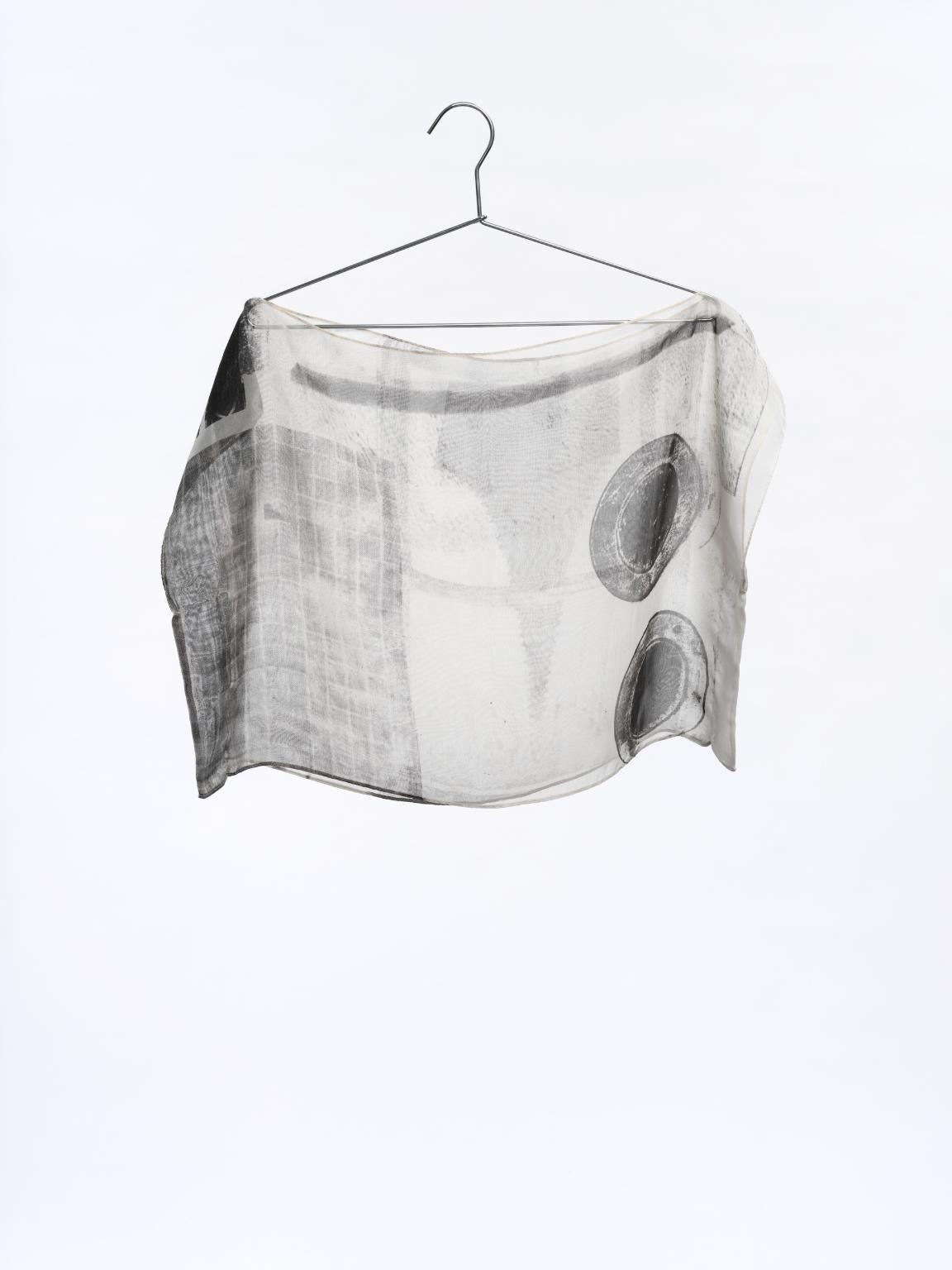
Robert Rauschenberg, Costumes for Trisha Brown’s ‘Set and Reset’ 1983
Set and Reset 1983 is an installation of Trisha Brown’s dance production of the same name that includes Robert Rauschenberg’s (1925–2008) original costumes and sculpture created for the stage-set, lighting by Beverly Emmons (born 1943) with Rauschenberg, and music by Laurie Anderson (born 1947), with optional archival documentation of Brown’s choreography being performed. Set and Reset is considered one of the most important works in Brown’s career and in the history of postmodern dance. Brown is best known as a founding member of the Judson Dance Theater in New York and as a choreographer of postmodern dance, with productions that have been staged in a range of venues internationally.
4/4
artworks in Artist Rooms: Robert Rauschenberg
Art in this room
Robert Rauschenberg
Preview
1974
Robert Rauschenberg
Almanac
1962
Robert Rauschenberg
Revenue (Spread)
1980
Robert Rauschenberg
Costumes for Trisha Brown’s ‘Set and Reset’
1983