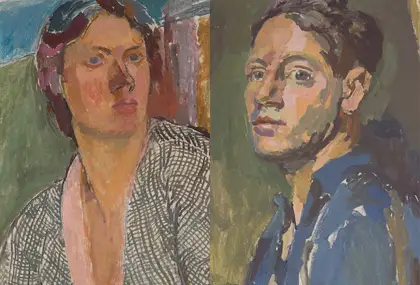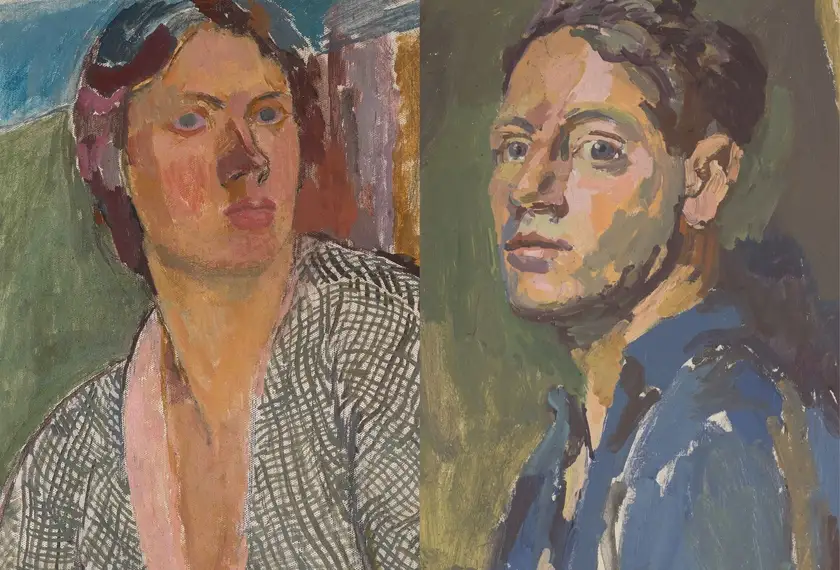
Join us in reflecting on the five-decade creative partnership between Vanessa Bell (1879-1961) and Duncan Grant (1885-1978). Members of the trailblazing Bloomsbury Group, Bell and Grant were two of the most influential British artists of the 20th Century.
Thomas Kennedy (Curator of Modern British Art, Tate Britain) is joined by Dr Darren Clarke, Head of Collections and Research at Charleston, to consider their radical approach to domesticity in their modernist home. Art historians Dr Sophie Pickford and Dr Jon King explore the significance of Bell & Grant's creative collaboration and individual practices.
Darren Clarke is the Head of Collections and Research for Charleston. He has curated several exhibitions including Vanessa Bell: A world of form and colour (Lewes, 2025), Collecting Modernism: Pablo Picasso to Winifred Nicholson (2024), Very Private (2023), Duncan Grant 1920 (2021), Post-Impressionist Living: The Omega Workshops (2019) and Orlando at the present time (2018). He has contributed many catalogue essays and has researched, edited and contributed to eight editions of the Charleston Press.
Thomas Kennedy is Curator of Modern British Art at Tate Britain. His projects include the exhibitions Vanessa Bell & Duncan Grant: Inside Bloomsbury (2026), Edward Burra (2025) and Walter Sickert (2022), and collection displays Nina Hamnett (2026), Ethel Walker (2023–4) and After Industry: Communities in Northern England 1960s–1980s (2022). He previously worked at Barbican Art Gallery where he curated the exhibition Vanessa Winship: And Time Folds (2018).
Jon King is Curatorial Fellow in British Art at the Fitzwilliam Museum, Cambridge. His first book, titled Vanessa Bell and Charleston: Motherhood, Queerness and the Domestic Imagination, was published in October and examines the intersection of maternal, domestic, and transgenerational ties across Bell’s work and legacy.
Sophie Pickford is a Director of Studies in the History of Art at Magdalene College, Cambridge, whose current research focuses on the cross-cultural interaction between the Bloomsbury Group and the Ballets Russes in the 1920s and ‘30s.
Tate Britain's step-free entrance is on Atterbury Street. It has automatic sliding doors and there is a ramp down to the entrance with central handrails.
The Exhibition is on the Lower floor of the gallery.
- Accessible, standard and Changing Places toilets are located on the Lower floor.
- Ear defenders can be borrowed from the ticket desk on the Lower floor.
To help plan your visit to Tate Britain, have a look at our visual story. It includes photographs and information about what you can expect from a visit to the gallery.
For more information before your visit:
- Email hello@tate.org.uk
- Call +44 (0)20 7887 8888 (daily 10.00–17.00)