Some artists return to the same subject over many years. Henri Matisse, for example, developed his sculpture Back I c.1909–10 through four versions across two decades.
For Picasso the challenge of truly capturing another person became a powerful force that shaped his work. Salman Toor uses the nude figure to explore the connections between private life and public experience. In contrast, Andy Warhol’s Marilyn Diptych 1962 uses repetition to turn a famous face into a modern icon.
On this tour we will explore how artists have used the studio to observe, experiment, and rethink the act of representation.
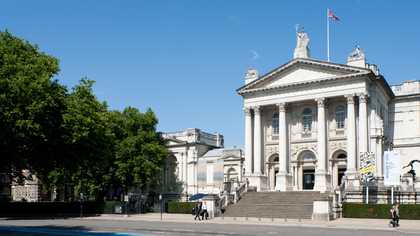
All Tate Modern entrances are step-free. You can enter via the Turbine Hall and into the Natalie Bell Building on Holland Street, or into the Blavatnik Building on Sumner Street.
There are lifts to every floor of the Blavatnik and Natalie Bell buildings. Alternatively you can take the stairs.
- Fully accessible toilets are located on every floor on the concourses.
- A quiet room is available to use in the Natalie Bell Building on Level 4.
- Ear defenders can be borrowed from the Ticket desks.
To help plan your visit to Tate Modern, have a look at our visual story. It includes photographs and information about what you can expect from a visit to the gallery.
For more information before your visit:
- Email hello@tate.org.uk
- Call +44 (0)20 7887 8888 (daily 10.00–17.00)