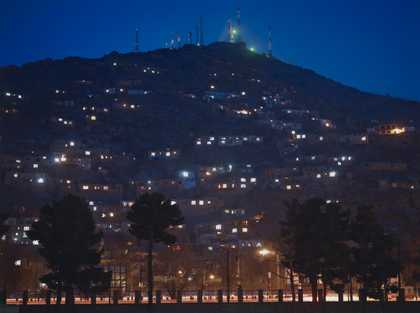
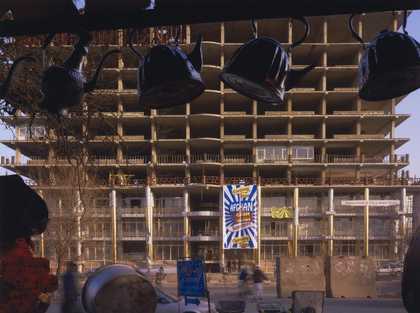
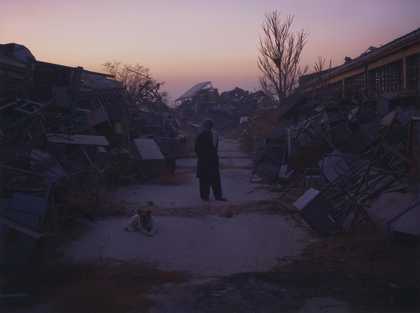
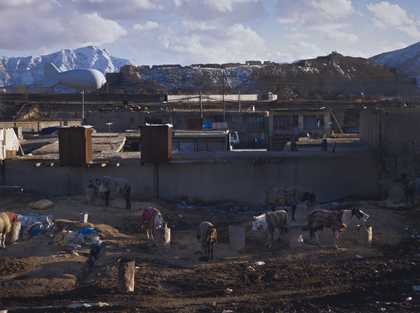
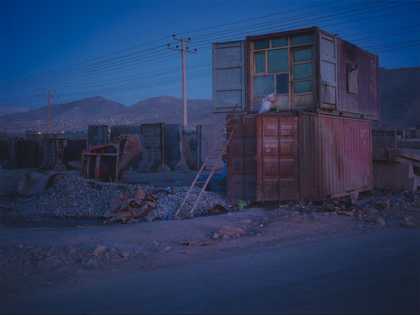
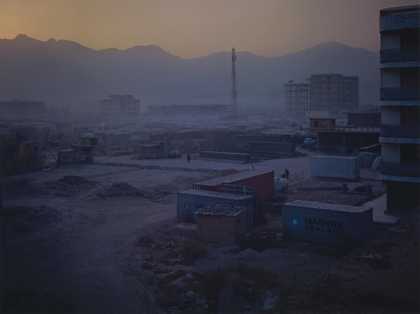
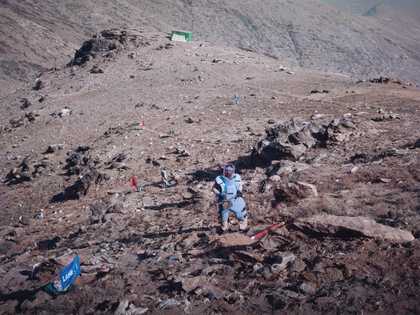
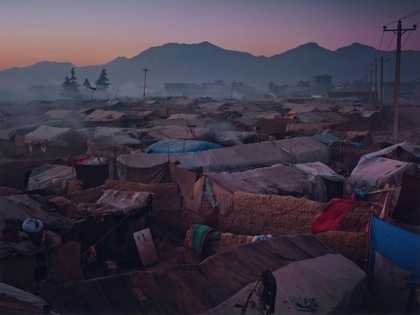
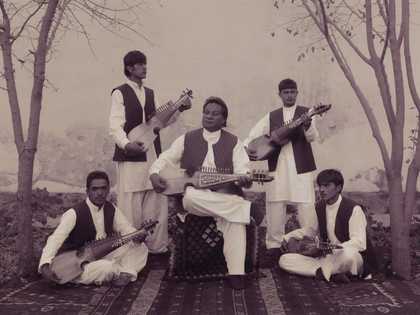
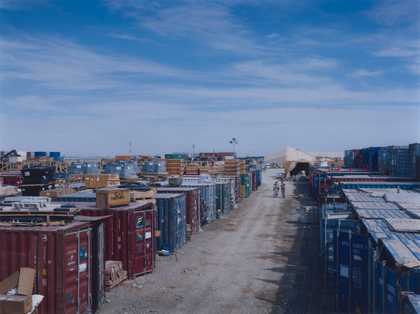
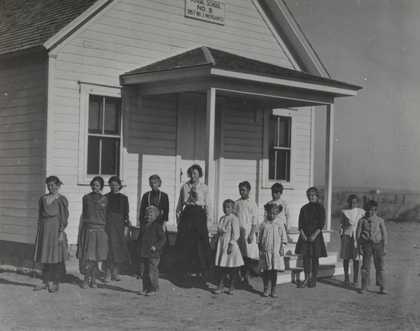
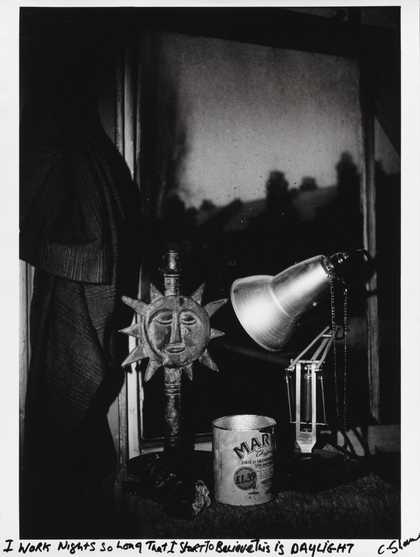
You might like Left Right ‘Radio TV Mountain’ in the centre of Kabul seen from where the Kabul River cuts through the mountains creating the Deh Mazang gorge. In the first Anglo-Afghan War it was the site of a crucial skirmish and hasty retreat by badly outnumbered British cavalry Simon Norfolk 2011 The future home of the Afghan Cash and Carry Superstore on the road between the foreign embassies and Kabul airport. Simon Norfolk 2011 The former home of Jangalak Industries, a metalworking factory that once had a workforce of 1,800 but was wrecked during the civil war in the 1990s. It is now used as a massive storage yard for scrap metal. This area is all discarded hospital beds and sch Simon Norfolk 2011 Wasteland at the back of shops used as stabling for draught horses. In the distance is the Bala Hissar citadel, now home to an Afghan army base and mooring for one of the American blimps that carry electronic surveillance gear and cameras. Simon Norfolk 2011 On the very northern edge of Kabul. A shipping container is re-purposed as home to men working in a yard casting concrete blast walls. Each section, when sold to foreign embassies or the military, fetches $1000 per piece. Simon Norfolk 2011 The peripheries of the city of Kabul, especially to the north and east are endless building sites. Since most of the documentation concerning land title was lost during the war, much of this speculative and illegal construction is concerned more with esta Simon Norfolk 2011 At Waisalabad high above West Kabul. It has taken 26 men from the Mine Detection Centre and four de-mining dogs more than three months to clear mines from an area the size of a few soccer pitches. Kabul’s rapid expansion has increased pressure for buildin Simon Norfolk 2011 Historically, Kuchis were strongly pro-Taliban; feelings made more intense by being bombed by NATO off their traditional grazing lands in Helmand. They are allowed to set up camp here on Kabul’s periphery only because it is below a large, new Afghan Army Simon Norfolk 2011 At a music school on Kabul, boys are taught the traditional Afghan instrument the rubab. Difficult to play, it is a skill which nearly became extinct due to the Taliban prohibition on secular music. Simon Norfolk 2011 One of the huge logistics compounds at Camp Leatherneck. A modern, technological army needs hundreds of thousands of different kinds of objects in order to keep it working. A $100m warplane can be grounded for the want of a $1 part. Supplying these things Simon Norfolk 2011 School, y9, District 3. This was the attendance on December 3, and several children were absent on account of sickness Lewis W. Hine 1915 I work nights so long that I start to believe this is daylight from the series Life as a Night Porter Chris Shaw 2003