
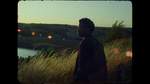

Simeon Barclay
Watch a video with Turner Prize nominee Simeon Barclay and explore performance, childhood memories, and British landscapes through discussion points
Simeon:
Squeeze up nuh man!
Down the M62 in a tin can deliverance. Buffeted in darkness. Hidden in dank fog. Battered in driving winds. Obscured in driving snow.
I'm an artist based in Leeds in West Yorkshire. I create large installations that encompass objects, sonic sound performance, sculpture, and I write also. A lot of the ideas for my writing come from stuff that's been collected in the world, whether it's on bus journeys, from history, my own personal journey. All this stuff is then fed into the work.
I grew up in Huddersfield, where you have this train station frontage. When we were young we hung around it hoping that some of that grandeur would rub off on to us.
The statue of Labour Prime Minister Howard Wilson has been erected out the front. He was very forward-thinking. His policies brought in the motorway network across England.
The M62 was a lifeline. The escape route to new frontiers where you could take in new fashion, new music, new becomings. We explored these frontiers as our peers had done, who would come back with stories that would create in us a sort of hunger to see what was over the hill. Huddersfield was sort of like the springboard. It's a place that in reality I escaped from, but I had unfinished business with.
The Ruin is a spoken word piece that will take you on a journey through different emotional territories.
I grapple with the Yorkshire Moors, particularly the part that comes out of Lancashire into Yorkshire through Scammonden. I used to love driving through that stretch. It's mechanical, it's serial. There's this contrast between its undulating beauty, but as night comes over there is a kind of darkness that swallows you. The weather is very climatic. It fluctuates between heavy rain, heavy fog, heavy wind, heavy snow.
Simeon performing: Of climatic distortions
Of gargantuan terrain
Of dust
Of fog
Of ice
Of wind
Of snow
In dust
Lost in all of the above In darkness
Simeon: The studio is where I sort of bring different elements together as a way of sort of understanding how the text will work itself into a performance. Simeon performing: Boy you mustn't run
You mustn't cry
You mustn't fraid
You mustn't hide
You must hear
You must feel
You must do
You must learn
Brush your teet
Comb your hair
Simeon: Performance has always been there. My dad, who was a tailor, when he first arrived in the country would shove the sofa to one side and he would unfurl this cloth, turning it into suits of armour that me and my brothers could wear and parade up and down the lounge. That's performance. I'm really interested in the alchemy that happens within performance. It's a kind of communication within space that changes the molecules of that space, I feel. The energy that you put into the performance is then transferred to the crowd. The crowd sort of bats it back at you. It's the kind of circular thing that energizes the space.
Nothing else matters, bar what's going on on stage.
About the Video
Encourage your students to respond to the video in their own ways – perhaps by making notes, doodles or drawings, or through gestures and sounds.
Artist Simeon Barclay explores the relationship between memory, place and performance.
"The idea of making art for me is about wanting to see yourself in the world"
Simeon Barclay
Join Simeon Barclay as he returns to the landscapes of Huddersfield and the Yorkshire Moors. He reflects on the places that shaped him and on his spoken word work The Ruin. In his studio, he brings together text, movement and memory, considering how performance can transform both performer and audience.
Discuss
Your students' ideas and experiences are the best starting point for any discussion. Using the prompts below, support meaningful and creative discussions in the classroom about the video’s key themes. Discover how Simeon Barclay's practice can inspire your students to learn with art.
Performance Art
The Ruin is a performance piece of spoken word poetry by Barclay with live percussion by James Larter and horn by Isaac Shieh. In the video, we see parts of this performance with live musical accompaniment.
Prompts
- Have you ever seen an art piece like this before? What do you think makes it a piece of art, rather than a play or a music performance?
- This is Simeon Barclay’s first piece of performance art. He has previously made sculpture and installation works, written, painted or made neon signs. Why do you think he wanted to present these ideas in this format?
- Barclay says that he thinks the work ‘takes you on a journey’ and changes both the space and everyone in it. Can you think of a time an artwork took you on a journey of different emotions or ideas, or changed you in some way?
Memories of childhood and home
Barclay said that he was ‘escaping’ Huddersfield to find ‘new becomings,’ but that he 'had unfinished business' with it, and much of The Ruin is about his memories and experiences growing up in the area.
Prompts
- Barclay says that he used to love driving through the Yorkshire Moors near Scammonden, calling the landscape ‘mechanical,’ ‘serial’ and saying it has a ‘darkness that swallows you.’ Can you think of a landscape from your past that brings up strong emotions for you?
- Barclay compares dressing up as a child to performance art. When was the last time you dressed in some kind of costume for a performance or played make-believe? Would you ever think of that as creating art?
- If you were to make a performance piece, what memories or experiences would you draw from? How might where you grew up influence what you present – the sounds you use, the colours you wear, or the words you choose?
Making art today
Simeon Barclay is one of four artists nominated for the 2026 Turner Prize, which celebrates the best of British art today. By thinking about the landscape of his past through performance art, Simeon Barclay brings an important perspective of his own to contemporary art.
Prompts
- “Contemporary art” means any artwork made in the present or recent past. Can you think of any other contemporary artists you’ve heard of before? What similarities and differences can you find between them and Barclay?
- Sometimes contemporary art presents familiar ideas in new or unfamiliar ways. Why might Barclay want to think about childhood and home in new ways?
- What might you find out about Barclay and his practice if you spent time with him as he worked?
How to Use Artist Stories
Introduce art and artists into your classroom with Artist Stories resources. The resources combine engaging videos and thoughtful discussion points to encourage confidence, self-expression and critical thinking. Art is a powerful tool for discussing the big ideas that impact young people's lives today.
- Explore the video:
- Read About the video to introduce the artist to your students.
- Project the video or watch it in smaller groups.
- Each video is between 3–10 minutes.
- Transcripts are included where available.
2. Discuss the video:
- Select discussion prompts from the lists to frame your conversation.
- Use a mix of individual reflection, pair work and group discussion.
- Use one set of prompts to explore a theme in depth or shape your discussion across different themes.
- Discussion prompts can also be used in a Q&A format.


