

Joseph Mallord William Turner, Sun Setting over a Lake c.1840. Tate.
9 rooms in JMW Turner
The paintings in this room have become celebrated examples of Turner’s boundary-pushing late style. And yet in his own lifetime they were unknown
These works were among the many unfinished paintings found in Turner’s studio after he died. Ethereal and luminous, they show Turner’s trailblazing focus on light and colour. There are no outlines – edges are blurred and colours blend into one another. Turner used thin layers of oil paint to create this effect, much like the way he used watercolour.
In some of these paintings Turner returns to decades-old subjects, re-imagining them in his mature style. He may have been aiming to exhibit these works, to show the public how his vision had evolved. Artists’ studios are places of experimentation. Turner’s was a very private space. He could be secretive about his working practices but also indulged in showmanship – on occasion he finished paintings in public just in time for exhibition openings. Those who did see him paint in his studio said he worked quickly, often working on several canvases at the same time.
An exhibition featuring some of these unfinished paintings was held in 1966 at the Museum of Modern Art (MOMA) in New York. This led to a fresh wave of interest in Turner’s work. Though Turner himself would not have regarded these paintings as ready to show in a public exhibition, it is fitting that some of his favourite compositions have gone on to become some of his most influential works. While they may appear ‘abstract’, they are rooted in subjects that held meaning for Turner.
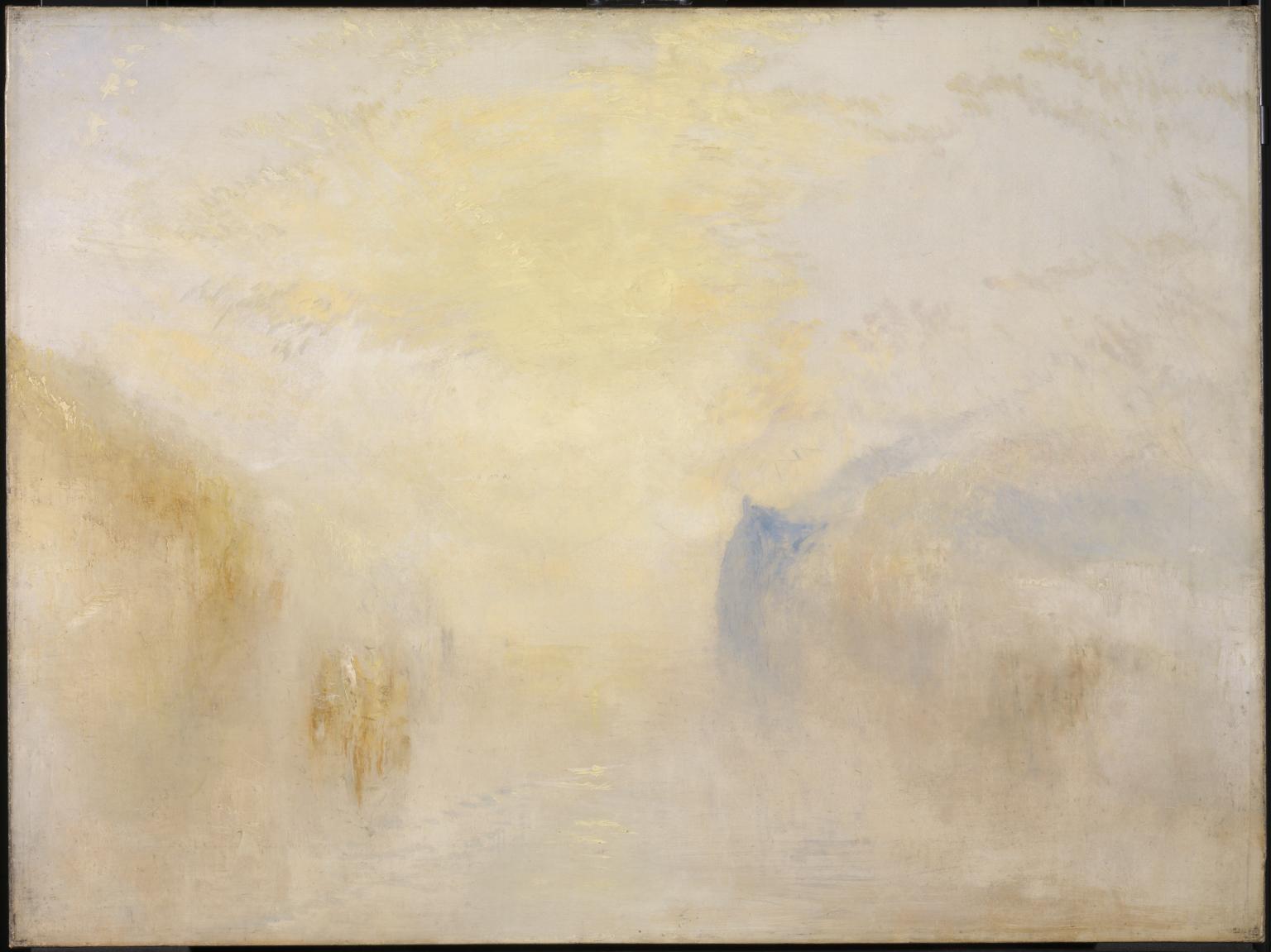
Joseph Mallord William Turner, Sunrise, with a Boat between Headlands c.1840–5
We do not know where this painting is set. The setting may be imagined. The headlands at left and right give structure to the glowing scene. The one on the right appears to have a tower at its tip. The location could be based upon Turner’s extensive travels in Europe, or his memory of them. Suggestions have included Lake Lucerne in Switzerland (a favoured location of Turner’s late in life), the River Rhine or an imaginary Italian port that might have become the backdrop for a mythological scene.
Gallery label, October 2023
1/8
artworks in Experiments on Canvas
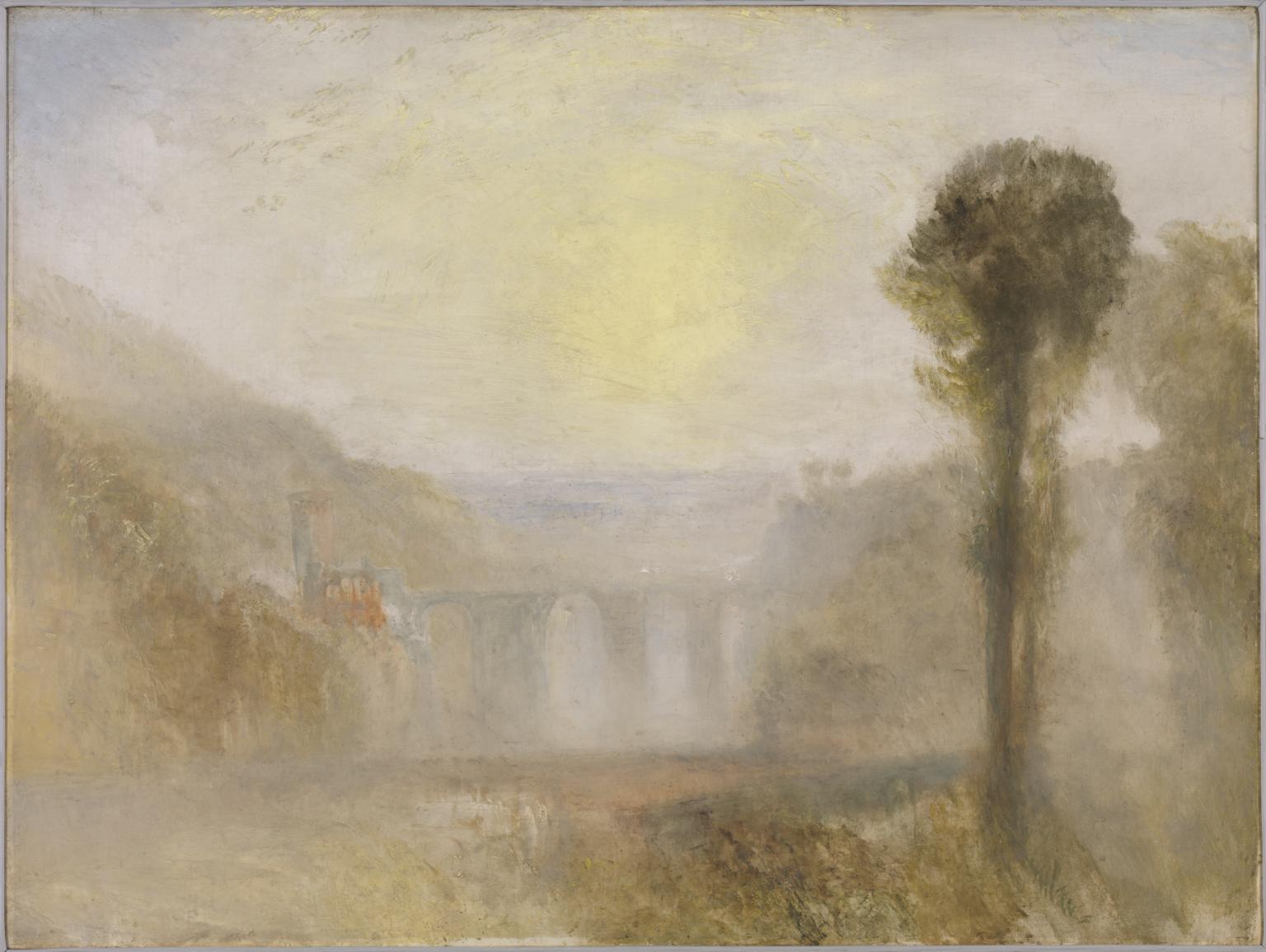
Joseph Mallord William Turner, The Ponte Delle Torri, Spoleto c.1840–5
Spoleto is a picturesque town in Umbria, famous for its Ponte delle Torri (Bridge of Towers), a medieval feat of engineering which spans the deep gorge to the east. Turner passed through the town on his way to Rome in 1819. As in so many of his Italian-inspired oils, he has enhanced real topography with an evocative but imagined sense of atmosphere. The composition is reworked from an earlier image known as ‘Bridge and Goats’. That etching was published in 1812 as part of the Liber Studiorum, a series of prints summing up Turner’s achievements in landscape to date.
Gallery label, February 2010
2/8
artworks in Experiments on Canvas
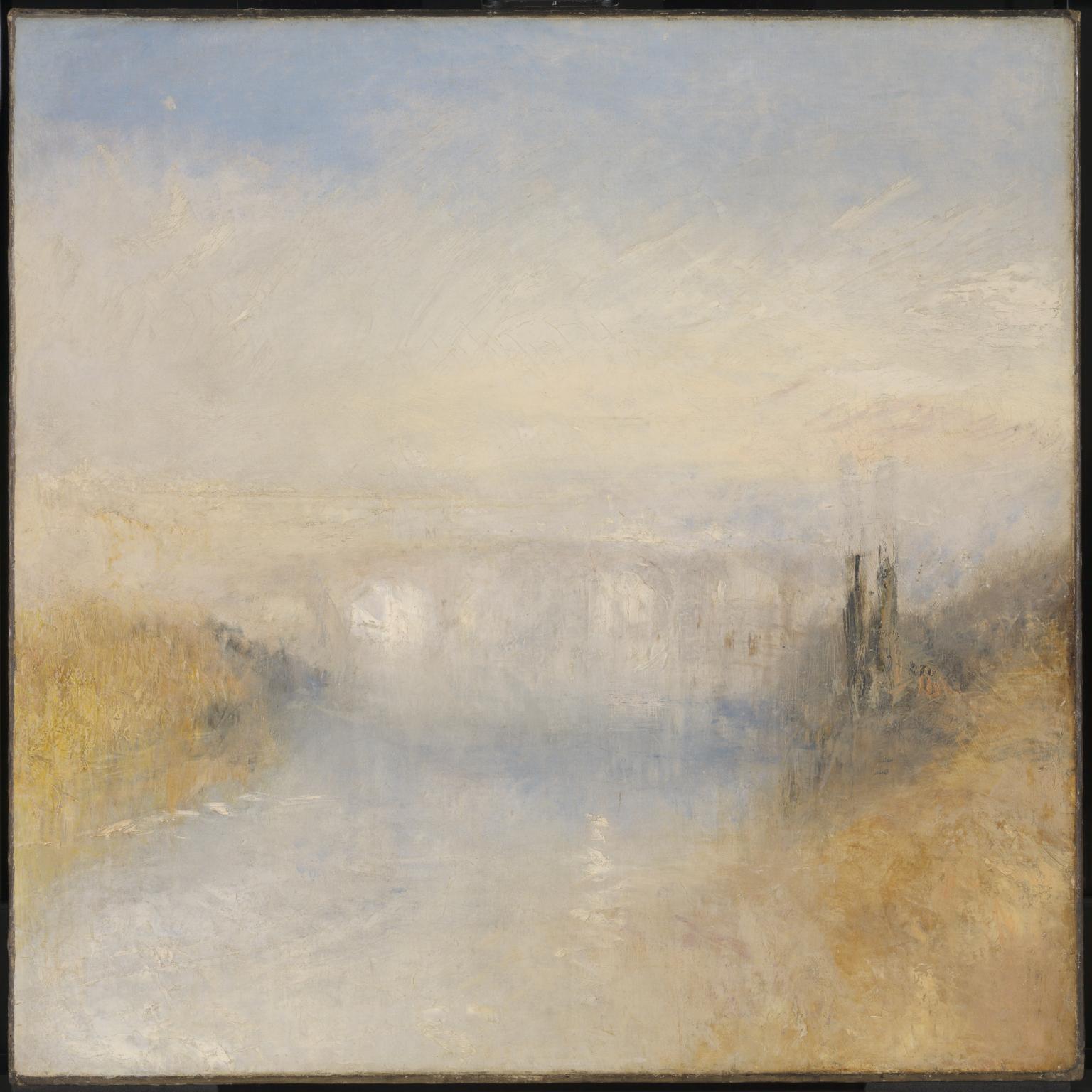
Joseph Mallord William Turner, A River Seen from a Hill c.1840–5
This is one of a series of square-shaped canvases that Turner painted in the 1840s. It remains unfinished. Late in his career Turner took to finishing paintings in front of his fellow artists in the days before an exhibition opening. One observer noted that such half-finished works were ‘divided into large masses of blue, where the water or sky was to come, [with] other portions laid out in broad orange yellow, falling into delicate brown where the trees and landscapes were to be placed.’
Gallery label, October 2023
3/8
artworks in Experiments on Canvas
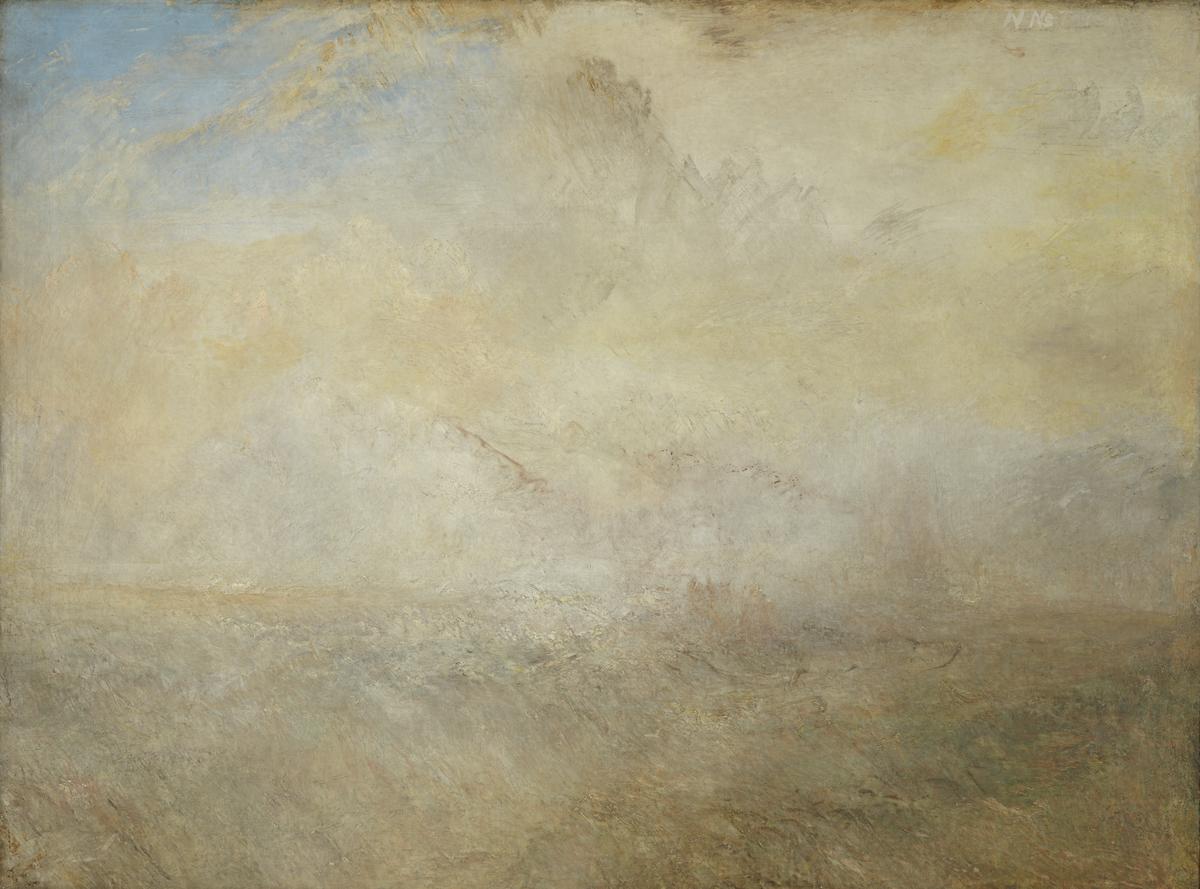
Joseph Mallord William Turner, Seascape with Distant Coast c.1840
This is one of many unfinished sea paintings found in Turner’s studio after his death. It represents a pivotal point in Turner’s painting process. Areas of light and shade have been mapped out but there is as yet no narrative and no distinctive shapes. From here Turner could have worked this up into any subject that took his imagination. The significance of the letters in the top righthand corner is not known. The inscription reads: ‘M [with ‘c’ inscribed directly below] M N Ns T Ts’. It appears to have been done before the sky had fully dried. This is one of many unfinished sea paintings found in Turner’s studio after his death. It represents a pivotal point in Turner’s painting process. Areas of light and shade have been mapped out but there is as yet no narrative and no distinctive shapes. From here Turner could have worked this up into any subject that took his imagination.
Gallery label, October 2023
4/8
artworks in Experiments on Canvas
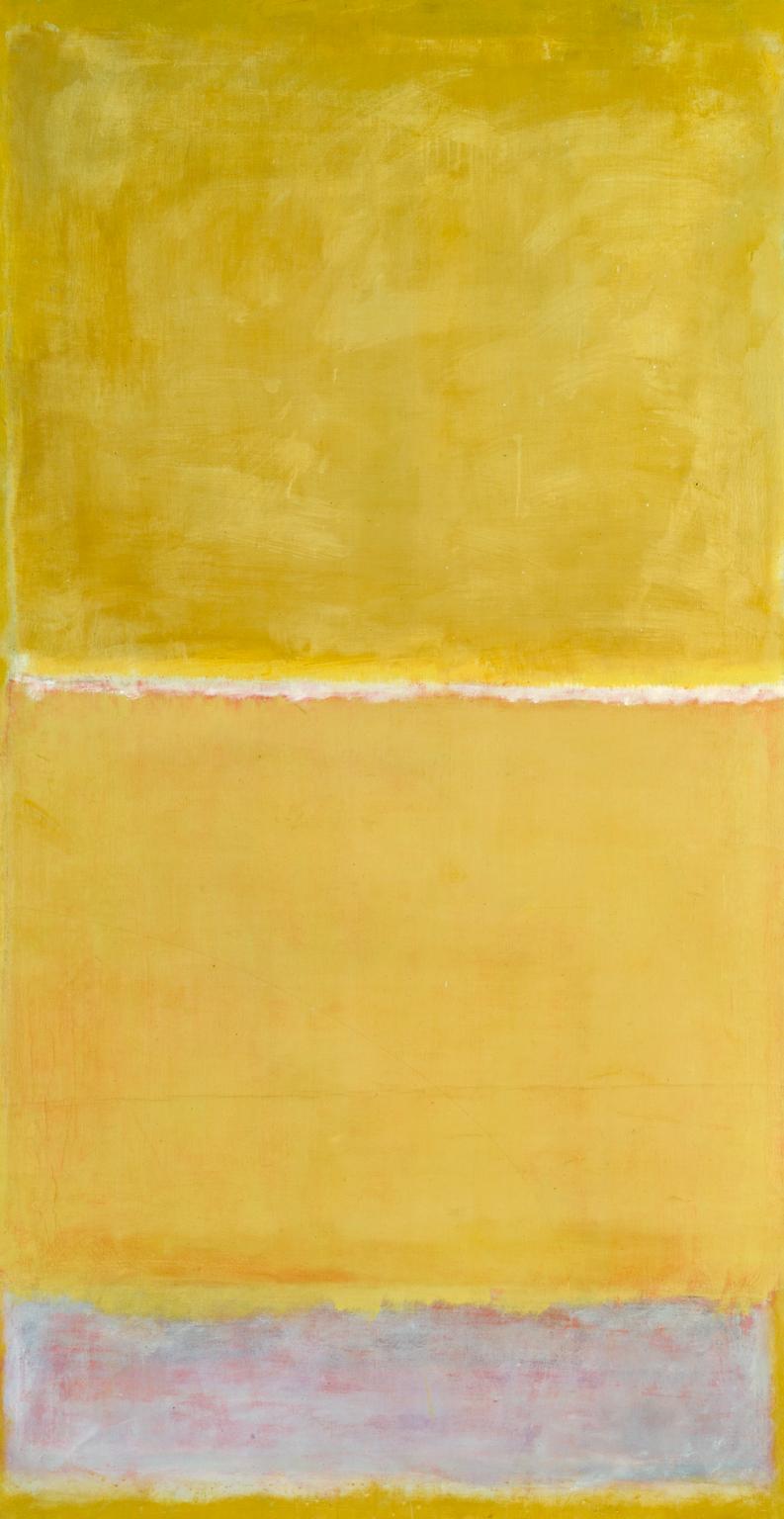
Mark Rothko, Untitled c.1950–2
North American artist Mark Rothko greatly admired Turner. He famously remarked in 1966: ‘This man Turner, he learnt a lot from me’. The works in this room – unfinished paintings from late in Turner’s life – appealed to Rothko. Late in his own career, he created paintings like this one which use rectangles of intense colour to convey emotion. In 1969 Rothko gave a group of paintings to Tate, hoping they would be displayed near those of Turner.
Gallery label, October 2023
5/8
artworks in Experiments on Canvas
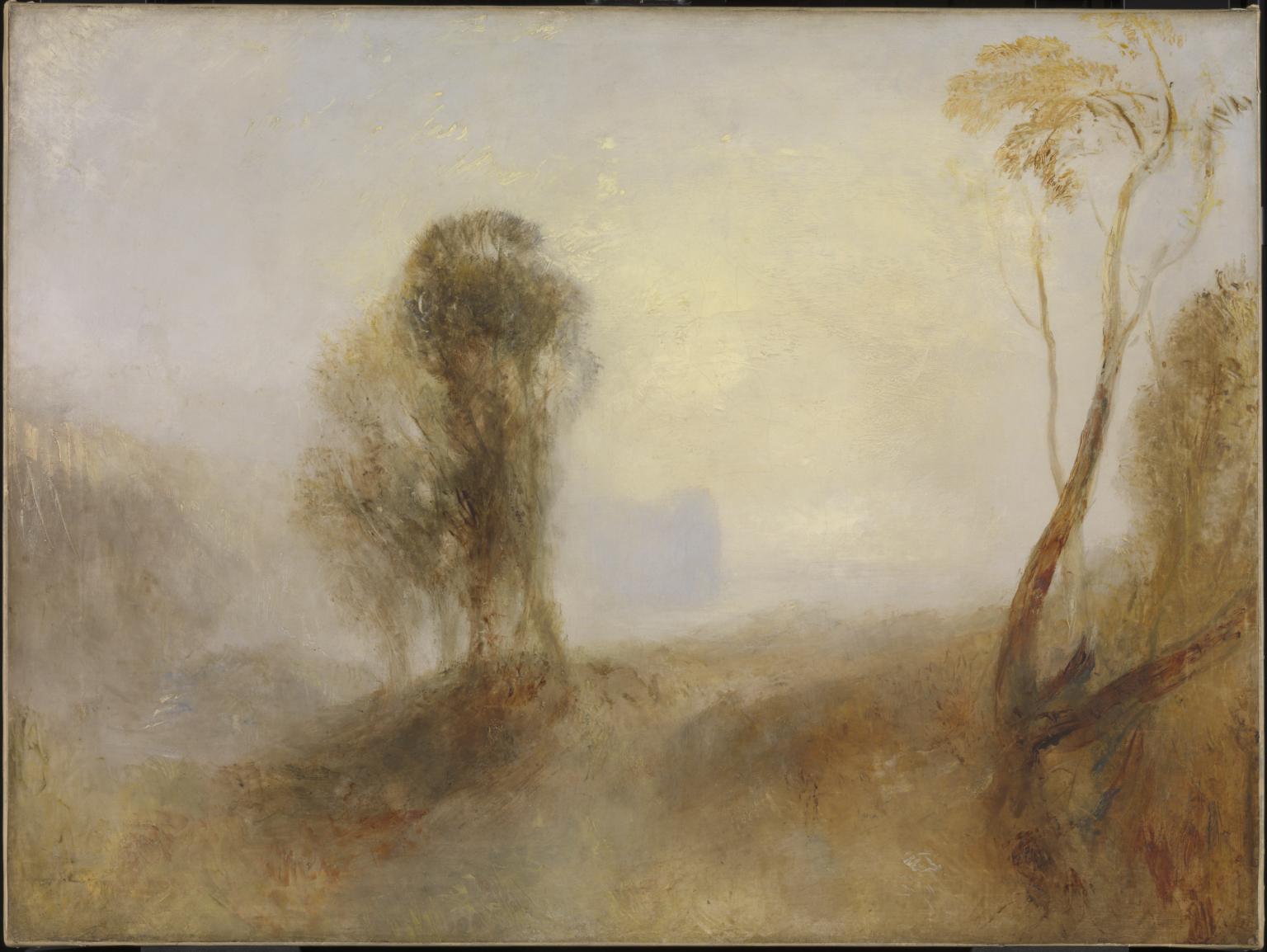
Joseph Mallord William Turner, Sunrise, a Castle on a Bay: ‘Solitude’ c.1840–5
This unfinished painting revisits a composition from Turner’s ‘Liber Studiorum’ (‘Book of Studies’). In this set of prints, he classified his landscapes into six types: Architectural, Historical, Mountainous, Marine, Pastoral and E.P. This composition is from the category E.P., meaning Elevated or Epic Pastoral. Pastoral art showed an idealised view of the countryside. Turner’s E.P. celebrated the pastoral art of French painter Claude Lorrain (c.1604/5–82), who depicted the countryside around Rome. This composition pays homage to Claude’s ‘Landscape with Psyche outside the Palace of Cupid’, now at the National Gallery, London.
Gallery label, October 2023
6/8
artworks in Experiments on Canvas
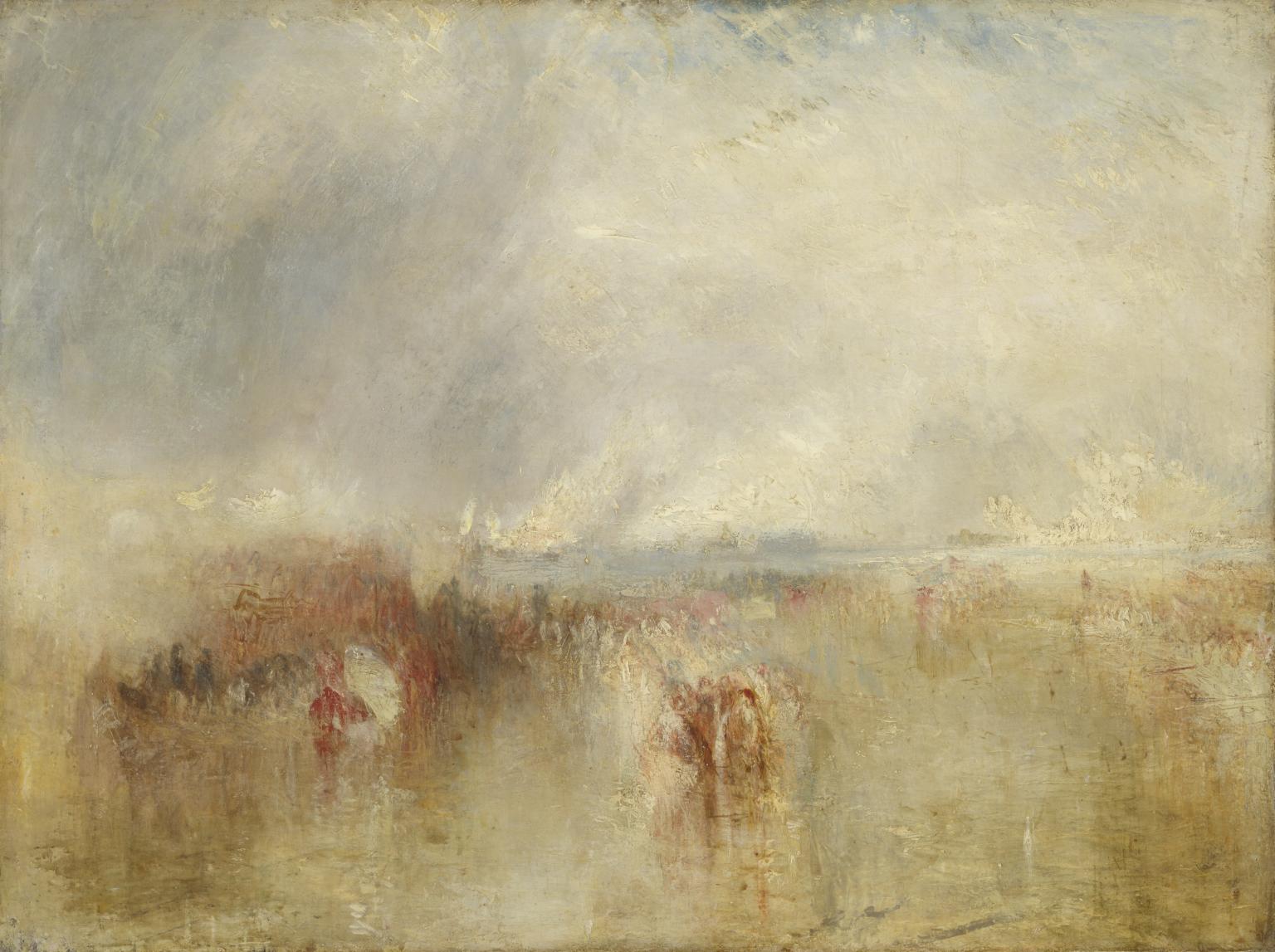
Joseph Mallord William Turner, The Arrival of Louis-Philippe at the Royal Clarence Yard, Gosport, 8 October 1844 c.1844–5
This pair of unfinished paintings was long thought to depict Venice. We now think they show the arrival in Portsmouth of French king Louis-Philippe in October 1844 for his state visit to Queen Victoria. These paintings hum with energy. The crowds that met the King upon his arrival in Portsmouth can be made out on the left and right of both scenes. Turner probably witnessed the proceedings from a boat. Even if Turner had completed these paintings his uncompromising late style – putting colour and atmosphere before immediate legibility – would almost certainly have been ridiculed in the press.
Gallery label, October 2023
7/8
artworks in Experiments on Canvas
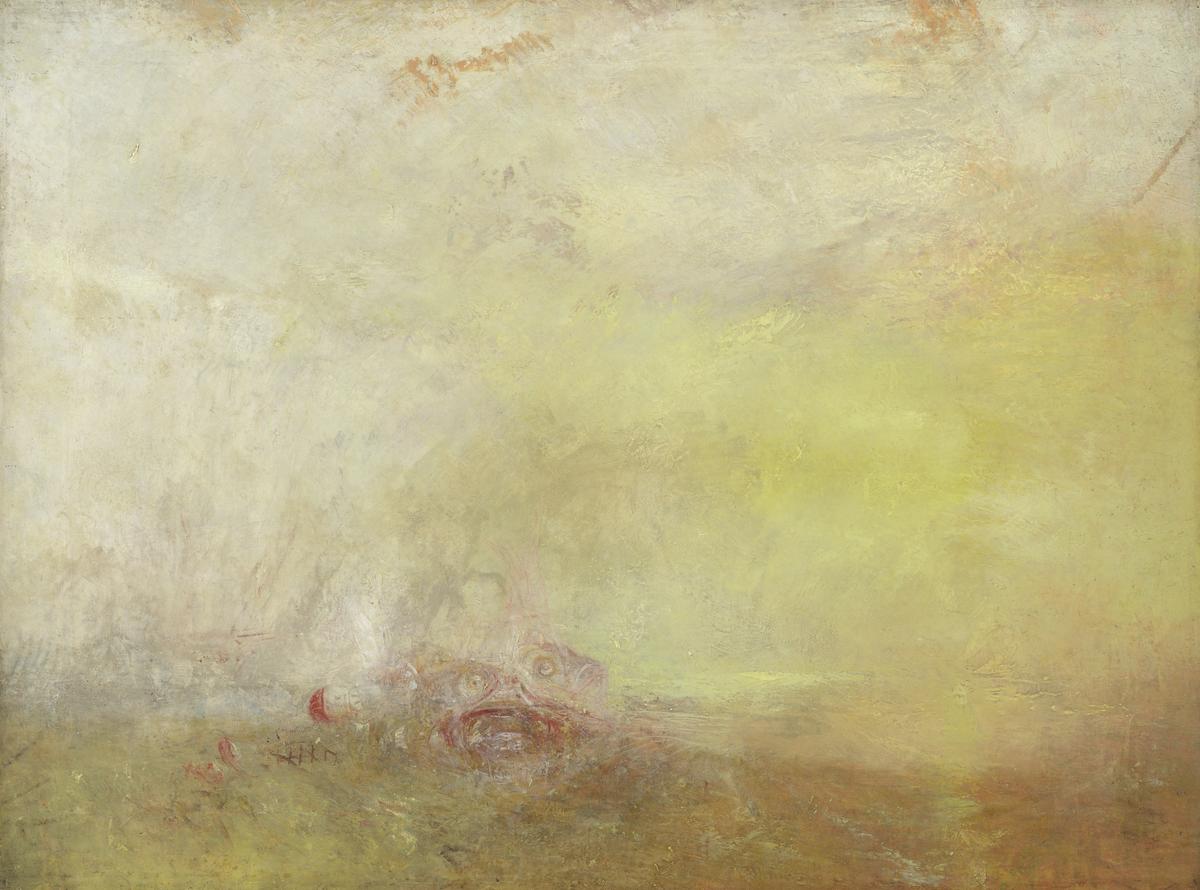
Joseph Mallord William Turner, Sunrise with Sea Monsters c.1845
This is one of Turner’s most mysterious unfinished paintings. The shapes of two or more giant fish can be seen against a yellow sunrise. Dark brown hatched lines to the left of the fish may suggest netting or fish scales. Turner would have read of sightings and stories of mysterious marine creatures by sailors engaged in Britain’s multiplying naval business interests. Despite its bright tonality, this work may relate to Turner’s frequent depictions of the sea as dark place.
Gallery label, October 2023
8/8
artworks in Experiments on Canvas
Art in this room
Joseph Mallord William Turner
Sunrise, with a Boat between Headlands
c.1840–5
Joseph Mallord William Turner
The Ponte Delle Torri, Spoleto
c.1840–5
Joseph Mallord William Turner
A River Seen from a Hill
c.1840–5
Joseph Mallord William Turner
Seascape with Distant Coast
c.1840
Mark Rothko
Untitled
c.1950–2
Joseph Mallord William Turner
Sunrise, a Castle on a Bay: ‘Solitude’
c.1840–5
Joseph Mallord William Turner
The Arrival of Louis-Philippe at the Royal Clarence Yard, Gosport, 8 October 1844
c.1844–5
Joseph Mallord William Turner
Sunrise with Sea Monsters
c.1845