We are living in a time of war, forced displacement, widening inequality, rising authoritarianism and ecological breakdown. These overlapping crises expose profound inequalities in whose lives are protected, whose histories are remembered, and whose rights are recognised today.
The symposium brings together the practices of artists and academics working with communities in resisting erasure and challenging entrenched systems of power. We will explore the building of support networks and grassroot institutions, use of feminist methodologies, memory work and counter-archiving practices, and the preservation and transmission of embodied knowledge across generations.
Developed in partnership with Mathaf: Arab Museum of Modern Art and IMMA (Irish Museum of Modern Art), Transnational Resistances brings into dialogue regions shaped by distinct yet intersecting histories of British colonialism and military intervention. Through critical exchange, it foregrounds opportunities for shared learning, fostering enduring forms of solidarity and resistance across borders.
Organised by Hyundai Tate Research Centre: Transnational in partnership with Hyundai Motor. In collaboration with IMMA (Irish Museum of Modern Art) and Mathaf: Arab Museum of Modern Art. Supported by the Irish and UK Governments under the UK-Ireland Cultural Co-operation Programme 2026-2030.
Friday 6 November 10.00–20.00
Starr Cinema and Clore Foyer
Learn more about Day One's programme of workshops, talks and Q&As.
10.00–11.30 | Workshop: Building Transnational Feminist Networks
Alessia Cargnelli
Starr Foyer
This workshop, devised by Alessia Cargnelli, welcomes artists, arts professionals, researchers, archivists, feminists and anyone interested, to take part in a series of open discussions around building transnational feminist networks. Asking how we might initiate and nurture networks of feminist practices, it will explore different thematics across five case studies.
Cargnelli will co-host this workshop with ‘friends’ – locally-based practitioners working at the intersection of archival practices, feminist organisational thinking and and infrastructural critique: Agnese Politi, independent curator and practice-based PhD researcher; Êvar Huseynî, founder of the West Asian and North African Women’s Art Library (WANAWAL); and Althea Greenan, curator of the Women’s Art Library (WAL) and Vasundhara Mathur, researcher, writer and curator of The Archive is a Gathering Place.
11.30–11.45 | Opening Remarks
Starr Cinema
An introduction to the first day of the symposium, by Nabila Abdel Nabi, Senior Curator, International Art, Tate Modern; Sheena Barrett, Head of Research and Learning, IMMA (Irish Museum of Modern Art); and Zeina Arida, Director, Mathaf: Arab Museum of Modern Art.
12.00–14.00 | Talk: Transnational Feminisms
Marsha Meskimmon, Nadine Atallah and Fionna Barber
Starr Cinema
This panel brings together Dr Marsha Meskimmon, Nadine Atallah and Fionna Barber, in discussion of feminist art practices that emerged in the 1960s–80s across Ireland and the SWANA region.
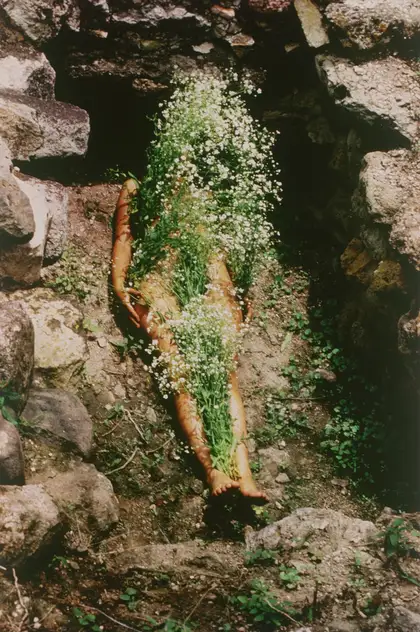
Centring feminist ecological thinking and the prefigurative politics of nonviolence, Marsha Meskimmon’s presentation, Transnational Feminist Resistances: On the slow art of un/re/making worlds, proposes transnational feminist resistances as a slow art of survivance and re/generation. It will contend that such resistances are not new and that the arts have long played a critical role within them.
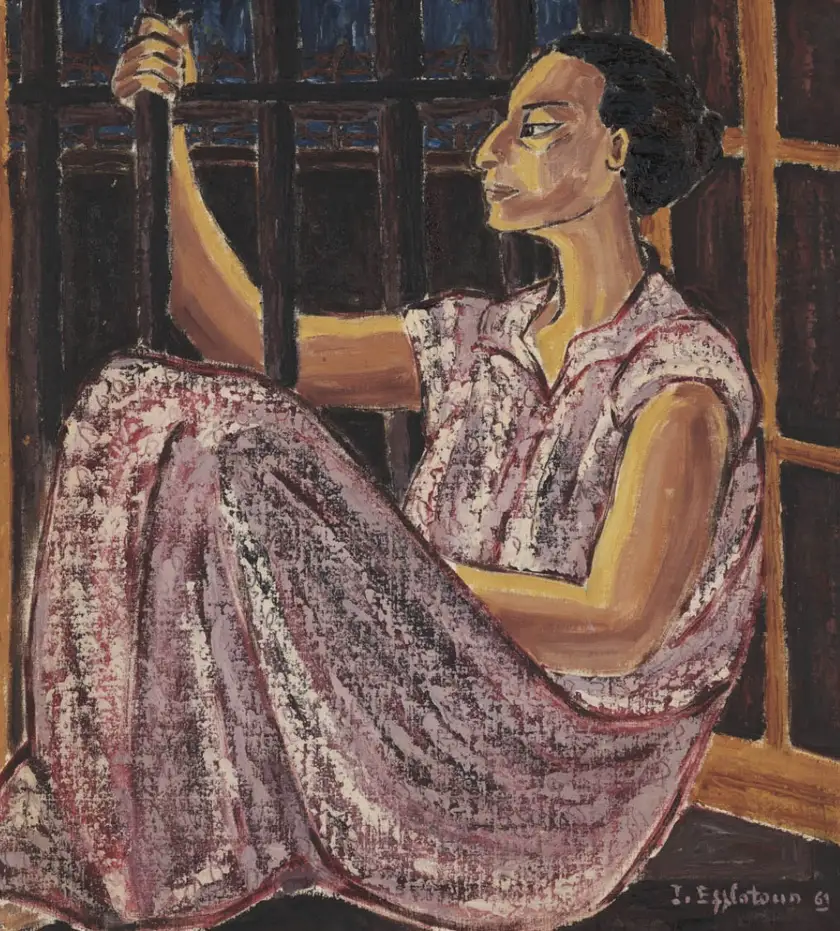
In her presentation, Inji Efflatoun After Prison: A Feminist Artist?, Atallah explores the work of Egyptian artist and activist Inji Efflatoun, who was a political prisoner between 1959-63. Atallah will explore the artist’s use of painting as a means of expressing her feminist vision in the 1950s, devising new ways to continue her activism in the 1960s and 1970s.
Focusing on the Women Artists Action Group (WAAG) and its counterpart in Northern Ireland (NIWAG), Barber’s presentation, Irish Feminist Art Activism in the 1980s, will explore how collective feminist art groupings engage with contemporary issues, and establish precedents for the future.
Followed by a discussion chaired by Ann Coxon, Senior Curator, Displays & International Art, and an audience Q&A.
14.00–15.00 | Communal Meal
Starr Foyer
Join us for a free, shared meal, for all symposium contributors and attendees. A chance to connect and explore the symposium's themes.
This meal is supplied by The Syrian Sunflower. Founded by Syrian chef and human rights activist Majeda Khouri in 2019, through The Syrian Sunflower Majeda continues to share her heritage, advocate for human rights, and unite people through the universal language of food.
15.00–16.30 | Talk: Memory and Archives
yasmine habib and Dima Srouji
Starr Cinema
This talk brings together artists Dima Srouji and yasmine habib, who share research-based practices grounded in (im)material histories, sustained collaborations and collective work, and counter-archival processes.
In her talk, Maternal Exhumations and a Rehearsal in Return, Srouji will trace Palestinian voices in the margins of the archaeological record over the last century. “Basket girls” and grains of sand appear as keepers of knowledge, as they emerge from paper trails and museum vitrines. Starting with and going beyond the extractivist practices of British and American eugenicists and biblical archaeologists, the projects presented thread the Palestinian relationship to the land and intergenerational ties to material culture.
habib will speak to her project Frictional Conversations: photographs gathered together with residents of Burj al-Shamali camp in southern Lebanon, which hosts Palestinians forcibly displaced from northern Palestine in 1948. This process of collecting photographs between 2001–2011, from a people living in a chronic state of exception, was one that was never about representing them. habib will discuss how centring both the photographs and those connected to them, has revealed the many disembodied layers of these images that our eyes cannot see.
Followed by a discussion chaired by curator and writer Pip Day, and an audience Q&A.
16.45–17.45 | Intervention: Sonic Resistance
Basel Abbas and Ruanne Abou-Rahme
Starr Cinema
Basel Abbas and Ruanne Abou-Rahme will share a live audiovisual intervention, exploring themes of displacement and collective memory. Since 2008, the pair’s collaborative performative practice has adopted non-linear storytelling, examining how communities bear witness to violence, loss and disenfranchisement, and illuminating underrepresented histories. Characterised by slippages between past and present, interruptions, repetitions and overlap, this performance will see the pair’s unique “poetics of resistance” applied to questions of how the present is shaped, remembered and imagined. Surfaced through gestures of voice and embodiment, this performance will engage with the politics of memory, and struggles of dispossession and oppression – in Palestine, Yemen, Iraq, Syria and beyond.
Followed by a discussion chaired by Beatriz García-Velasco, Curator, International Art, and an audience Q&A.
18.30–20.00 | Keynote
Abdelrahman ElGendy
In this keynote, Egyptian author Abdelrahman ElGendy will draw on his new book, Huna: A Memoir of Revolution, Prison, and Becoming. Inviting us to reconsider the grounds on which we build solidarities across borders and struggles, ElGendy will ask: what would it mean to move beyond recognition, proximity or empathy? How do the politics of legibility and translation – in language and flesh – foreclose our liberatory horizons?
Working from the entanglement of the literary, the carceral and the political, this keynote asks what becomes possible when we approach love as a political question rather than a sentimental answer. How might revolutionary love unsettle the distance between witness and participant, self and other, here and elsewhere? And how might it open onto new ways of relating and being, that exceed what we can imagine within the terms of the present?
Followed by a discussion chaired by Katrina Nzegwu, Assistant Curator, International Art, and an audience Q&A.
Saturday 7 November 10.30–20.15
Blavatnik Building Level 5 and Starr Cinema
Discover the performances, keynote and screenings on Day Two of the symposium.
10.30–10.45 | Opening Remarks
Blavatnik Building Level 5
An introduction to the second day of the symposium, by Helen O’Malley, Curator, International Art, Tate Modern, Sheena Barrett, Head of Research and Learning, IMMA (Irish Museum of Modern Art); and Zeina Arida, Director, Mathaf: Arab Museum of Modern Art.
10.45–12.45 | Talk: Institution Building
Blavatnik Building Level 5
The Question of Funding (Yazan Khalili and Lara Khaldi), Sakiya (Sahar Qawasmi and Nida Sinnokrot) and Dar Jacir for Art and Research (Emily Jacir and Ahmed Alaqra)
This panel brings together representatives from The Question of Funding, Sakiya and Dar Jacir for Art and Research, in exploration of how we might build and maintain equitable cultural institutions. Grounded in the Palestinian context, the collectives work at the intersection of disciplines, centring experimental and circular systems of knowledge sharing and production. Their work challenges the manner in which culture is locally produced and consumed, championing established economies of funding, integrating traditional ecological practices as a route to liberation and shared prosperity, and creating encounters between historic and contemporary conditions. This panel will discuss ways in which resources and experiences can be accumulated, documented and disseminated amongst communities, to create institutions grounded in practices of reciprocity, sustainability and care.
Followed by a discussion chaired by Tirdad Zolghadr, Curator of Academic Engagement, Mathaf: Arab Museum of Modern Art, and an audience Q&A.
13.00–14.00 | Intervention: Body as a Site of Resistance
Sandra Johnston and Alastair McLennan
Blavatnik Building Level 5
This intervention foregrounds social interconnectedness as a defining feature of Alastair MacLennan and Sandra Johnston’s collaborative work. Focussing on the vulnerabilities and resistances of human bodies, their actions are typically visually sparse. Revealing an attentiveness to the intimacies of internal and external sensations, this performance seeks to generate a space for empathetic communication between self and others.
Followed by a discussion chaired by Johanne Mullan, Curator of Collections, IMMA (Irish Museum of Modern Art), and an audience Q&A.
14.00–15.00 | Communal Meal
Blavatnik Building Level 5
Join us for a free, shared meal, for all symposium contributors and attendees. A chance to connect and explore the symposium's themes.
This meal is supplied by The Syrian Sunflower. Founded by Syrian chef and human rights activist Majeda Khouri in 2019, through The Syrian Sunflower Majeda continues to share her heritage, advocate for human rights, and unite people through the universal language of food.
15.00–16.15 | Keynote
Zeina Maasri and Bernadette Devlin McAliskey
Starr Cinema
This keynote features presentations by Zeina Maasri and Bernadette Devlin McAliskey, rooted in the context of transnational solidarity with the Palestinian liberation movement during the Global Sixties. Roughly spanning the years 1954–1975, the Global, or ‘long’ Sixties describes a historical and academic framework that examines the social, political and cultural transformations of the period. Maasri’s presentation, Cosmopolitan Radicalism, will explore visual cultures of solidarity with Palestine during this period. She will focus on Beirut’s rise as a nodal city within Tricontinental networks of anticolonial liberation struggles.
Devlin McAliskey’s presentation, Colonialisation, colonialism and racism: Ireland at the crossroads of transnational solidarity, reflects upon Ireland’s unfinished decolonisation. She will discuss the ‘conundrum’ of Ireland: the history of displacement, cultural and linguistic suppression, and partition it shares with many colonised nations, whilst its citizens also benefit socially, economically and politically due to their Whiteness. Looking to Palestine as a ‘litmus test’, she will discuss the unique opportunity Ireland has to decline this advantage.
Followed by a discussion moderated by Sheena Barrett, Head of Research and Learning, IMMA, and an audience Q&A.
16.45–18.45 | Screening – Film Show
Dr. Isobel Harbison
Starr Cinema
Introduced and programmed by Dr Isobel Harbison, this screening recreates a London Filmmakers’ Co-Op & Troops Out programme from 1981 with two documentaries of resistance: Chris Reeves’ Home Soldier Home (1977—78), and The 17th Parallel: Vietnam in War, directed by Marceline Loridan-Ivens and Joris Ivens. It relativised the importance of demilitarising the north of Ireland with previous anti-war campaigns from Vietnam. Interviews with filmmakers, including Chris Reeves, are part of a new oral history and paper archive Harbison is assembling called ‘Recording History’ for the Public Record Office of Northern Ireland (PRONI), Belfast.
Followed by a discussion between the filmmakers, chaired by Isobel Harbison.
19.00–20.00 | Sonic Intervention – HUM III
Hajra Waheed
Starr Cinema
Hajra Waheed closes the Symposium programme with an iteration of HUM III, recently presented in Genova, Italy as the final volume of a trilogy that has been staged across the world. Meaning “We” in Urdu, HUM explores the power of collective voice and action against systems of repression. The work considers sound as a way of supporting political struggles, refusing isolation, holding communities together under censorship and oppression, and building collective forms of resistance.
Followed by a discussion chaired by Hannah Gorlizki, Assistant Curator, International Art, and an audience Q&A
20.00–20.15 | Closing Remarks
Starr Cinema
Final thoughts on the themes of and questions raised by the symposium, by curators from Tate Modern, IMMA (Irish Museum of Modern Art) and Mathaf: Arab Museum of Modern Art.
More information
Each day, you will be able to access a livestream of the talks, workshops and performances by clicking the links below.
6 November, 11.30: watch livestream on YouTube
7 November, 10.30: watch livestream on YouTube
7 November, 15.00: watch livestream on YouTube
Abdelrahman ElGendy
Abdelrahman ElGendy is the author of Huna: A Memoir of Revolution, Prison, and Becoming, a finalist for the National Book Award. His work attends to the entanglements of local and global oppressions and the solidarities that emerge across them. A winner of the Samir Kassir Press Freedom Award, ElGendy's essays appear in TIME, The Washington Post, The Nation, and elsewhere.
Alastair MacLennan
Alastair MacLennan is a Scottish performance artist based in Belfast and an Emeritus Professor from Ulster University. He is known for durational performance and installational works addressing political, social and cultural concerns. Working in performance art since the 1970s, he is a founding member of Belfast's Art and Research Exchange and Belfast's Bbeyond Performance Art International. He represented Ireland at the Venice Biennale in 1997.
Dr Alessia Cargnelli
Dr Alessia Cargnelli is a Belfast-based artist and researcher. A Research Ireland Postdoctoral Fellow at the National College of Art and Design and the Irish Museum of Modern Art, she is co-founder of Soft Fiction Projects; a member of Turner Prize-winning Array Collective; and former co-director of Catalyst Arts.
Basel Ruanne and Ruanne Abou-Rahme
Basel Abbas and Ruanne Abou-Rahme are artists whose are artists whose collaborative practice spans sound, image, text, installation and performance. Their work explores political imaginaries, colonial histories and virtuality, creating immersive multimedia projects that reimagine the present through fragmented narratives, collective memory and speculative futures.
Bernadette Devlin McAliskey
Bernadette Devlin McAliskey is a civil rights activist, campaigner and former politician from Northern Ireland. Elected to the UK Parliament in 1969 at the age of 21, she became a leading voice in the civil rights movement and has spent decades advocating for social justice, labour rights and equality.
Chris Reeves
Chris Reeves is a filmmaker based in London. He co-founded Platform Films in 1982 and directed The Cause of Ireland, The People’s Flag, and Proud Arabs and Texan Oilmen, among other films. Chris was a founder member of the London Socialist Film Co-op which screened an annual series of progressive films from 1989 to 2020.
Dima Srouji
Dima Srouji is a Palestinian artist based in London whose research-led practice explores material histories across Palestine and the Mediterranean. Working with glass, stone, clay and moving image, she collaborates with artisans and archaeologists. She teaches at the Royal College of Art and was the inaugural Jameel Fellow at the Victoria and Albert Museum.
Dar Jacir for Art and Research
Dar Jacir for Art and Research is an interdisciplinary, experimental learning hub that fosters cross-cultural and intergenerational exchanges in Bethlehem, Palestine and beyond. This process and practice-oriented space, together with its diverse community of artists, farmers, researchers, dancers, musicians, and cultural workers, brings together a broad public deeply involved in community activity and collaboration.
Fionna Barber
Fionna Barber is an art historian whose research explores modern and contemporary art, feminism and postcolonialism. She previously lectured at Belfast College of Art and Manchester School of Art, and taught with The Open University, including in the Maze, Long Kesh and Portlaoise prisons between 1987 and 1990.
Hajra Waheed
Hajra Waheed is an artist and educator, living and working between Montréal and Yogyakarta. Her multidisciplinary practice explores the nature of power, the human impact of displacement and incarceration, and the transformative possibilities of liberation struggles. She has taught extensively and worked within popular and informal education movements, developing practices of collective learning.
Dr Isobel Harbison
Dr Isobel Harbison is an Irish art historian focused on the politics of images in circulation and Senior Lecturer at Goldsmiths, London. The author of Performing Image (2019) and Welcome to Fabulous Las Vegas (2027), her third book is about the urgency of making the ‘Recording History’ archive now.
Dr Marsha Meskimmon
Dr Marsha Meskimmon is Professor Emerita at Loughborough University. She is currently completing the third volume of a trilogy, Transnational Feminisms, Planetary Aesthetics and Nonviolence. She co-edited the most recent issue of Art Journal on decolonial and ecocritical art’s histories and, in 2023, received the Distinguished Feminist Scholar award from CAA.
Nadine Atallah
Nadine Atallah is an art historian and curator specialising in contemporary and modern art from the Middle East and North Africa. Her work explores nationalism, feminism and modernism in Arab contexts. She is preparing a monograph on Egyptian artist Inji Efflatoun, and is currently a researcher at the Centre Pompidou.
Pip Day
Pip Day is a curator, writer, educator and advisor, and Director of Mosaic Rooms, London. Spanning continents and communities, Pip’s practice is rooted in solidarity, reciprocity and changemaking. Her curatorial research emphasises long-term, collaborative inquiries into themes of sovereignty, performative speech acts and spatial practices, that enter into dialogue with the political, social and cultural urgencies of our time.
Sakiya
Sakiya is a Palestine-based progressive academy for experimental knowledge production, combining agrarian traditions with contemporary art and ecological practice. Through residencies, food production, education and public programmes, it brings together artists, farmers, researchers and craftspeople to explore sustainable, community-led approaches at the intersection of art, agriculture and ecology.
Sandra Johnston
Sandra Johnston is a Northern Irish artist whose performance and installation practice explores trauma, memory and commemoration through acts of testimony and empathetic encounter. She is currently a lecturer at Belfast School of Art and has been committed long-term to the development of creative networks through initiatives such as: Catalyst Arts, Bbeyond, and the Belfast International Festival of Performance Art.
The Question of Funding
The Question of Funding is a Palestine-based collective of cultural producers and community organisers established in 2019. Through research, dialogue and collaborative practice, it explores how funding shapes cultural production while developing alternative, community-governed economic models that support artistic, social and collective infrastructures in Palestine and beyond.
yasmine habib
yasmine habib is an artist and researcher whose social and collaborative research-based practice explores photography, archives and collective memory. She develops long-term projects that examine relationships, the (im)possibility of representation and the agency of archival material in situations of displacement and oppression.
Dr Zeina Maasri
Dr Zeina Maasri is Senior Lecturer in Global Visual Culture at the University of Bristol. She is the author of the award-winning Cosmopolitan Radicalism: The Visual Politics of Beirut’s Global Sixties and Off the Wall: Political Posters of the Lebanese Civil War, and co-editor of Transnational Solidarity: Anticolonialism in the Global Sixties. Her most recent research project and curated online exhibition, Decolonizing the Page, explores the visual culture of Arabic books as archives of decolonization.
Amanda Carneiro
Amanda Carneiro is Assistant Curator, International Art at Tate Modern. She has previously worked with ARTIST ROOMS, the Venice Biennale, Bienal de São Paulo, Toronto Biennial and Japan House São Paulo. Her curatorial and research interests centre on contemporary art from the Global South, with a particular interest in Latin American identities, memory and belonging.
A. S. Francis
A. S. Francis is Programme Manager for the Hyundai Tate Research Centre: Transnational (HTRC:T), they have a background in historical research with a focus on Black British community and activist histories, and have worked across live and research programmes, as well as commissions and installations at Tate Modern.
Beatriz García-Velasco
Beatriz García-Velasco is Curator, International Art at Tate Modern. She works on exhibitions, performances, commissions and the community programme, and develops the collection through the Latin American Acquisition Committee. She has edited and contributed to publications including Artist Series: Frida Kahlo, Capturing the Moment and Disclaimer: Pre-emptive Listening.
Hannah Gorlizki
Hannah Gorlizki is Assistant Curator, International Art at Tate Modern, where she contributes to exhibitions, commissions, performances and collection development, including the South Asia Acquisitions Committee. Projects include Emily Kam Kngwarray, Mike Kelley, The Hyundai Commission: Máret Anne Sara (2025) and Infinities Commission (2027). She co-curated Zaha Hadid: Reimagining London.
Helen O’Malley
Helen O’Malley is Curator of International Art (Community & Participation) at Tate Modern. She develops exhibitions, collection displays, and commissions with a focus on socially engaged, participatory and collaborative practices, including the Hyundai Commission: Máret Anne Sara, Gathering Ground, Abbas Zahedi: Begin Again, and projects with the Tate Neighbours.
Issy Cook
Issy Cook is Exhibition Assistant, Curatorial at Tate Modern. She holds an MA from Leicester University, where she was awarded the Susan Pearce prize. Her research interests include performance and socially engaged practices. At Tate, she works across the community and acquisitions programmes, and assisted with the Uniqlo Tate Play commission Lina Lapelytė: Serendipity Island.
Johanne Mullan
Johanne Mullan is Curator of Collections at the Irish Museum of Modern Art. Her recent curatorial projects include Technologies of Peace: Art and Transition in contemporary Europe 1989-2026; Patricia Hurl: Irish Gothic and commissions for Self-Determination: A Global Perspective. Her research explores contested histories and overlooked narratives, with a focus on collecting live performance and artist archives.
Katrina Nzegwu
Katrina Nzegwu is Assistant Curator, International Art at Tate Modern. She has co-curated the display Gathering Ground and the Uniqlo Tate Play commission Lina Lapelyte: Serendipity Island; and contributes to the development of Tate’s collection via the Africa Acquisition Committee. She has written for platforms including Elephant Magazine and Burlington Contemporary, and is one-third of the creative collective When They Meet.
Lisa Moran
Lisa Moran is Curator of Engagement & Learning at the Irish Museum of Modern Art (IMMA). Her work at IMMA focuses on public participation and collaborative learning through exhibitions, public programmes and research. She has led major initiatives including IMMA’s International Summer School, fostering dialogue across art, education and society. Her research focuses on commemoration, memorialisation and artistic responses to memory and difficult pasts.
Marleen Boschen
Marleen Boschen is a researcher, lecturer and curator working at the intersection of art and ecology. She is Adjunct Curator for Art and Ecology at the Hyundai Tate Research Centre: Transnational and a postdoctoral fellow at Kew Gardens on the project Future Ecologies of Art. She was co-curator of Testing Grounds, the artistic programme for the garden of Villa Romana, Florence.
Nabila Abdel Nabi
Nabila Abdel Nabi is Senior Curator, International Art at Tate Modern and leads the Hyundai Tate Research Centre: Transnational. She has curated exhibitions including Do Ho Suh: Walk the House, Hilma af Klint & Piet Mondrian: Forms of Life and The Making of Rodin, and leads Tate’s Middle East and North Africa Acquisitions Committee.
Nathan O’Donnell
Nathan O’Donnell is a writer, curator, and one of the co-editors of PVA (Journal + Books). He has worked on educational and curatorial projects with IMMA since 2018, including the IMMA International Summer School, co-organised with Lisa Moran. He teaches on the MA/MFA Art in the Contemporary World at NCAD, and in 2026 he will curate the Dublin Art Book Fair at Temple Bar Gallery + Studios.
Osei Bonsu
Osei Bonsu is Jorge M. Pérez Senior Curator of International Art, Africa and Diaspora, at Tate Modern. Bonsu has organized exhibitions and commissions including A World in Common: Contemporary African Photography (2023), El Anatsui: Behind the Red Moon (2024), and Nigerian Modernism: Art and Independence (2025); and leads the Africa Acquisitions Committee.
Sheena Barrett
Sheena Barrett is Head of Research and Learning at the Irish Museum of Modern Art. She joined IMMA from Dublin City Council in 2023. Her practice spans commissioning, public programming and research collaborations, with particular focus including Technologies of Peace, climate and creative brain health. She is a member of L'Internationale Editorial Board.
Sophie Byrne
Sophie Byrne is Assistant Curator: Talks & Public Programmes at the Irish Museum of Modern Art (IMMA). She curates and programmes the IMMA TALKS series and Listen Back audio resources. Her curatorial practice explores intersectional and feminist approaches to learning and public engagement, working collaboratively to develop critical dialogue and expand contemporary art discourse.
Tirdad Zolghadr
Tirdad Zolghadr is Curator of Academic Engagement at Mathaf: Arab Museum of Modern Art. He has curated internationally including at the Venice Biennale, Taipei Biennial and Sharjah Biennial. His published writing includes fiction, criticism and curatorial research. Zolghadr has taught at the International Art Academy Ramallah and the Center for Curatorial Studies Bard College NY, among other settings.
Zeina Arida
Zeina Arida is Director of Mathaf: Arab Museum of Modern Art in Doha. A specialist in modern and contemporary Arab art, photography, archives, and cultural production, she previously directed Beirut's Sursock Museum and the Arab Image Foundation. She is General Secretary of CIMAM and serves on several cultural boards and committees.
This event will be BSL interpreted and live-streamed.
All Tate Modern entrances are step-free. You can enter via the Turbine Hall and into the Natalie Bell Building on Holland Street, or into the Blavatnik Building on Sumner Street.
There are lifts to every floor of the Blavatnik and Natalie Bell buildings. Alternatively you can take the stairs.
- Fully accessible toilets are located on every floor on the concourses.
- A quiet room is available to use in the Natalie Bell Building on Level 4.
- Ear defenders can be borrowed from the Ticket desks.
To help plan your visit to Tate Modern, have a look at our visual story. It includes photographs and information about what you can expect from a visit to the gallery.
For more information before your visit:
- Email hello@tate.org.uk
- Call +44 (0)20 7887 8888 (daily 10.00–17.00)