

Helen Marten, The Lemon 2015. Tate. © Helen Marten; Courtesy of the artist and Greene Naftali, New York.
14 rooms in Modern and Contemporary British Art
Images, structures and fragments of text collide in this dialogue between two artworks
The sculptural elements in this room may look like everyday objects, but they are almost all carefully fabricated or crafted by hand. Helen Marten manipulates familiar forms – such as a lemon, a pickle jar or a crate – in ways that shift their meaning. Objects can be made to feel ‘drunk’ or ‘electric’, as if they had absorbed human qualities. Tracks, carts and other signs of infrastructure suggest systems in motion.
Marten’s compositions draw on a wide range of influences, including 15th-century Florentine painting, cartoons, psychology, animals and the quirks of urban space. Materials, images and things are animated, behaving like words in an elastic and poetic vocabulary. They might repeat, combine and become unfamiliar. Unfolding like sentences, they connect and break apart with their own rhythm and internal logic.
The artist’s multimedia practice spans sculpture, painting, drawing, video, writing and performance. Connecting all of these is the central influence of language. In Marten’s words: ‘Syntax and grammar are parts of the potion, the dark magic, hell-bent on distortion.’
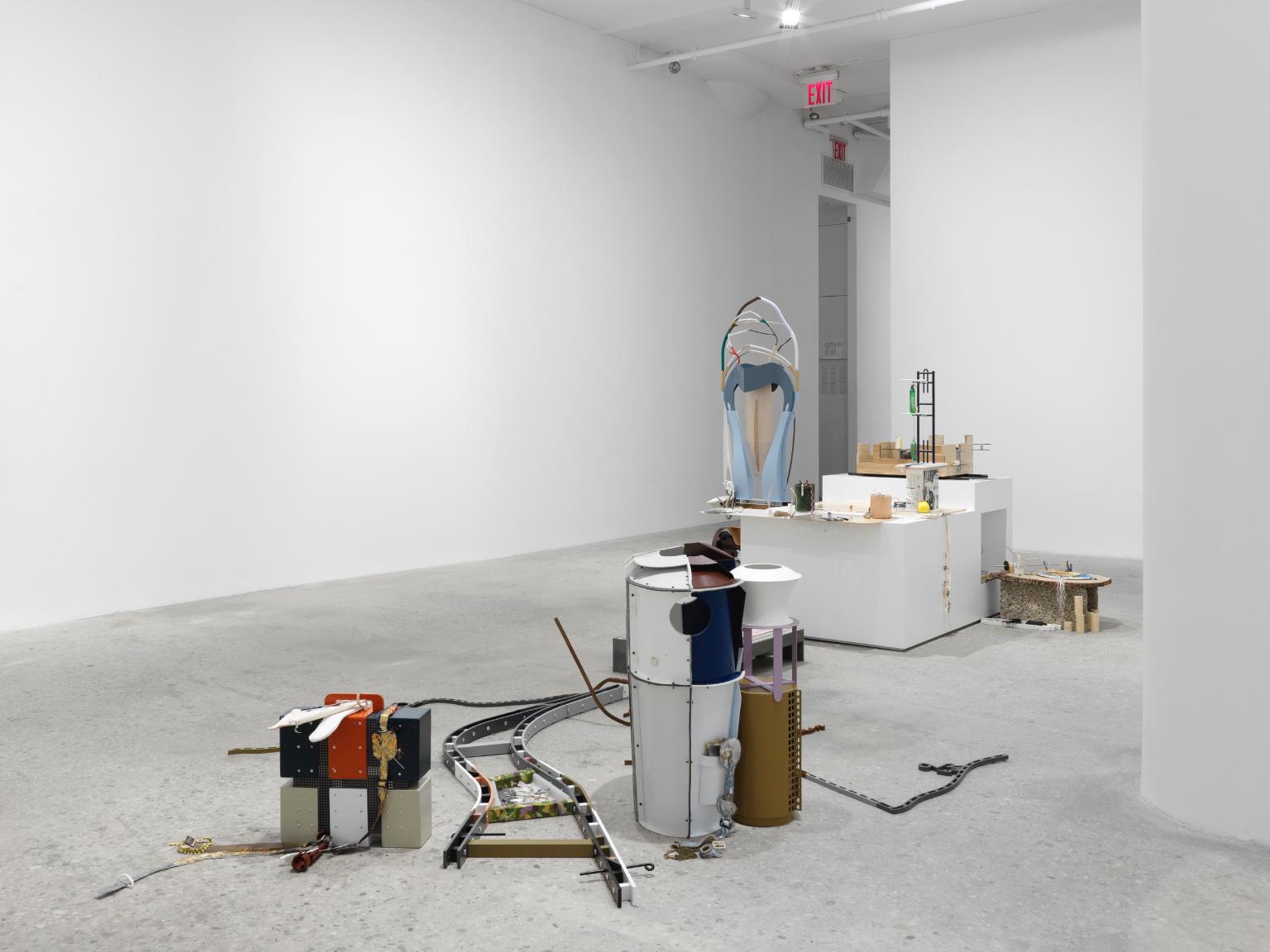
Helen Marten, The Lemon 2015
The Lemon 2015 is a large multipart sculpture comprising a wide range of objects, some found and others handmade from various materials, which are displayed both on plinths and directly on the gallery floor. Disparate objects, including three bright yellow citrus fruits and a pair of jugs – all cast in resin – an upturned Dulux paint bucket, spools of sewing thread and a brass cup, are brought together on and across a range of surfaces. The elements that form the work exemplify the precise and immaculately detailed objects that have become part of Marten’s visual lexicon, such as embroidered fabric, model replicas of natural objects like trees and fruit, and ceramics and powder-coated metal constructions.
1/2
artworks in Helen Marten
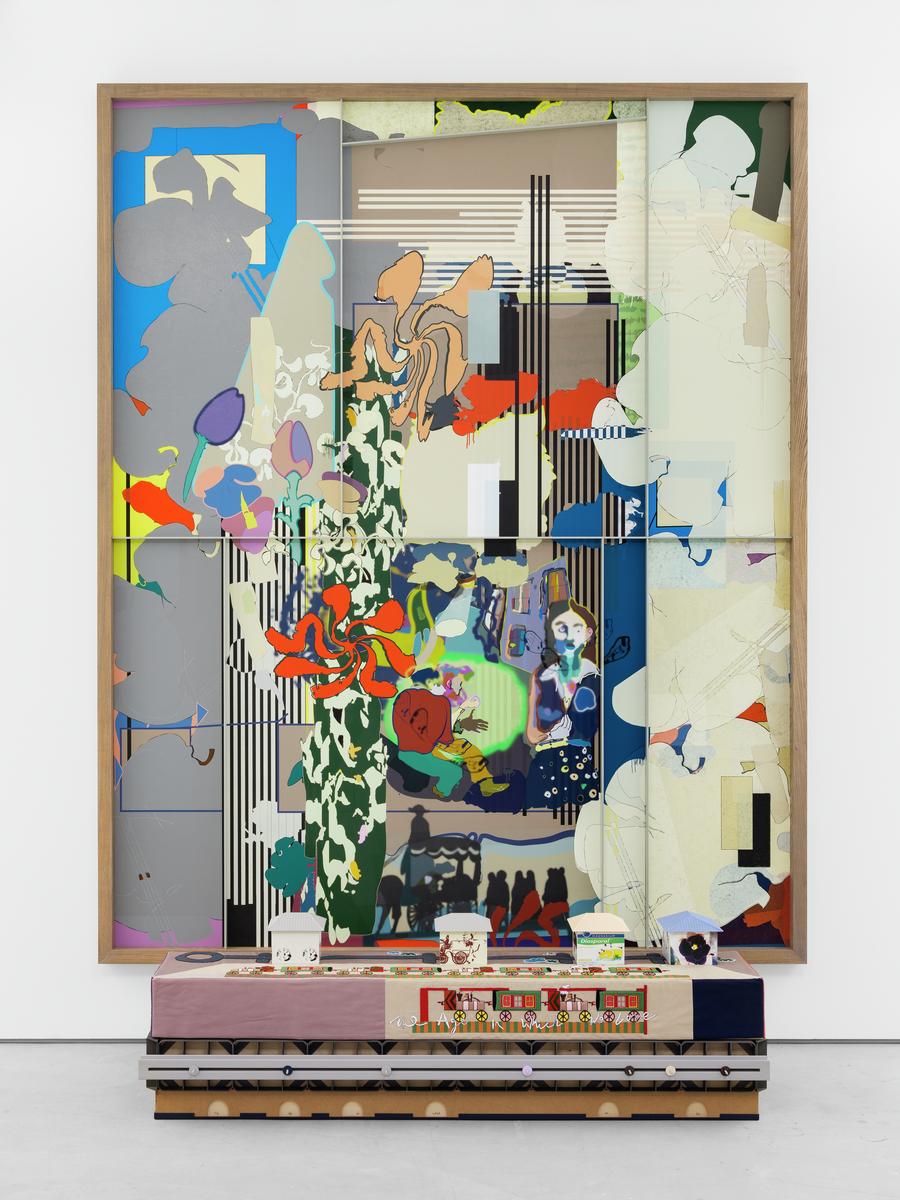
Helen Marten, The Age in Which We Love (Bulging the House) 2021
The Age in Which We Love (Bulging the House) 2021 is a two-part work that comprises a large-scale painting and a sculpture that is placed on the floor directly in front of it. The painting, which measures three by almost two and a half metres, is composed of a series of screenprinted and hand-painted elements that were produced separately and then joined together using a series of metal ‘dividers’, which follow the linear printed elements of the work. The seven separate panels (each of different dimensions) that make up the work are screenprints on different materials – synthetic leather, suede, brocade, leatherette, printed cotton and crushed velvet – the textures of which remain visible to the viewer.
2/2
artworks in Helen Marten
Art in this room
Helen Marten
The Lemon
2015
Helen Marten
The Age in Which We Love (Bulging the House)
2021