
Display
Modern Conversations
What does it mean to be modern?

Modern Conversations display, Tate St Ives 2021 © Kirstin Prisk
What does it mean to be modern? Modern Conversations explores this question through 100 years of British and international art.
The artworks displayed in these six rooms span the 20th century through to the present day. Throughout this extraordinary ‘modern’ era, industrial growth and technological advancements has transformed daily life. While this rapid globalisation has brought benefits for some, it has also been founded on widespread losses of cultural traditions and rights. The artists raise questions about modern experience, such as: How do we relate to the natural and built environment? What is the experience of inhabiting a human body? What happens when science and technology overturn established beliefs?
Tate St Ives
Level 2, Level 3
Ongoing
Gallery admission required
Entry to both the display and the gallery is free for Tate Members, Locals' Pass holders and under 18s.
Become a memberFrom November 2026, we will be updating the Tate St Ives collection displays. Different galleries will be closed at different times while this takes place. The work will be completed in early 2027.
If you are coming to see a particular work of art, please contact us before you visit.
6 rooms in Modern Conversations


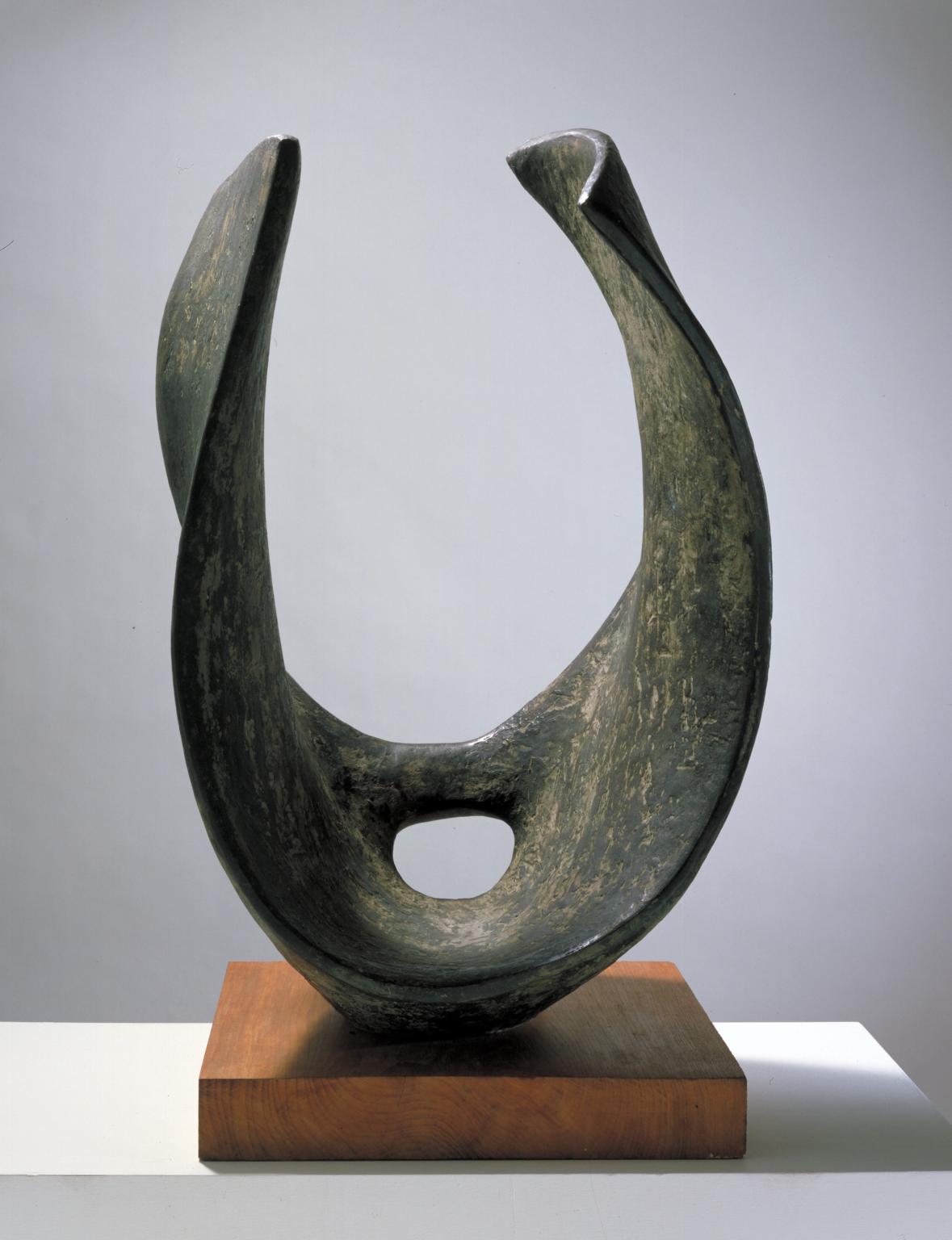
Dame Barbara Hepworth, Curved Form (Trevalgan) 1956
Hepworth settled in St Ives during the Second World War. Inspired by the local landscape, she began to sculpt her responses to the natural forms around her. Trevalgan is the name of a hill near her home. There, she wrote, ‘the cliffs divide as they touch the sea facing west. At this point, facing the setting sun across the Atlantic, where sky and sea blend with hills and rocks, the forms seem to enfold the watcher and lift him towards the sky.’ The sculpture is not a literal representation of the divided cliffs, but a personal expression of Hepworth’s physical and spiritual encounter with nature.
Gallery label, May 2007
1/10
highlights in Modern Conversations
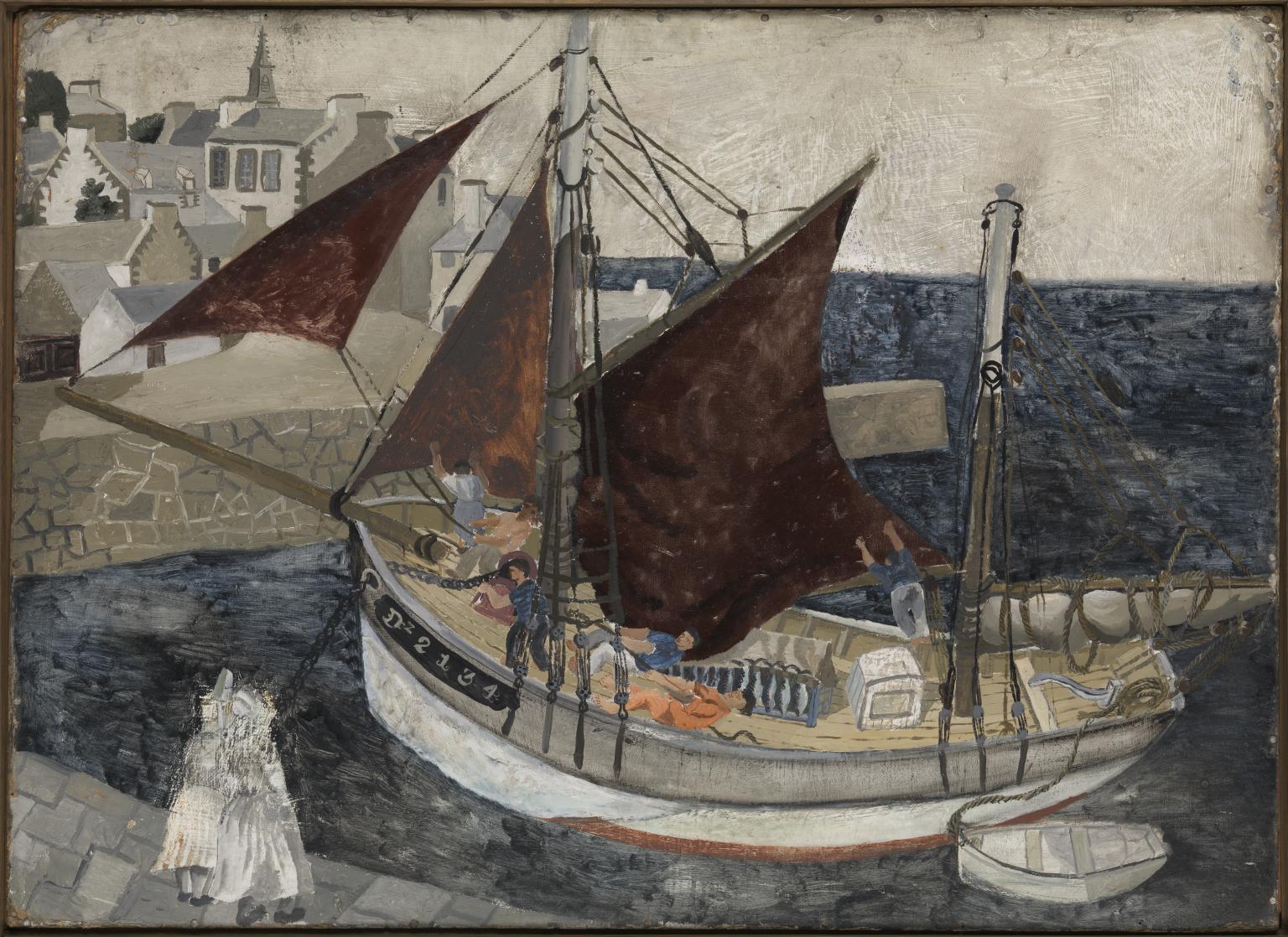
Christopher Wood, Boat in Harbour, Brittany 1929
Though in Brittany, this scene is similar to many works painted by Wood in Cornwall. Towards the end of his short life, Wood spent periods working in both places in pursuit of a ‘naïve’ style of painting. In 1928 he visited Cornwall with his friends Ben and Winifred Nicholson. In St Ives the two men came across Alfred Wallis, whose ‘primitive’, child-like paintings made a deep impression on their subsequent work. For them, adopting Wallis’s instinctive style allowed them to reject the artificiality of established painting for a more authentic mode of expression.
Gallery label, July 2007
2/10
highlights in Modern Conversations
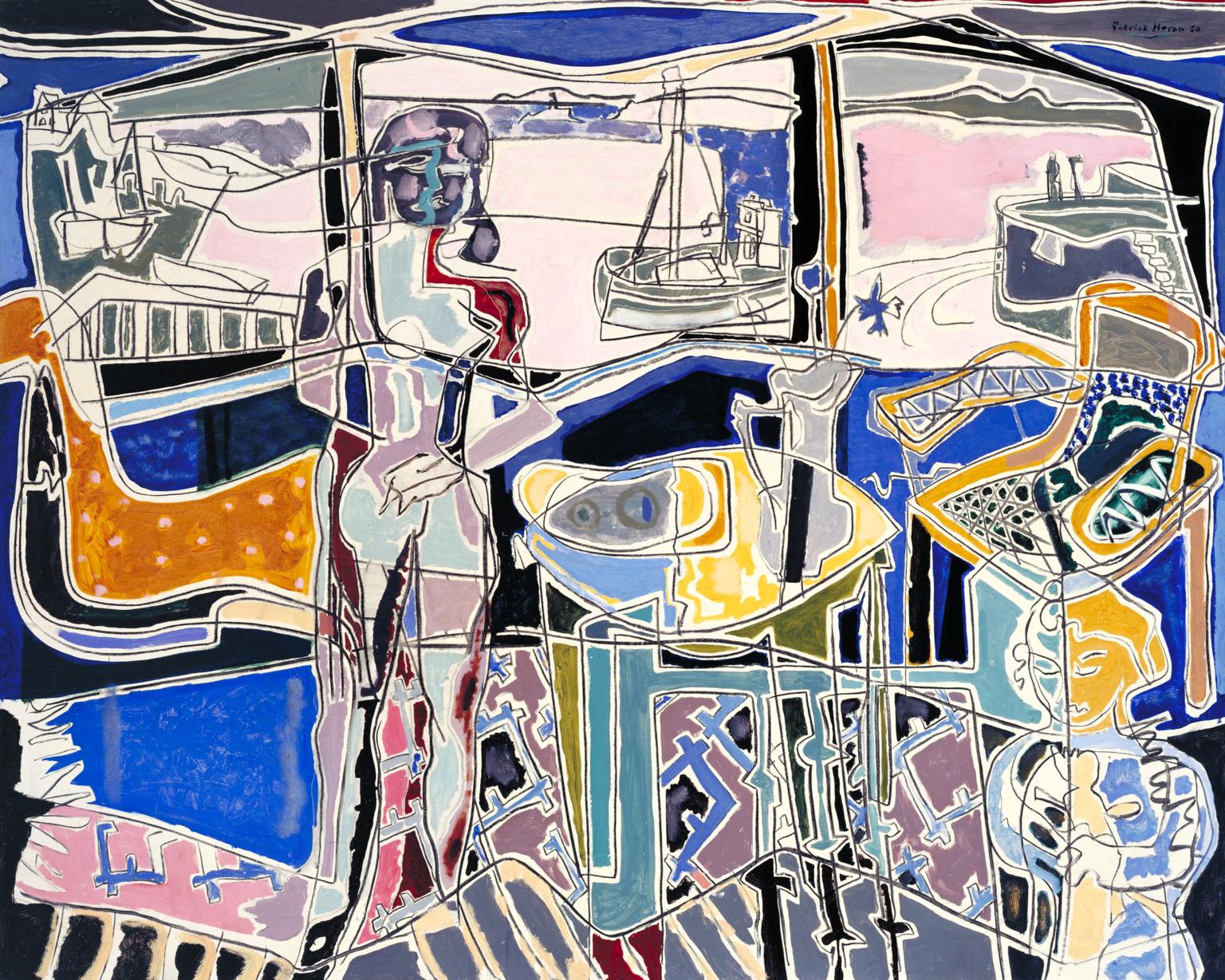
Patrick Heron, Harbour Window with Two Figures : St Ives : July 1950 1950
3/10
highlights in Modern Conversations
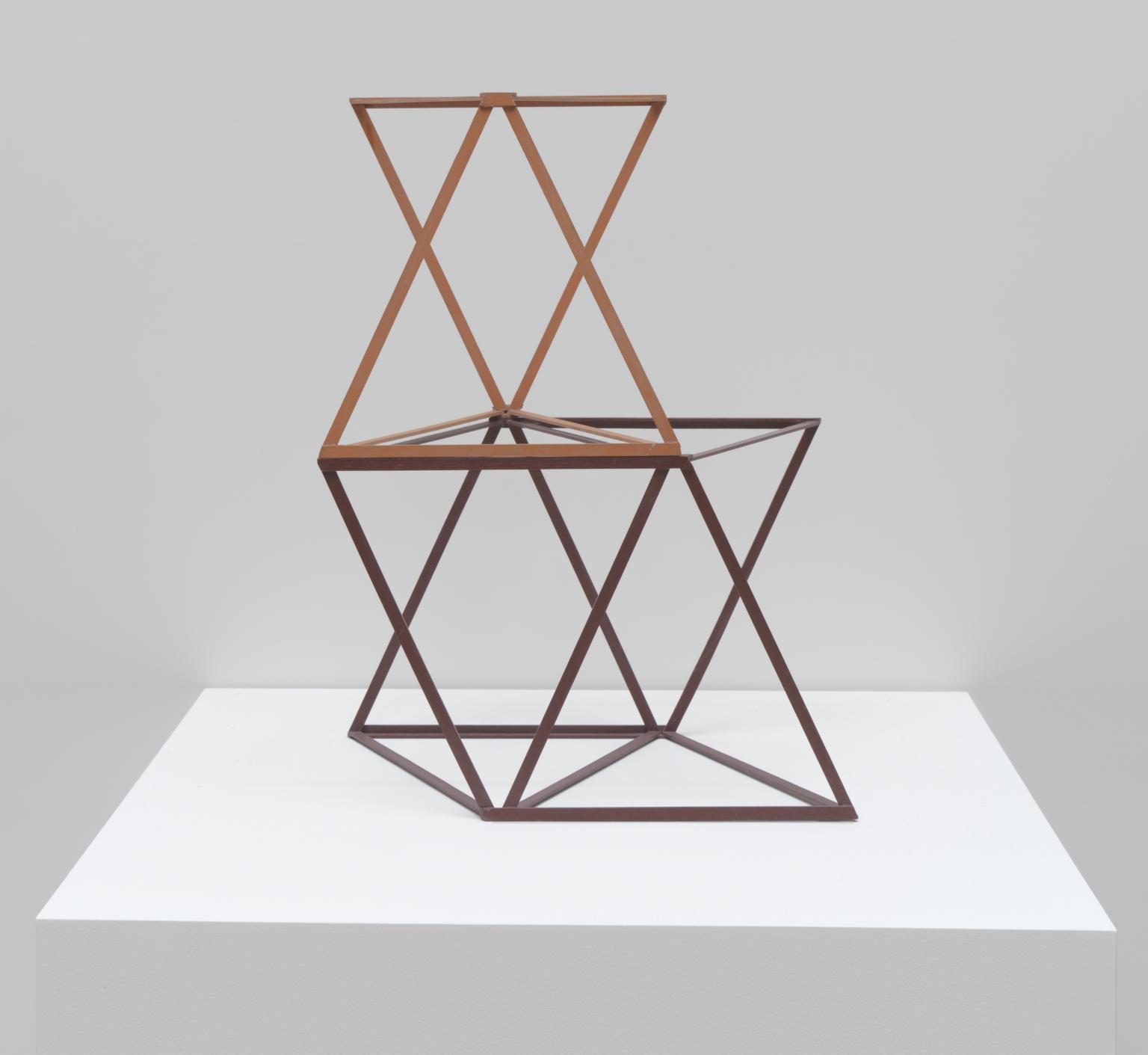
Rasheed Araeen, Lovers 1968
Araeen trained as a civil engineer, and his sculptures are constructed using geometric forms. Lovers combines two structures, each of which consists of a series of triangles that have been rotated and orientated in different ways. The work can be shown in two different configurations: either with the two parts next to each other, or on top of each other. This introduction of alternative possibilities challenges the idea of the artwork as a fixed object conceived by a single individual.
Gallery label, October 2016
4/10
highlights in Modern Conversations
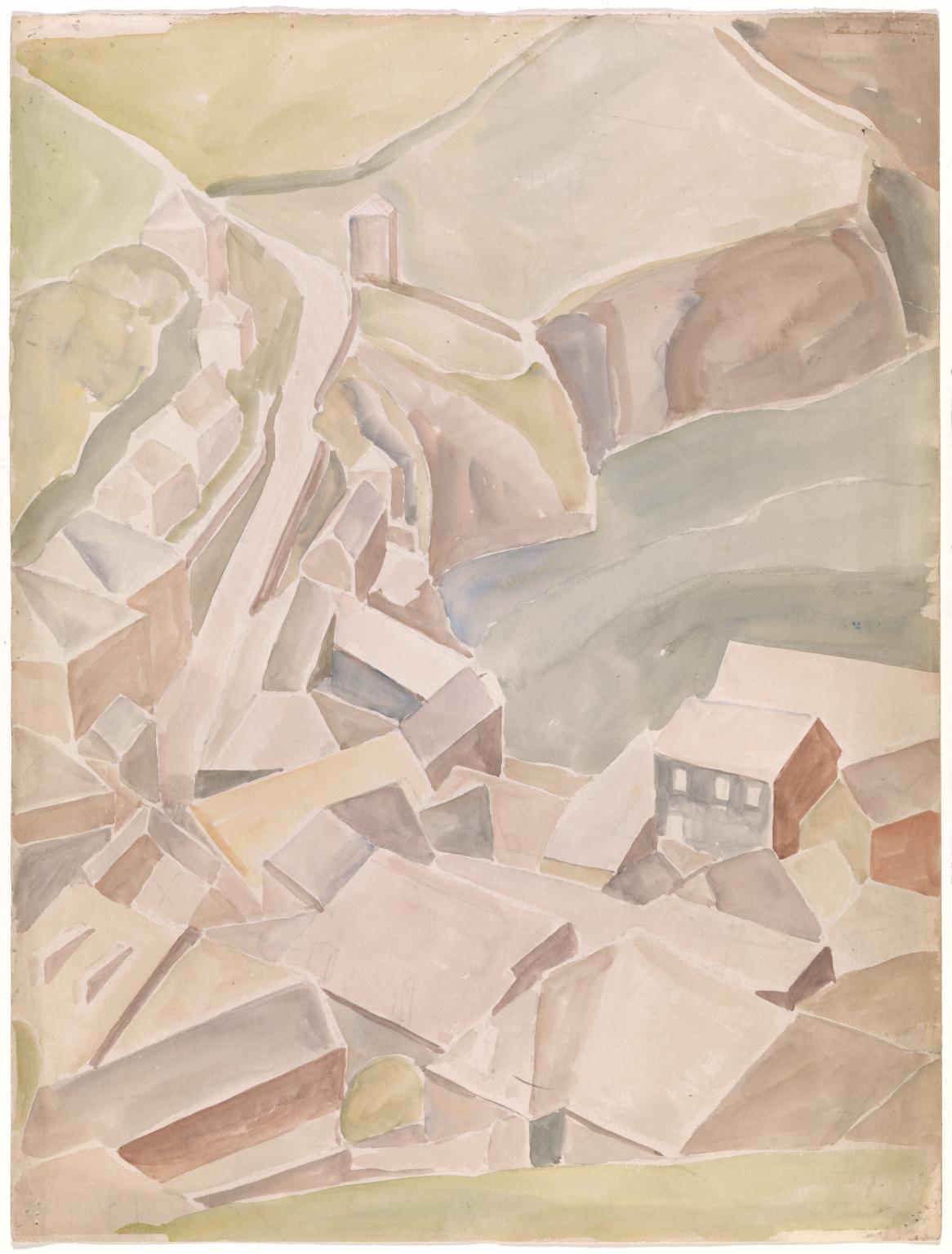
Helen Saunders, View of Port Isaac 1930s
5/10
highlights in Modern Conversations
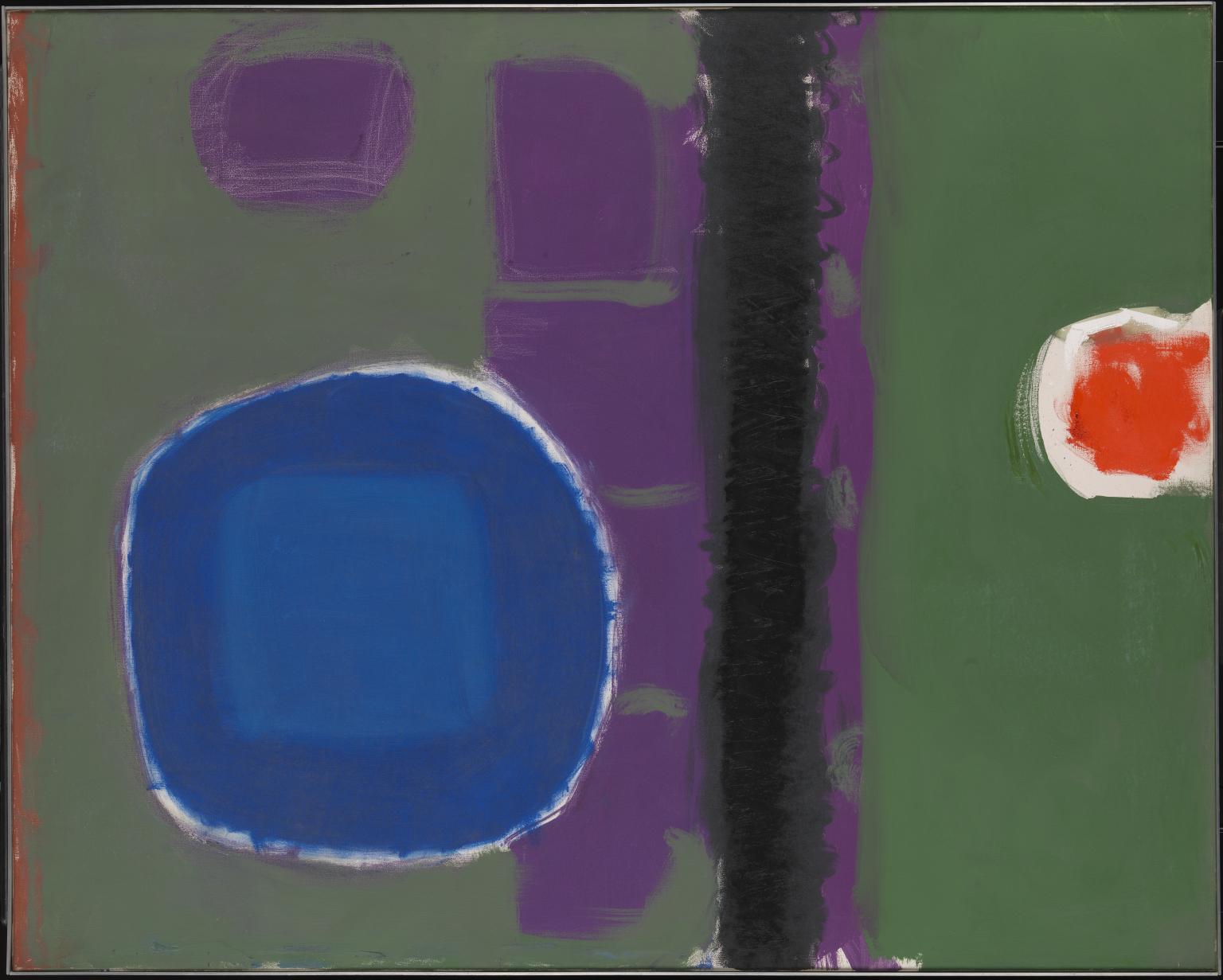
Patrick Heron, Green and Purple Painting with Blue Disc : May 1960 1960
In this work, an irregular blue disc hovers in front of a field of green and purple, seeming to expand and contract within the flat picture plane. Even when he eliminated recognisable subject matter, Heron’s abstractions stemmed from his observations of the visual world. He denied that he consciously painted ‘landscapes’, but affirmed: ‘the enormously powerful rhythmic energies of the granite outcrops beneath my feet transmit certain rhythms straight up through the soles of my shoes every minute of the day.’
Gallery label, May 2007
6/10
highlights in Modern Conversations
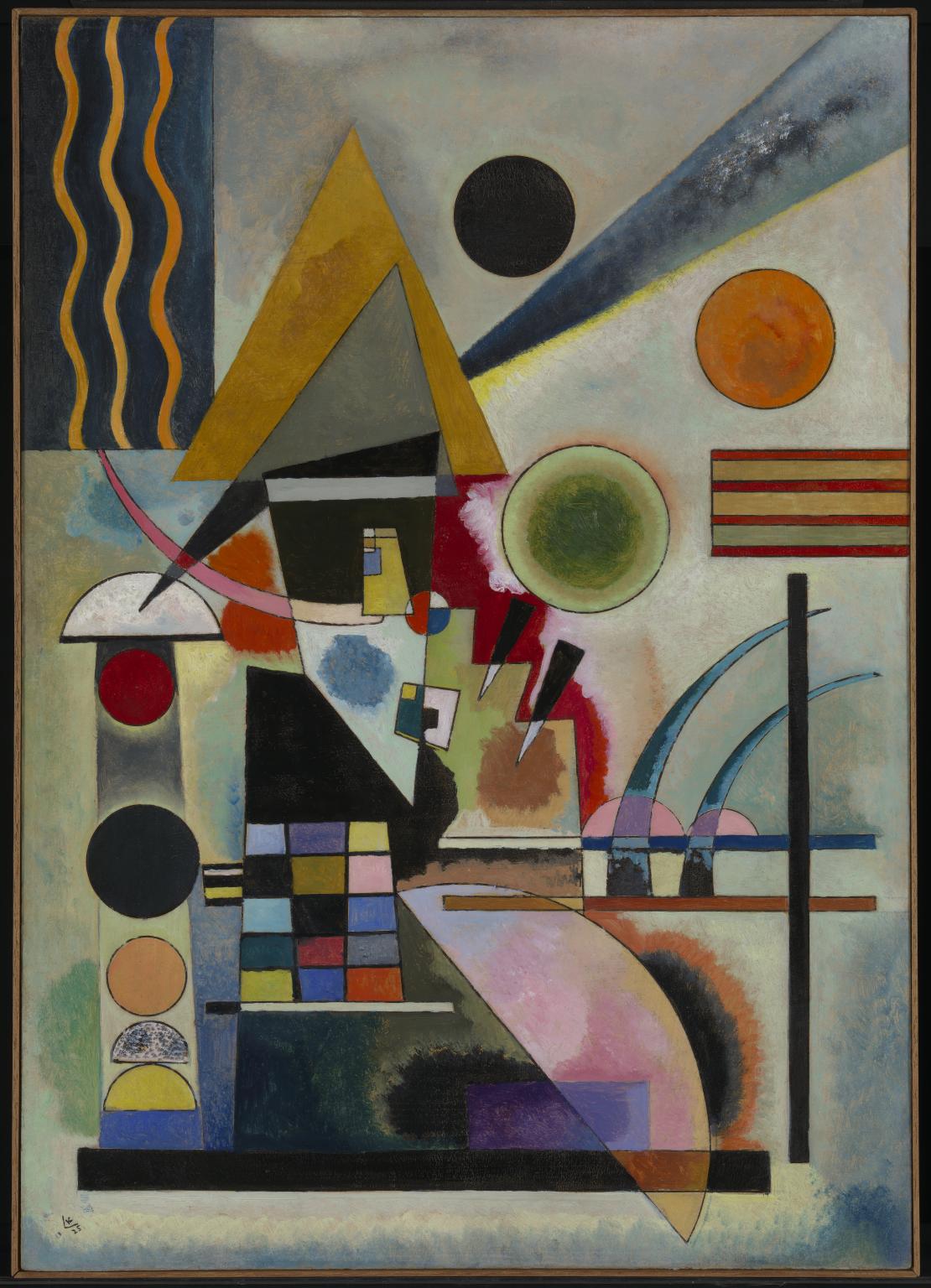
Wassily Kandinsky, Swinging 1925
The title ‘Swinging’ captures this work’s sense of movement. Kandinsky believed painting should aim to be as abstract as music. He worked to create art that was free from all references to the material world. For him, colour in particular was essential for liberating art from representing the visible world.
Gallery label, August 2019
7/10
highlights in Modern Conversations

8/10
highlights in Modern Conversations
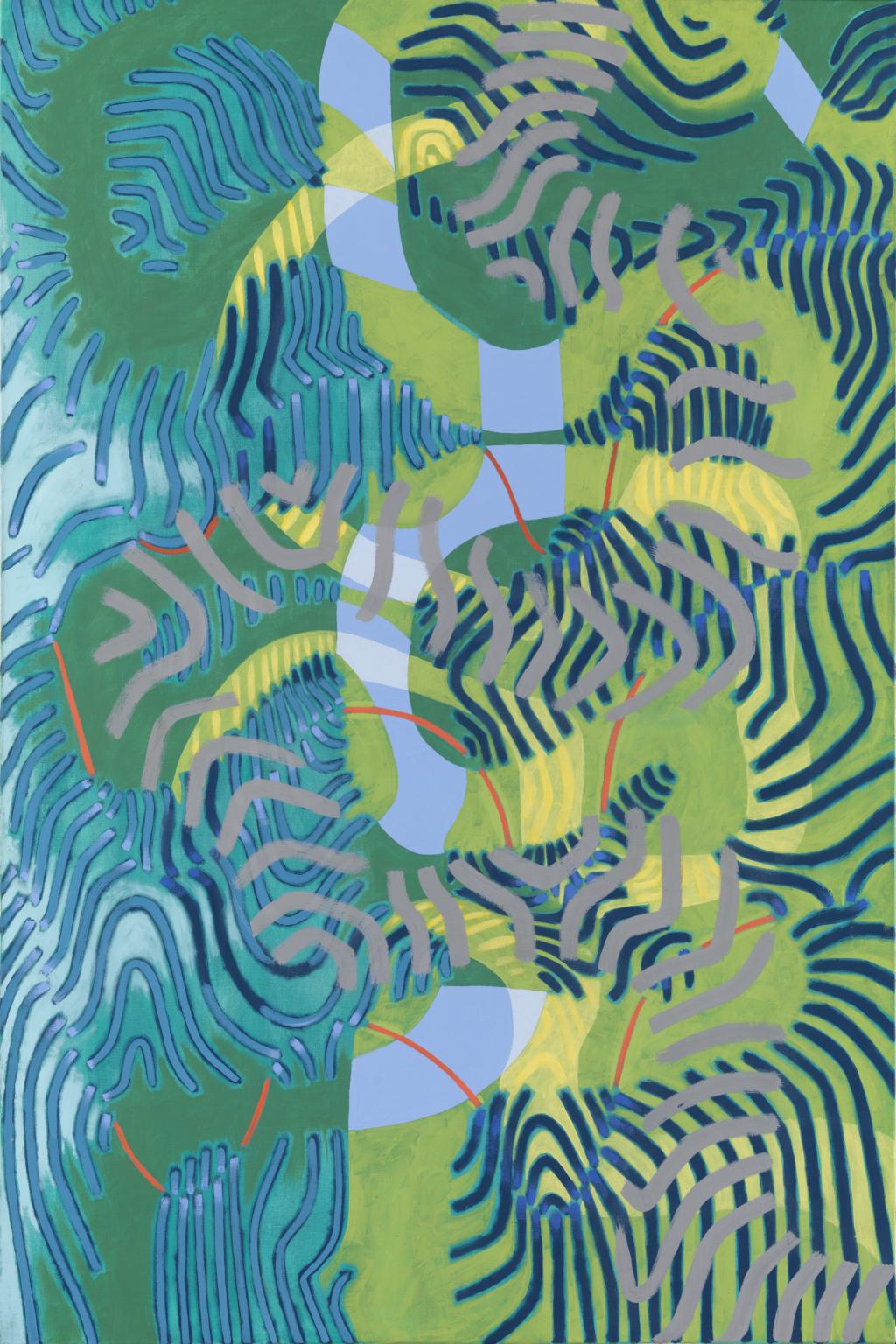
Bryan Wynter, Green Confluence 1974
9/10
highlights in Modern Conversations
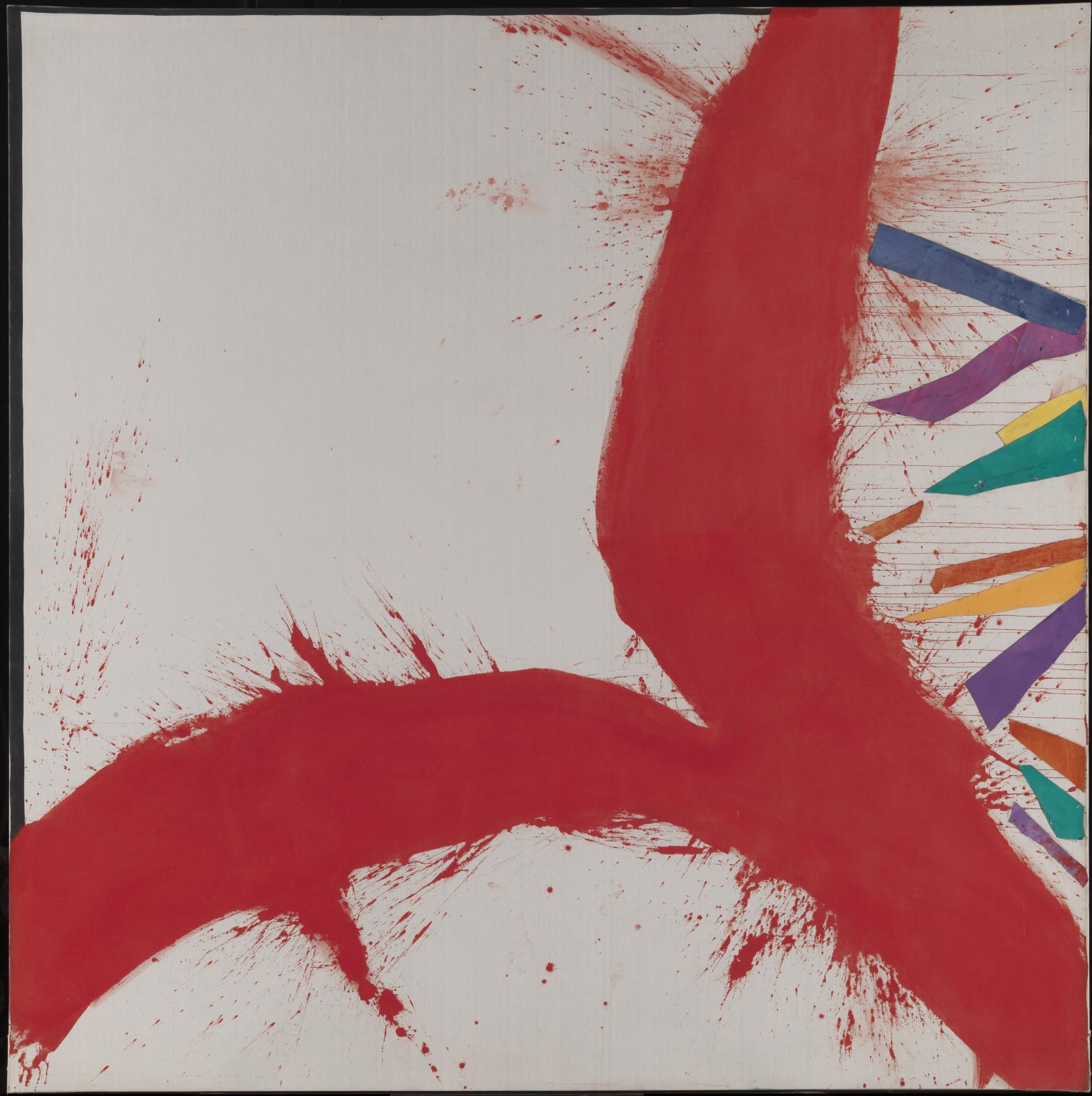
Sandra Blow, Vivace 1988
10/10
highlights in Modern Conversations
Highlights
Dame Barbara Hepworth
Curved Form (Trevalgan)
1956
Christopher Wood
Boat in Harbour, Brittany
1929
Patrick Heron
Harbour Window with Two Figures : St Ives : July 1950
1950
Rasheed Araeen
Lovers
1968
You've viewed 4/10 highlights
You've viewed 10/10 highlights