

© Xiyadie
14 rooms in Artist and Society
Xiyadie’s works express queer intimacy and joyful self-determination through the folk art of papercutting
Papercutting is one of the oldest and most popular Chinese folk arts. Xiyadie learned the craft from his mother, growing up in a farming family in rural Shaanxi province. Traditionally practised by women, papercutting is used to decorate windows and doorways to bring prosperity into the home. Xiyadie’s intricate compositions transform this practice, exploring queer intimacy and tender family relationships, like his bond with his son. These diaristic works document the intimate narratives of his life alongside the wider evolution of queer experience in China since the 1980s.
The artist chose the alias Xiyadie, meaning Siberian Butterfly – a beautiful creature that survives in the harshest conditions – to reflect his personal and artistic evolution. Although homosexuality was decriminalised in China in 1997, attitudes towards queer identities remain ambivalent.
This is my stage. Here I can dance with abandon, I can give free rein to my thoughts, I can live out my fantasies... Here, I can fly to the moon, I can become a butterfly, I can love, and I can hate. This is the place where I can be free.
Xiyadie
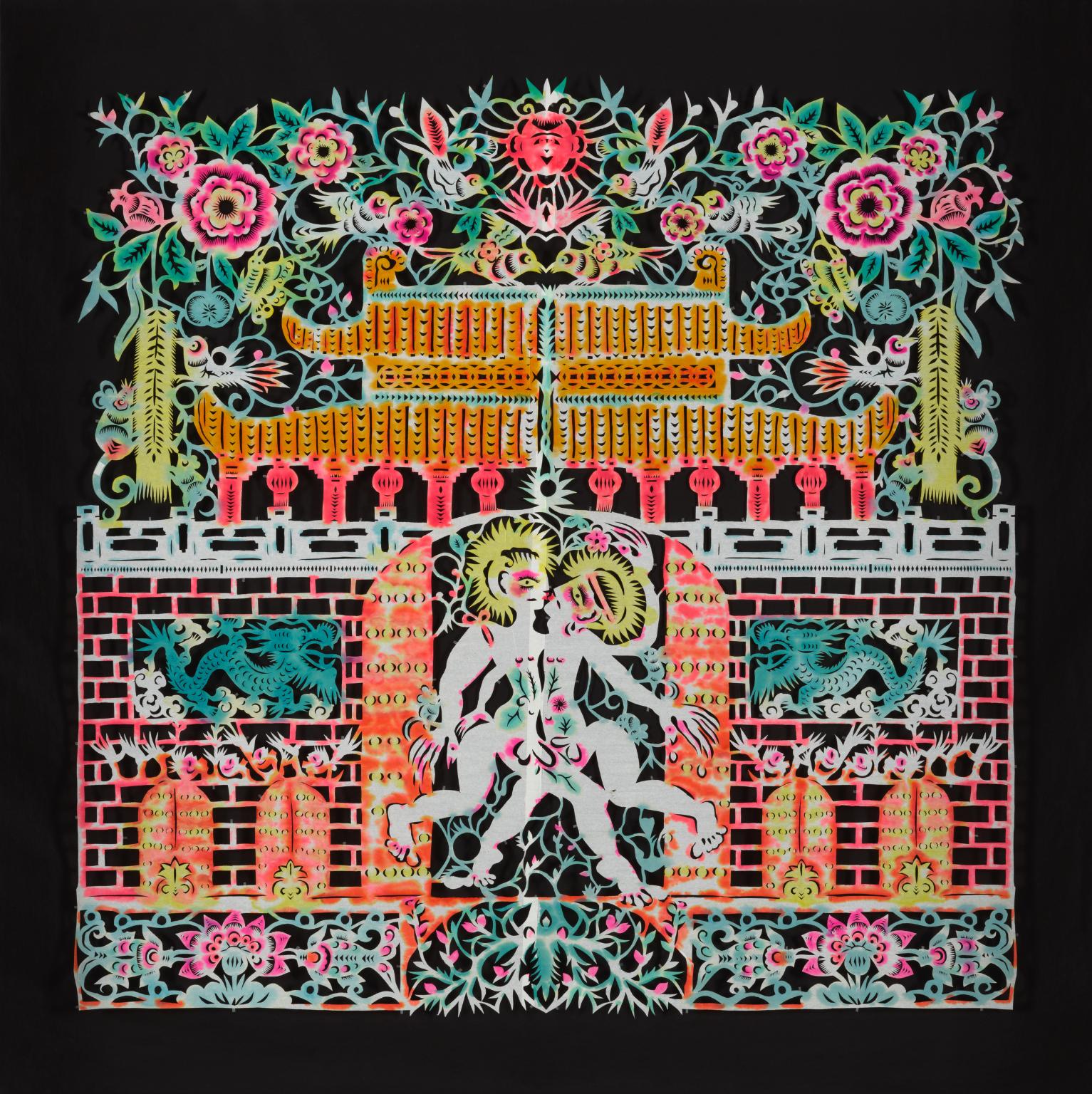
Xiyadie, Gate (Tiananmen) 2020
This one of a group of paper works in Tate’s collection by the Chinese artist Xiyadie. The works come from two separate series of works which subvert in different ways the traditional and intricate art of papercutting, recognised in China as an ancient folk art that can be traced back to the Eastern Han Dynasty (25–220 CE). Three works from 2020 (Gate (Tiananmen), Fish on a Chopping Board and Train, Tate T15927–T15929) are large-scale papercuts from white ‘xuanzhi’ (宣纸), a type of paper which is also used for traditional Chinese calligraphy and ink-wash painting due to its resilient yet absorbent qualities. Once cut, each of these works is hand-painted with food colouring more commonly used for identifying the fillings of steamed ‘bao’ buns, a humble snack often sold at street food stalls throughout China. Though each of these works represents figurative subjects, they are highly stylised according to the parameters of cutting folded paper: an intricate skill which has generically been described as a ‘matriarchs’ art’ due to the way in which it has traditionally been passed down through generations of women within the domestic sphere.
1/8
artworks in Xiyadie
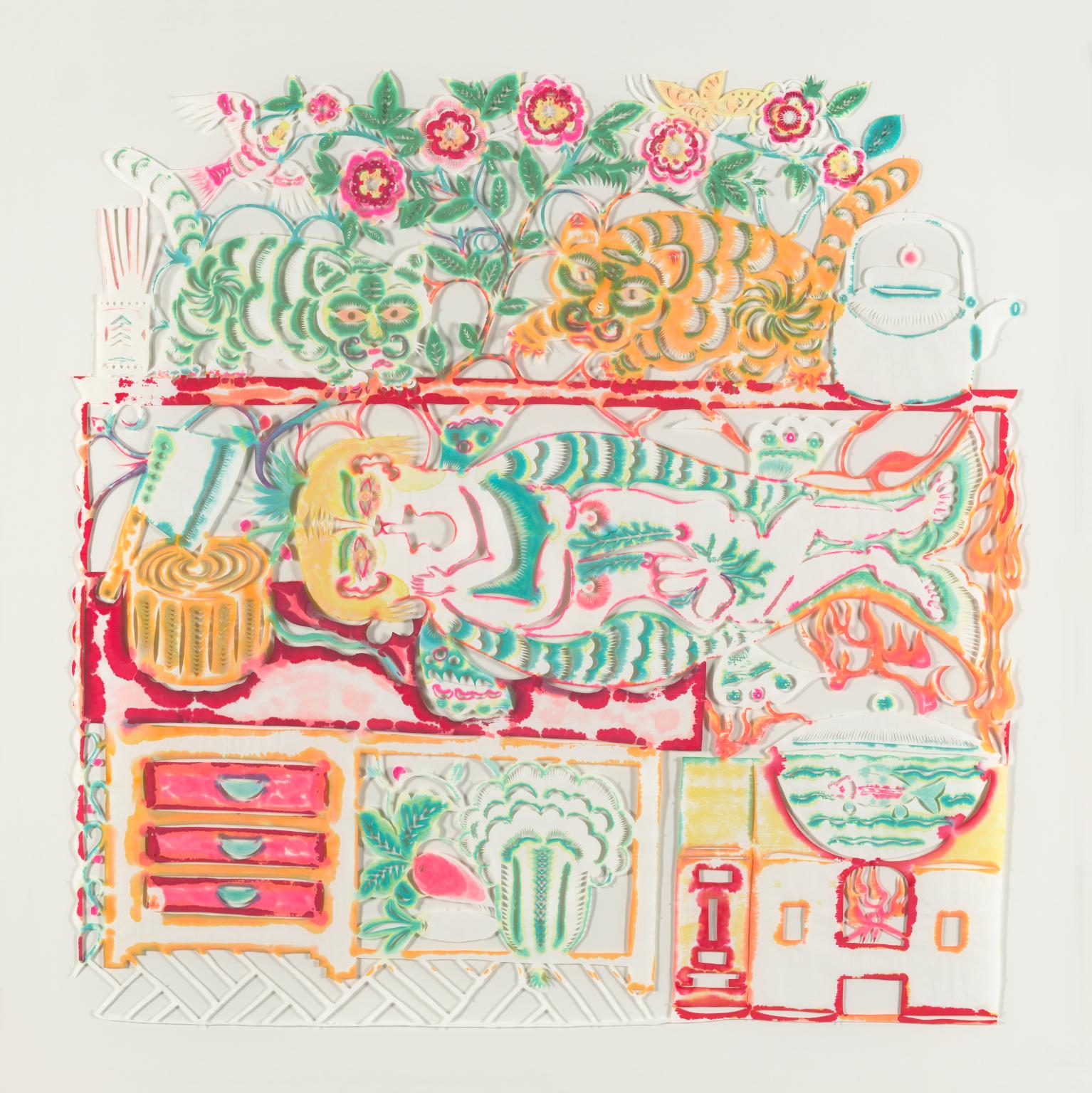
Xiyadie, Fish on a Chopping Board c.2001
This one of a group of paper works in Tate’s collection by the Chinese artist Xiyadie. The works come from two separate series of works which subvert in different ways the traditional and intricate art of papercutting, recognised in China as an ancient folk art that can be traced back to the Eastern Han Dynasty (25–220 CE). Three works from 2020 (Gate (Tiananmen), Fish on a Chopping Board and Train, Tate T15927–T15929) are large-scale papercuts from white ‘xuanzhi’ (宣纸), a type of paper which is also used for traditional Chinese calligraphy and ink-wash painting due to its resilient yet absorbent qualities. Once cut, each of these works is hand-painted with food colouring more commonly used for identifying the fillings of steamed ‘bao’ buns, a humble snack often sold at street food stalls throughout China. Though each of these works represents figurative subjects, they are highly stylised according to the parameters of cutting folded paper: an intricate skill which has generically been described as a ‘matriarchs’ art’ due to the way in which it has traditionally been passed down through generations of women within the domestic sphere.
2/8
artworks in Xiyadie
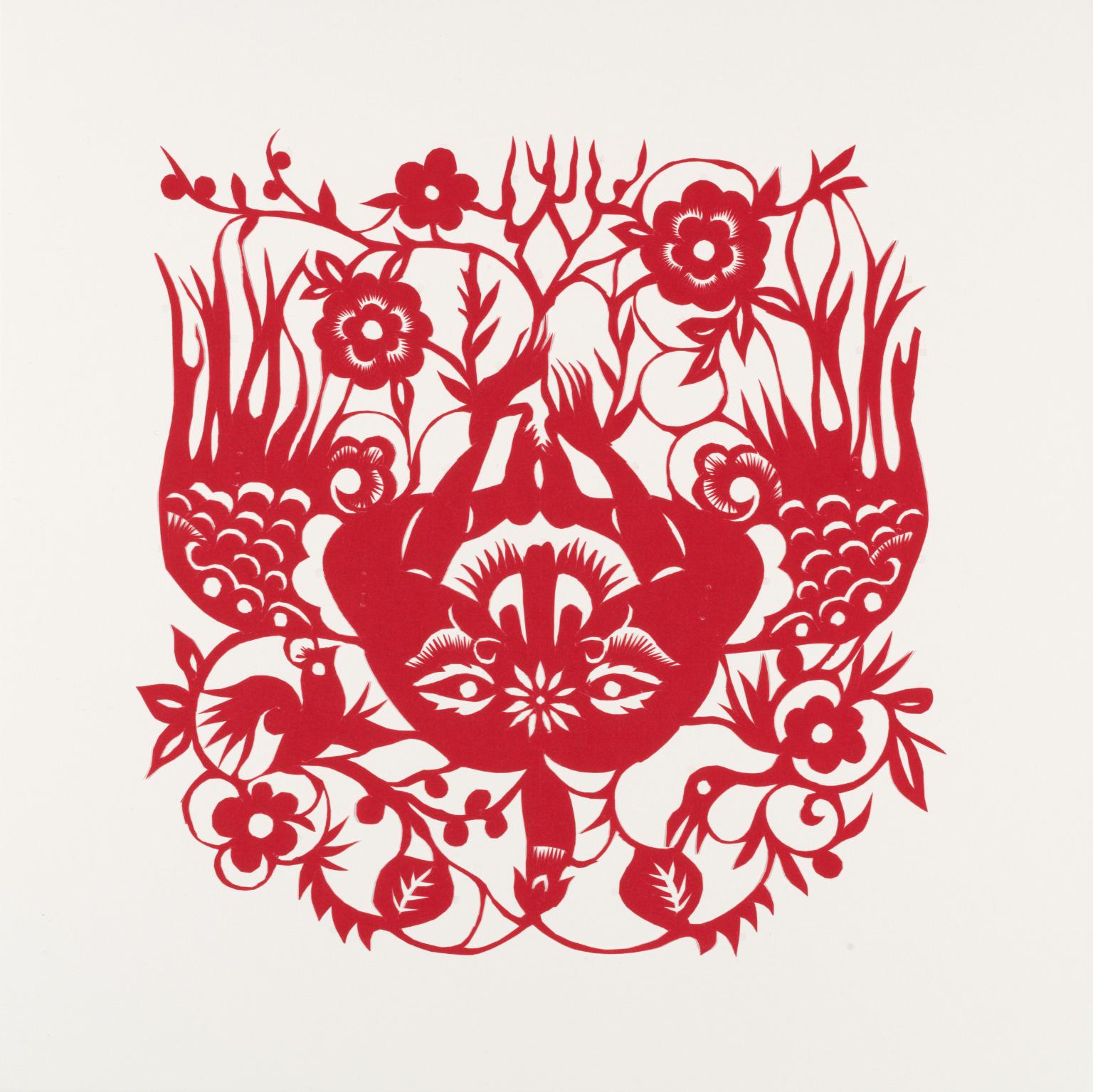
Xiyadie, Fun 2017
This one of a group of paper works in Tate’s collection by the Chinese artist Xiyadie. The works come from two separate series of works which subvert in different ways the traditional and intricate art of papercutting, recognised in China as an ancient folk art that can be traced back to the Eastern Han Dynasty (25–220 CE). Three works from 2020 (Gate (Tiananmen), Fish on a Chopping Board and Train, Tate T15927–T15929) are large-scale papercuts from white ‘xuanzhi’ (宣纸), a type of paper which is also used for traditional Chinese calligraphy and ink-wash painting due to its resilient yet absorbent qualities. Once cut, each of these works is hand-painted with food colouring more commonly used for identifying the fillings of steamed ‘bao’ buns, a humble snack often sold at street food stalls throughout China. Though each of these works represents figurative subjects, they are highly stylised according to the parameters of cutting folded paper: an intricate skill which has generically been described as a ‘matriarchs’ art’ due to the way in which it has traditionally been passed down through generations of women within the domestic sphere.
3/8
artworks in Xiyadie
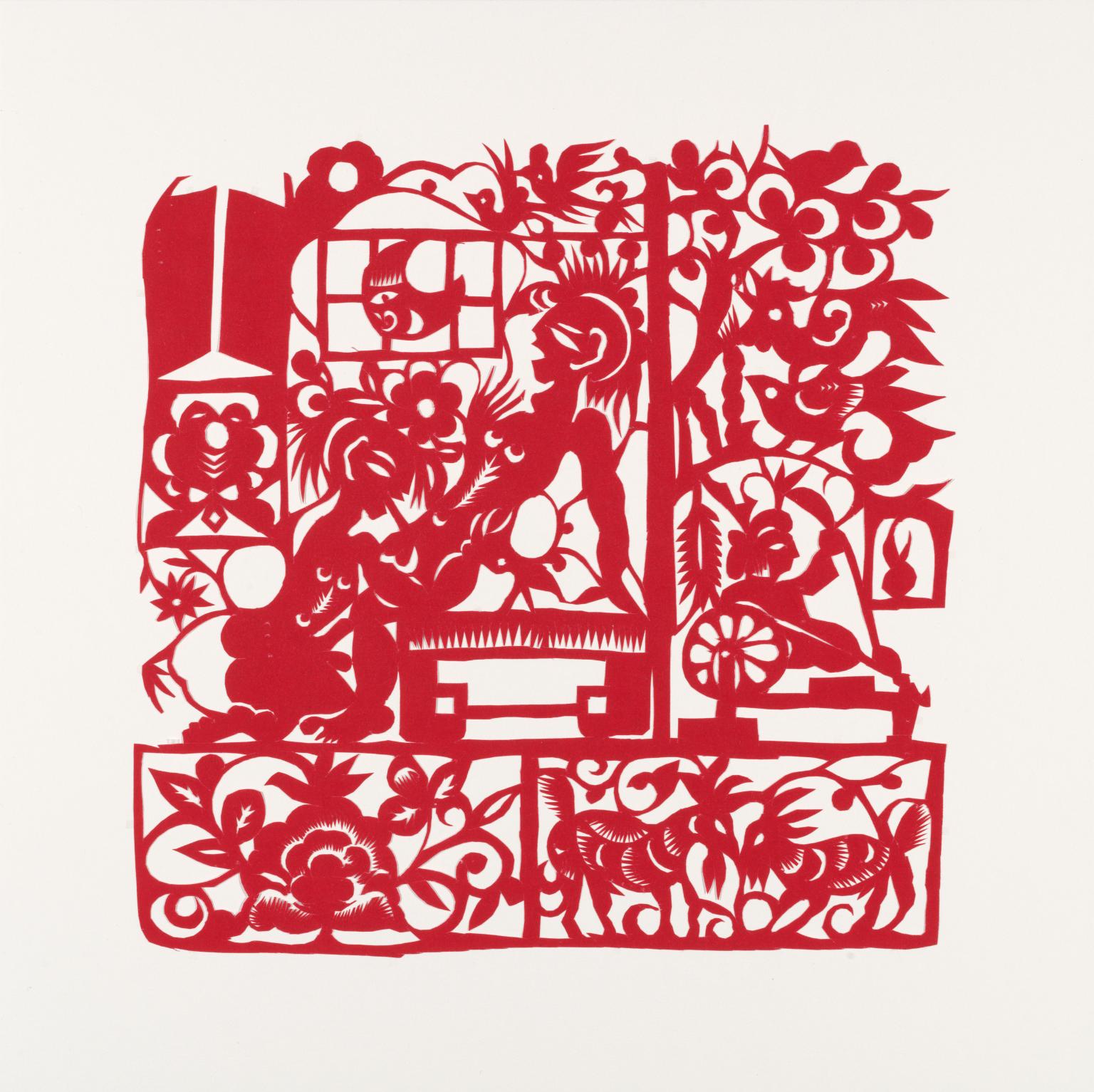
Xiyadie, ‘No Worries, My Mother Is Next Door’ 2017
This one of a group of paper works in Tate’s collection by the Chinese artist Xiyadie. The works come from two separate series of works which subvert in different ways the traditional and intricate art of papercutting, recognised in China as an ancient folk art that can be traced back to the Eastern Han Dynasty (25–220 CE). Three works from 2020 (Gate (Tiananmen), Fish on a Chopping Board and Train, Tate T15927–T15929) are large-scale papercuts from white ‘xuanzhi’ (宣纸), a type of paper which is also used for traditional Chinese calligraphy and ink-wash painting due to its resilient yet absorbent qualities. Once cut, each of these works is hand-painted with food colouring more commonly used for identifying the fillings of steamed ‘bao’ buns, a humble snack often sold at street food stalls throughout China. Though each of these works represents figurative subjects, they are highly stylised according to the parameters of cutting folded paper: an intricate skill which has generically been described as a ‘matriarchs’ art’ due to the way in which it has traditionally been passed down through generations of women within the domestic sphere.
4/8
artworks in Xiyadie
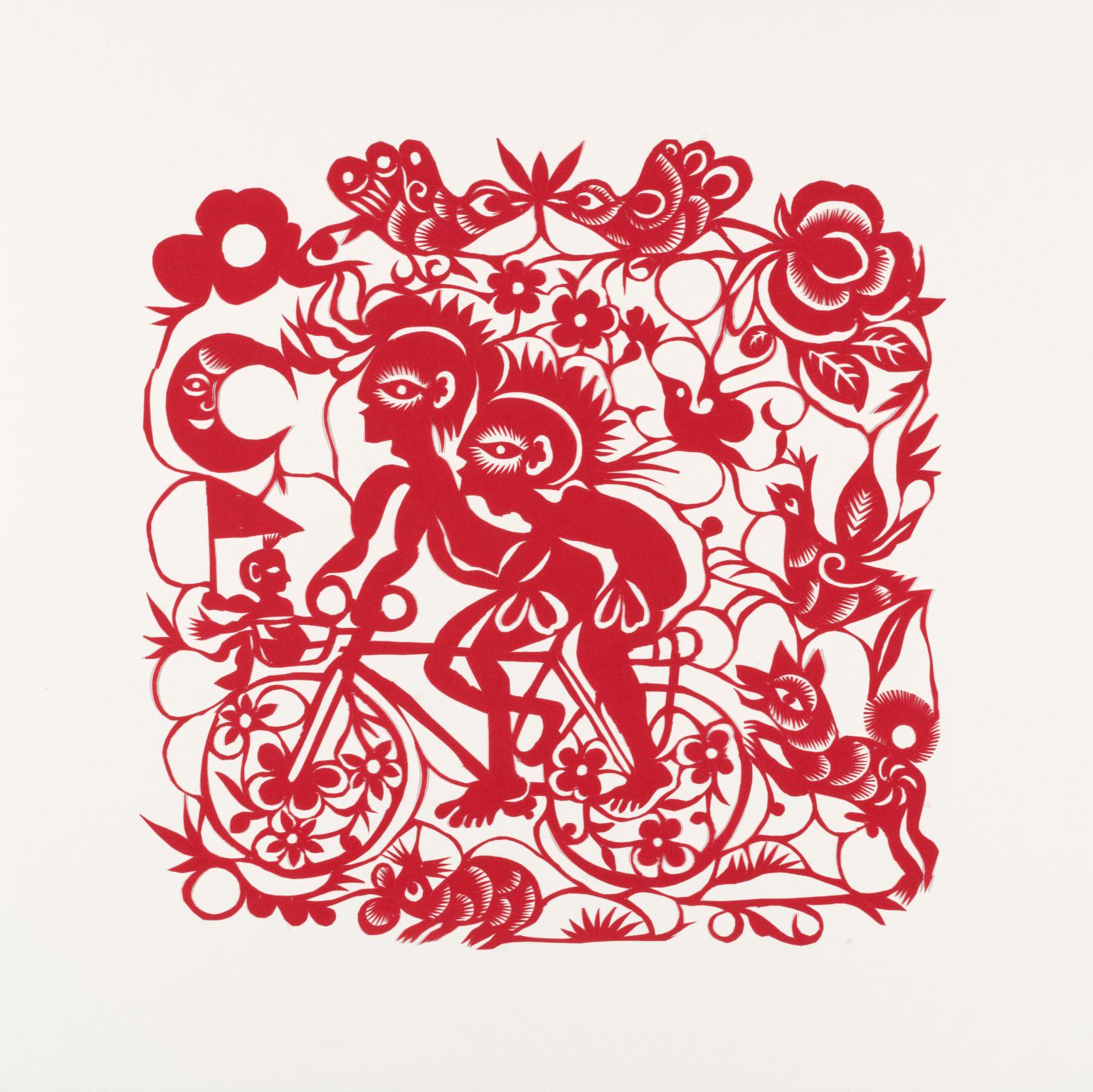
Xiyadie, Fun 2001
This one of a group of paper works in Tate’s collection by the Chinese artist Xiyadie. The works come from two separate series of works which subvert in different ways the traditional and intricate art of papercutting, recognised in China as an ancient folk art that can be traced back to the Eastern Han Dynasty (25–220 CE). Three works from 2020 (Gate (Tiananmen), Fish on a Chopping Board and Train, Tate T15927–T15929) are large-scale papercuts from white ‘xuanzhi’ (宣纸), a type of paper which is also used for traditional Chinese calligraphy and ink-wash painting due to its resilient yet absorbent qualities. Once cut, each of these works is hand-painted with food colouring more commonly used for identifying the fillings of steamed ‘bao’ buns, a humble snack often sold at street food stalls throughout China. Though each of these works represents figurative subjects, they are highly stylised according to the parameters of cutting folded paper: an intricate skill which has generically been described as a ‘matriarchs’ art’ due to the way in which it has traditionally been passed down through generations of women within the domestic sphere.
5/8
artworks in Xiyadie
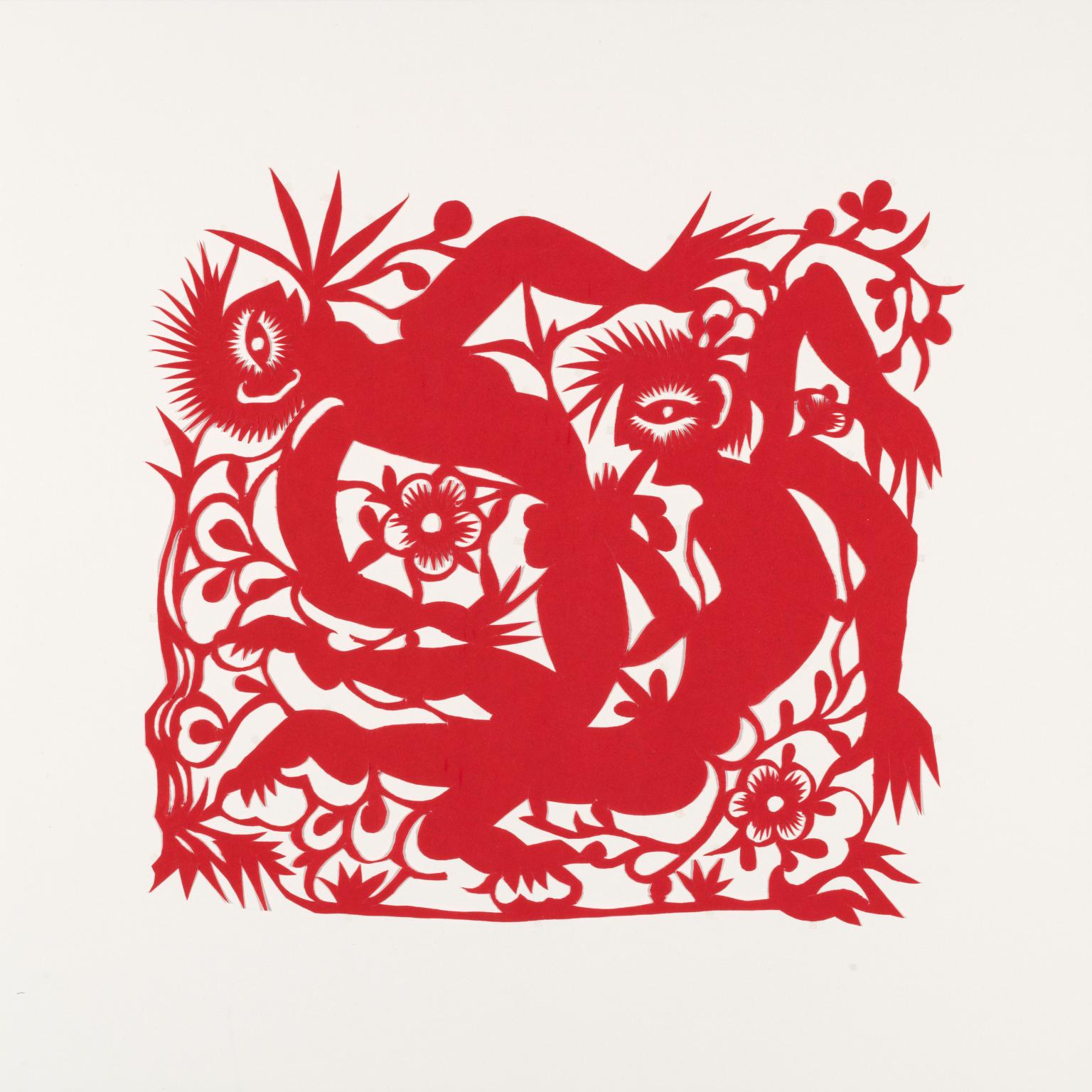
Xiyadie, Fun 2001
This one of a group of paper works in Tate’s collection by the Chinese artist Xiyadie. The works come from two separate series of works which subvert in different ways the traditional and intricate art of papercutting, recognised in China as an ancient folk art that can be traced back to the Eastern Han Dynasty (25–220 CE). Three works from 2020 (Gate (Tiananmen), Fish on a Chopping Board and Train, Tate T15927–T15929) are large-scale papercuts from white ‘xuanzhi’ (宣纸), a type of paper which is also used for traditional Chinese calligraphy and ink-wash painting due to its resilient yet absorbent qualities. Once cut, each of these works is hand-painted with food colouring more commonly used for identifying the fillings of steamed ‘bao’ buns, a humble snack often sold at street food stalls throughout China. Though each of these works represents figurative subjects, they are highly stylised according to the parameters of cutting folded paper: an intricate skill which has generically been described as a ‘matriarchs’ art’ due to the way in which it has traditionally been passed down through generations of women within the domestic sphere.
6/8
artworks in Xiyadie
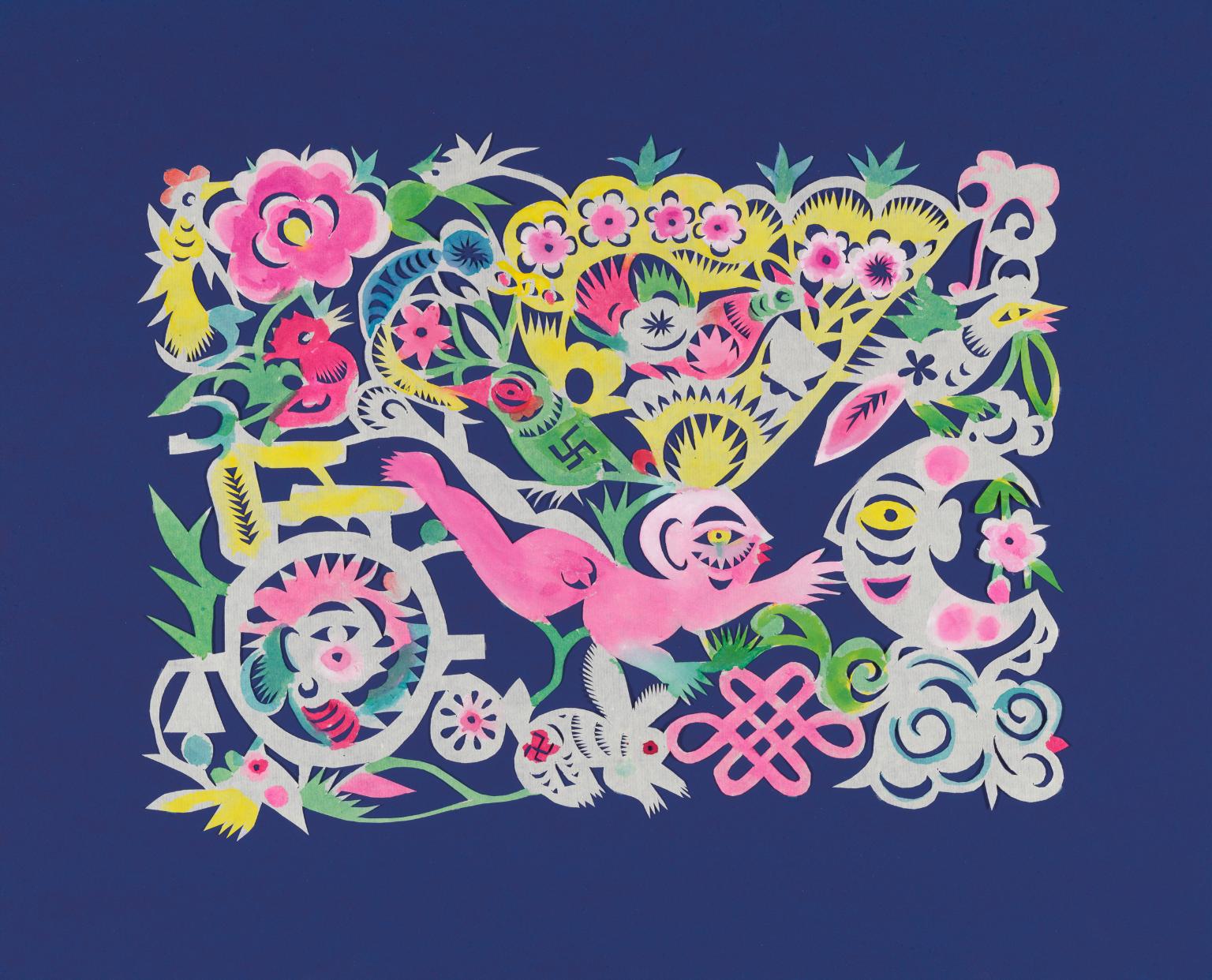
Xiyadie, Flying 2000
This one of a group of paper works in Tate’s collection by the Chinese artist Xiyadie. The works come from two separate series of works which subvert in different ways the traditional and intricate art of papercutting, recognised in China as an ancient folk art that can be traced back to the Eastern Han Dynasty (25–220 CE). Three works from 2020 (Gate (Tiananmen), Fish on a Chopping Board and Train, Tate T15927–T15929) are large-scale papercuts from white ‘xuanzhi’ (宣纸), a type of paper which is also used for traditional Chinese calligraphy and ink-wash painting due to its resilient yet absorbent qualities. Once cut, each of these works is hand-painted with food colouring more commonly used for identifying the fillings of steamed ‘bao’ buns, a humble snack often sold at street food stalls throughout China. Though each of these works represents figurative subjects, they are highly stylised according to the parameters of cutting folded paper: an intricate skill which has generically been described as a ‘matriarchs’ art’ due to the way in which it has traditionally been passed down through generations of women within the domestic sphere.
7/8
artworks in Xiyadie
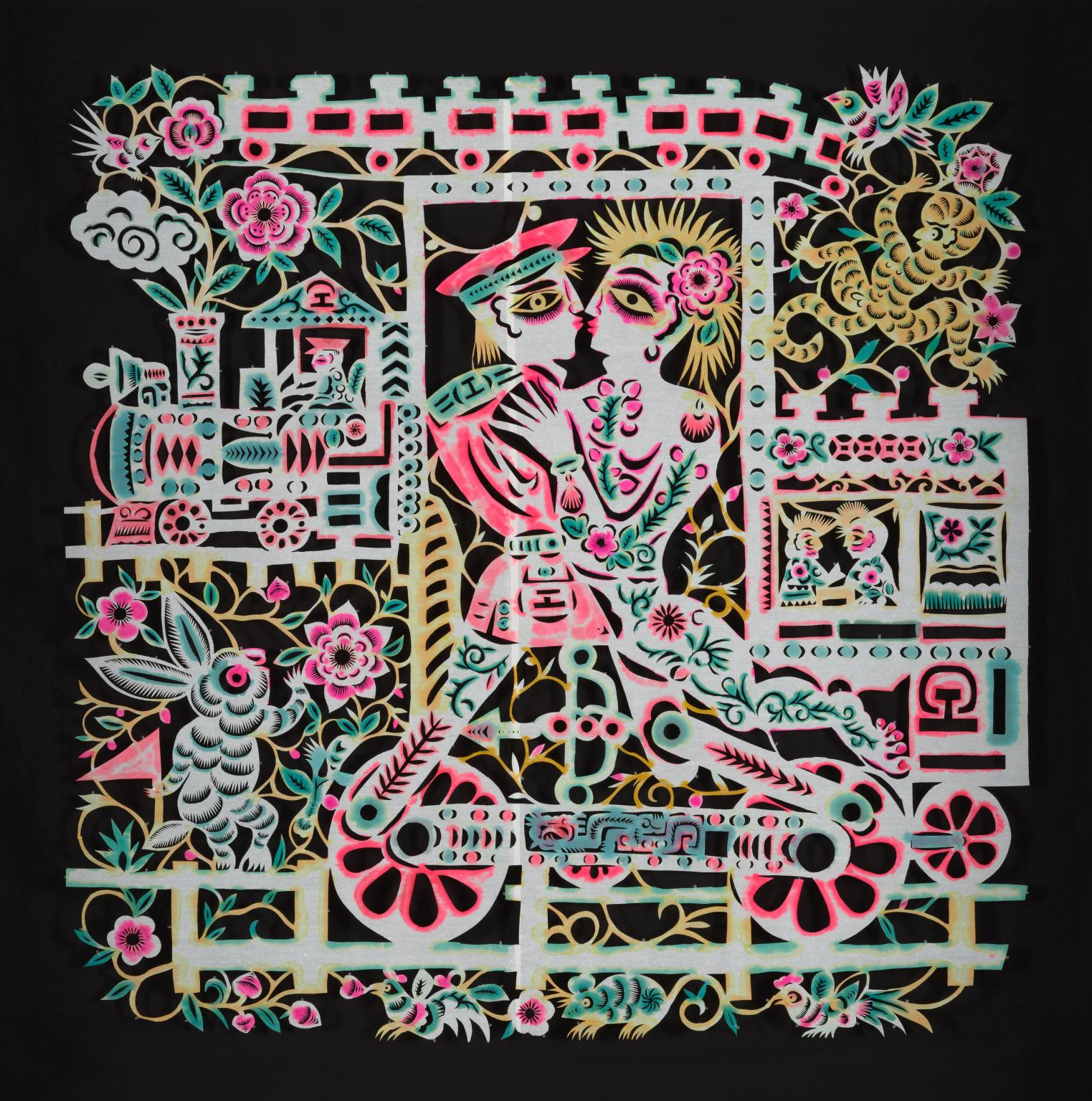
Xiyadie, Train 1985–6
This one of a group of paper works in Tate’s collection by the Chinese artist Xiyadie. The works come from two separate series of works which subvert in different ways the traditional and intricate art of papercutting, recognised in China as an ancient folk art that can be traced back to the Eastern Han Dynasty (25–220 CE). Three works from 2020 (Gate (Tiananmen), Fish on a Chopping Board and Train, Tate T15927–T15929) are large-scale papercuts from white ‘xuanzhi’ (宣纸), a type of paper which is also used for traditional Chinese calligraphy and ink-wash painting due to its resilient yet absorbent qualities. Once cut, each of these works is hand-painted with food colouring more commonly used for identifying the fillings of steamed ‘bao’ buns, a humble snack often sold at street food stalls throughout China. Though each of these works represents figurative subjects, they are highly stylised according to the parameters of cutting folded paper: an intricate skill which has generically been described as a ‘matriarchs’ art’ due to the way in which it has traditionally been passed down through generations of women within the domestic sphere.
8/8
artworks in Xiyadie
Art in this room
Xiyadie
Gate (Tiananmen)
2020
Xiyadie
Fish on a Chopping Board
c.2001
Xiyadie
Fun
2017
Xiyadie
‘No Worries, My Mother Is Next Door’
2017
Xiyadie
Fun
2001
Xiyadie
Fun
2001
Xiyadie
Flying
2000
Xiyadie
Train
1985–6