

Photo © Tate (Matt Greenwood)
9 rooms in Materials and Objects
What societal expectations are represented within the image of the home?
Robert Gober moved to New York in 1976, the day after graduating from Middlebury College in Vermont. He first had the idea to make doll’s houses before realising he was more interested in what home itself symbolised. Wanting to explore the idea of a domestic space, one of his first works as a professional artist was a small sculpture of a house in 1977.
Since then, houses and homes have been a recurring reference point – whether in the form of common objects found around the home or in patterned wallpaper. But on closer inspection, Gober’s objects are unusual since they are not the mass-produced objects they might at first appear to be.
Gober meticulously hand-makes his objects rather than purchasing them. Often, he and his team of studio assistants will use traditional art-making techniques or materials. The aim is not to imitate an object exactly, but to create a sensation of something recognisable yet strange.
Through a 45-year practice of subverting familiar objects and encouraging us to look again, Gober’s work draws attention to our differing moral attitudes towards sex, violence and religion. These debates are familiar in the media and politics of his home country, the United States, where these subjects continue to be intensely scrutinised.
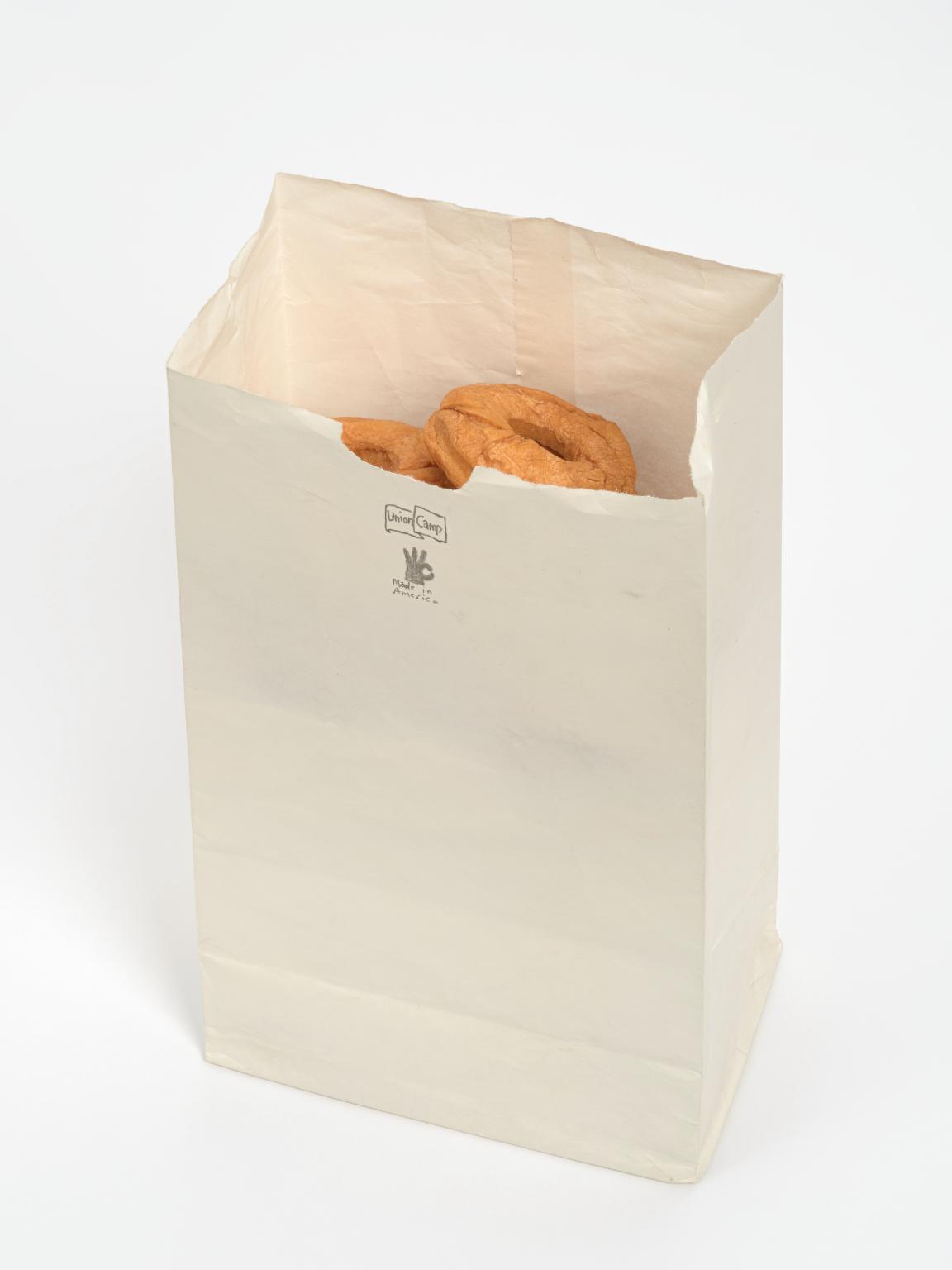
Robert Gober, Bag of Donuts 1989
Each object in the installation that this work forms a part of is carefully made by hand. The sheets of wallpaper are individually screen-printed, the pewter drains were hand-moulded, and the paper bag with a logo is drawn in pencil by Gober. Though the doughnuts were deep fried by the artist, he worked with the sculpture conservator Christian Scheidemann to preserve them. They are injected with a synthetic resin to ensure their longevity. When it was first shown as one of two installations in a solo exhibition at Paula Cooper Gallery in New York in the autumn of 1989, critical reviews prompted a debate about nudity and public attitudes towards sex. Elizabeth Hess, the writer for the Village Voice, concluded ‘The work is graphic but not in the least bit pornographic.’
Gallery label, August 2024
1/7
artworks in Robert Gober
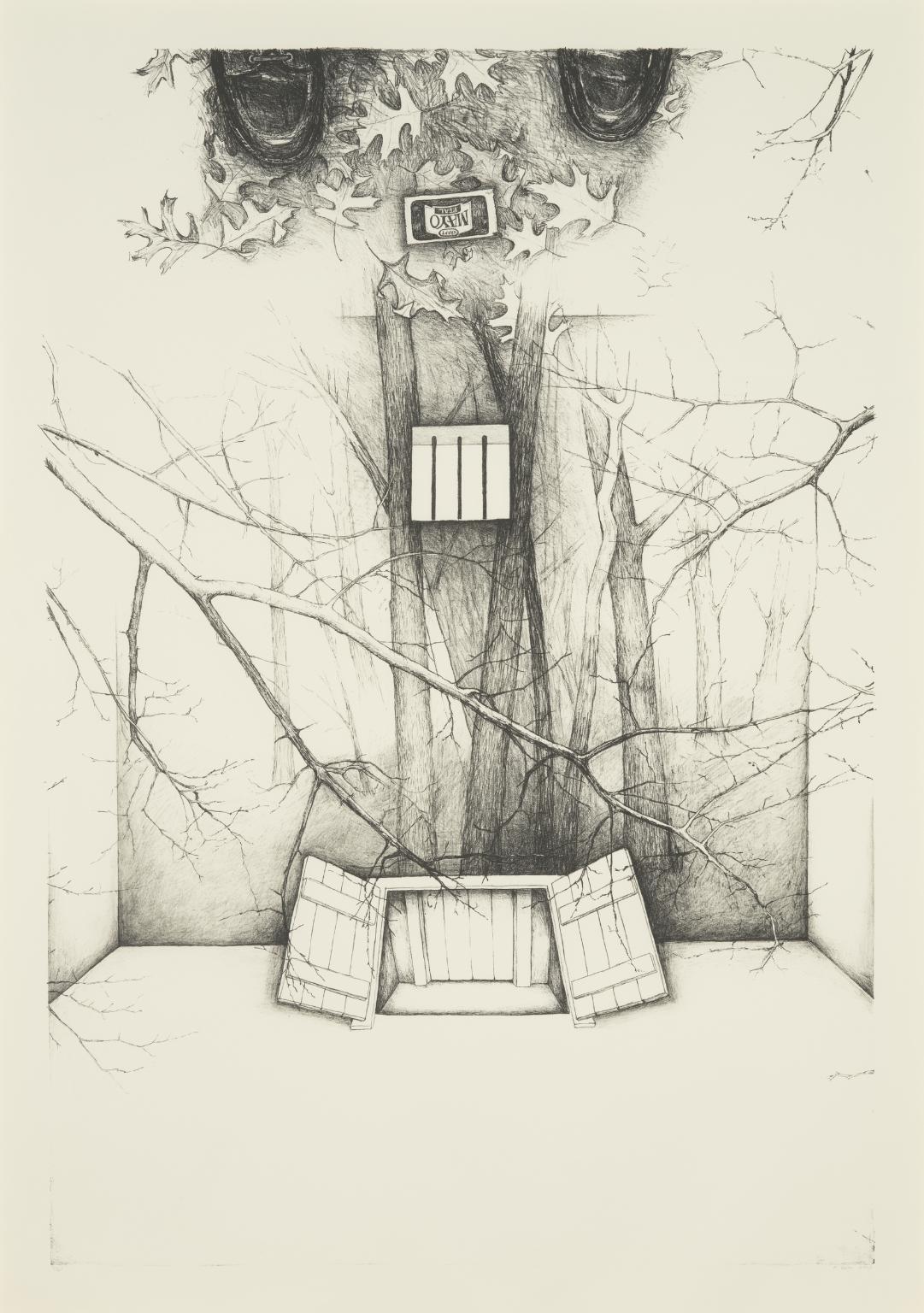
Robert Gober, Untitled 2002
In this print, Gober depicts seemingly ordinary objects that have been significant in his life. The dream-like overlapping of images reflects how memories can sometimes lack coherence or reason.
The cellar door is based on one his father built in their family home. The humble shoes are practically the only style the artist wore for two decades, during countless life events. Gober only discovered that they had been discontinued when he was preparing to travel for his United States Pavilion exhibition at the 49th Venice Biennale of Art, in 2001.
Gallery label, February 2026
2/7
artworks in Robert Gober
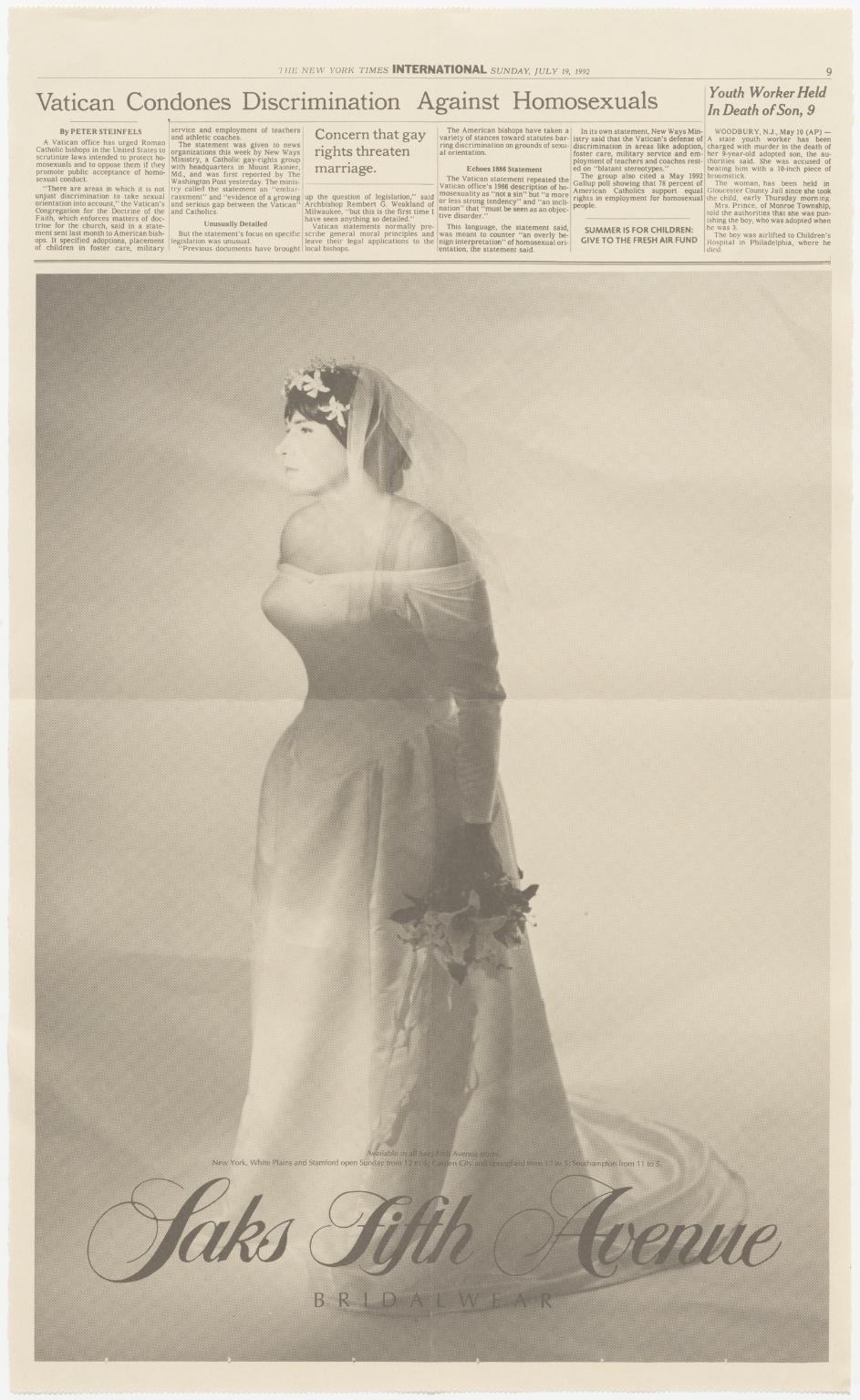
Robert Gober, Untitled 1992–6
This artwork is a meticulous imitation of a newspaper clipping, complete with a fold down the centre. However, the juxtaposition of the articles and the department store advertisement is fictional, and the bride in the advertisement is Gober himself, in an elaborately staged studio photograph.
Gober is interested in the ways news media reflects and shapes prejudices: ‘Some things would never appear on the wedding page, for instance. Never. But if there was anything about gay Americans and there happened to be an AIDS article, they always put them together’.
Gallery label, February 2026
3/7
artworks in Robert Gober
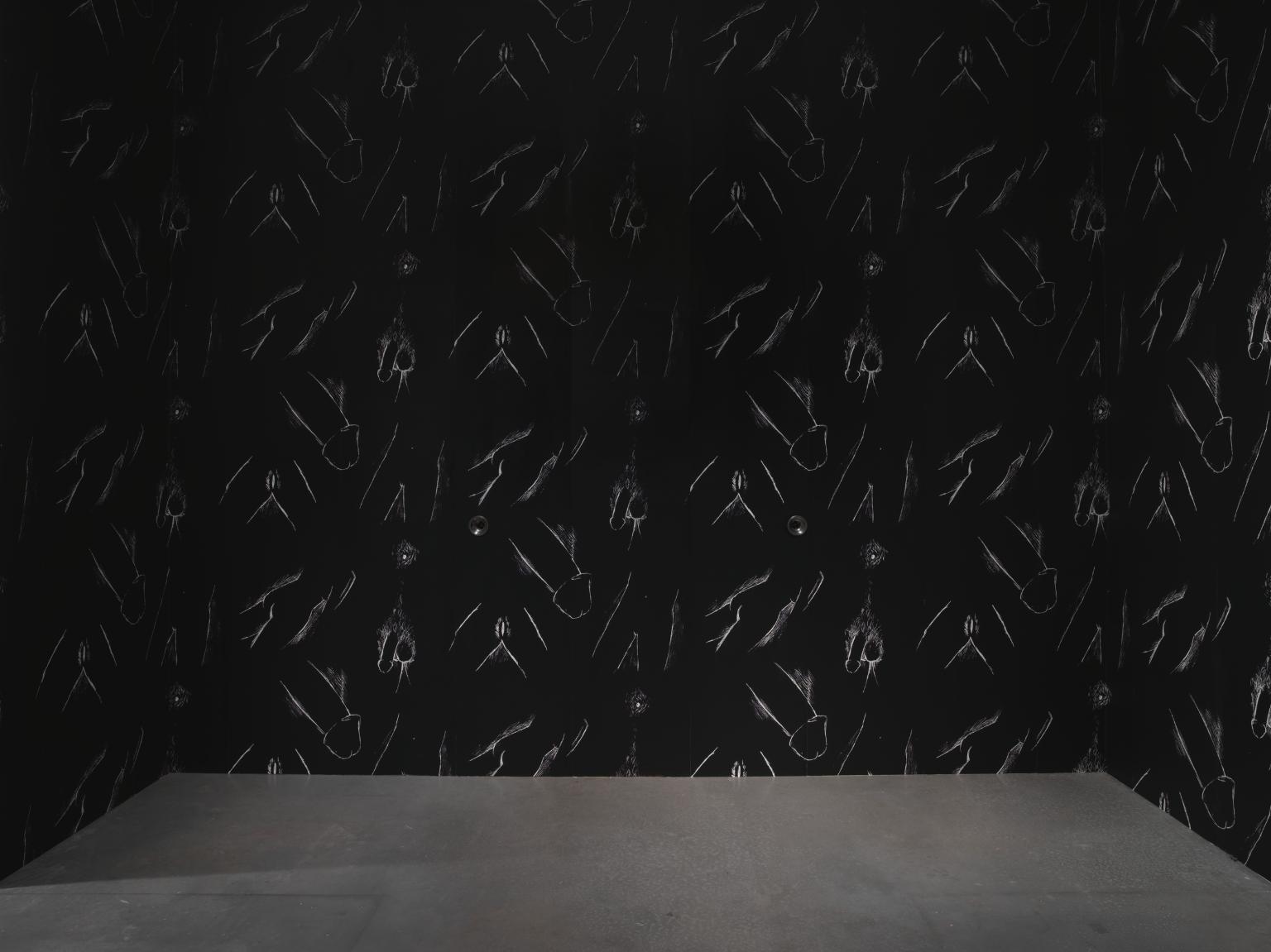
Robert Gober, Male and Female Genital Wallpaper 1989
Each object in the installation that this work forms a part of is carefully made by hand. The sheets of wallpaper are individually screen-printed, the pewter drains were hand-moulded, and the paper bag with a logo is drawn in pencil by Gober. Though the doughnuts were deep fried by the artist, he worked with the sculpture conservator Christian Scheidemann to preserve them. They are injected with a synthetic resin to ensure their longevity. When it was first shown as one of two installations in a solo exhibition at Paula Cooper Gallery in New York in the autumn of 1989, critical reviews prompted a debate about nudity and public attitudes towards sex. Elizabeth Hess, the writer for the Village Voice, concluded ‘The work is graphic but not in the least bit pornographic.’
Gallery label, August 2024
4/7
artworks in Robert Gober
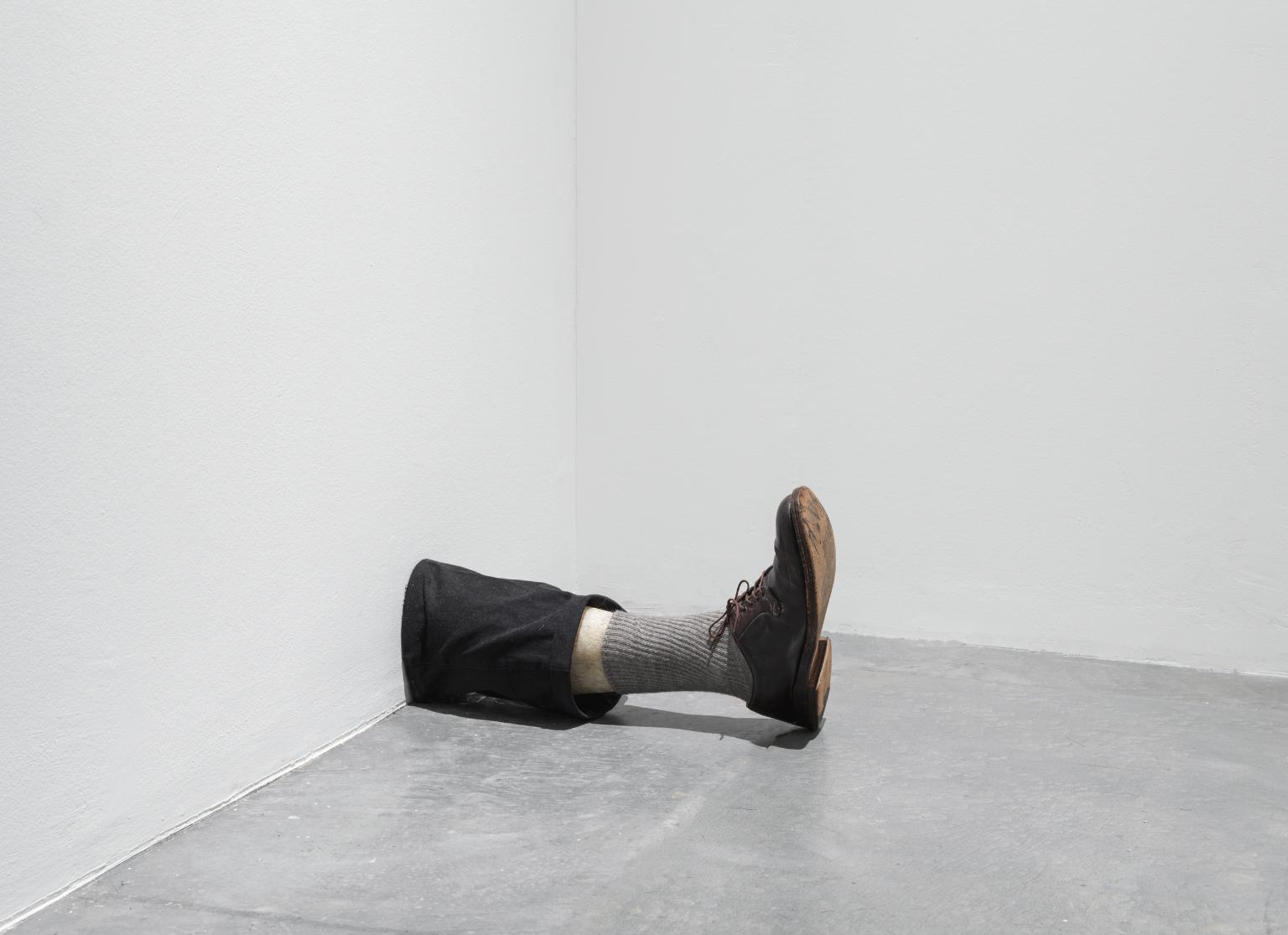
Robert Gober, Untitled 1989–92
This is one of about ten leg sculptures Gober made in a two-year period. They were inspired by two formative experiences – a story his mother, who had been a nurse, told young Gober about being handed an amputated leg in the operating theatre. The second was as an adult, seeing a sliver of bare skin exposed by a fellow passenger crossing their legs on a flight. The artist said of his making process: ‘The hair on the leg is human and purchased from a wig supplier. The leg is a bleached beeswax cast of my lower leg. The hairs are implanted into the warmed-up beeswax, one by one, with a tool we crafted through trial and error in the studio.
Gallery label, August 2024
5/7
artworks in Robert Gober
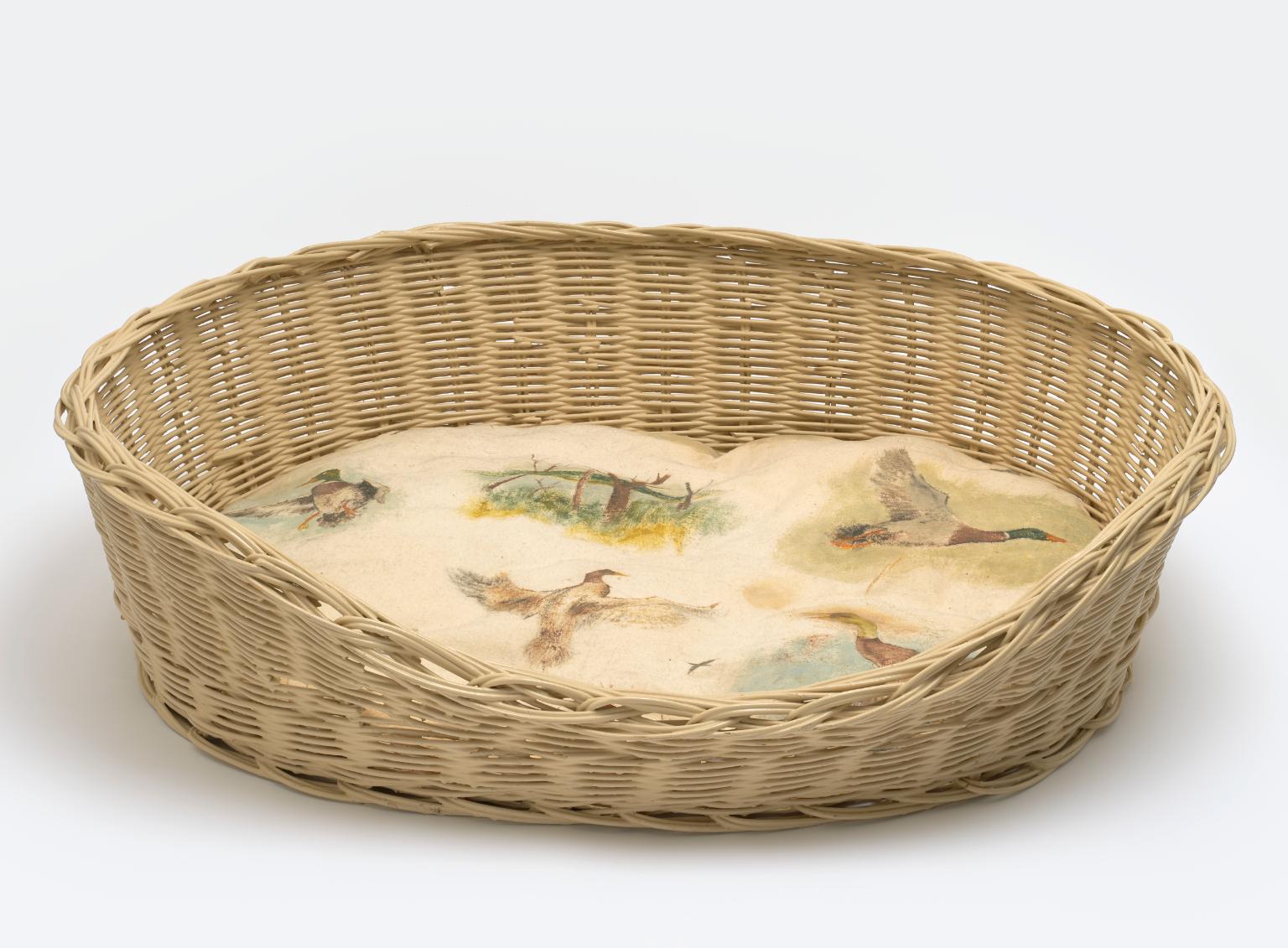
Robert Gober, Dog Bed 1986–7
A dog basket is a place where a dog sleeps and dreams – possibly about subjects such as the ducks depicted on the fabric. The underside of the dog bed is dedicated ‘For Sandy, 1983–7’ – the dog of the gallerist Paula Cooper, whom Gober used to look after during the summers. The hunting imagery on the patterned fabric is hand-painted. Gober taught himself hand-weaving as a form of physical rehabilitation after he injured his hand while woodworking.
Gallery label, August 2024
6/7
artworks in Robert Gober
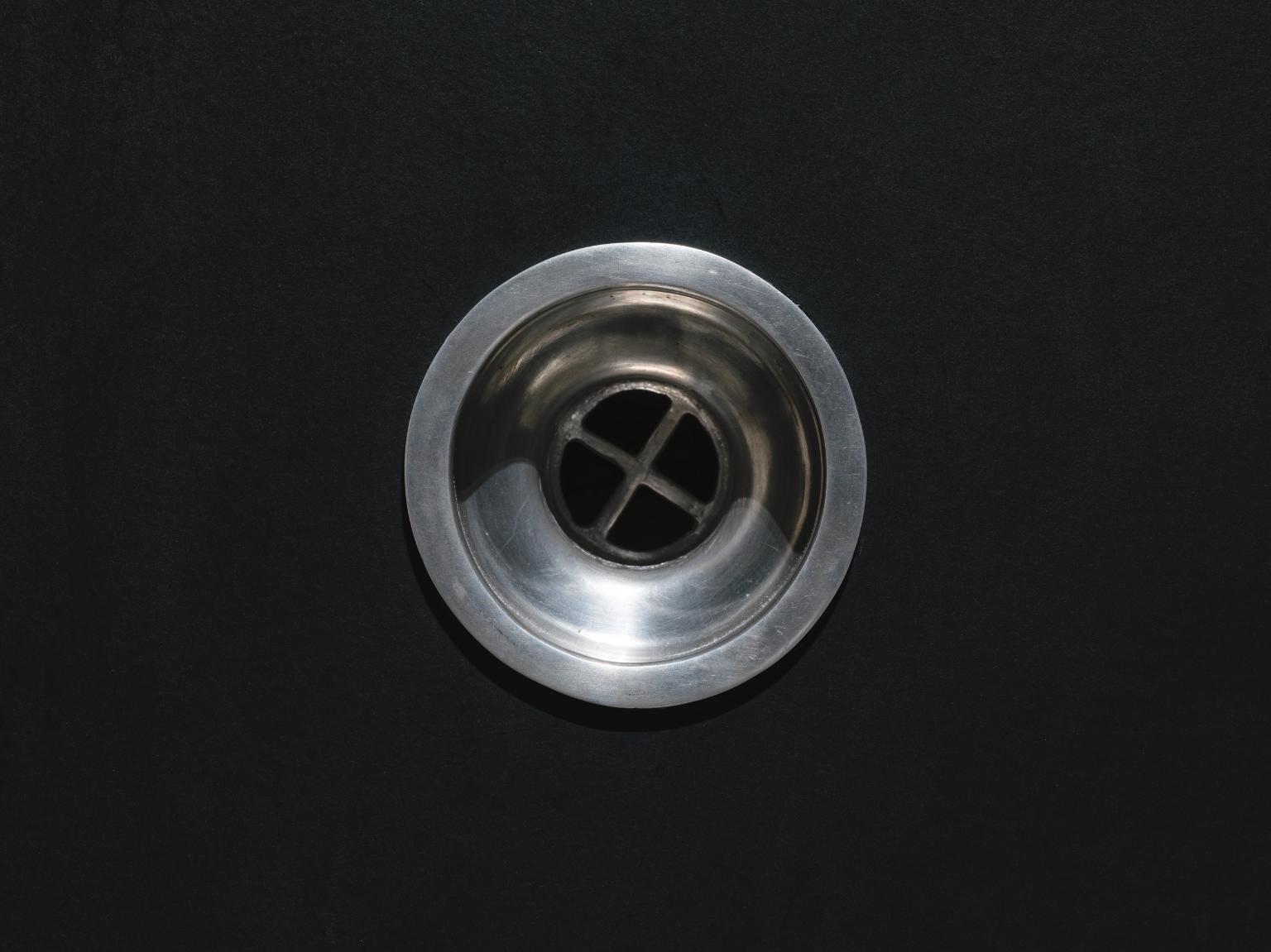
Robert Gober, Drain 1989, 2006
Each object in the installation that this work forms a part of is carefully made by hand. The sheets of wallpaper are individually screen-printed, the pewter drains were hand-moulded, and the paper bag with a logo is drawn in pencil by Gober. Though the doughnuts were deep fried by the artist, he worked with the sculpture conservator Christian Scheidemann to preserve them. They are injected with a synthetic resin to ensure their longevity. When it was first shown as one of two installations in a solo exhibition at Paula Cooper Gallery in New York in the autumn of 1989, critical reviews prompted a debate about nudity and public attitudes towards sex. Elizabeth Hess, the writer for the Village Voice, concluded ‘The work is graphic but not in the least bit pornographic.’
Gallery label, August 2024
7/7
artworks in Robert Gober
Art in this room
Robert Gober
Bag of Donuts
1989
Robert Gober
Untitled
2002
Robert Gober
Untitled
1992–6
Robert Gober
Male and Female Genital Wallpaper
1989
Robert Gober
Untitled
1989–92
Robert Gober
Dog Bed
1986–7
Robert Gober
Drain
1989, 2006