

Romare Bearden, Mysteries II 1964. Lent by the Tate Americas Foundation 2017. © Estate of Romare Bearden / DACS 2026.
9 rooms in Materials and Objects
Combining everyday objects and materials became a new technique for 20th-century artists
More than a century ago, artists began to use cut-up newspapers and other paper fragments in their compositions. This technique was first called papier collé (French for glued paper) and then collage. It brought recognisable pieces of everyday life into artworks.
Artists soon expanded this technique into three dimensions. They began combining discarded objects to create new forms using different construction methods. These built sculptures are also known as ‘assemblages’.
These works often draw on the idea that unexpected combinations can have an unsettling or humorous power. This was the principle behind many surrealist artworks. Many collages and assemblages also included mass-produced objects, reflecting on their growing influence on art and life.
Later generations of artists have brought images and objects together in new ways. Some continue to use this approach to create moments of poetic surprise. For others, collages and assemblages are ways to comment on advertising, mass media and consumer culture.
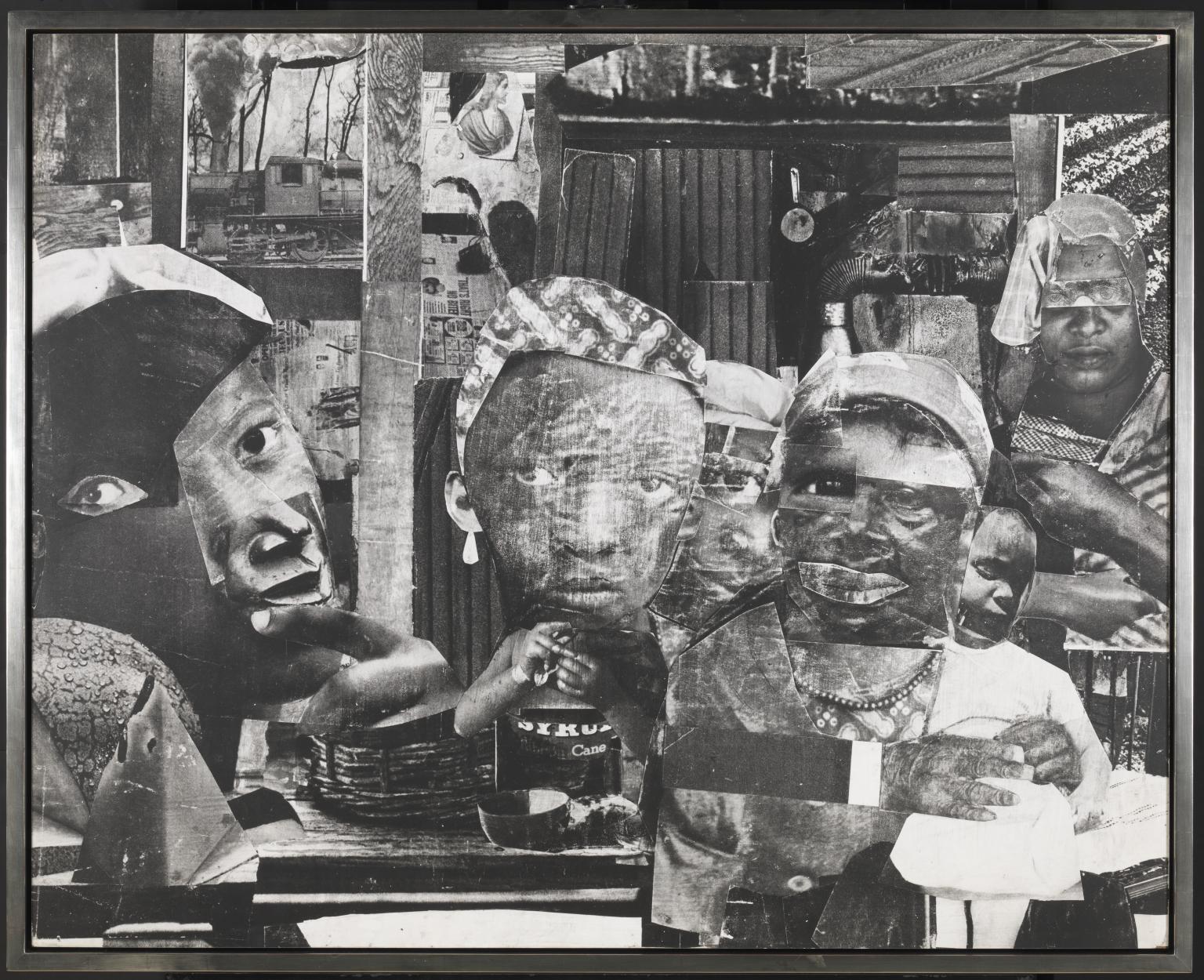
Romare Bearden, Mysteries II 1964
1/7
artworks in Collage/Assemblage
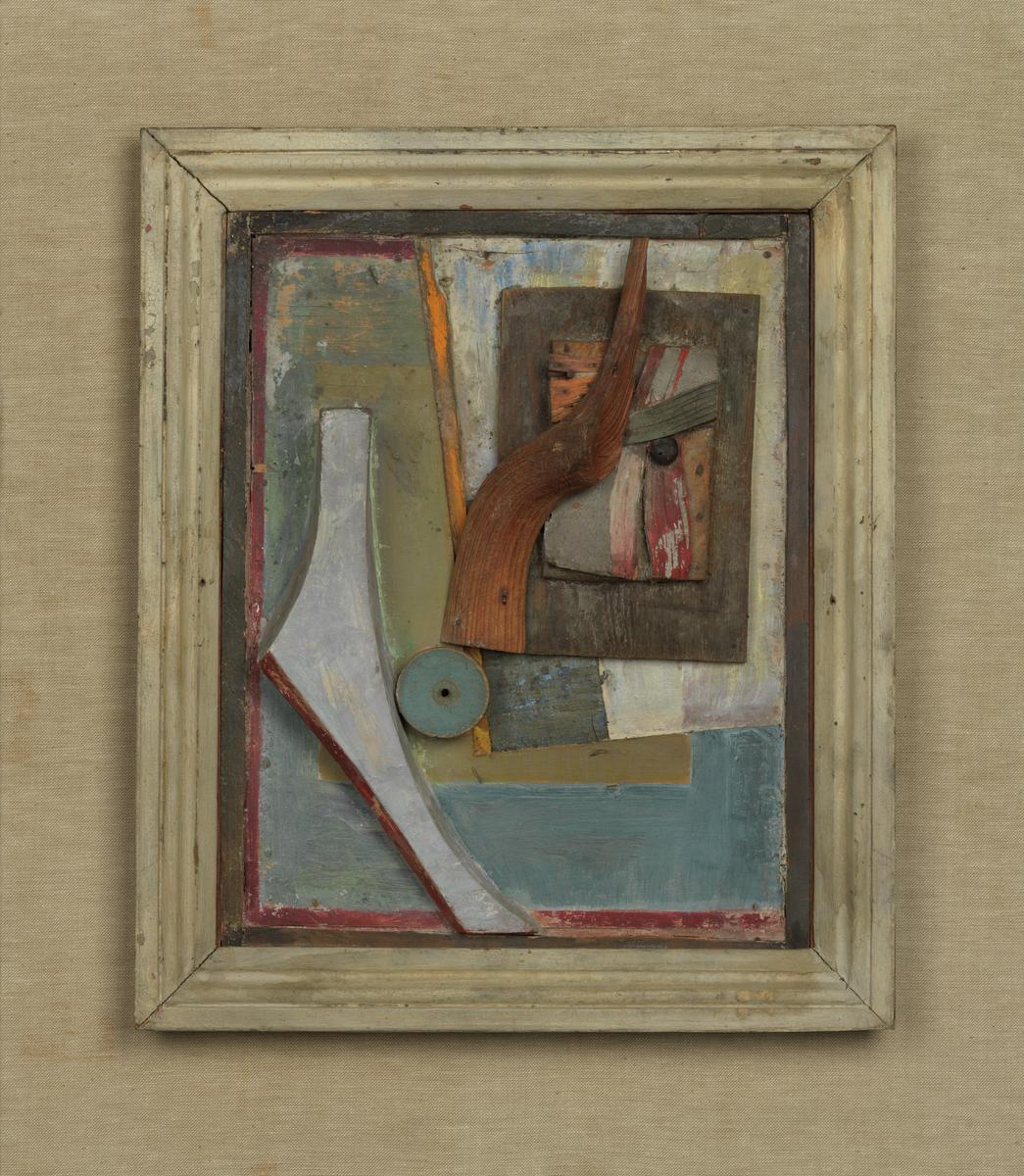
Kurt Schwitters, (Relief in Relief) c.1942–5
Schwitters was associated with the irreverent dada movement in 1920s Germany. He developed idiosyncratic forms of collage that combined the discarded ephemera of everyday life such as bus tickets and labels with other materials, coining the nonsense term Merz to describe his technique.Schwitters left Germany in the 1930s, arriving in Britain via Norway and spending over a year in internment camps before moving in 1941 to London, where he made this work. Schwitters often took months over his constructions, searching for appropriate elements.
Gallery label, September 2016
2/7
artworks in Collage/Assemblage
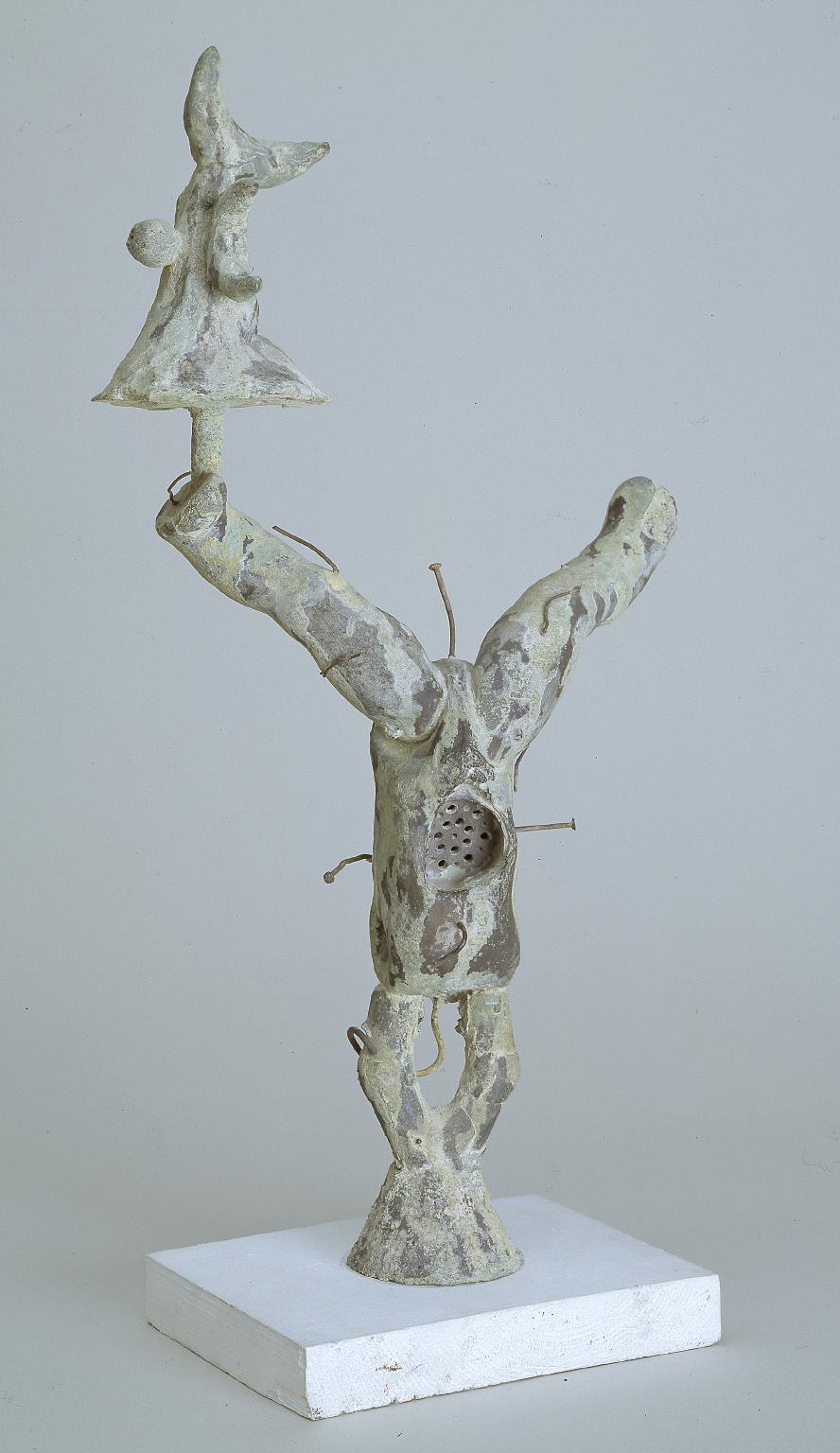
Joan Miró, The Tightrope Walker 1970
Miró often used discarded materials, some of them discovered in the foundry. His aim was to create what he called an ‘unlikely marriage of recognisable forms’. The body of the tightrope walker is made from a child's doll, cast into bronze. The base on which it rests is the cone through which the bronze was poured, while the nails originally held the mould together. The mottled and textured surface results from acid deposits left by the casting process. Each of these elements has an expressive role within the sculpture which, like much of Miró's work, combines humour with suggestions of violence.
Gallery label, July 2013
3/7
artworks in Collage/Assemblage
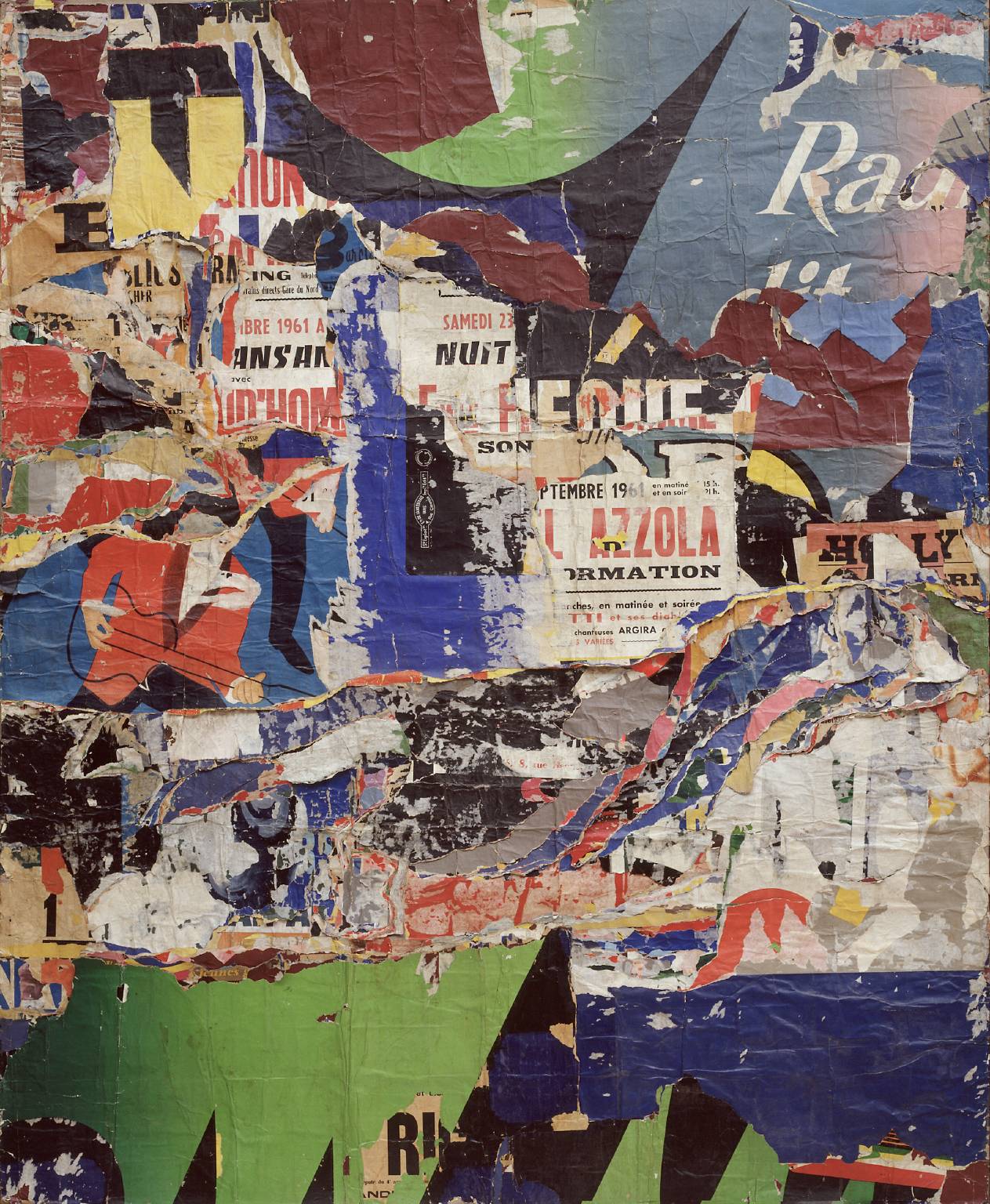
Jacques Mahé de la Villeglé, Jazzmen 1961
This work is made from posters and advertisements stripped from a street in Paris. Villeglé presented torn posters as artworks by hanging them on gallery walls, after only minor adjustments. He wanted to channel the spontaneous actions of the anonymous passer-by, seeing the process of tearing off posters as a kind of street art. Villeglé started making works using torn posters in the late 1940s and first exhibited them in 1957. The title of this work comes from the partially torn image of the guitarists on the left-hand side.
Gallery label, February 2026
4/7
artworks in Collage/Assemblage
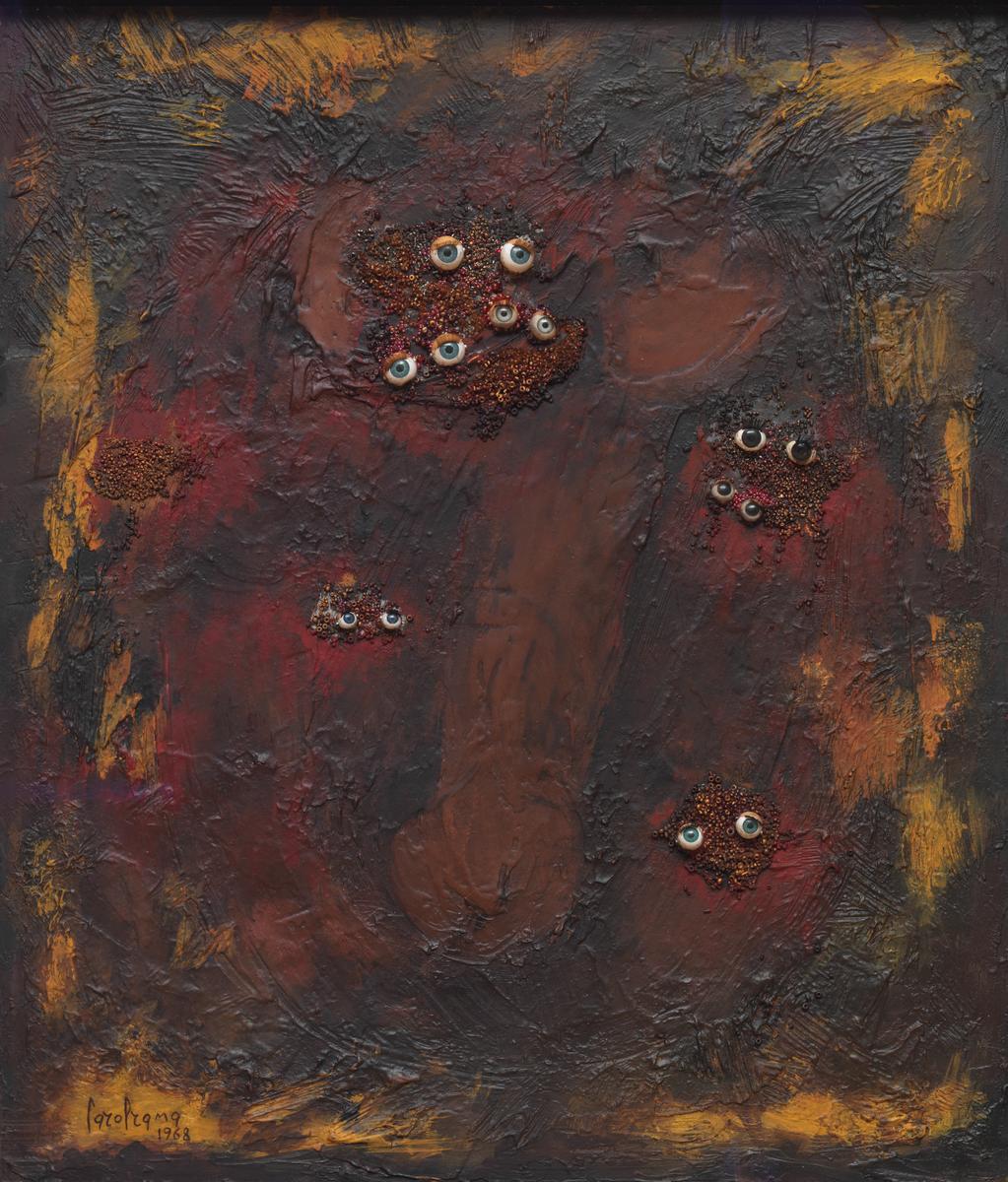
Carol Rama, Bricolage 1968
Bricolage 1968 is a work on Masonite with collaged elements by the Italian artist Carol Rama. It is thickly painted with brown, yellow, red and black paint, with four groupings of dolls’ eyes embedded in the surface. It measures 700 by 600 millimetres, a size which is consistent with that of Rama’s other works of this period. It was made in Turin and is signed and dated in the lower left corner. The title is a French word for something that has been constructed from a diverse range of objects and materials.
5/7
artworks in Collage/Assemblage
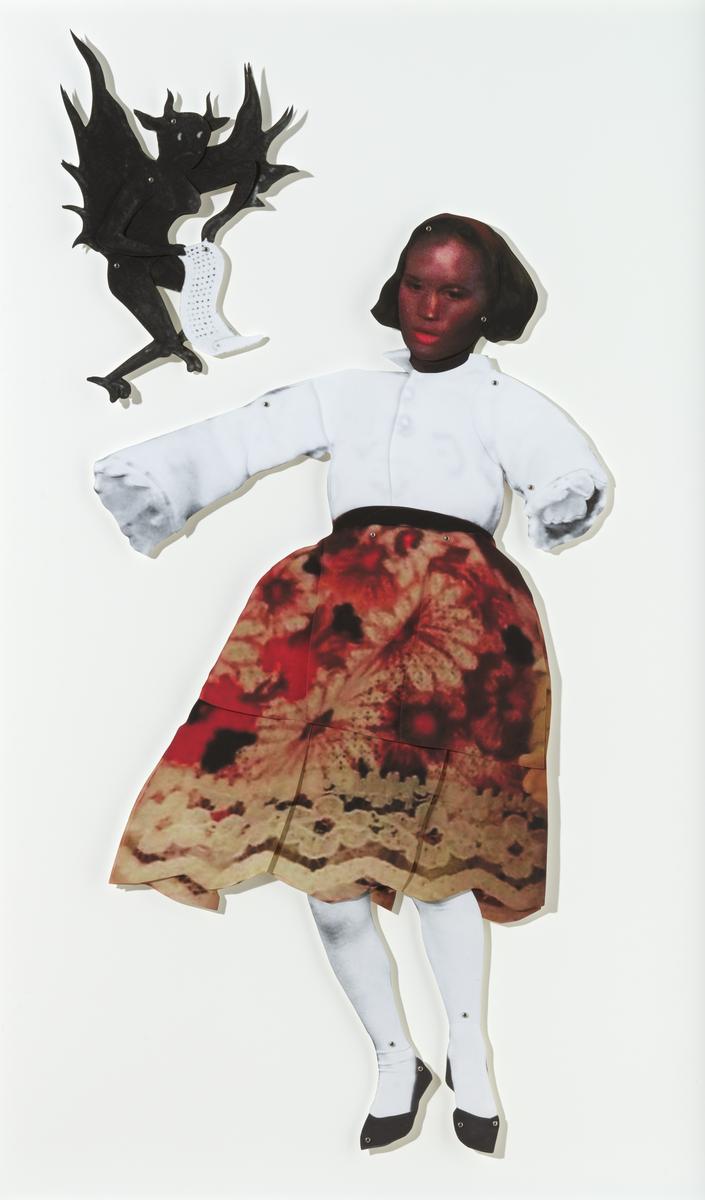
Frida Orupabo, Little Devil 2022
Orupabo made this collage by cutting out photographic prints of images she found online. She then assembled the figures with metal pins, like paper dolls with moving parts. The ‘little devil’ is inspired by depictions of demonic creatures in religious art from the past. The face of the female figure combines images of a white actress and an anonymous Black woman. This constructed image reflects Orupabo’s Christian upbringing alongside the pressures and isolation she felt as a Black woman living in Norway.
Gallery label, February 2026
6/7
artworks in Collage/Assemblage
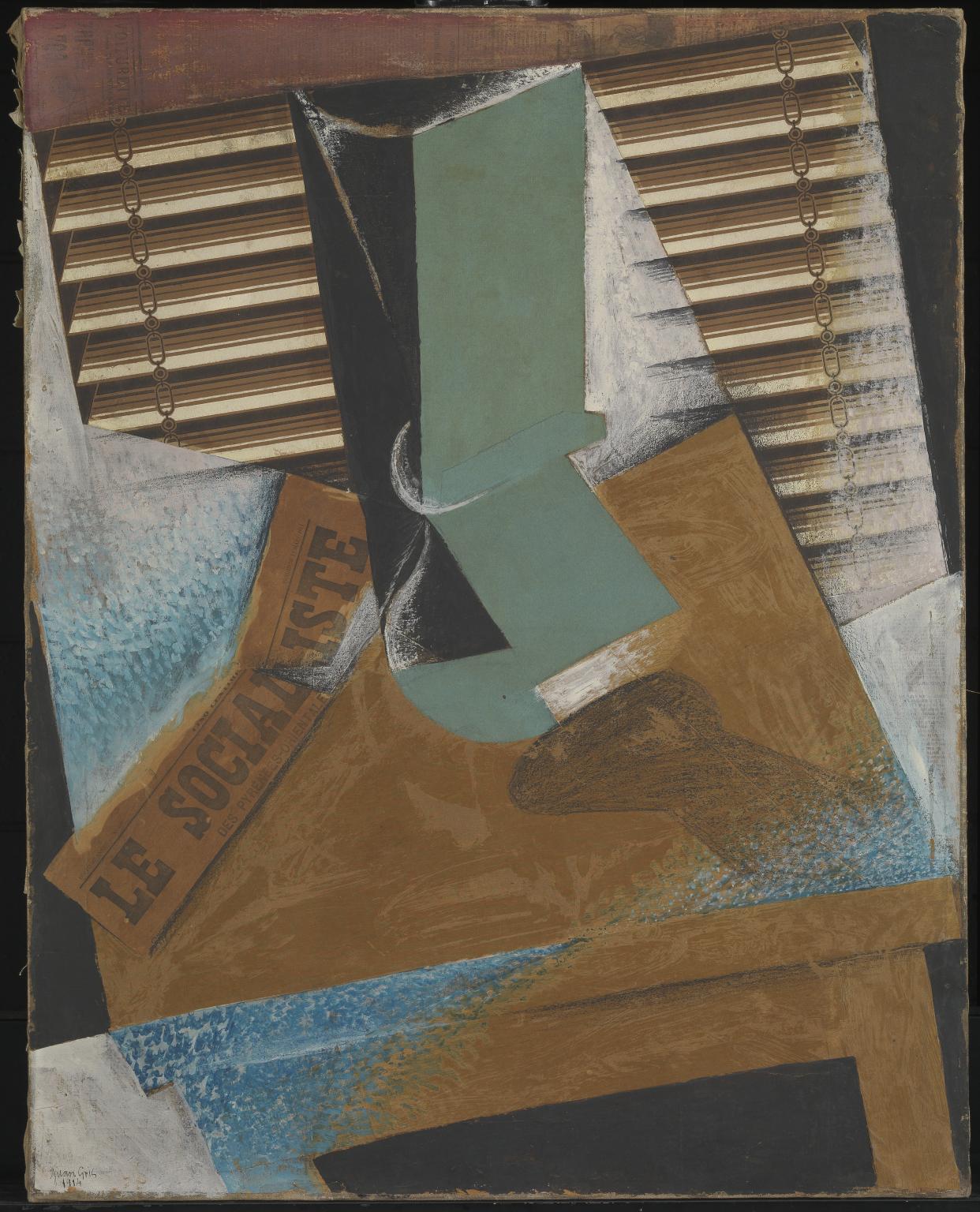
Juan Gris, The Sunblind 1914
In this cubist collage, Gris uses a variety of materials to create densely textured layers. Light slips through a Venetian blind, casting a shadow from the wine glass and onto a small table. He also incorporates a real newspaper titled Le Socialiste des Pyrénées-Orientales, which was local to Collioure, a fishing town he stayed at in the summer of 1914. Describing his approach to still life, Gris wrote: ‘My art is an art of synthesis ... I try to concretise that which is abstract ..., I want to humanise it’.
Gallery label, March 2026
7/7
artworks in Collage/Assemblage
Art in this room
Romare Bearden
Mysteries II
1964
Kurt Schwitters
(Relief in Relief)
c.1942–5
Joan Miró
The Tightrope Walker
1970
Jacques Mahé de la Villeglé
Jazzmen
1961
Carol Rama
Bricolage
1968
Frida Orupabo
Little Devil
2022
Juan Gris
The Sunblind
1914