Tate Etc. Issue 22: Summer 2011

Editors’ note

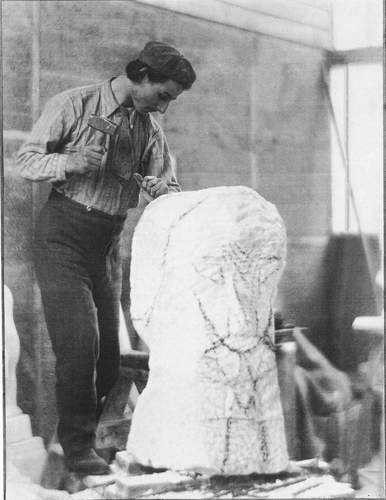
Welcome to our new-look Tate Etc. On the cover of this issue there is a sculpture by Gaudier-Brzeska, whose works feature in Tate Britain’s exhibition The Vorticists: Manifesto for a Modern World, alongside a photograph of René Magritte – himself taking a photograph, outside the Israel Museum in Jerusalem. It is an apt image, as Tate Liverpool’s exhibition of Magritte reveals how the artist sourced his images from photographs, magazines and advertising. The picture was taken in 1966, several months before the start of the Six-Day War between Israel and neighbouring states Egypt, Syria and Jordan.

Several decades on, and Israel is watching extraordinary events unfold across the Middle East. The political upheavals in Egypt, Libya, Bahrain, Yemen and Syria had not yet happened when Tate Etc. invited four panellists to discuss art in the region. One of the questions asked was: is contemporary art from the Middle East more political than from elsewhere? How might they answer this question now? And how will artists from these countries, and beyond, respond to and process such turbulence and uncertainty. Time will tell. However, for one man this will no longer be possible. Ahmed Basiony was a promising young Egyptian artist who was, tragically, shot dead by a sniper in Tahrir Square, Cairo, on 28 January. Here, we publish an image from one of his last performance works. For those who can, the process of documentation is one possibility. As Simon Baker explains in his introduction to Tate Modern’s forthcoming series of new displays New Documentary Forms, works by an increasing number of artists are concerned with politics at a global level – from the political upheaval as seen in Guy Tillim’s Congo Democratic to the ongoing conflicts in Afghanistan and the Middle East referenced in Luc Delahaye’s series History. These artists feel a need to bear witness to the world. One wonders, if Magritte had been in Jerusalem a few months later, whether his camera would have documented a very different reality from that which he saw.

Bice Curiger and Simon Grant

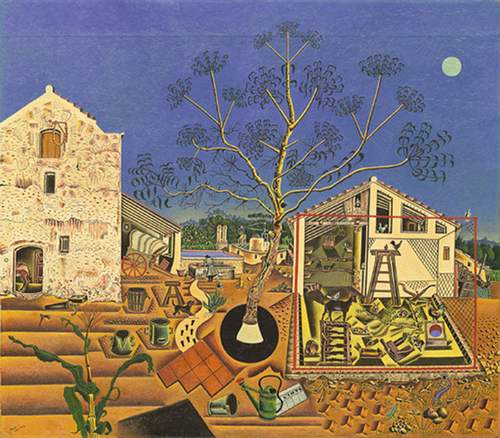
Joan Miro oil painting of a farm with blue sky

Joan Miró
The Farm 1921–2
Oil on canvas
123.8 x 141.3 cm
Courtesy National Gallery of Art , Washington © Succession Miró/ADAGP, Paris and DACS, London 2011

In this Issue

Up close and personal: Tate Britain New Displays II

Amanda Delew, Pen Hadow, Chris Stephens, Peter Peri and Michael Bracewell

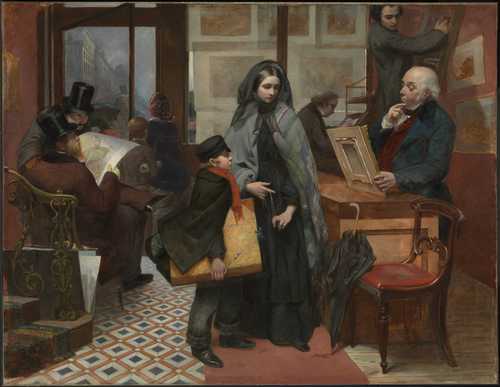
Tate Britain’s recent rehang, which follows a broadly chronological sequence, includes focused individual displays that highlight new research as well …

Documents for the world: Tate Modern New Displays I

Simon Baker, Boris Mikhailov and Mitch Epstein

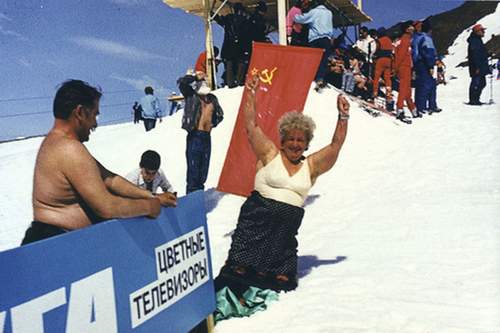
The documentary photograph has a history as old as the art itself, but recent practitioners from across the globe, some …

Domes for doomsday: Etc. Essay

Eva Díaz

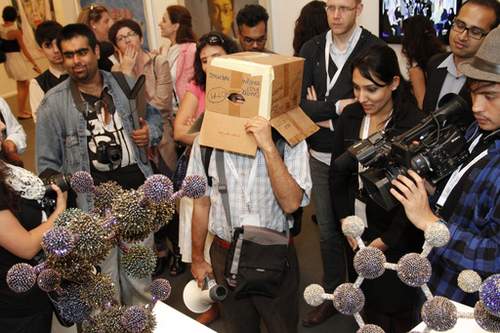
The enduring legacy of Buckminster Fuller’s geodesic domes

Drawing the vortex: The Vorticists II

Mark Antliff

The British avant-garde group was formed in London in 1914 by the artist, writer and polemicist Wyndham Lewis. Their idea, …

In the freewheeling world of the mind: René Magritte II

John Baldessari, Eleanor Antin, Thomas Demand and Jeff Koons

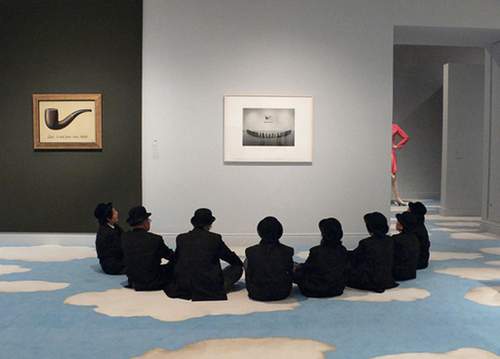
The Belgian Surrealist remains an influential figure among contemporary artists. Tate Etc.’s Mariko Finch spoke to four admirers. One shares …

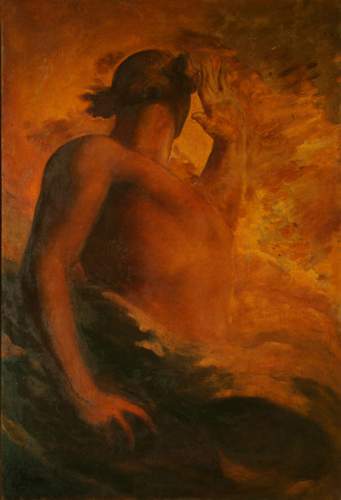
G.F. Watts: symbolist and star-gazer

Simon Grant1

G.F. Watts (1817–1904) has been variously described as one of the ‘heroic failures of British art’ and ‘shallow and pretentious’. …

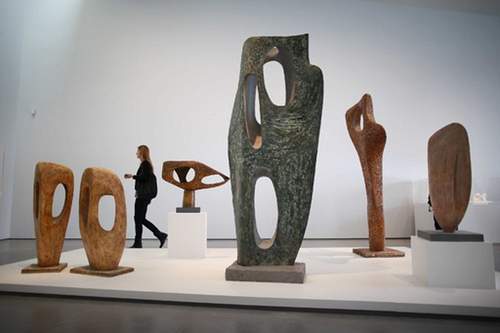
The Hepworth family gift

Sophie Bowness

The recently opened Hepworth Wakefield gallery includes an impressive selection of Barbara Hepworth’s relatively unknown plaster and aluminium prototypes that …

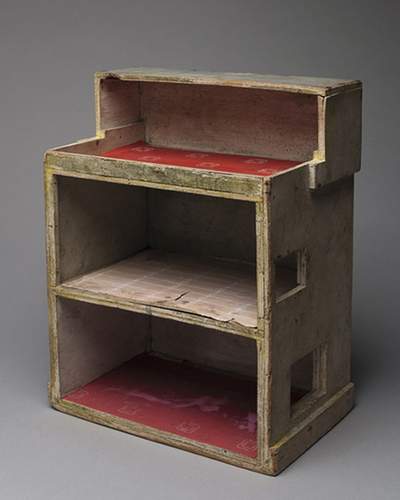
The house that Ben built: Behind the curtain

Jenny Seton

The daughter of the St Ives-based artist Denis Mitchell once played with a doll’s house made by Ben Nicholson, which …

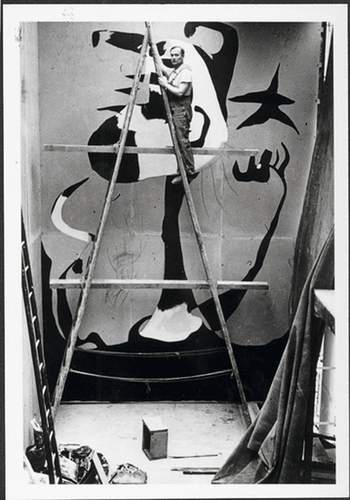
A hymn of freedom: Joan Miró I

Beatriu Meritxell

In 1937, at the height of the Spanish Civil War, several Spanish artists were commissioned by the Republican Government to …

'If you can improve the corner of your street...': Art in the Middle East

Kaelen Wilson-Goldie, Kader Attia, Vasif Kortun and Wael Shawky

Recent openings of art centres and national museums in Algiers, Alexandria, Doha and other cities in the Middle East and …

The lowly weed has its day: Private view

Richard Mabey

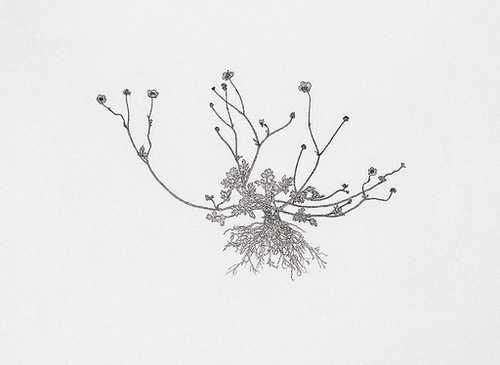
The celebrated nature writer takes a personal tour of those lesser known pictorial heroes that feature in many works within …

MicroTate 22

Victoria Pomery, Corin Sworn, Peter Kennard and Sarah Burnage

Individual reflections on a work in the Tate collection

Mike Nelson in conversation

Clarrie Wallis

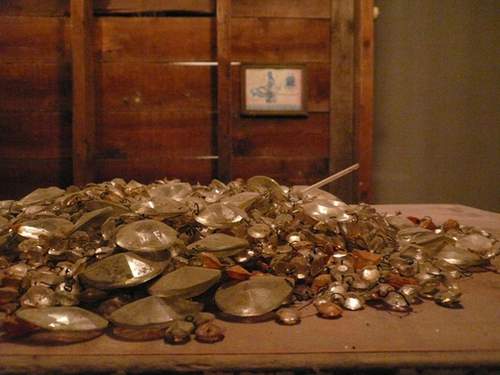
To coincide with Mike Nelson representing Britain at the 54th Venice Biennale of Art, Tate curator Clarrie Wallis talks to …

Miracle or monstrosity?: Story of an artwork

Stuart Tulloch

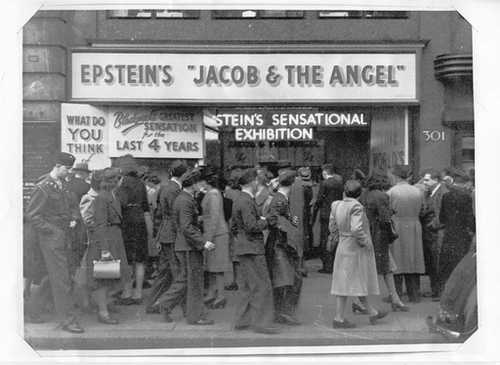
Jacob Epstein’s Jacob and the Angel. Currently on display at Tate Liverpool, this much-loved work was once viewed as …

Miró in London: Joan Miró IV

Iria Candela

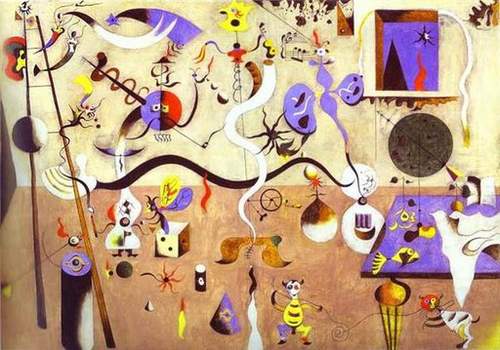
Iria Candela on Miró in London Tate Etc issue 22

My Tate ladies

Erdem

Tate Etc. invited the fashion designer Erdem on a special tour Tate Britain, where he selected his favourite paintings of …

On the roll of a dice: Joan Miró II

Ernest Hemingway

When Miró was a penniless painter in Paris in the 1920s, he became friends with the writer Ernest Hemingway, who …

Report: Art Dubai

Simon Grant1

Simon Grant travelled to Art Dubai in March, and reports back for Tate Etc

Say hello to my python: Joan Miró III

Desmond Morris

The celebrated zoologist and Surrealist painter shared his first London exhibition with Miró – and introduced him to a snake …

The scene is set: Tate Britain New Displays I

Lizzie Carey-Thomas

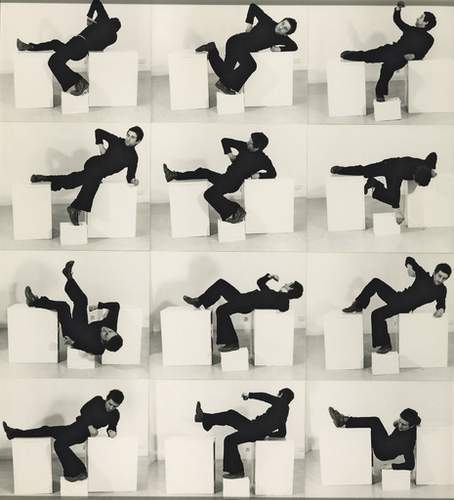
Several displays this summer explore ways in which ideas surrounding performance have come to occupy a defining place in art …

Something borrowed, something new: René Magritte I

Neil Matheson

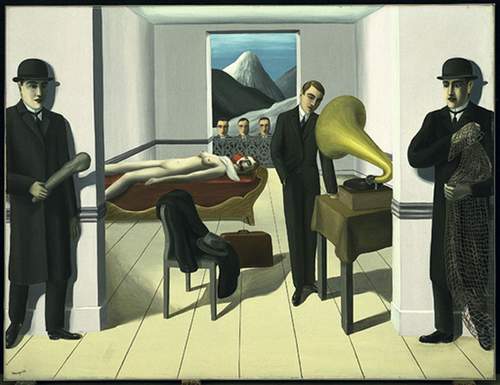
Magritte’s particular style of Surrealism, to be explored in a new show at Tate Liverpool, has become a favourite, with …

Steven Shearer Q&A: Venice Biennale

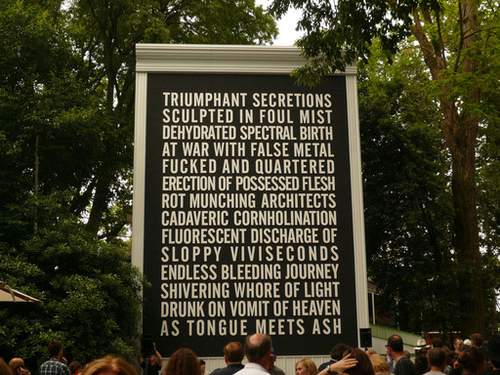
Steven Shearer’s work draws on various styles of figurative painting throughout history, song lyrics and archived images. He collects images …

Women that a movement forgot: The Vorticists I

Brigid Peppin

The short-lived Vorticist movement was often seen as a predominantly masculine, muscular affair, but as one of the descendents of …

Close