Tate Etc. Issue 3: Spring 2005

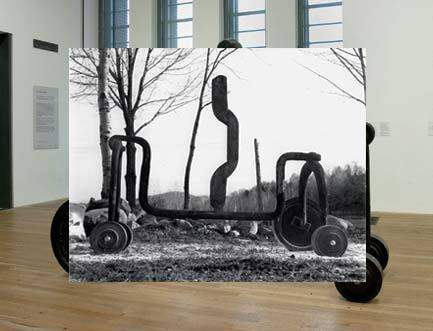
The idea of philanthropy was close to your heart, and your generosity led to the beginnings of the Tate collection. Since then, artists, collectors and donors have followed your example. For national art institutions, it has never been a more important time to give. Government Grant-in-Aid is no longer a reliable source of income for acquisitions, and art market prices have soared, which means that the actual purchasing power of existing funds has decreased dramatically. Looking at this photograph, we feel that the donors to Tate give in a belief, as you did, that their gift is well placed – it is not going to be lost in a rusty box.

So far, our culture has been reluctant to embrace the benefits of benevolence. However, the recent initiative launched by Tate – Building the Tate collection – will hopefully encourage the practice on a wider scale. It starts with a commitment of £1 million from Tate Members, plus gifts from artists including Richard Hamilton and Rachel Whiteread, as well as further donations from private collectors, such as Lord Attenborough’s gift of several important works including Michael Andrews’s Self Portrait 1959.

The collection is a key part of Tate, and it is the artists who have shaped it. We at Tate Etc., however, wish to add to the energy generated from the institution that carries your name by exploring the work of artists both within Tate and beyond. In this issue, for example, we examine how contemporary artists such as Keith Tyson and Maurizio Cattelan have built on the legacy of one of the great artists of the twentieth century – Joseph Beuys (whose exhibition opens at Tate Modern in February).

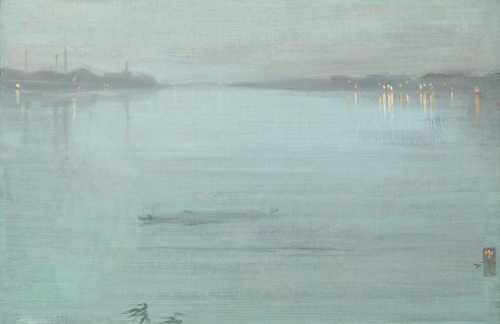
We also extend the vision of Turner Whistler Monet (opening at Tate Britain in February) by placing their work alongside that of filmmakers and photographers of the period. Similarly, we take a fresh look at the often misunderstood Salvador Dalí, and celebrate his profound influence on popular culture.

It is often easy to forget that art is about the human touch. Many of the images in this issue show artists at work as well as the art they produce. In this spirit, we include graphic interventions by Lily van der Stokker, specially commissioned by Tate Etc., which appear on the cover. We hope you like them Henry.

Bice Curiger and Simon Grant
In this Issue

The art of noise

David Toop

Almost 100 years ago, shortly before the outbreak of the First World War, the Italian Futurist Luigi Russolo proposed the …

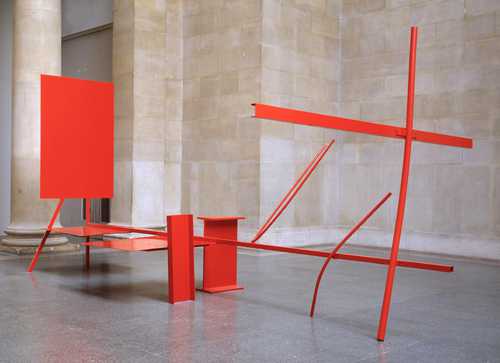
Early one morning: Anthony Caro

Michael Fried and Charles Ray

Sculptors and architects both work with form in space, albeit on different scales and using varying methods. Anthony Caro, known …

The elemental photographer: August Strindberg

Clément Chéroux

August Strindberg (1849–1912) was a celebrated playwright, novelist and poet, whose  writing was often filled with his own sense of …

The first pop star of painting: Salvador Dalí

Vincent Pécoil

‘God save the King!’ was one of Dalí’s last, typically provocative, public pronouncements. As two touring centenary exhibitions of his …

He is like digging in the garden and sailing in rough winds. But the garden overgrows, the ship wrecks: August Strindberg II

Per Kirkeby

August Strindberg painted such tempestuous seascapes in between his writing periods that the 1890s were known as the ‘Inferno Years’. …

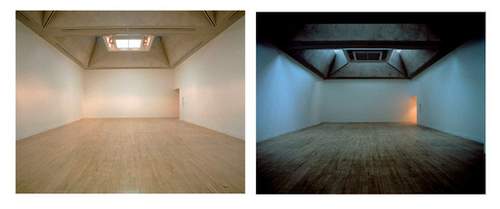
But is it installation art?

Claire Bishop

What does the term ‘installation art’ mean? Does it apply to big dark rooms that you stumble into to watch …

For Joseph Beuys the day of his death

Rebecca Horn

For Joseph Beuys the day of his death; Rebecca Horn's poem for Joseph Beuys. Tate Etc. issue 3

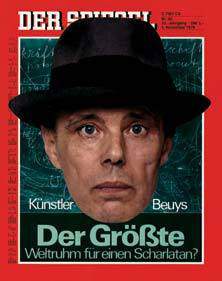
The legacy of a myth maker: Joseph Beuys

Francesco Bonami

Joseph Beuys is considered by some as the most important of the post-war period – a sculptor, performance artist, teacher …

Messages from the other world: Behind the curtain

Paul Farley

In 1934 the sculptor John Skeaping told the Daily Mail: ‘Perhaps I ought to tell you that I have …

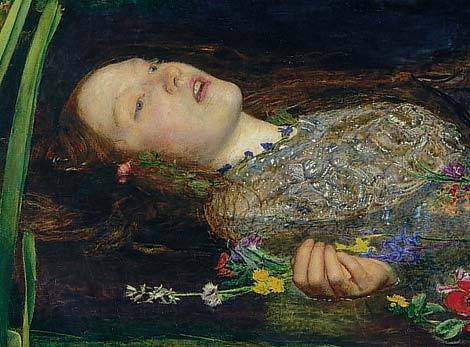
MicroTate 3

Elisabeth Bronfen, Lucinda Hawksley, John Paul Lynch and Callum Innes

Elisabeth Bronfen, Lucinda Hawksley, John Paul Lynch and Callum Innes reflect on a work in the Tate collection

Model behaviour: Thomas Demand

Matt Watkins

Matt Watkins talks to the German artist Thomas Demand about how he makes his photographs

The poetics of space

Norman Foster and Anthony Caro

Sculptors and architects both work with form in space, albeit on different scales and using varying methods. Anthony Caro, known …

River of dreams: Turner Whistler Monet

Patrick Keiller and John House

When the seventeenth-century diarist John Evelyn described London as a ‘Hellish and dismall Cloud of SEA-COALE’, he was one among …

Say butterfly!: Salvador Dalí II

Diedrich Diederichsen

When Diedrich Diederichsen went to Cadaquès in the late 1970s he wasn’t expecting to stumble into the surreal world of …

Who paints bread better than Dalí?: Salvador Dalí III

Jeff Koons

‘God save the King!’ was one of Dalí's last, typically provocative, public pronouncements. Jeff Koons explains how meeting Dalí when …

You can hear the welding. And you can hear the blows of the hammer: David Smith

Richard Wentworth

Richard Wentworth saw David Smith’s Wagon II in Smith’s outdoor studio in New York in the 1970s. Here he takes …

Close