Tate Etc. Issue 14: Autumn 2008

Editors’ note

These days you don’t often hear the word transcendental being used, particularly amid the language that accompanies the cacophonous mix of art styles and aesthetics, but it has never disappeared. To coincide with an exhibition of Rothko’s late works at Tate Modern Brice Marden pays homage to the master of the abstract sublime as well as exploring how Rothko’s taste for the transcendental has inspired his work.

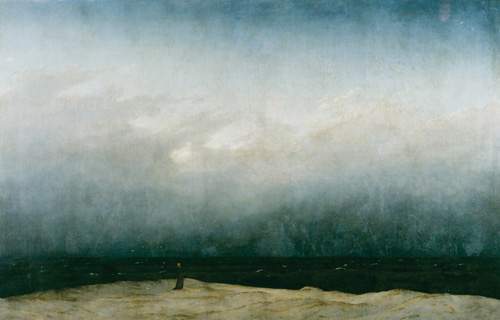
The late critic and curator Robert Rosenblum famously explored how such sensibilities linked Caspar David Friedrich and Turner to the astraction of Mondrian and Rothko, and wrote how their work ‘places us on the threshold of those shapeless infinities’. As Beat Wyss writes in relation to Friedrich’s iconic Monk by the Sea c.1809, his legacy – what he calls ‘the Friedrich effect’ – saw ‘the Romantic confrontation of the ego and the cosmos transposed into the white cube of the gallery’.

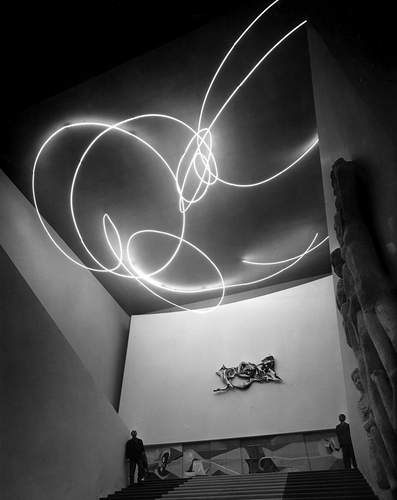
When Rothko said he was attracted to ‘pictures of a single human figure – alone in a moment of utter immobility’, he could have been talking about Friedrich. But the sentiment of being transfixed by an artwork could also extend to Francis Bacon’s paintings (on view at his forthcoming retrospective at Tate Britain), or even to non-figurative works such as Lucio Fontana’s extraordinary Spatial Light – Structure in Neon for the 9th Milan Triennial 1951. Alternatively, we could become immersed and enveloped, perhaps even disorientated, in an installation by Dominique Gonzalez-Foerster  – an experience that may not be so far removed from Marden’s road trip.

Bice Curiger and Simon Grant
In this Issue

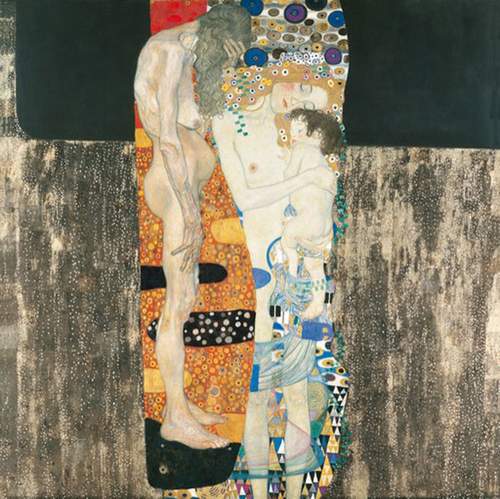
Gustav Klimt and the 1908 Kunstschau: Gustav Klimt and the 1908 Kunstschau

Simon Grant1

At the Belvedere, Vienna, until 18 January 2009

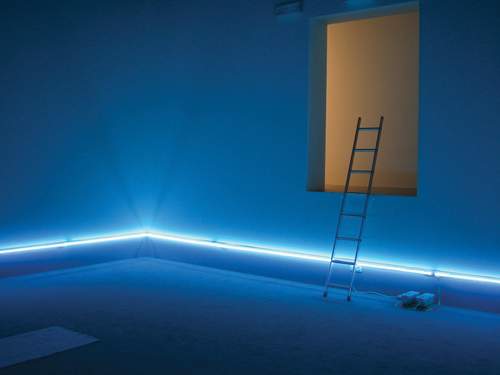
Immerse yourself: Dominique Gonzalez-Foerster

Penelope Curtis

Since the early 1990s Dominique Gonzalez-Foerster has created installations and interactive environments in which she evokes an atmospheric, yet often …

'It Is not a lasso, an arabesque, nor a piece of spaghetti': Lucio Fontana

Francesca Pasini

Fontana saw his work as a classic representation of what he called “a spatial environment” and described it as “a …

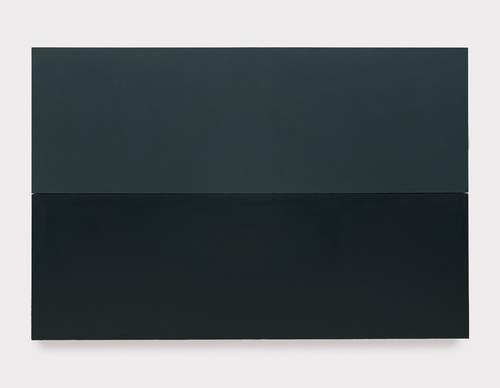
Landscapes of the mind: Mark Rothko II

Brice Marden

Simon Grant talks to Brice Marden about his enduring fascination with Rothko’s paintings.

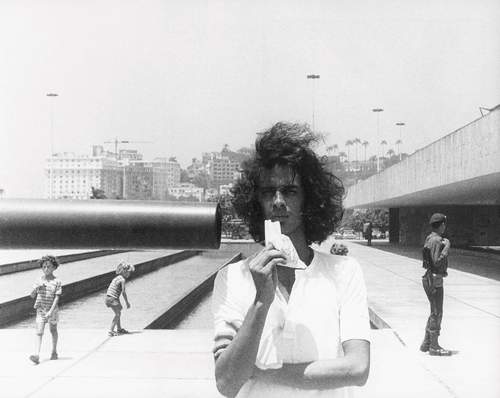
Material language: Cildo Meireles I

Frederico Morais and Cildo Meireles

The Brazilian artist is regarded as one of the leading figures in the development of conceptual art. In works that …

MicroTate 14

Heimo Zobernig, Tim Lee, David Shrigley and Kay Rosen

Heimo Zobernig, Tim Lee, David Shrigley and Kay Rosen on Tate Collection works Tate Etc. issue 14

My dearest Clive...: Behind the curtain

Tishani Doshi

Inspired by her mother’s love letters to her father, Tishani Doshi reads the moving correspondence in the Tate archive between …

Playing the system: Cildo Meireles II

Mark Godfrey

Mark Godfrey asks three artists to describe projects in which they have adopted the strategy of insertion, using Meireles's Insertions …

Of redemption and damnation: Mark Rothko I

Carter Ratcliff

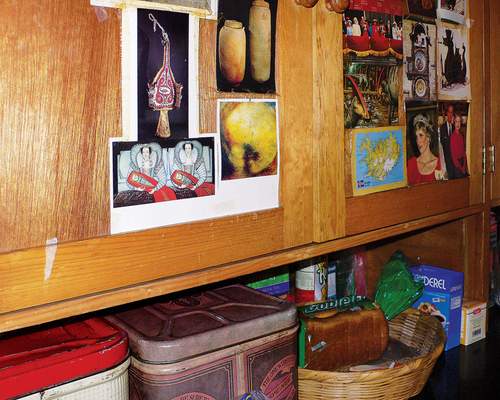
Rothko believed he was "producing an art that would last for 1,000 years". It was a sentiment that was in …

The sharks begin eating the fish

Peter Campus

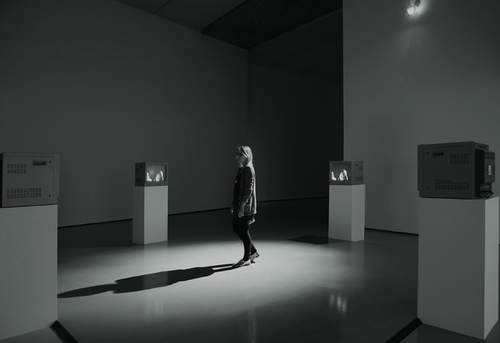
Peter Campus talks to Tate Etc. about his recent work

Simon Grant interviews Robert Morris

Robert Morris and Simon Grant1

Robert Morris (born 1931) has been variously involved in the development of Land art, performance, installation as well as being …

The transcendence of the image: Leonora Carrington

Lucy Skaer

A visit to the Tate not only prompts a journey to track down the Surrealist painter Leonora Carringotn at her …

The whispering Zeitgeist: Caspar David Friedrich

Beat Wyss

The image of a monk standing by an empty sea soon became an icon of German Romanticism. However, in the …

The expansive lens: In conversation

Peter Campus, Douglas Gordon and David A. Ross

Peter Campus was one of the first artists to explore the formal possibilities of film and video technology. Douglas Gordon, …

The school of life: Education

Sophie Howarth

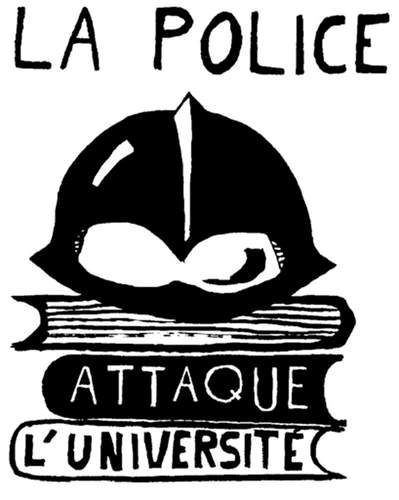
From the 1960s there has been a series of radical organisations aiming to revolutionise educational practice, including Joseph Beuys’s Free …

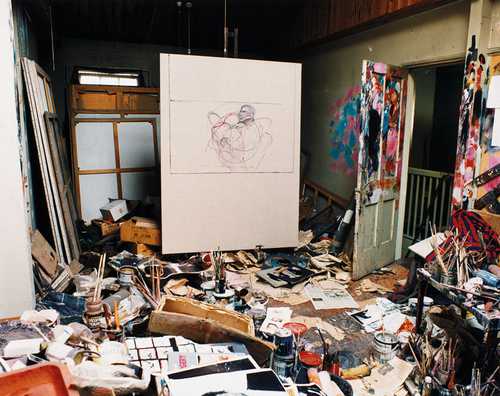
Homage to Bacon

We bring together a mix of writers, museum directors, artists, musicians and filmmakers to pay homage to the legendary artist

Close