Tate Etc. Issue 11: Autumn 2007

Dear Henry Tate,

Do artists have ‘stages’ in the way that they used to? Philip Guston famously ditched abstraction for cartoon-inspired figuration, much to the bemusement of critics. Jackson Pollock got famous for work he made over a five-year period. Some stages are short-lived. As Bernard Marcadé writes, Magritte’s underrated ‘vache’ period – which was a clear break from his traditional Surrealism – lasted only a couple of years. J.E. Millais (at Tate Britain) has many stages in his long career. Best known for his Pre-Raphaelite picture Ophelia, in later life he painted emotive, empty landscapes. They reflected a poetic sincerity that avoided the mawkish sentimentalism of the High Victorian era.

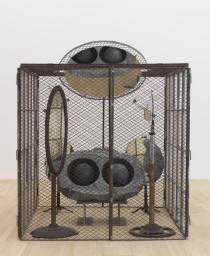
Some artists, however, remain confidently consistent throughout. One such is Louise Bourgeois. As her retrospective exhibition at Tate Modern will show, her drawings and sculptures reflect the strength of vision of her personal universe that has been there from the beginning

Retrospectives in themselves are selective, and, due to the naturally patchy nature of any museum’s collection, we are more likely to see a piece in isolation - or in the context of other works. Where and how these are displayed together shapes the way we think about them, a theme explored in Jonathan Harris’s piece on Tate Liverpool’s rehang. The critic Ralph Rugoff once commented that if you took Damien Hirst’s shark to Sea World, it would be just a dead fish. Something to bear in mind when visiting the Turner Prize retrospective at Tate Britain. Martin Herbert describes the prize as ‘a bellweather of contemporary British art practice’, but how will these works – seen together for the first time – look today?

Bice Curiger and Simon Grant.

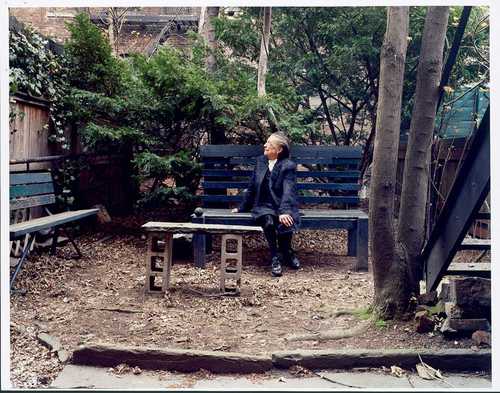
Henry Tate holding a model of Tate Gallery Pall Mall Gazette 21 July 1897.

Henry Tate holding a model of Tate Gallery, Pall Mall Gazette, 21 July 1897
© Tate archive

In this Issue

Dear Louise Bourgeois

Helmut Lang and Nancy Spero

Two artists who know Louise Bourgeois talk about how she has played a part in their lives.

A family affair: Millais

Edward Platt

Millais’s early career was closely linked to his friendship with the Lemprière family. The teenage artist’s desire for one of …

Figure it out: Tate Liverpool Rehang

Jonathan Harris

Jonathan Harris interprets Tate Liverpool’s comprehensive rehang, and how it shows many of the works in the collection in a …

Half woman, half goddess: Nicholas Hilliard's 'Queen Elizabeth I'

Antonia Fraser

There are many portraits of Elizabeth I, but few reflect her image as steely icon as perfectly as the one …

‘I loved the bugs, they were gross.’ Ruby, age 9: Turner Prize

Martin Herbert

On a yearly basis it provokes passionate debate on the state of contemporary British art, and it has inspired other …

‘I’ll find a way to slip in a great big incongruity from time to time’: René Magritte

Bernard Marcadé

In 1947 Magritte gave up what he called his ‘tactile conformism’ partly to distance himself from the rigours of Parisian …

It's all true: The World as a Stage II

Catherine Wood and Jessica Morgan

Co-curators of the Tate Modern exhibition, ask some of the participating artists about its themes

A kiss across the ages: Barnett Newman

Carter Ratcliff

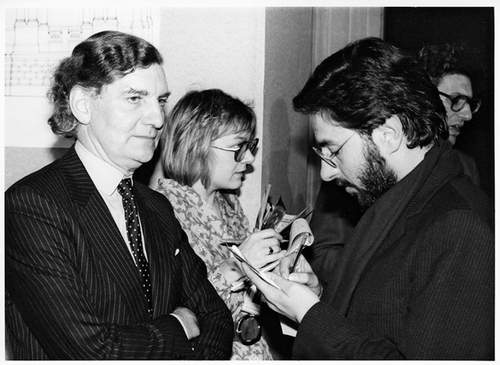
The older man in the photograph was Barnett Newman, unexpectedly being kissed by the youngster Michael Auder. Carter Ratcliff looks …

Lumps, bumps, bulbs, bubbles, bulges, slits, turds, coils, craters, wrinkles and holes

Elaine Showalter

Literary critic and feminist, Elaine Showalter explores the life and work of artist Louise Bourgeois.

Memory frames: Tate Archive

Iain Sinclair

Iain Sinclair visits the Tate archive and unearths the images of a photographer ‘trembling on the brink of life and …

MicroTate 11

Carsten Nicolai, Duncan Marquis, Piers Faccini and Andrew Graham-Stewart

Microtate 11: Carsten Nicolai, Duncan Marquis, Piers Faccini and Andrew Graham-Stewart, Tate Etc.

No questions please: Louise Bourgeois

Denyse Bertoni

For many years Louise Bourgeois conducted a monthly salon from her house in New York. It was a chance to …

Other worlds: William Blake

Katharine Stout

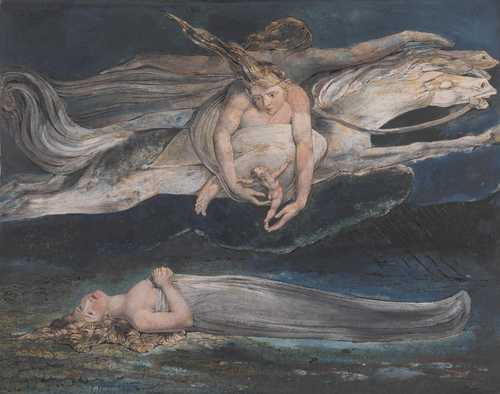
William Blake famously declared: “I must create a system or be enslaved by another man’s.” His visionary work is on …

Play on: The World as a Stage

Marie de Brugerolle

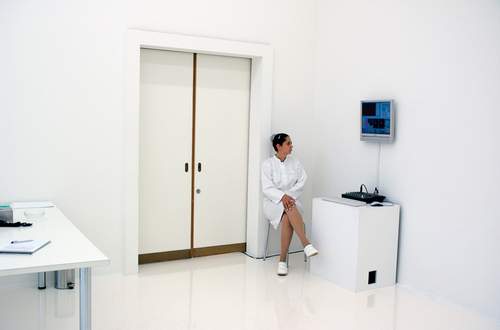
To coincide with the forthcoming The World as a Stage exhibition at Tate Modern, Marie de Brugerolle explores how contemporary …

Poetic encounters: Millais's Chill October

Kathleen Jamie

Many of Millais’s late landscapes in Scotland were painted en plein air and given titles inspired by his favourite poems. …

R.I.P.: Henry Lamb's 'Death of a Peasant'

George Shaw

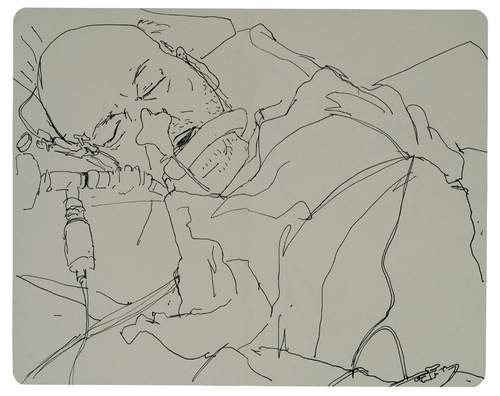
George Shaw sketched his father for several decades, until his death last year. Prompted by a visit to the Tate …

Strangely familiar: Norma Jeane

Alessandra Galasso

Norma Jeane is the alias of an artist who never appears in public and has no studio, using Marilyn Monroe’s …

Voice of the invisible: Doris Salcedo

Madeleine Grynsztejn

The social, historical and political landscape of Colombia and beyond has deeply informed the work of the artist who is …

Where the wild things are: Animals

Massimiliano Gioni

When Chinese artist Huang Yong Ping was forced to expel the beasties that inhabited his Theater of the World he …

'You look charming. You look enchanting. You look dazzling. You look breathtaking. You look unique. But you don't make an evening.: Art & theatre

Nicholas Ridout

‘Since visual art practice has so decisively repudiated, problematised, complicated the whole business of pretending’, says Nicholas Ridout, ‘it's hardly …

Close