Tate Etc. Issue 24: Spring 2012

Editors’ note

What is the role of the artist? And how does one challenge existing perceptions of what an artist is? Simple questions perhaps, but ones that Italian artist Alighiero Boetti (1940–1994) took seriously, as will be explored in Tate Modern’s forthcoming retrospective. As the curator of the show, Mark Godfrey, writes, Boetti ‘recognised the contradictory nature of the artist as both private creator and public showman’, and this led him to a radical idea of art production: a work could be authored by different people so that it had a multiple character itself. The best known example of this is seen in his embroidered maps of the world made by Afghan women (often including their own Farsi text stitched around the borders), which were symbols in themselves of Boetti’s understanding – years ahead of his time – that globalisation would change the art world forever.

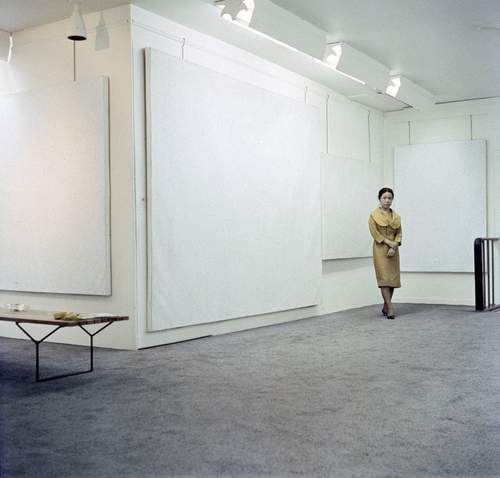
The Japanese artist Yayoi Kusama (born 1929) shares Boetti’s restless quest for answers in the world around her. As Ali Smith writes, Kusama is an artist who is ‘fascinated by the attractions and horrors of multiplicity and individuality in the universe’. Her wish to measure this unbounded space has taken many forms, and you get a sense of this in the photograph on our cover of Kusama in her New York studio in 1963. She looks out from behind one of her Infinity Net paintings and down on to what became part of her Aggregation: One Thousand Boats installation, works to be included in Tate Modern’s Kusama exhibition. Through her painting, sculpture, performance, poetry and fiction, she has continually, as she puts it, ‘examined the single dot that was my own life’. And along the way she has come into contact with diverse and numerous art groups and artists with whom she has exhibited, from Donald Judd (who apparently helped her to stuff the innards of the rowboat) to Group Zero and Andy Warhol, although her work has remained singularly distinctive.

The writer Italo Calvino no doubt would have enjoyed the complexities of both Boetti’s and Kusama’s work. Calvino regarded the novel as a ‘vast net’, and looked to art to reassure us of what meaning is and how it works. As Ali Smith notes of Calvino, he understood human language as ‘signs, packed as closely together as grains of sand, representing the many-coloured spectacle of the world on a surface that is always the same and always different, like dunes shifted by the desert wind’. That seems a good place to start.

Bice Curiger and Simon Grant
In this Issue

Beginning of the end, or end of the beginning: Tate Britain Commission 2012

Patrick Keiller

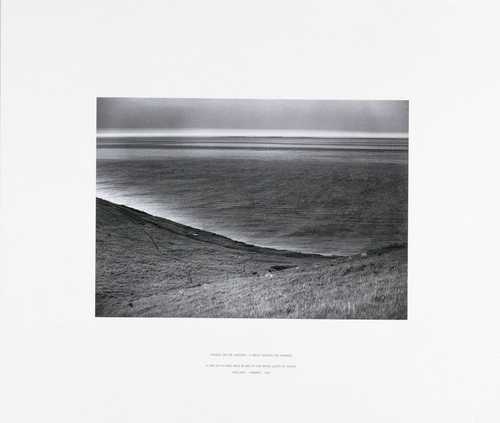
Artist and filmmaker Patrick Keiller is best known for his essay films that chart the progress of the fictional character …

Between terror and ecstasy: Artistic hallucination

Jean-François Chevrier

Stories of hallucinations in art and literature date back to the Bible, but the idea of the artistic hallucination is …

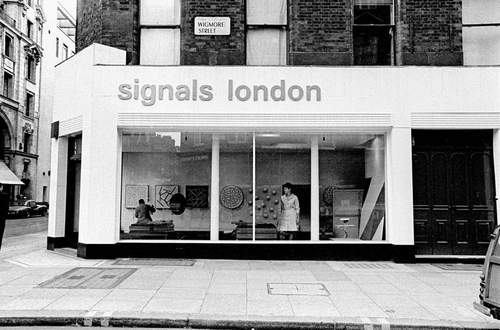
Beyond the easel: Gallery One, New Vision Centre, Signals and Indica at Tate Britain II

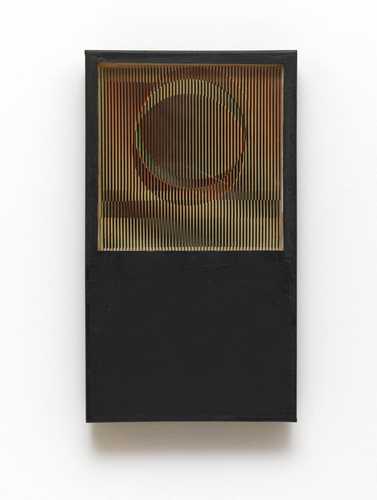
To coincide with the display, Tate Etc. talked to the Venezuelan-born artist Carlos Cruz-Diez (born 1923) about his early exhibition …

'Death has not required us to keep a day free': Damien Hirst at Tate Modern

Damien Hirst

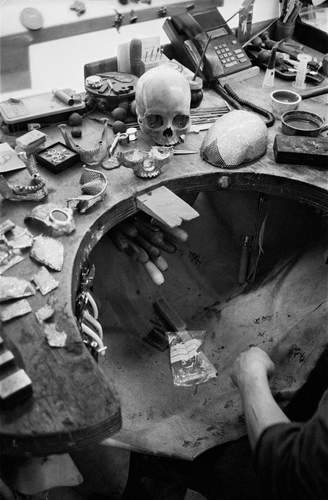
For the Love of God, Hirst's diamond-encrusted skull, has already become one of the most talked about works …

Giving time to time: Alighiero Boetti at Tate Modern I

Mark Godfrey

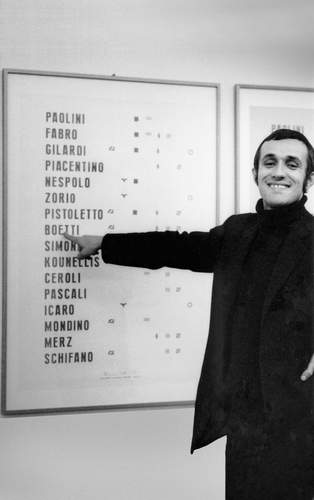
One of the most important and influential Italian artists of the twentieth century, Alighiero Boetti (1940–1994) is renowned for the …

Guernica... In a car showroom?

Helen Little

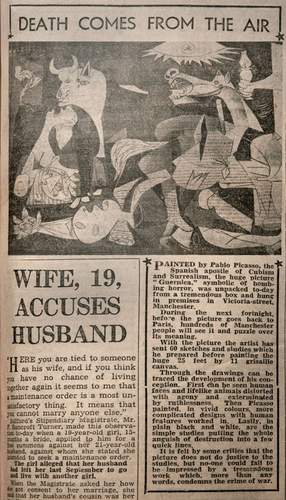
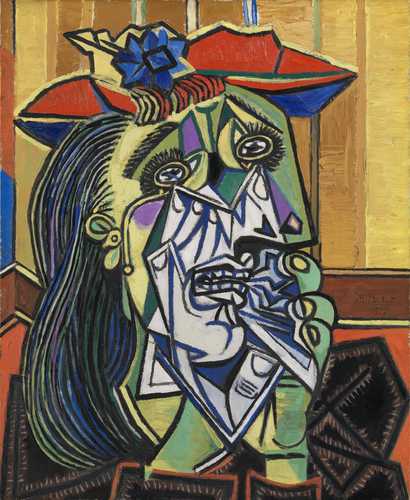
Picasso’s Guernica went on display in a Manchester car showroom in early 1939, in support of the Spanish Republican cause. …

I do not seek Picasso, I find...

Rachel Flynn

Read about artist Graham Sutherland's admiration for Picasso and regular visits to see him in the South of France

Infinity on a single canvas?: Yayoi Kusama at Tate Modern

Ali Smith

One of Japan’s most prolific artists, Yayoi Kusama is probably best known for her spot-covered rooms and objects. On the …

The invisible man: Behind the curtain

Edward Platt

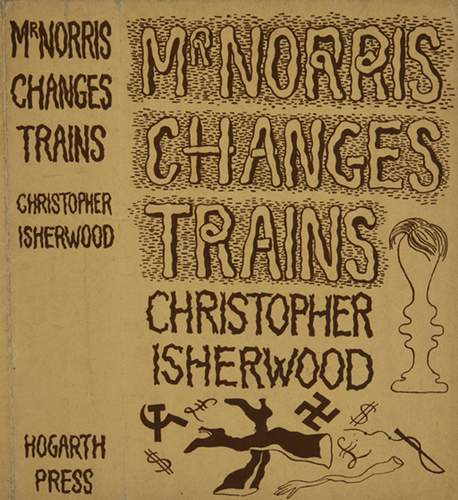
Royalist, revolutionary, pacifist, arms dealer, Communist, right-wing extremist, con man and traitor. Who was Gerald Hamilton (c.1888–1970)? He claimed among …

Large legacy of the little Spaniard: Picasso and Modern British Art at Tate Britain I

James Hall

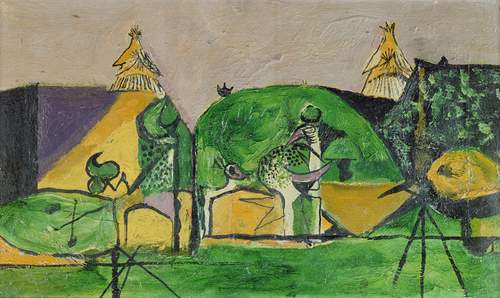
It is well known that Pablo Picasso initiated many important developments of twentieth-century art, but we know less about his …

Let me in: Migrations at Tate Britain

Kamila Shamsie

To coincide with the exhibition which explores British art through the theme of migration from 1500 to the present day, …

MicroTate 24

Sarah Martin, Simon Martin, Brian Muelaner and Steven Claydon

Four reflections on artworks in the Tate Collection

More to meet the eye: Contemporary drawings at Tate

Katharine Stout

Until the 1960s it was seen as a secondary act in the process of art making. Now a new generation …

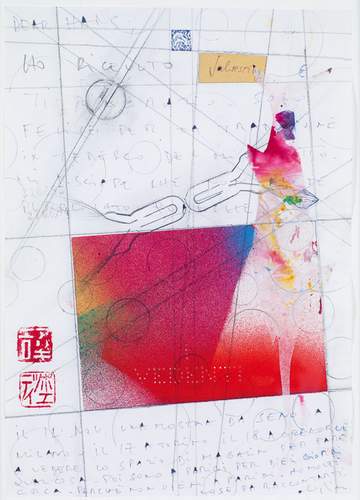
'One of the most important days in my life': Alighiero Boetti at Tate Modern

Hans Ulrich Obrist

A long-term friend remembers his first encounter with the artist at the age of eighteen, and the subsequent effect this …

Optical allusion: Private view

Michael Raedecker

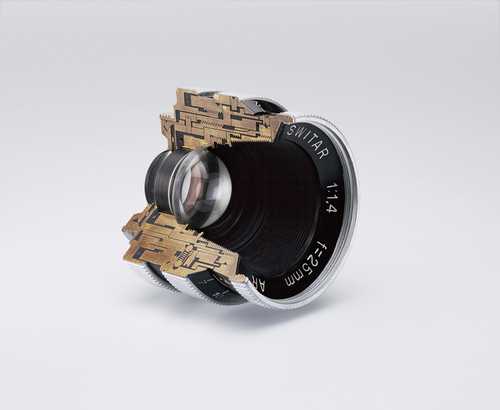
How incredulity and irritation turned to fascination when an artist encountered Christopher Williams’s image of a cutaway section of a …

Optimistic abstraction: Charline von Heyl at Tate Liverpool

Gavin Delahunty

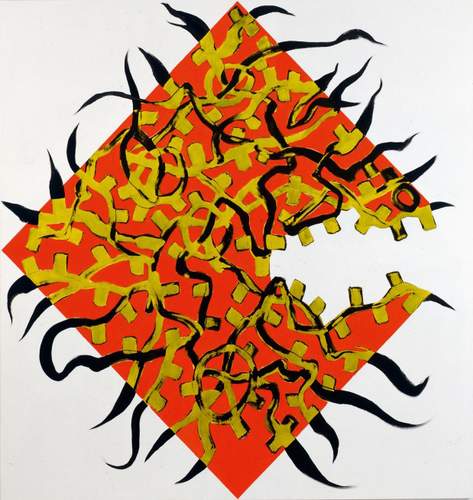
The curator of the forthcoming exhibition by the German abstract painter introduces her work, and a fellow artist pays homage

Planting a seed: Yayoi Kusama at Tate Modern II

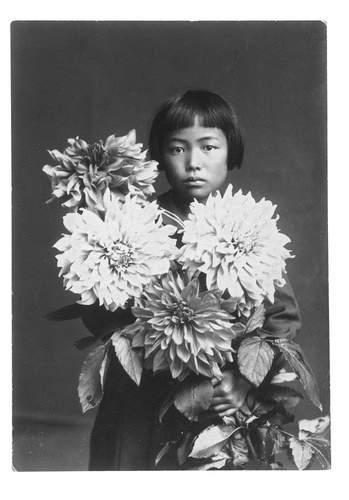
One of the Japanese artist’s earliest memories was of the seed-harvesting field in the plant nursery owned by her family, …

You saw it here first

Carmen Juliá

Find out which four trail-blazing galleries introduced Britain to the international avant-garde

Close